+18 | Commercial Content | T&C's Apply | Play Responsibly | Publishing Principles
David Beckham Icon 16:9GOAL

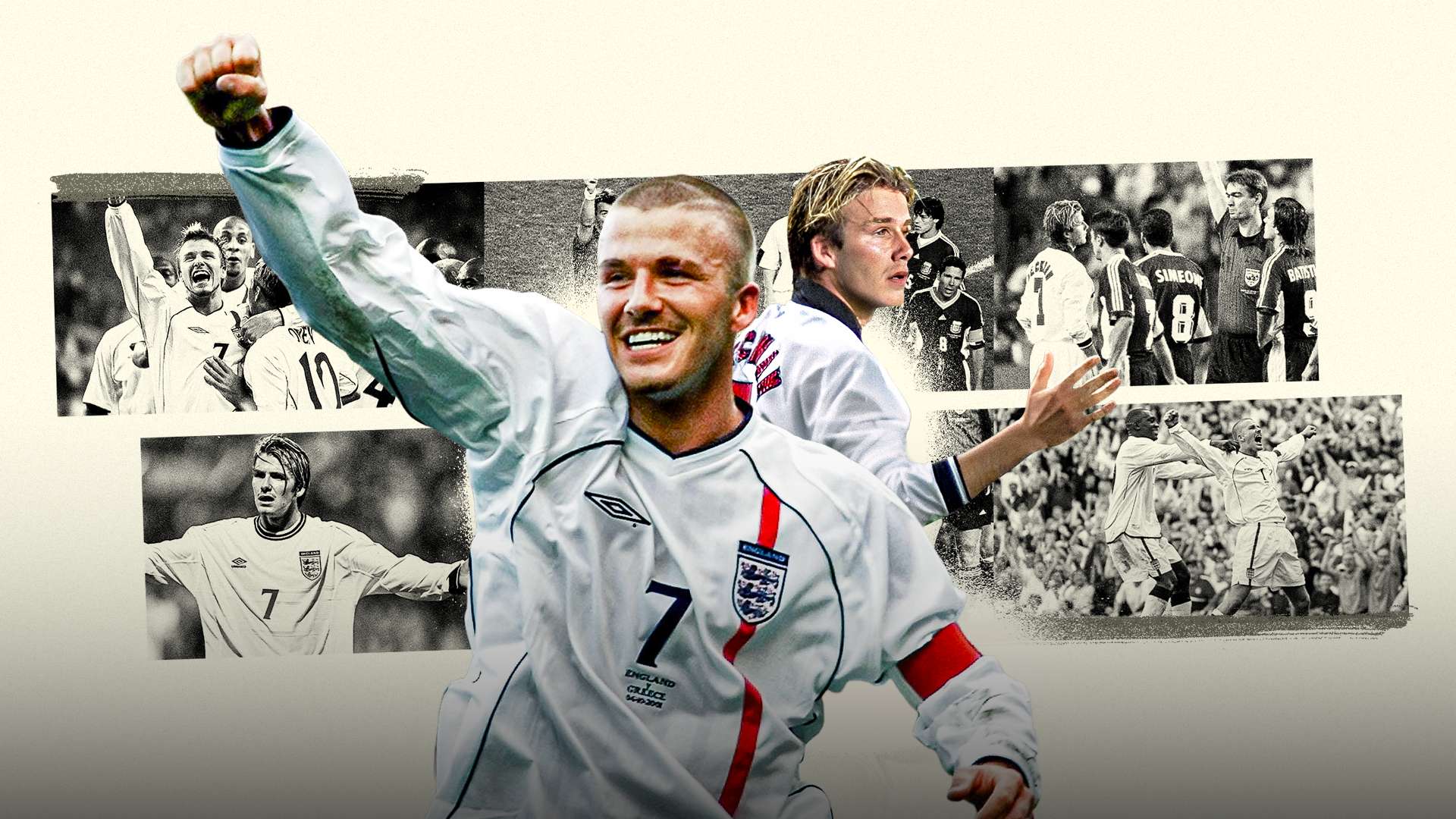
LEGACY: The shocking fall of 'stupid boy' David Beckham after England's heartbreaking World Cup '98 exit - and how he fought back to become a national treasure

The David Beckham the world knows of today is very different from the one who came to prominence before the turn of the 21st century.

One constant, however, is he has and always will be a superstar, for better or worse. He was and is the embodiment of an old Manchester United phrase: ‘Hated, adored, never ignored’. Beckham was one of the first celebrity footballers, a pioneer in having interests outside the game itself and leaning into his ‘image’.

Come the end of the summer of 1998, that ‘image’ was one of infamy. He was the most hated man in England. One rush of blood to the head, one moment of petulance turned a nation against him. It all seems rather silly in hindsight.

Nevertheless, this was a seminal moment in Beckham’s career and life. In modern-day speak, it was a canon event and a core memory. England’s World Cup last-16 tie with Argentina ought to have been a spectacle remembered mainly for the football, but it is best known for a red card that shifted the universe ever so slightly.

Here is the tale of Beckham’s darkest hour, and how he bounced back to go down as one of the most popular football players of all time.

  • David Beckham Manchester United 1996 FA Charity ShieldHulton Archive

    Rise of a superstar

    By the time the 1998 World Cup rolled around, Beckham had been a regular at Manchester United for three years. He formed part of the famous ‘Class of ‘92’ alongside fellow academy graduates Paul Scholes, Ryan Giggs, Nicky Butt, Gary Neville and his brother Phil. This was a new dawn for the Red Devils, who won the inaugural Premier League following the breakaway from the Football League to set themselves up for a lucrative future.

    Managed by the legendary Sir Alex Ferguson, United became the dominant force in England. The Scottish coach preached a culture of discipline and work ethic, which Beckham followed to a tee. He would spend countless hours on the training pitch perfecting his craft, working on his game and adding layers to it. This commitment, plus a sprinkling of stardust and raw talent, made the right winger one of the best free-kick takers the game has ever seen.

    Beckham broke into the United first team during their title-winning 1995-96 season, though it was the following campaign in which he truly made a splash, being named the PFA Young Player of the Year for 1996-97 and making his England debut a few weeks after their Euro 1996 campaign on home soil ended in a semi-final defeat to Germany.

  • Advertisement
  • CUP-FR98-ENG-ROM-BECKHAMAFP

    Foreshadowing a nightmare

    Despite having not been capped by England prior to September 1996, Beckham became undroppable once a member of the Three Lions. He featured in every qualifying game leading up to the World Cup 1998 finals, though went into the tournament in a state of relative acrimony.

    Beckham topped the Premier League assist charts for the first of three times in his career, but United were beaten to the title by Arsenal and England boss Glenn Hoddle was unhappy with the winger’s mentality ahead of the tournament in France, with it suggested his mind was wandering and focused on his upcoming marriage to Spice Girls singer Victoria Adams.

    “He really didn't have his mind concentrated on the World Cup,” Hoddle said as explanation for not starting Beckham in their first two group-stage games. “He has to learn to calm down. The quicker he learns, the better player he will be.”

    This was, however, disputed by the player himself as the spat became public. “I've always been focused on my football,” Beckahm retorted. “That's always come first, before everything else. Nothing gets in the way. I just needed the chance to get in there and show what I can do. I was given that chance, in the role I want, and I gave my best performance for England.”

    Beckham’s retaliation came on the eve of their last-16 matchup with rivals Argentina. For many Three Lions followers, their elimination to Diego Maradona’s ‘Hand of God’ 12 years prior was still fresh in the memory. This was a fixture that England couldn’t afford to lose. The population wouldn’t allow this squad of 23 to return home as anything but winners of this match, regardless of what happened for the rest of the tournament.

    What followed was one of the most memorable World Cup encounters of all time.

  • CUP-FR98-ARG-ENG-SIMEONE-BECKHAM-RED CARDAFP

    The battle of Saint-Etienne

    FIFA brought in the big dogs to oversee what was expected to be a tempestuous game. The experienced and reliable Kim Milton Nielsen was appointed referee, while Argentina sought to invoke some pre-match mind games by asking to play in their changed navy blue strip despite being the nominal ‘home’ team, believing it would bring good luck against the English.

    Within five minutes of kick-off, La Albiceleste went in front. Goalkeeper David Seaman hauled down Diego Simeone inside the box and Argentina were awarded a penalty, which master bagsman Gabriel Batistuta smashed home. Yet with their next attack, England had a spot kick of their own after Michael Owen was felled by Roberto Ayala, and Alan Shearer converted from 12 yards.

    Owen was on the scoresheet himself on 16 minutes, taking on all comers to grab one of the most iconic goals in Three Lions history. However, England couldn’t quite get into the half-time break in the lead, as Javier Zanetti equalised from a clever free-kick routine in stoppage time.

    A breathless first 45 minutes that felt like forever did eventually come to an end, yet Beckham’s night was over sixty seconds after the restart. While challenging for a high ball, he fell to the floor after receiving an elbow to the back from the cunning Simeone, who then pinned the United winger down for an extra second or two for good measure. Beckham, at this point still only 23, reacted by flicking his heel up at the future Atletico Madrid manager.

    Unfortunately, that last incident occurred right in front of the watchful eyes of referee Milton Nielsen. Simeone was shown a yellow card and you’d have forgiven Beckham for thinking he would suffer the same fate, only for the Danish official to reach around to his back pocket and brandish a red instead.

    He was sent off. England were down to ten men. Even if VAR had been in use back in the day, they probably wouldn’t have recommended a review to overturn the decision. Beckham entered a game of dark arts with Simeone and lost, just as the Three Lions would do in the tie to Argentina. As was the case with many shootouts before and after, England were defeated on penalties.

    And the man the country blamed was Beckham.

  • ENJOYED THIS STORY?

    Add GOAL.com as a preferred source on Google to see more of our reporting

  • David BeckhamGetty Images Sport

    Public enemy No.1

    ‘10 heroic lions, one stupid boy’ read the most damning of headlines the day after England’s elimination. That title was courtesy of The Mirror, who weren’t alone in singling out Beckham as the main reason the Three Lions lost. ‘Beck-home’ was The Sun’s version, ‘Moment of lunacy that cost cup hopes’ with a picture of the incident was the Daily Mail’s take.

    Beckham had hardly punched Simeone in the face. He didn’t lose his temper or let rage come over him. The offence was one of violent conduct, but with the ‘violent’ doing some extremely heavy lifting. England even made it all the way to penalties, where spot kicks saw them eliminated for a third tournament running, yet it was one player’s action after 46 minutes which was the focus.

    The public followed the press’ warpath. Accompanying The Mirror’s headline was a dartboard, and that set the tone for how violent the sentiment turned against Beckham. Effigies were burnt and hung, death threats were sent to him, and a radio poll in Manchester claimed 61% of fans didn’t want him to represent the Three Lions ever again.

    Beckham didn’t go into hiding, instead opting to face the music. “This is without doubt the worst moment of my career,” he said in the aftermath. "I will always regret my actions. I have apologised to the England players and management and I want every England supporter to know how deeply sorry I am.

    “I stood in the tunnel and watched the last few minutes and the terrible tension of the penalty shoot-out. That was worse than anything else. It was then I fully realised what I had done. I kept thinking to myself that, if I had been out there, I would have been one of the penalty takers. The rest of them had done so much without me and I had let them down desperately.”

    Upon returning to club football with United, Beckham regularly found himself booed and jeered by opposing fans. Even when representing England again, supporters turned on him.

    During a 3-2 loss to Portugal at Euro 2000, in which Beckham set up both of England’s goals, he was harassed by his own fans. Following two years of abuse, the winger let emotion come over him once again and he raised his middle finger to those who wouldn’t leave him be. Where the media previously dug him out for his actions, they opted to stand with him on this occasion, perhaps wary of the damage they had previously done.

  • MUSIQUE-NRJ-SPICE GIRL ADAMS-BECKHAMAFP

    Battling depression

    During the 2023 Netflix documentary focusing on Beckham and Victoria, who claimed her fiance at the time was ‘clinically depressed’, the now-former winger admitted these were still days he wished he could forget.

    “I wish there was a pill you could take which could erase certain memories,” he said. “I made a stupid mistake. It changed my life. ‘How do you feel about letting your country down?', ‘you are a disgrace’.

    “We were in America, just about to have our first baby, and I thought 'we will be fine, in a day or two people will have forgotten'.

    “I don't think I have ever talked about it, just because I can't. I find it hard to talk through what I went through because it was so extreme.

    “Wherever I went, I got abused every single day. To walk down the street and to see people look at you in a certain way, spit at you, abuse you, come up to your face and say some of the things they said, that is difficult.

    "I wasn't eating, I wasn't sleeping. I was a mess. I didn't know what to do. The boss (Ferguson) called me. He said 'David, how are you doing?' I think I got quite emotional. He said 'how are you doing, son?'. I said 'not great, boss'. He said 'OK, don't worry about it, son'.

    “That was the only thing I could control, once I was on the pitch, then I felt safe.”

  • England v Greece 2002 World Cup QualifierHulton Archive

    Finding redemption

    Amid the noise and personal criticism, Beckham still managed to go about his business and became one of the best players in the world during this period. He finished second in Ballon d’Or voting for 1999, the year United won the first treble in English football history. He was world renowned for his free kicks and crossing ability, with a film - Bend It Like Beckham - first going into production in 2001. There was more to life than what happened one evening in 1998.

    Yet Beckham still craved the plaudits of the England faithful. He still wanted to right his previous wrongs. The decision to appoint him Three Lions captain in November 2000 was far from universally popular, but it was accepted all the same. With the appointment of Sven-Goran Eriksson as the team’s first foreign manager, there was hope this crop would end decades of hurt and deliver a trophy.

    Despite beating rivals Germany 5-1 away in World Cup qualifying, England still needed to claim a point against Greece on the final matchday to book their spot at the 2002 finals in Japan and South Korea. Bizarrely, the Three Lions trailed 2-1 going into stoppage time of the game at Old Trafford.

    With seconds to go, the hosts were awarded a free kick just under 30 yards out. There was only one man for the occasion. This was it. Three years of pain and vitriol could be wiped away with one swing of his right boot, this time onto a ball rather than another player.

    Up stepped Beckham, and the rest was history.

    “I don’t believe it,” commentator Gary Bloom said in utter disbelief. “David Beckham scores the goal to take England all the way to the World Cup Finals! Give that man a Knighthood!”

    England were going to the World Cup, and would you believe it, they were drawn to face Argentina again, this time in the group stage. This time, Beckham was the winner.

    Once more, Owen won a penalty, brought down by Mauricio Pochettino, nowadays better known as the former manager of Tottenham and Chelsea. There was no doubt who was taking the spot kick, though.

    “Hold the cups and the glasses back home,” the immortal John Motson said on the gantry as Beckham took one last breath to himself. “You can smash them now, Beckham has scored for England!” was the next line spoken.

    England went out to eventual winners Brazil in the quarter-finals, even despite the Selecao playing over 40 minutes with ten men after Ronaldinho was sent off. In fact, the Three Lions’ trophy drought is still ongoing to this day, with the ‘Golden Generation’ failing to deliver silverware. But Beckham had his moment of vindication. He was no longer an England enemy, rather a hero and a legend. To this day, only two men - Peter Shilton and Wayne Rooney - have played more games for the national team.

    Beckham is one of the most recognisable faces in sport anywhere in the world, seen as a trailblazer and a leader by example rather than a mere player. Moreover, he is viewed as an unofficial ambassador of his country during his many excursions abroad.

    He ended his career with a grand total of 146 goals in 724 matches, winning 17 trophies and playing club football in five different countries, still loved to this day by every team he ever represented - United, Preston North End, Real Madrid, LA Galaxy, AC Milan and Paris Saint-Germain. The furore over 1998 is now more remembered than the actual hatred towards Beckham, proving once and for all he exorcised those demons.

    Oh, and he received his knighthood from King Charles III at long last in 2025. Arise, Sir David Beckham.
0