 Backpage
Pitso Mosimane blasts Patrice Motsepe and CAF for moving AFCON to four years 'it's like cancelling COSAFA Cup where we first saw Patson Daka, Peter Shalulile and Teko Modise'
 AFP
AFPMosimane unhappy with new AFCON plan
Since 1968, the Africa Cup of Nations has taken place every two years, but going forward, this is set to change, as the competition will copy the World Cup format of four years between editions.
Just like the one-year gap between the 2012 and 2013 editions, there will be a similar arrangement in 2027 and 2028 before the full transition into the four-year cycle.
But is the four-year cycle good or bad for African football? Three-time CAF Champions League winner Pitso Mosimane has said the move is bad for Africa.
 Pitso Mosimane, August 2025
'I don't agree with the decision'
"The level at the AFCON was very good. You could see the likes of Tanzania and Sudan levelled up. The football and coaching education have improved, the former South African national team head coach wrote on News24.
"However, there are things that concern me as a coach when I look at the future. I don't agree with the decision to move the AFCON from every two years to every four years.
"I have heard CAF's argument that there will be a Nations League played in the years between AFCONs. But that will not address one of the fundamental importances of staging the AFCON every two years," he added.
"I am looking at this from a socio-economic perspective. Holding an AFCON every two years afforded countries the opportunity to generate more revenue. If you have a sponsor, for instance, they would pay you more for playing the AFCON every two years instead of doing so quarterly."
 Backpage
Why biennial AFCON is good
According to the former Al Ahly head coach, a four-year cycle will deny African football the chance to develop in terms of infrastructure.
"The AFCON, held every two years, also helps fast-track infrastructure development because countries have to build stadiums. I support the decision to spread the 2027 AFCON in East Africa, which will be co-hosted by Kenya, Tanzania, and Uganda," Mosiamne explained.
"This will leave a lasting legacy for Tanzanian football. I remember a while back when we went to play in Tanzania. The stadium we were going to play in was good, and so was the hotel. But the training venue that was in an elite sports complex in Dar es Salaam, which we were given, was not good enough.
"When I returned to Tanzania recently for an event by Yanga, that training venue had improved," Mosimane stated.
"That probably happened because of the 2024 African Nations Championship (CHAN) that Tanzania co-hosted, as they needed to not only have world-class stadiums for the tournament but also provide good training pitches for the teams involved," the former SuperSport United tactician continued.
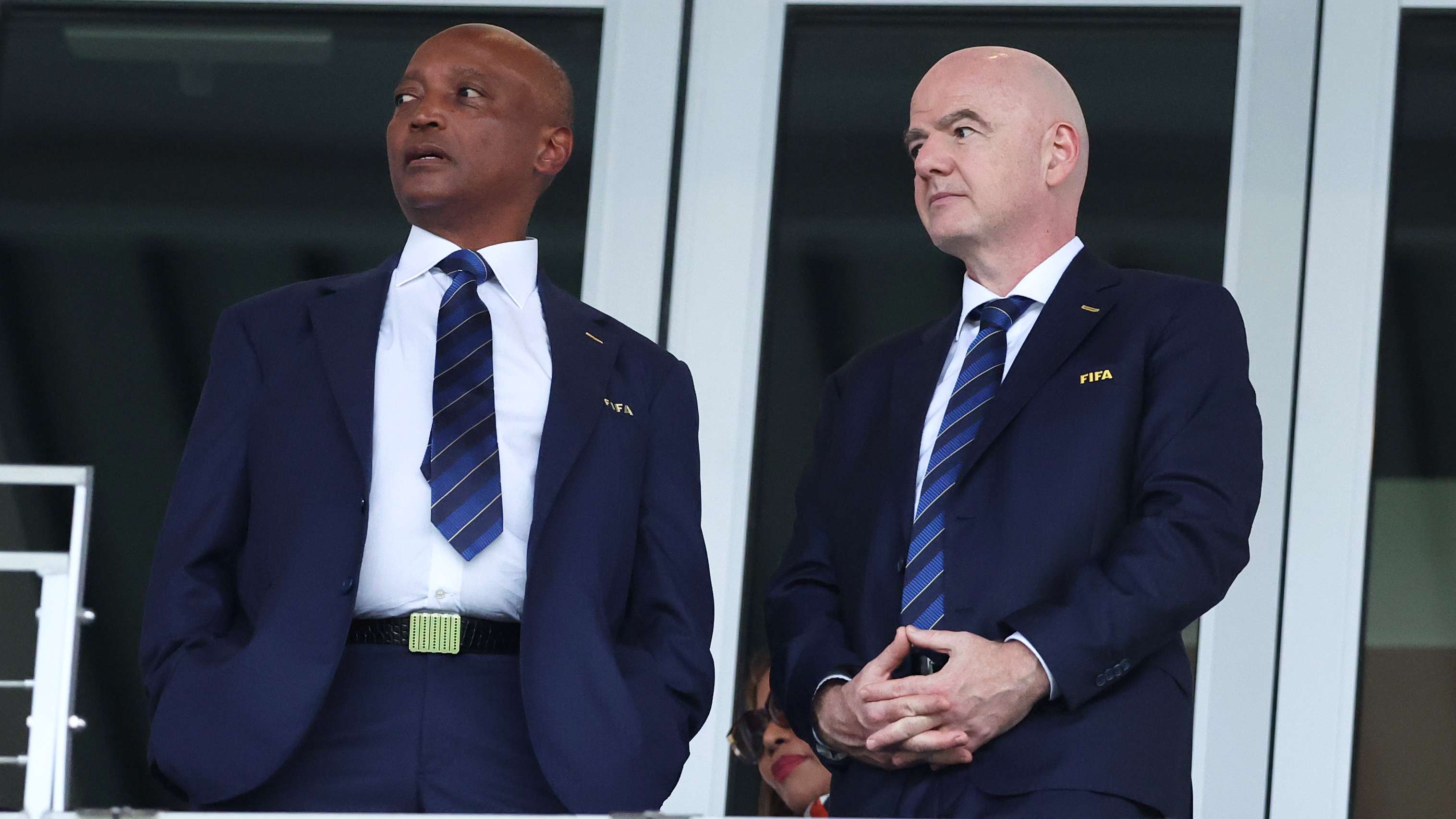 Getty Images Sport
CHAN out, Nations League in
Another dynamic shifting change made by CAF is to end the 17-year-old African Nations Championship (CHAN), the tournament reserved for locally based players.
In his explanation, Motsepe said there is no need to have CHAN with the introduction of the African Nations League, a new competition altogether.
Mosimane has also shared his opinion on CAF's decision to do away with CHAN.
"And speaking of CHAN, I am also not happy with the decision to cancel it, as was announced recently. CHAN is an important tournament in African football. CHAN gives us a glimpse of what is happening in domestic leagues on the continent, especially the lesser-watched ones," Mosimane argued.
"Cancelling CHAN would be the same as cancelling the COSAFA Cup, which is an important foundational tournament for football in Southern Africa. The COSAFA Cup is where we first saw players like Patson Daka, Peter Shalulile, and Teko Modise at the international level.
"The COSAFA Cup, like CHAN, helps scouts identify upcoming talent and gives locally based players an opportunity to change their lives, as some national teams rely solely on overseas-based players," the Premier Soccer League-winning coach added.
"[Pape] Thiaw, for instance, won the CHAN title with the Senegalese team based in the local area before being elevated to lead the senior national team. CHAN helped in his development, and now he is an AFCON winner."