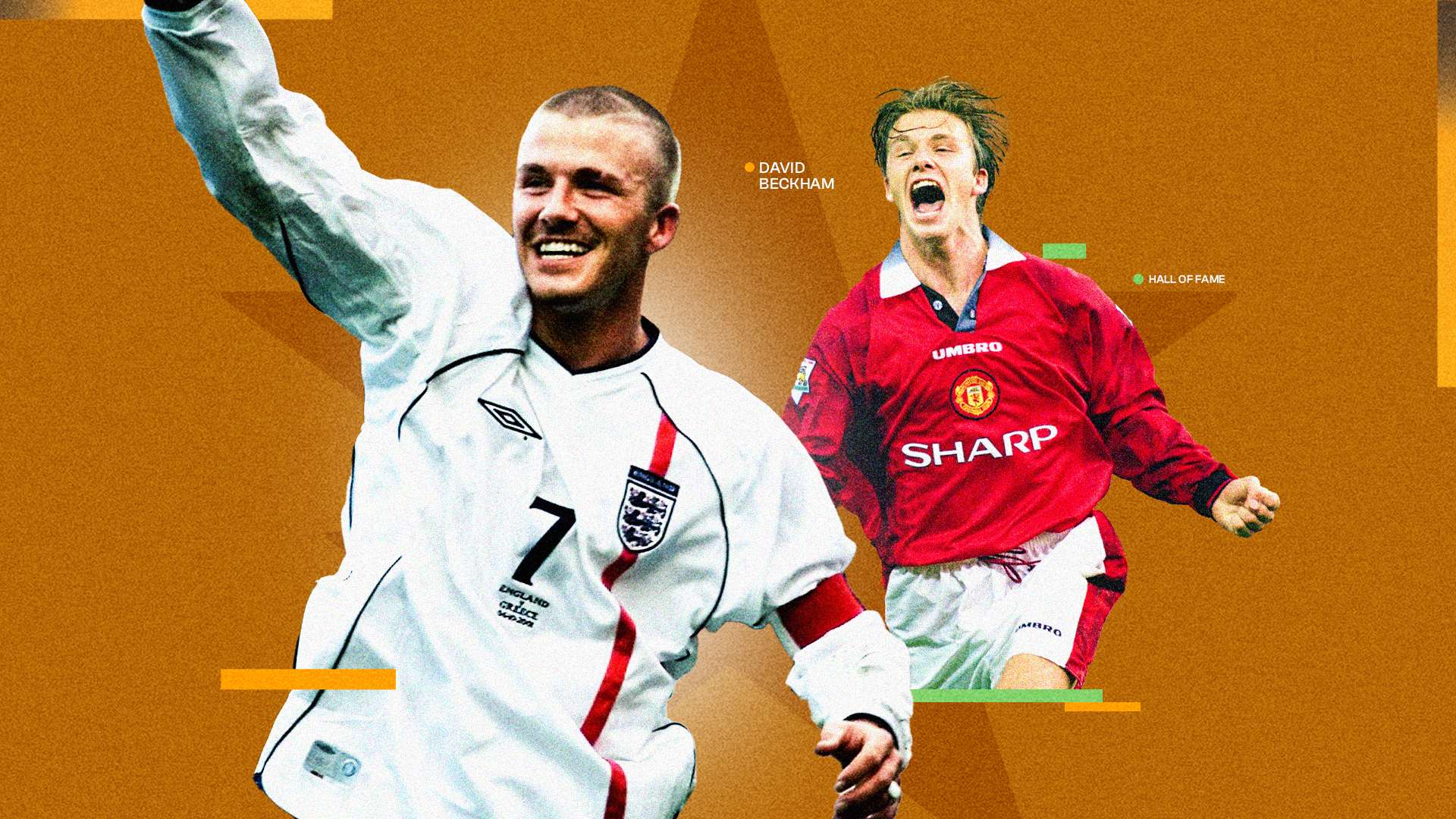
In 1999, the year Beckham won the treble as a key player for Ferguson's United, Beckham arguably deserved to also take home the the Ballon d'Or, which was instead awarded that year to Rivaldo. The Brazilian had been sensational in La Liga for Barcelona but had been eliminated from the Champions League in the group stages.
>Beckham, by contrast, had been forced to pick up the pieces after a World Cup in which he was vilified, publicly bullied by English fans, and greeted on Premier League pitches with a soundtrack of boos, insults and verbal abuse. He endured this relentless hostility without ever showing his emotions, responding simply with what he did best: playing football.
"The more he was targeted, the better he played," his former team-mate Ole Gunnar Solskjaer would later say. Six goals and 12 assists in the Premier League, two goals and eight assists in the Champions League, and a crucial goal in the FA Cup semi-final against Arsenal, Beckham unquestionably made a decisive contribution to the Red Devils' journey to immortality.
The 1999 Ballon d'Or, which saw Beckham finish in second place, would probably have allowed the English midfielder to enter another dimension in the collective imagination, in the circle of undisputed number ones. Today, 12 years after his retirement, re-evaluating the value, relevance and footballing aura of Sir David Beckham is not a nostalgic gesture, but rather an act of justice towards one of the great icons of the sport.