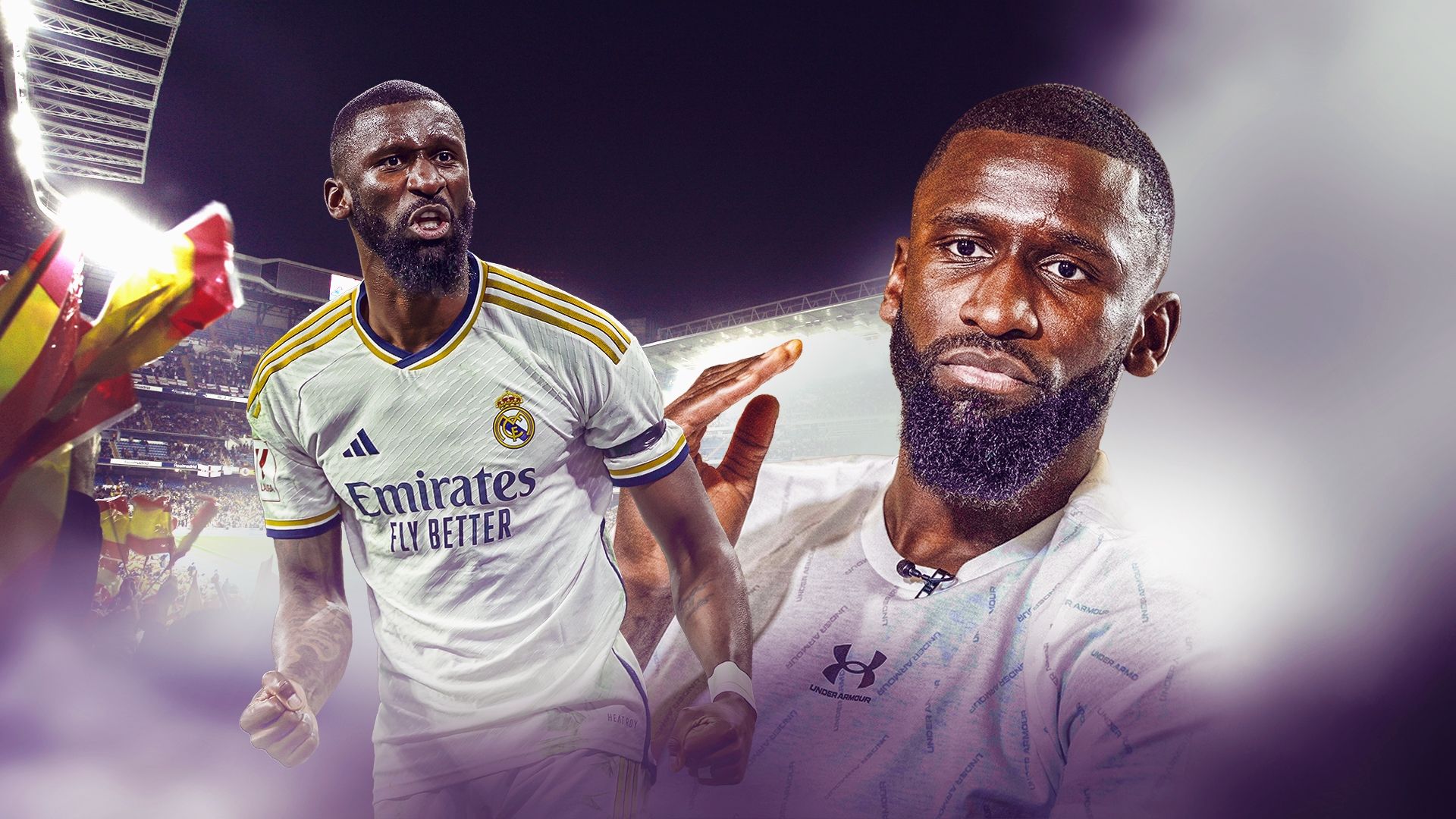
Antonio Rudiger has experienced a lot in his career - especially big name coaches. Whether Carlo Ancelotti, Thomas Tuchel or Antonio Conte, the Germany star has had the privilege of playing under some of the game's most impressive managers in recent years. In an exclusive interview with GOAL, Rudiger, who has helped Real Madrid to the top of La Liga this season, talks about the tacticians who have shaped his career, how football offered him a 'way out' as a child, almost joining Paris Saint-Germain from Chelsea and plenty more.
.jpg?auto=webp&format=pjpg&width=3840&quality=60) Getty Images / GOAL
Getty Images / GOALAntonio Rudiger exclusive: Real Madrid defender opens up on his Chelsea roller-coaster, Thomas Tuchel's 'wow' tactics and Germany's Euro 2024 hopes
 Getty Images
Real and Ronaldo
You grew up in very modest circumstances in Neukölln. How much did you learn about the legendary Galacticos as a child?
Rudiger:
To be honest, not really much. But what I always remember is the 2002 Champions League final against Bayer Leverkusen - that goal by Zinedine Zidane. That's always been in my head.What were your first points of contact with football? Who were your first role models?
George Weah played a big role for me back then! Because he was the only African to win the Ballon d'Or. After that, around 2002, it was Ronaldo, "El Fénomeno". It's a shame, of course, that he beat Germany in that year's World Cup final. But Ronaldo was still an inspiration for me.
What did you think of his hairstyle at the time, long at the front and nothing at the back?
I thought it was outstanding at the time and I had it too...
Your brother Sahr Senesie, who is almost eight years older, moved to Borussia Dortmund in 2000. You grew up as a family in poor circumstances, did that change after he went to Dortmund?
Things improved in the sense that I had proper football boots from that point onwards, for example. In terms of money, things also got a bit better. But not everything changed back then. The sums that young professionals were paid were also different back then than they are today. But it was still tough for us as a family. My brother was still young back then, around 16/17 years old, and of course he couldn't immediately change things at home for the whole family. Only I was able to do that in the course of my career.
 Getty
GettyTuchel, Conte and issues at Roma
Let's take a look at your career. Luciano Spalletti, Frank Lampard, Thomas Tuchel, Antonio Conte, Carlo Ancelotti: the names of coaches in your career to date fill many Wikipedia pages - who did you get on particularly well with?
I've definitely had a lot of good coaches. If I had to choose one now, it would be Thomas Tuchel. I got on particularly well with him. His honest manner simply suited me. Also, when I look at his tactical understanding: Wow!
You have got to know several Italian coaches in your career - do they differ in their approach to the other coaches you have played under?
I have to be honest and say that all Italians are very demanding. But Carlo (Ancelotti) is really very relaxed. Conte really needed a lot of discipline. Tactically, it was at a very high level - simply a really good coach. Luciano Spalletti is really great. When I see the work he did at Napoli: It's amazing.
Under Spalletti, the star of club legend Francesco Totti also fell at Roma. How did the team take it at the time, what was the atmosphere like in the dressing room?
There was definitely a lot of tension. The two of them had a history that I don't know. But in the end they both respected each other, Spalletti and Totti were simply two alpha animals.
 Getty Images
Highs and lows with Chelsea
Under Frank Lampard, you were sidelined at Chelsea in the 2019/20 season. How did that happen?
To be honest, I still can't say exactly what happened back then. That's part of football. Maybe he had other ideas or saw other players better. But the good thing about football is that the answer is on the pitch and I think I gave the perfect one.
Would you have liked to leave the Blues at that stage?
I really wanted to leave. I wanted to leave. I wanted to join Thomas Tuchel at Paris Saint-Germain, that was my wish. But it didn't happen and six months later Tuchel came from PSG to Chelsea. We then won the Champions League together. It was probably meant to be.
What worked better under Tuchel than under Lampard?
I probably just fitted in better with his idea of football and he also really liked me as a guy.
In what way?
That I can take the lead and lead the way.
We journalists sometimes come to the conclusion that a team is playing against its coach. Is that really true? How does that work?
Perhaps. But nothing like that has ever happened in my career. I even played under Lampard again at the end of his tenure. Let me put it this way: if it doesn't fit at some point, then it doesn't fit anymore. But no footballer in this world loses on purpose.
.jpg?auto=webp&format=pjpg&width=3840&quality=60) Getty Images
Getty ImagesAncelotti and Germany's Euro hopes
Now you're playing under Carlo Ancelotti, who is often described as a kind of feel-good coach for the players. What is your impression?
That's definitely true. Carlo has his own way and he does it perfectly, he just seems natural. Of course he gets angry sometimes, but under Carlo we all go in the same direction - and that's exactly how it is.
You've now been playing for Real Madrid for almost a year and a half. What does it mean to you to play for such a glorious club?
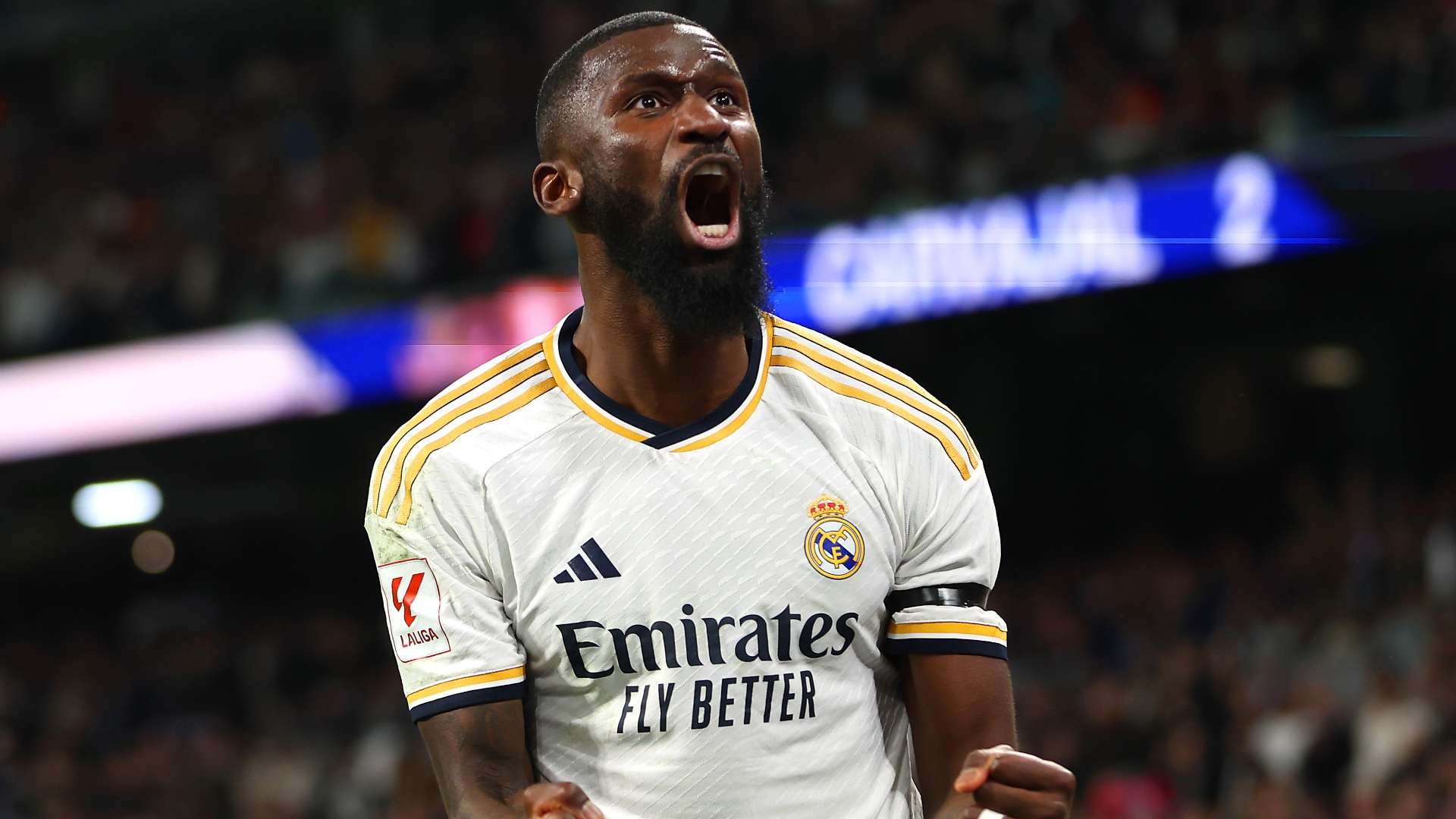
It's something I've always dreamed of. It was never in my head. For me, the Premier League was the ultimate goal. I definitely wanted to play in the Premier League, but at top clubs like Chelsea and Real Madrid - that's just a bonus for all the hard work I've put in over the years.
Looking ahead to the upcoming European Championship 2024, the general euphoria among fans in Germany is still limited despite the prospect of hosting the tournament at home. Can you understand this attitude?
You can understand it, of course, especially when you see how we've performed in recent international matches. Of course, that doesn't give us much courage for such a big tournament. In the end, it's up to us players. We are responsible for bringing the euphoria to Germany. If the results are right, if the way we play is right, then we'll also have the fans behind us.
What makes you optimistic?
We have a good team, we have a top coach and we all know what time it is. It's a European Championship, everyone will be motivated and everyone will throw everything into it. That's why I'm not worried.
What is your goal for Euro 2024?
If I go there, I want to get as far as possible. The current situation doesn't matter, it doesn't matter what will happen or what happened before. We're not just going there to say hello. Of course I want to go as far as possible. But we're taking it step by step and we'll be prepared.
Advertisement


