+18 | Commercial Content | T&C's Apply | Play Responsibly | Publishing Principles
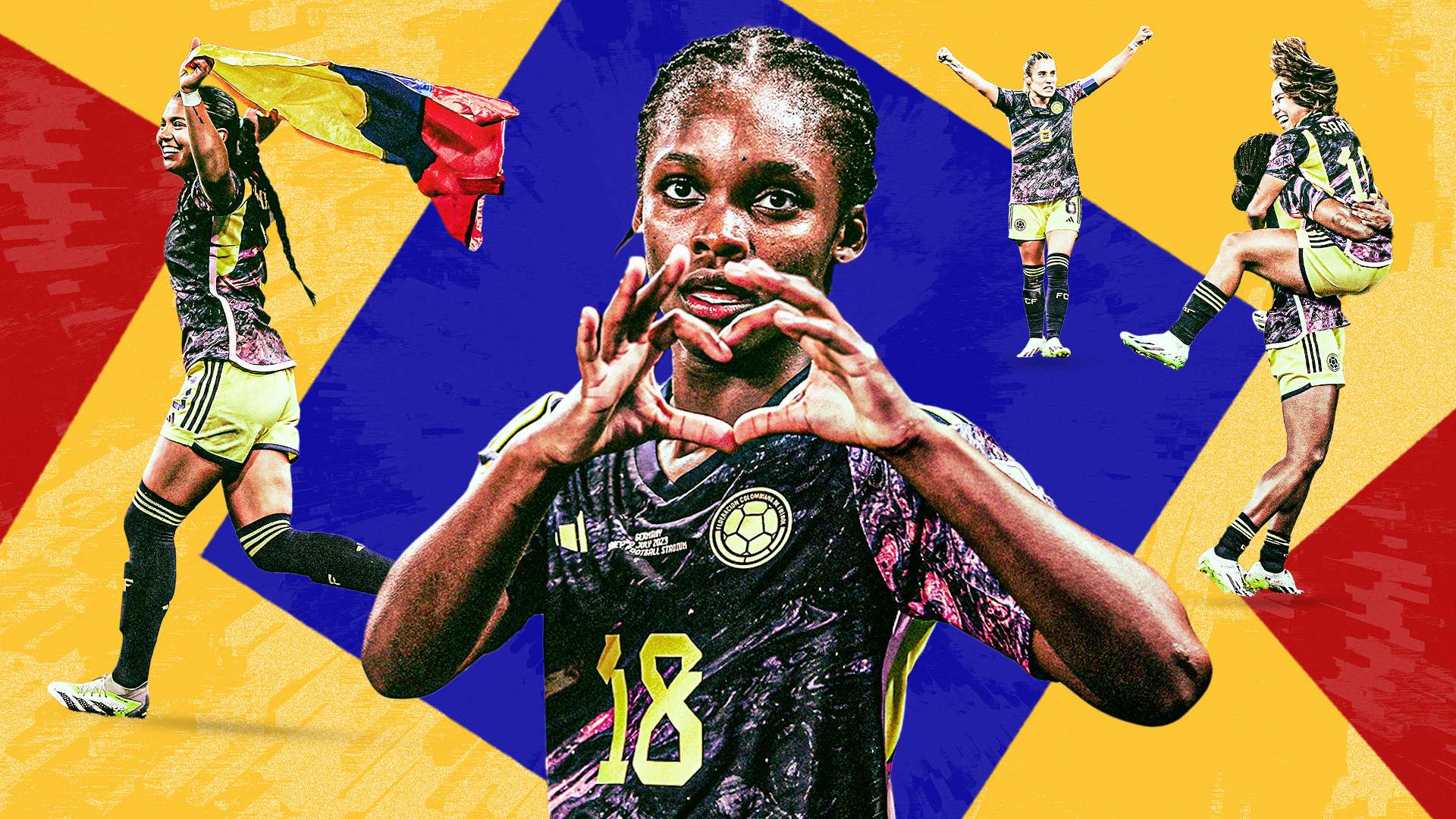
Colombia Women's World Cup feature graphicGOAL

A future Ballon d'Or winner and an historic World Cup campaign: How England's opponents Colombia became a force in women's football

In the build-up to Colombia’s Women’s World Cup group-stage encounter with Germany, there were signs that it was going to be a special night in Sydney. Hours before kick-off, there were pockets of yellow shirts around the city, people with the national colours painted across their faces, large flags being carried around. But even when they joined together in their thousands to produce an incredible atmosphere as kick-off approached at the Allianz Stadium – roaring as the Colombia line-up was announced and singing their hearts out at the national anthem – few would have predicted what would follow.

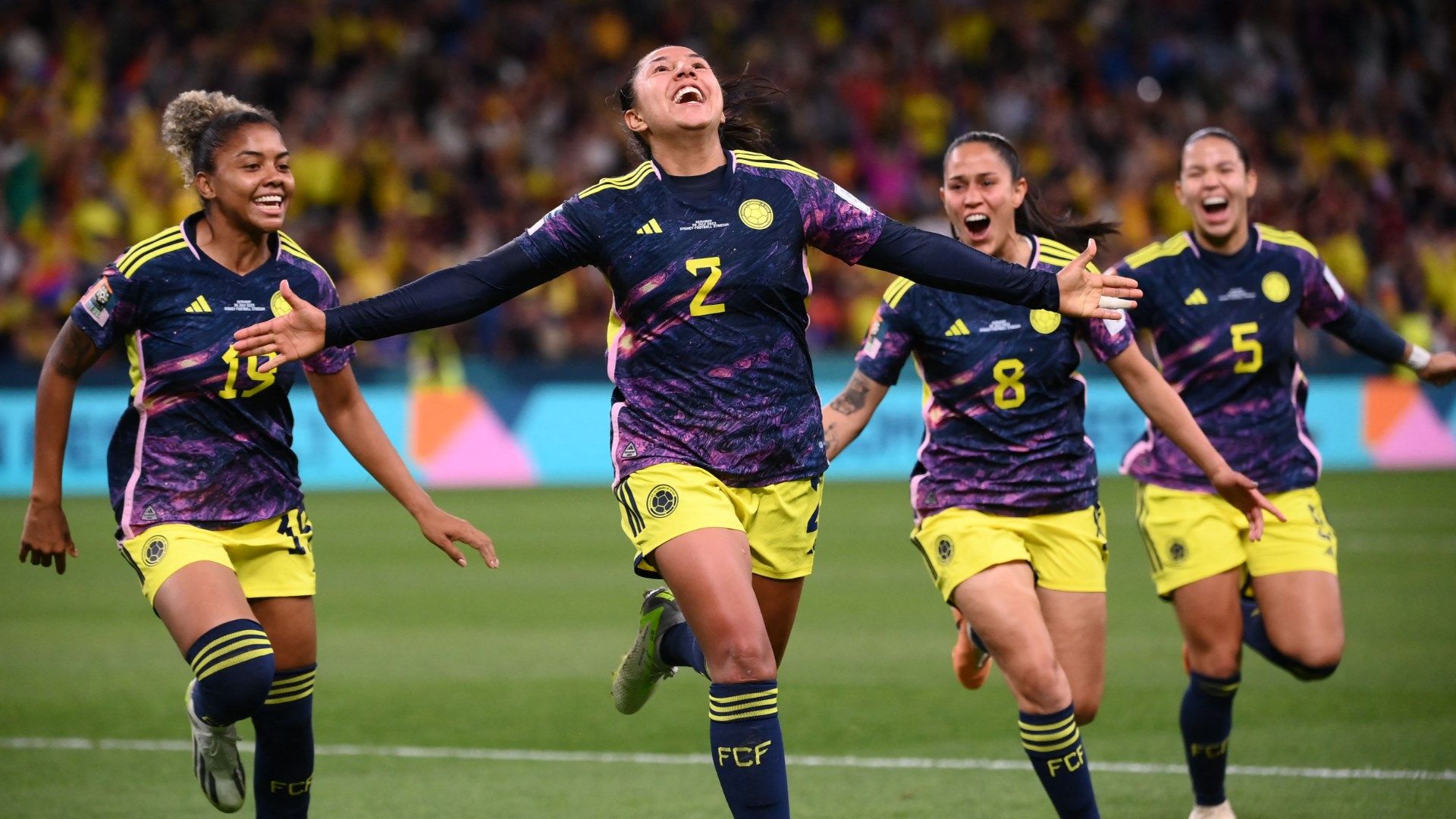
Germany are a powerhouse in women’s football. They’ve won eight European titles and two World Cup trophies. Going into this tournament, they were one of the absolute favourites. But a wonder goal from teenage phenom Linda Caicedo and a towering header in the 97th minute from Manuela Vanegas meant they would be defeated. Colombia had pulled off one of the best results, and performances, of the World Cup so far.

"Today, we were playing as the home team,” assistant coach Angelo Marsiglia, standing in for suspended head coach Nelson Abadia, said with a beaming smile at the start of his post-match press conference. It was a result that all-but-sealed Colombia’s progression to the knockout stages – and would prove extremely costly for their opponents, too, who shockingly failed to get out of the group.

"We were competitive,” Marsiglia added. “We knew we would have an excellent attitude. We knew that against Germany, we had to be even better to get the win. If there is no intention whatsoever, there’s no attitude to compete and fight hard.

"Emotions were running high after the match. We said, ‘Let’s enjoy this but keep our feet on the ground’. We have a very mature team. We have to be happy because this is a great win for the country but the tournament still continues so we will go step by step."

After showing grit and determination to beat a stubborn Jamaica side, one that had not conceded until Catalina Usme’s winning goal in their last-16 encounter, Colombia’s next step is a pretty big one - a first ever Women’s World Cup quarter-final.

They took out Germany and now they have the chance to go one better by defeating England, the European champions and, on paper, the favourite to win the tournament. It's the biggest game in the history of the Colombia women’s national team – and it’s taken quite a lot to get here.

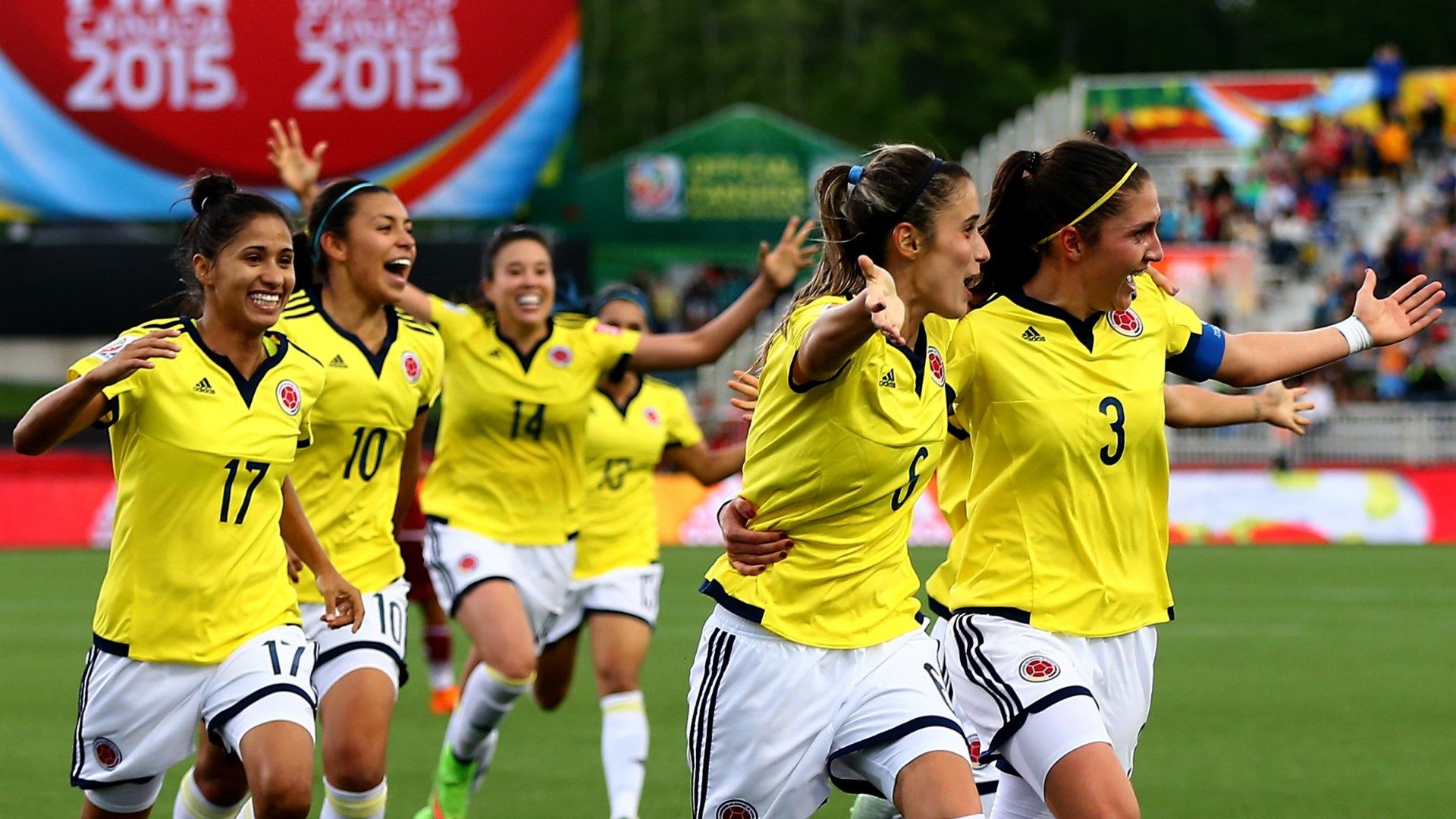
  • Colombia fans Women's World Cup 2015Getty

    Football-mad nation

    Colombia loves its football - it’s crazy about the sport – and so for many, its arrival at the top level of the women’s game was always a case of when, rather than if.

    Despite a relative lack of support from the federation, the women's team defied the odds to qualify for the Women's World Cup for the first time in 2011 and, four years later, they went one better when they reached the knockout rounds. With back-to-back appearances at the Olympic Games also coming in 2012 and 2016, what that generation did was incredible.

    “When I was playing, I would be the one doing the videography and creating content and all this stuff because no one else was doing it,” Melissa Ortiz, a member of the squad for the 2012 Olympic Games and one of the players who spoke out so prominently about a lack of support, explained to Indivisa before the World Cup.

    “I look back and I think, 'How many player photos do I even have?' Not that many, because they never even would send photographers out. Some supporters would come and watch us and give us some photos, but even the smallest details like that, actually having staff at camps, at training, at games, at tournaments that will cover things such as content and social media so that there's more exposure to the women's game [was lacking].”

    These were the little things. That’s before we get into what a team needs to best prepare itself for matches. What, then, could this team be capable of with better resources?

  • Advertisement
  • Colombia Women 2015Getty

    Growth of the game

    The team’s successful five-year spell was important. It resulted in more attention from the media and the launch of a professional women’s league, one which the country’s biggest clubs would invest in and one that Win Sports, Colombia’s sports channel, would broadcast. The final of that first season showed the interest was growing, too, an attendance of 33,327 setting a new record for a Colombian women's match.

    Attitudes started to change within the country and when Ortiz and her team-mate Isabella Echeverri spoke out about problems within the federation, questions were asked by those on the outside. “There definitely has been progress,” Ortiz admitted.

    The simple things improved, too. Colombia started to play more friendly matches against international opposition, rather than just their familiar South American foes. This was not just in the senior teams, either, but also at youth level. Meanwhile, the federation was keeping tabs on an incredibly talented generation of young stars that was coming through, one that would certainly benefit from these steps forward. Women’s football was growing everywhere and, slowly but surely, this was also the case in Colombia.

  • Colombia Women 2022Getty

    Making a mark

    We’re starting to see the fruits of all of this now. Colombia’s club teams are regulars in the latter stages of the Copa Libertadores and the country has several names that play their football in Spain, in one of the best leagues in the world.

    Last year was a huge one for the national teams, too. Colombia hosted the Copa America Femenina and its team captured the hearts of the nation, reaching the final. They couldn’t conquer Brazil in the end, losing 1-0 due to a Debinha penalty, but they were so close to an historic triumph, and that was more than enough to make an impact.

    The success didn’t end there, either. At the Under-20 Women’s World Cup in August, there were positive signs as Colombia topped the group, again inflicting an eventually fatal blow on Germany, but lost to Brazil in the quarter-finals, another penalty deciding events.

    Then came the U17 Women’s World Cup and another run to the final. It was this which really highlighted the incredible generation that Colombia has coming through, the likes of Ana Maria Guzman and Gabriela Rodriguez really catching the eye in India.

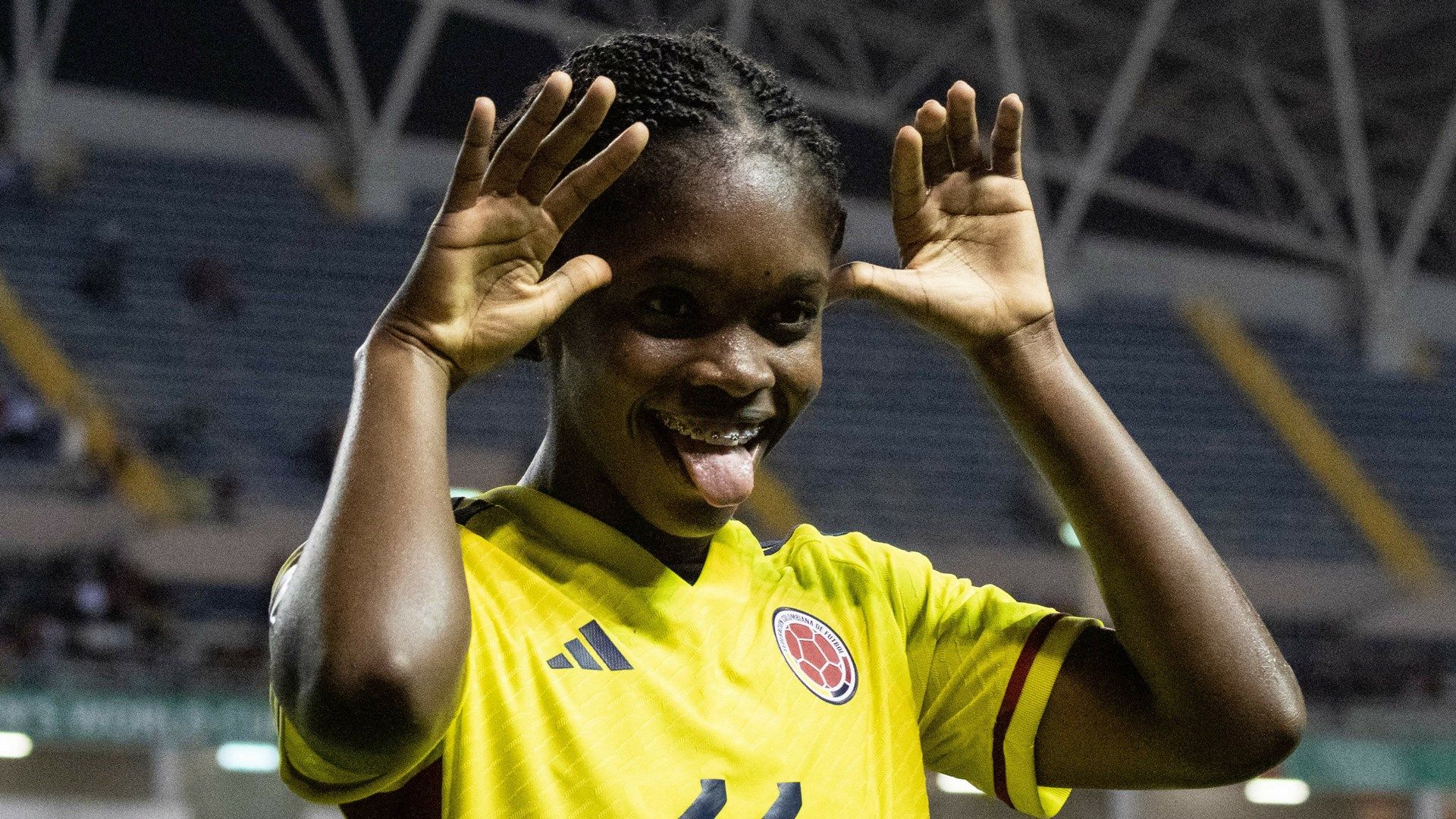
    But at the forefront of that charge, and that of both the U20 World Cup team and the senior Copa America team, was Linda Caicedo.

  • Linda Caicedo Colombia Women 2022Getty

    A genuine superstar

    There’s a lot of talent in Colombia’s squad, be it in record goal-scorer Catalina Usme, the promising and prolific Mayra Ramirez and the creative abilities of Leicy Santos. But in Caicedo, they have one of the most promising teenage footballers on this planet.

    As a 14-year-old, Caicedo debuted in the Colombian top-flight, won the Golden Boot and led America de Cali to its first league title. She made her senior national team debut at the same age. A year later, she had to go through an extremely tough period when she was diagnosed with ovarian cancer. Fortunately, the young forward battled through it and can even look back on it in an extremely mature light today. “What happened made me grow,” she told FIFA.

    Aged 16, she’d moved on to Deportivo Cali, where she'd win another a league title while also claiming the Golden Boot in her debut campaign in the Copa Libertadores. By the time last year’s Copa America came around, then, a tournament she'd be named the Most Valuable Player of, Caicedo was one of the hottest properties in the women’s game. Every club wanted her. After dazzling the continent with her tricky feet, clinical touch and impressive work-rate, then doing so on two world stages at youth level, she eventually signed for Real Madrid in February, a few days after her 18th birthday.

    She’s already making a difference in Spain and her performances at this World Cup have absolutely confirmed that she is a genuine superstar and a potential Ballon d'Or winner of the future.

  • Manuela Vanegas Colombia Women 2023Getty

    Putting it together

    But Caicedo is just one part of a deadly Colombia attack. Focus on her and her alone, and someone else will make you pay. Usme and Ramirez link-up almost telepathically, Santos creates plenty in central areas and there is Lady Andrade, too, who can be a force out wide. Head coach Abadia has the option to vary how his front four set up depending on the opponent and on what is needed, with all of these players proving to be capable of playing different roles.

    The different levels of experience that all five of these players have is a notable nod to the good job Abadia and his staff have done in integrating the veterans and the talented youngsters. “There has been respect, interaction, collective respect, cooperation,” he told GOAL of his squad before the tournament. “We have talked a lot about the generosity and selflessness that a group must have. I am convinced that when you have a united dressing room that is worth more than 100 hours of tactics.”

    Throw in the organised and committed defence that Colombia has, the workaholics in midfield, their well-prepared and well-executed gameplans and the role of the whole team of staff – take assistant Marsiglia having to step up in the dugout when Abadia was suspended for the first two matches of the World Cup – and it’s all been pieced together brilliantly to make Colombia one of the stories of the tournament.

  • Colombia Women 2022 protestGetty

    Room for growth

    What’s exciting, then, is how much room for growth there still is. The domestic season in Colombia is still far too short, running for under five months in 2023. It needs to be longer and more competitive in order to aid the players, with 11 of the 23 in this year’s World Cup squad still playing at home.

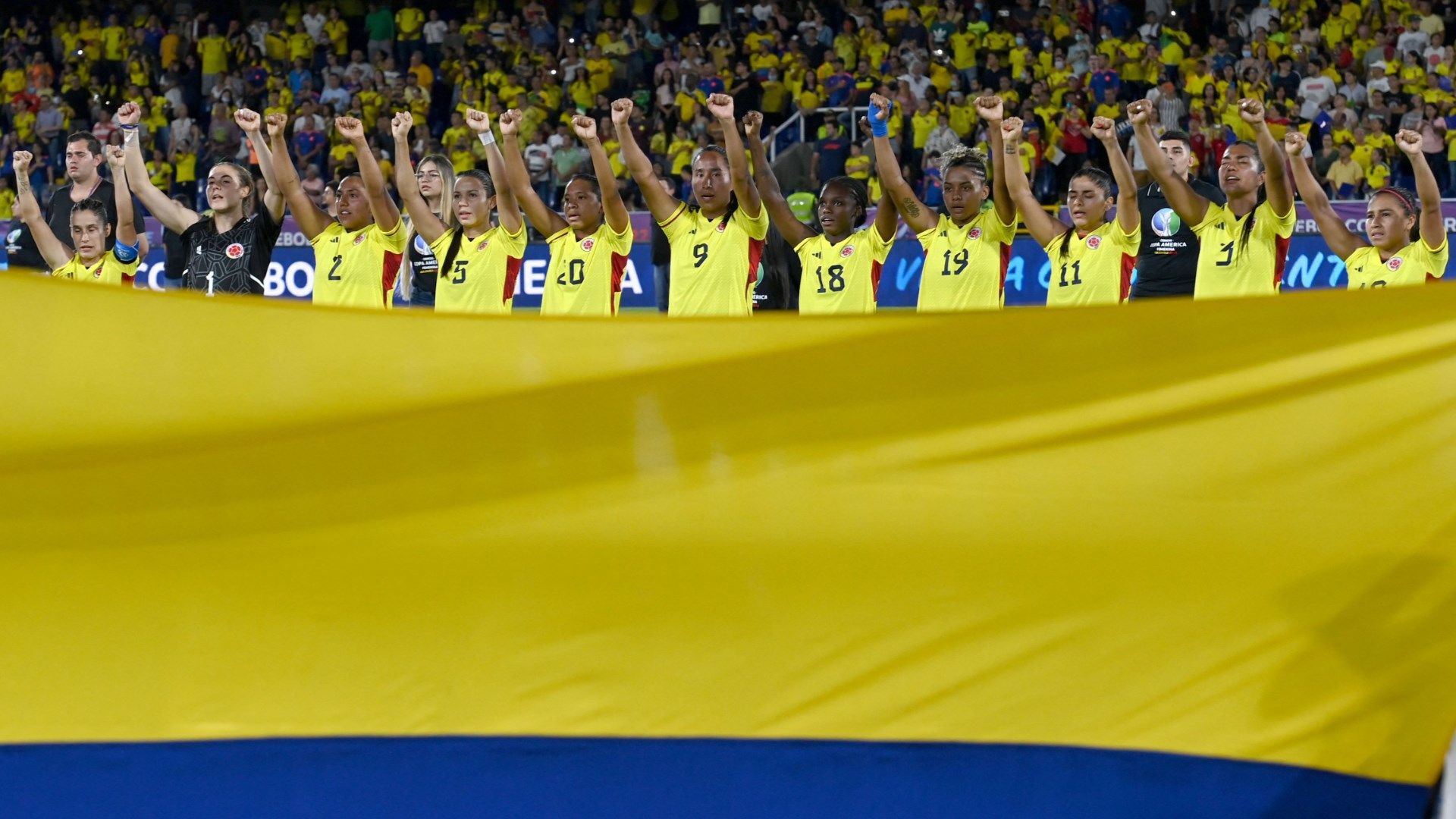
    The team also needs more financial and structural support, with a fist-raised protest during the Copa America last year executed by the players in order to draw attention to the improvements needed in this area.

    “Today we unite for change,” the players wrote in a statement. “Although we lack guarantees, we have plenty of love for this shirt, that’s why we unite with the illusion of teamwork, fairness in working conditions and competition, concerted decisions and a bright future for all of us who are part of [women’s football].”

    And while things continue to grow at home, it certainly would be of benefit to many of the players in this team to get higher quality, professional experiences abroad. There will no doubt be clubs watching this World Cup that have spotted a player or two of Colombia’s that they’d be interested in. It’s a huge stage to shine on and could certainly lead to some progressive transfers for individuals in the coming weeks.

  • Colombia WCGetty

    Proving their worth

    This World Cup could be a catalyst for some of those improvements at home, too. In the women’s game, things tend to develop based on performance. After all, it was the achievements of the generation that qualified for four major international tournaments between 2011 and 2016 that played a huge role in the formation of Colombia’s professional league.

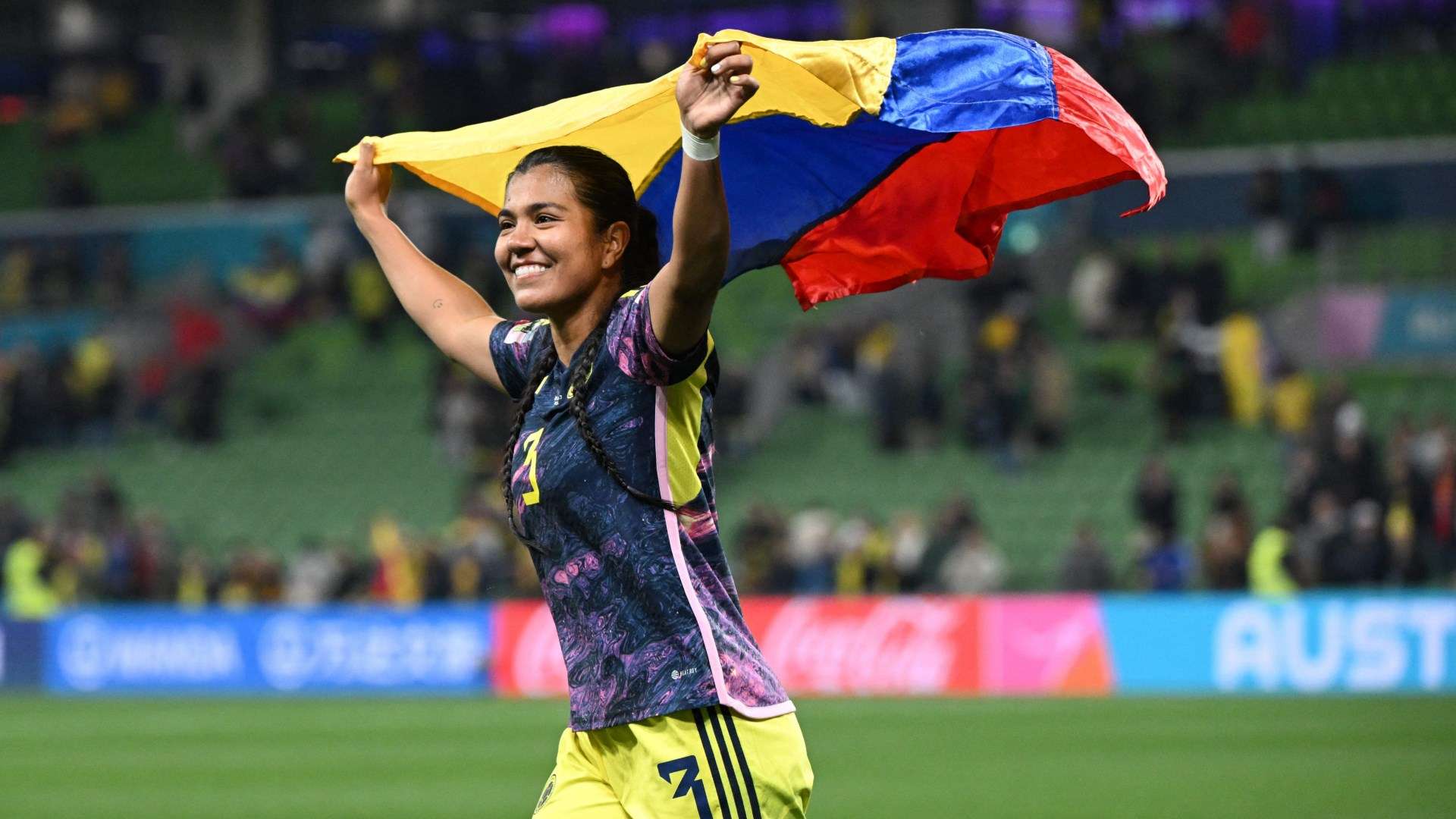
    There’s no doubt that Abadia’s side have been incredible in Australia. This is already the best Women’s World Cup result the country has ever seen – and it could get better yet. Ten years ago, Colombia didn’t have a professional women’s league and the national team had so much less resource. Today, those steps forward are starting to be taken.

    With more progress, and this incredible generation of players that Caicedo is at the forefront of, they will not only be a serious problem for England on Saturday - but a team to fear on the international stage beyond 2023.

0