+18 | Play Responsibly | T&C's Apply | Commercial Content | Publishing Principles
World Cup Year Out FeatureGOAL

'See the light bulb go off' - The 2026 World Cup is one year away, and America is set to flip the switch on a global soccer spectacle

It’s June 11, 2026, and 100,000 fans have swarmed the revamped Estadio Azteca in Mexico City. El Tri take the field in a venue that feels simultaneously ancient and modern, one of soccer’s great cathedrals appropriately refurbished for a massive show. The eyes of the world are focused, watching as two teams kick off what is - by number of teams, not to mention scale and grandeur - the biggest soccer tournament ever.

The whistle blows, and we are underway. The World Cup has begun.

Anticipation for that scene has seemed so far in the distance for so long. But it’s now just 365 days away. What was once a date circled on the calendar - the kickoff of the most important soccer tournament in the world, to be held in North America - is becoming a tangible reality in the American sporting consciousness.

The World Cup is coming. It’s officially on the clock. And with exactly one year to go, there’s a prevailing sense that this country - this continent, as the U.S., Canada and Mexico ready to host 48 of the world’s best teams over five weeks - is prepared to put on the kind of show befitting of the beautiful game’s greatest event.

“We do have to operate with a sense of purpose and urgency,” said Pam Kramer, CEO of Kansas City's planning committee. “And June 11, 2026 is going to be here before you know it.

  • Mexico fans World Cup Argentina 2022Getty Images

    'The eyeballs of the world are on this'

    Every World Cup is a party. It’s as much a celebration as it is a soccer tournament. In its purest form, the World Cup is a vehicle for not only elite sport, but also national identity. Some sporting events are overstated, their importance hyped up for artificial reasons. The World Cup is not in that category. Everything stops.

    There’s a magnetism to a World Cup. Soccer supporters - already some of the most devout sports fans on the planet - become even more invested. And likewise, casual fans - those who normally don’t know, or don’t care - are also suddenly dialed in.

    These tournaments are defined by truly beautiful moments: fans coming together in celebration or shared agony; great teams completing memorable feats. Remarkable players defining their careers. There are famous penalty kick wins after 3-3 finals, and agonizing 7-1 defeats on home soil. There really isn’t such a thing as a bad World Cup. They are all immensely important, some more than others. And for the United States, this is as meaningful as it gets.

    Of course, that comes with immense pressure for organizers.

    “The eyeballs of the world are on this, and so we're taking everything we can from every input that we can,” said Georgia O'Donoghue, president of Atlanta’s host committee.

    And there are immense costs, and revenues, tied to the event. FIFA expects to generate nearly $9 billion in revenue next year, including $3.9 billion on media rights, $3 billion on tickets and hospitality and $1.8 million on marketing rights. The governing body, in turn, says the economic impact for the three host countries could exceed $40B.

  • Advertisement
  • Mercedes Benz Stadium(C)Getty images

    'It is going to be studied and well-resourced'

    Logistics for a World Cup are a messy thing. Staging such an event requires, in effect, a reevaluation and sometimes overhaul of not only facilities but also, sometimes, entire cities. That’s difficult in the United States, metropolitan blocks, concrete freeways, rattling subway systems and all. But for the 16 host cities across three countries - including 11 in the U.S. - it’s a challenge that simply must be solved.

    It is a good thing, then, that host cities have been working on their facilities for years - some as soon as the U.S’s successful bid was ratified years ago.

    The biggest, and most pressing issue is that of stadiums. America has improved in its building and fleshing out of soccer-specific stadiums, but there are still extensive renovations required on a number of key venues. Most of the World Cup matches will be held in NFL venues.

    Kansas City’s Arrowhead Stadium will need seats removed to allow for the widening of the pitch - with temporary bleachers introduced for the 2025-26 NFL season. Mercedes-Benz Stadium in Atlanta needs new lights. There are concerns everywhere about ensuring that pitches are fitted with adequate turf. For some, that means growing real grass elsewhere for almost a year, then transplanting it into the stadium, and allowing it to bed into a field. Sound complicated? It is.

    “We started a 41-day kind of construction project below the current turf to lay the infrastructure… we will then install in ‘26 when the grass actually comes in the building.” Adam Fullerton, VP of Stadium Operations for Mercedes-Benz Stadium, said.

    While the celebration has already begun - numerous fan fests have been announced, and all 16 host cities are unveiling countdown clocks installed in iconic locations - there are also fiscal realities. U.S. host cities need to raise upward of $150 million. In addition to government funding and private contributions, FIFA for the first time has given host cities the ability to sell local commercial rights.

    “In a market like the U.S., it’s very hard to sell three years out for something when a city is hosting a Super Bowl, an MLB All-Star Game, an NBA All-Star and so on,” Amy Hopfinger, FIFA’s chief business and strategy officer, told Sports Business Journal. “So, I think as we look into that one year out, that’s really when the notoriety of the tournament and the excitement about the tournament hopefully lifts everyone up as we get into that home stretch.”

    There are further challenges. Some cities have had to reconsider the state of their public transport, provide fan buses to and form venues, and clear large spaces - some of which simply do not exist - for the raucous fan fests that will serve as the heartbeat of the traveling supporters’ experience.

    “Fan Fest is part of the journey. It is going to be studied and well resourced and meticulously planned. We get good experience from a lot of the events we have,” O'Donoghue said.

  • Copa America final prematchGetty

    'Entire area is safe and secure'

    This is by no means an entirely novel event. North America has put on massive sports tournaments before. The Olympics have been on the continent eight times, the Summer Games most recently in Atlanta in 1996 and the Winter Games in Vancouver in 2010. Critically, Los Angeles will host the Olympics again in the summer of 2028, the next in a series of major soccer events in the U.S., to be followed by the Women’s World Cup in 2031.

    It has also taken on soccer events of a comparable magnitude - albeit with varying degrees of success. The 2024 Copa America served as a trial run. And in most ways, it was a wonderful thing.

    Parking lots before the semifinal at Metlife Stadium between Canada and Argentina, for example, were flooded with a warm haze of smoky barbecues as supporters took part in a pre-match Asado. Grilled meat and beer are pillars of that fan experience, and by providing open spaces, the U.S. mastered it.

    But there were also messier instances. The final in Miami was a really good game of football, Lautaro Martinez getting his well-deserved Albiceleste moment with an extra time goal to wrap up a third straight major international trophy for his national team.

    That fixture, though, will also be remembered for the fan chaos that preceded it. Poor planning and questionable crowd control led to frightening swarms of fans pushed up against entry gates. Some supporters were pictured climbing into vents trying to force their way into the stadium. FIFA and CONCACAF pointed fingers at CONMEBOL - the organizing body of Copa America - but in either case, it did raise questions about the state of U.S. readiness.

    “Security has got to make sure that the game and and kind of the entire area is safe and secure, that the fans can feel that they're in a good environment,” Alex Lasry, CEO of the New York/New Jersey host committee, told GOAL.

  • Mauricio Pochettino USMNT vs SwitzerlandGetty Images

    'We think this talented group can perform'

    There is undoubtedly pressure attached to being the host nation of a World Cup. It’s not that host nations have never won it. Just six teams, in fact, have done so over the years: Uruguay, Italy, England, Germany, Argentina and France. Rather, appearing on home soil simply inflates expectations.

    The logic is simple: home fans and home turf equals success. Of course, many nations have proved that it’s far from a simple equation over the years (five-time champion Brazil’s 7-1 thrashing at the hands of Germany in the 2014 knockouts still lives long in the Selecao memory.)

    But there is a hyper-focused attention on the USMNT as a result here. Manager Mauricio Pochettino was hired in September 2024 on a contract that ends after the 2026 tournament. U.S. soccer have made it clear since then that he has been brought in for one reason: to facilitate a good performance in front of U.S. fans.

    "We are here because we want to win. We are winners," Pochettino said. "We are successful, very successful coaching staff."

    Pochettino has embraced that rhetoric in full. In his opening news conference, he targeted a quarterfinal appearance as the goal for the USMNT. He has since doubled down on that goal.

    "The truth? It's a quarterfinal, it's the target, no?” he said. “They were very clear and I am very honest to you. I think that was the idea, the challenge, they know that it is going to be difficult. We think this talented group can perform better. So we accept the challenge.”

    The U.S. have endured a rough run of late, losing four straight matches, and Pochettino is a pedestrian 5-5 after his first 10 fixtures. However, he is yet to have a full squad at his disposal, forced instead to dip into backups and third-stringers against the caliber of opponent that the U.S. might face in a knockout tie. The absences from the upcoming Gold Cup roster include some of the faces of the program, including Christian Pulisic, Antonee Robinson and Weston McKennie.

    By September, the manager insists, he will have his full squad ready to go - and a nine-month sprint to the tournament to put it all together.

    Other host nations have a similar outlook. Canada’s Jesse Marsch, too, is on a short-term contract. He has done the math: if Les Rouges top their group at the World Cup, they get to host knockout fixtures. That could be invaluable, he argued.

    “If we win the group, we stay in Vancouver for two more games. Knockout phase. If we finish second or third, we go to the US. So the objective is clear. It's not just advance, it's win the group,” Marsch said.

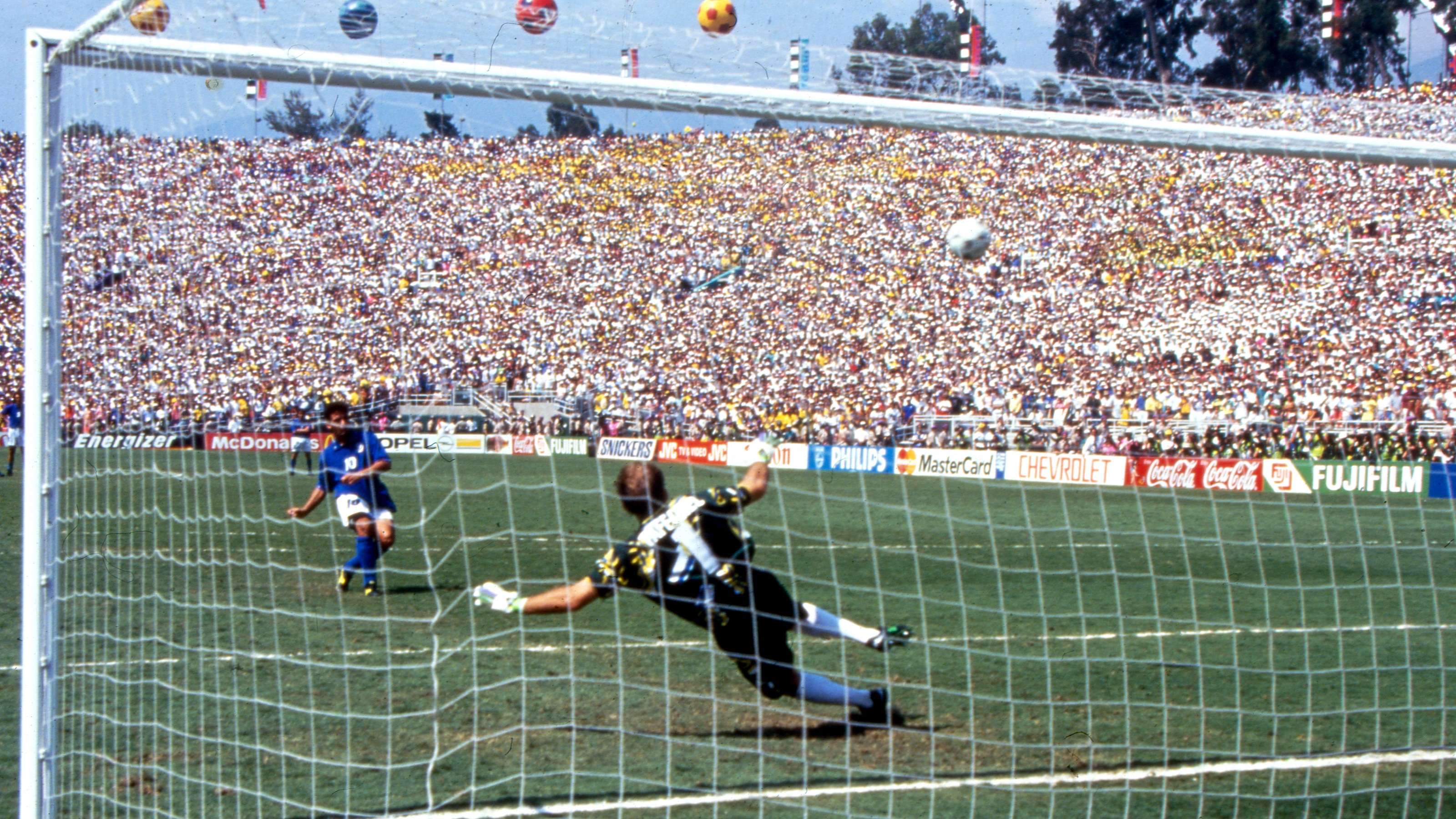
  • Italiy-Brazil 1994 World Cup USAGetty Images

    'I'm excited as an American'

    The 1994 World Cup is regarded as a seminal moment in U.S. soccer. And with good reason. It literally kicked off soccer 2.0 in the nation. The sport had existed before then, but largely in hipster corridors and ethnic enclaves. Few really cared about this thing. Those who remember it, especially from foreign countries, describe it as a bit of an odd tournament.

    “Obviously they've had the World Cup before, but if I'm being totally honest, that it didn't feel right to me at the time, that maybe the World Cup was there in 1994 - and America was a country was sort of maybe ready for that,” CBS Sports’s Jamie Carragher said.

    But it was a vital event. It literally sparked the launch of Major League Soccer. In its early years, the professional setup was a raggedy league, played at the wrong time of year on American football fields. The standard left a lot to be desired. Players flew economy class, were paid relatively poorly, and were subject of ridicule by the rest of the world. America was doing soccer wrong, we were all told.

    “It felt pretty amateurish when I got to the league,” long time MLS midfielder Dax McCarty said. “I mean, I don't use that word as a derogatory word. It's just kind of, you know, it's just the reality of what MLS was.”

    But cultures take a long time to develop, and the United States has gone about curating theirs wonderfully. MLS is now in its 30th season, and has gone from afterthought to retirement league to an increasingly prominent stage for some top-quality football. More than anything, this is now an immensely entertaining product - a chaotic and beautifully wayward genre of the sport - with a guy named Lionel Messi kicking a ball around at the center of it all.

    "I'm excited as an American that lives here because Major League Soccer, their stadiums, their venues, their infrastructure, the clubs, the fan bases, a new fan base is going to be exposed to Major League Soccer - and what we're doing over in this country," Apple TV commentator and analyst Taylor Twellman told GOAL.

    At this point, the league is steady - financially and in terms of expansion. San Diego entered as its 30th franchise before the 2025 season. And it’s not just MLS in the picture. The USL has expanded of late, announcing that it will form its own Division 1 setup, and implement a promotion-relegation system to flesh it out.

    A World Cup, with millions of eyes, could ignite American soccer 3.0.

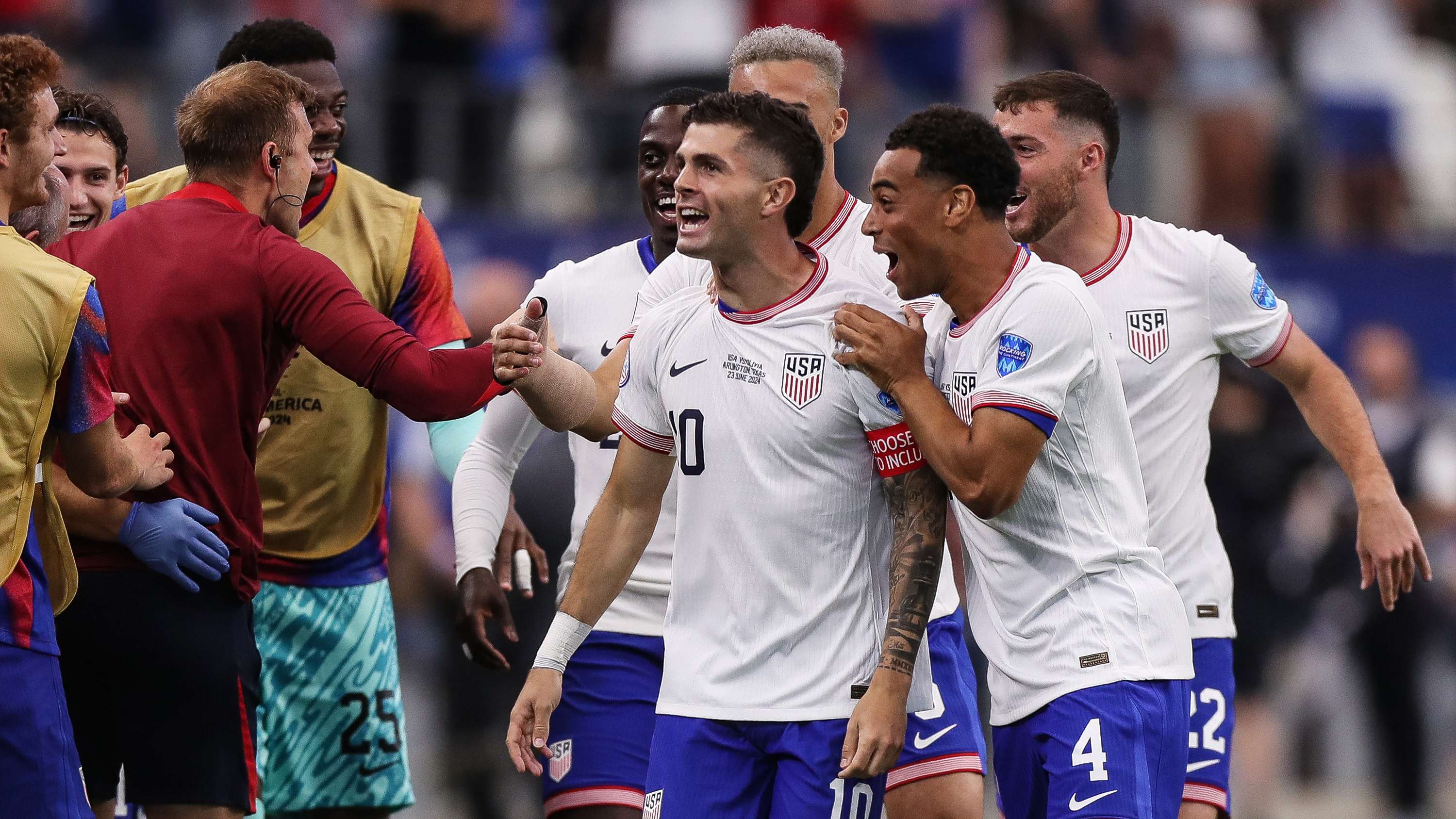
  • United States v Bolivia - CONMEBOL Copa America USA 2024Getty Images Sport

    'We’re starting to see the light bulb go off'

    The U.S. worked its way into the world’s soccer scene. The game, both globally and domestically, has evolved immensely since then, but nostalgia is a powerful thing, and ‘94 is still remembered fondly.

    It was - and still is - the best attended World Cup in the competition’s history, with 3.6 million fans attending matches. Goals per game increased from the 1990 tournament, with 24 teams playing in nine cities as America added a prominent section to its soccer resume. That was the OG proof of concept, evidence that soccer could exist in the country.

    “We’re starting to see the light bulb go off, that people are understanding the appeal,” Kramer said.

    Now, it’s time to not only cement, but also grow further. We are still reasonably far out here, as 365 days is simultaneously well into the future and frighteningly close. A year’s separation offers some comfort. And there are still some logistics to be checked off.

    Only 13 of the 48 teams have sealed their places in the competition. Not a single European side have booked their ticket yet. Yet given the expanded field, you can expect virtually every major player and nation in the world to be competing in North America next June.

    There are still a few big moments to come. The draw won’t take place until December. Tournaments such as the Club World Cup and Gold Cup will entertain fans and divert attention for some international teams, clubs and players - not least the United States.

    Still, it all seems to be falling into place nicely. This will be the biggest iteration of the World Cup: 48 teams, 104 games, 39 days of competition. The responsibility is now on everyone - host cities, teams, even fans - to ensure that 2026 is one to remember.

    There is really no such thing as a bad World Cup. And America - with bubbling levels of anticipation - is 365 days away from making the 2026 iteration a truly great one.