+18 | Play Responsibly | T&C's Apply | Commercial Content | Publishing Principles
Leeds Downfall GFXGOAL

The rise and fall of Leeds United: How Marcelo Bielsa's great entertainers crumbled towards Premier League relegation

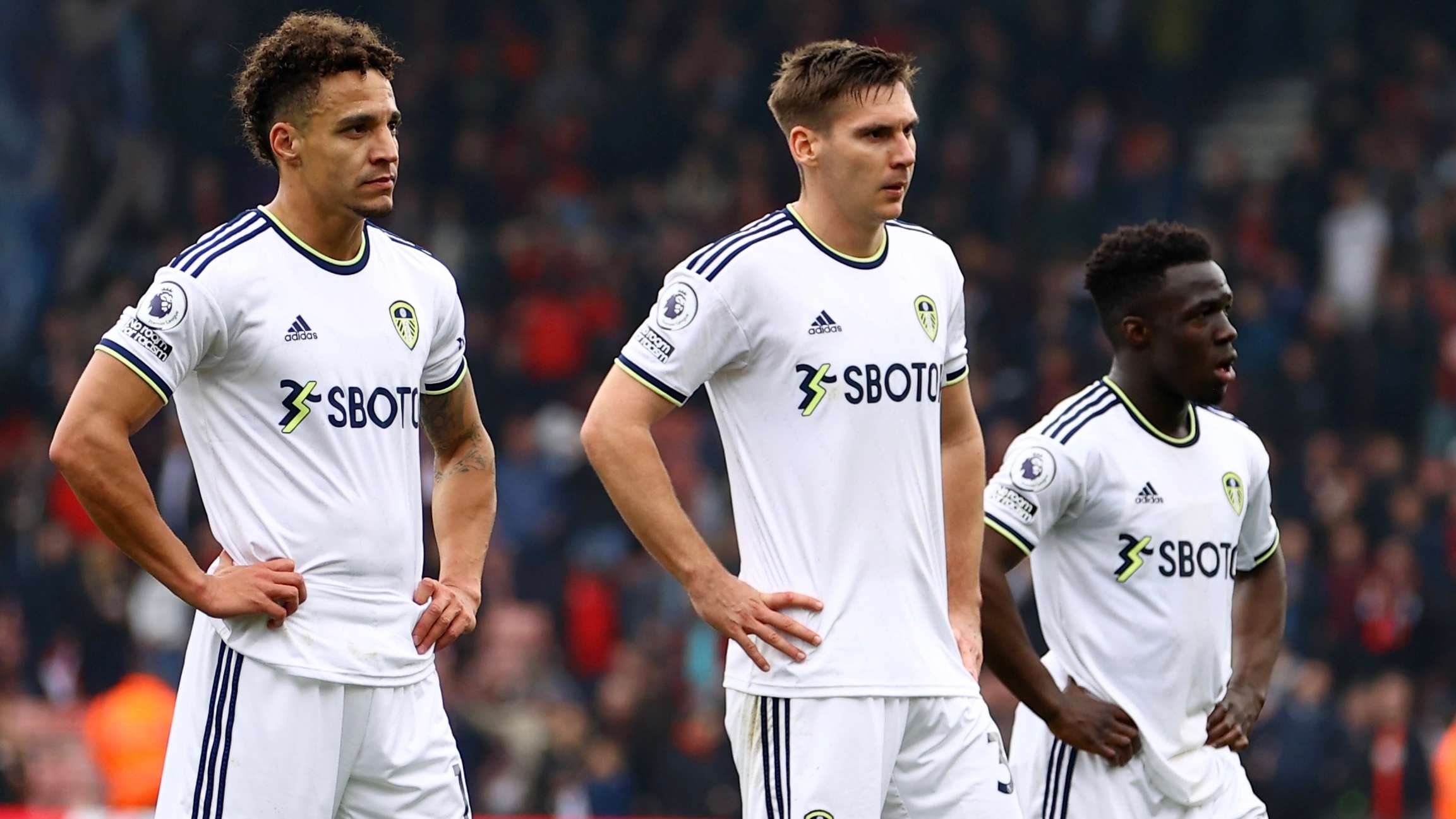
On Sunday, just short of 40,000 supporters packed into Elland Road more in hope than expectation. Final home games of the season are meant to be cause for celebration, but for Leeds United, their fixture against Tottenham was more like a wake, albeit a particularly boisterous and, towards the end, angry one.

Only a win would have given Leeds any chance of avoiding relegation on the last day of the Premier League campaign, and even then that might not have been enough. In the end, they barely put up any kind of fight, conceding inside the first three minutes of each half as Spurs ran out 4-1 victors.

Winning is something that does not come easy to this Leeds team. They end the season on a nine-game winless run, tasting victory just three times in 24 league outings since the World Cup. Their final points total of 31 is their worst since 1947.

That Leeds find themselves in this position, returning to the Championship after three years back in the top-flight, is a tale of missed opportunities and awful decision-making. The club is without a permanent manager, a director of football, and has a squad that is far worse (but more expensive) than the one they began their Premier League journey with back in 2020.

Back then, Marcelo Bielsa managed to build a team that was the envy of many. Playing fast, free-flowing football, they emerged as the great entertainers of the English game, and secured a ninth-placed finish upon their return to the promised land with a points tally of 59. Only once - Ipswich Town in 2001 - has that been bettered by a newly-promoted side in the era of a 20-team Premier League.

The talk ahead of the following campaign was of pushing for European qualification, but Leeds were barely out of the bottom half of the table since. So where has it all gone wrong, and who is to blame?
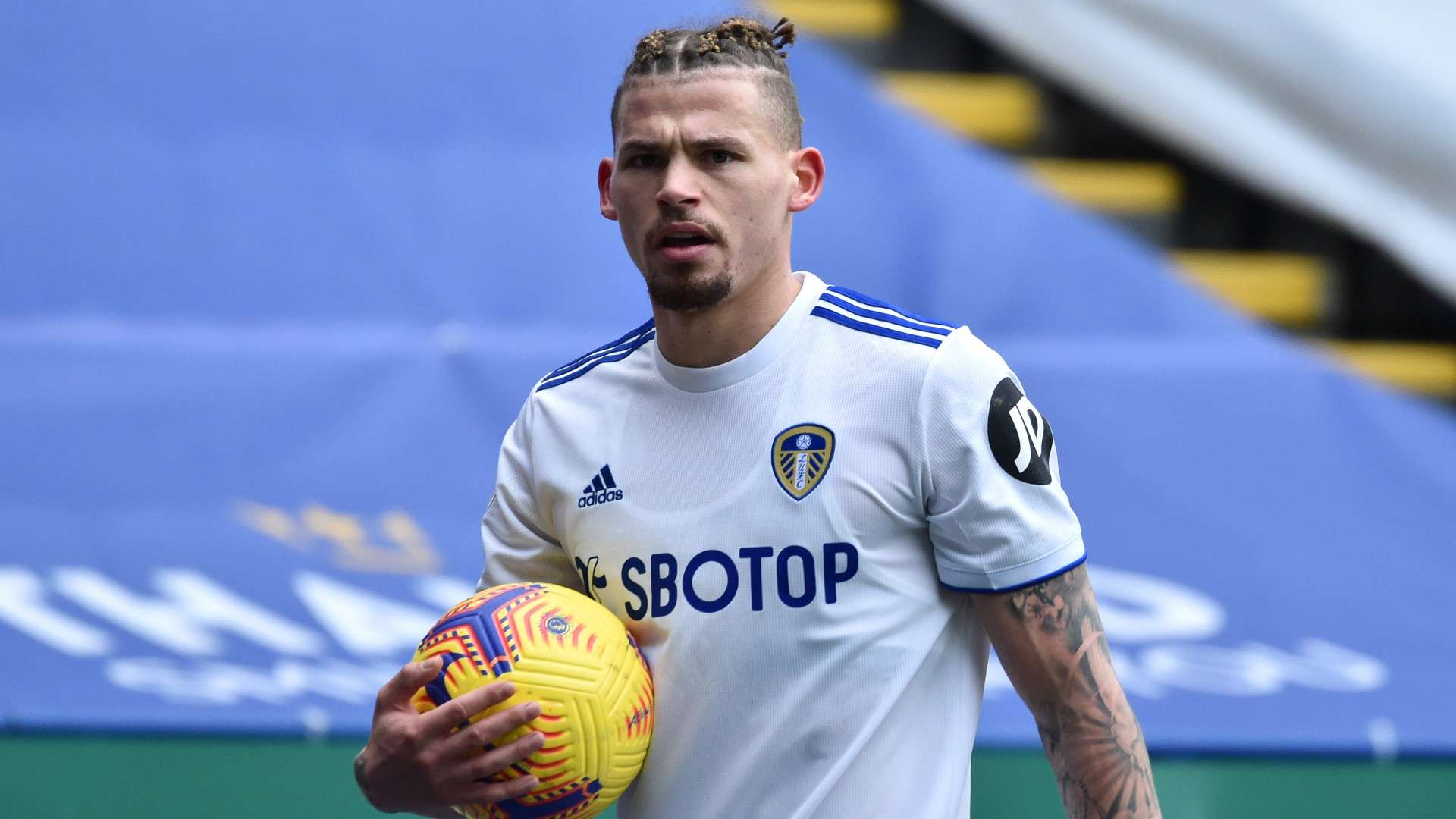
  • Kalvin Phillips Leeds 2020-21Getty

    Negligence in the market

    Leeds’ current woes can be traced back to the summer of 2021. Their Premier League status having been secured in emphatic fashion and with Bielsa signed on for another year at the helm, the club’s board could have been forgiven for feeling themselves somewhat. What followed, however, bordered on negligence.

    Bielsa’s thrilling team was largely made up of players who had spent the majority of their careers in the Championship, and while the Argentine coach had raised their collective levels spectacularly, the need for a slow upgrade of the squad remained clear. Perhaps more importantly, more depth in key positions - namely central midfield and at striker - was an absolute necessity, despite the way Kalvin Phillips and Patrick Bamford had performed in 2020-21.

    Those positions, though, were ignored. It was well-known that Bielsa had final say on potential signings, but there must also be plenty of blame apportioned to director of football Victor Orta, who surely must have seen the gaps that needed filling and should have been able to find players to Bielsa’s liking.

    Instead, the only potential starters who arrived that summer were Barcelona left-back Junior Firpo and Manchester United winger Daniel James, a player who Leeds had so memorably failed to sign on deadline day in January 2019 after Swansea City pulled the plug on the deal at the last minute. While Firpo filled a need, James’ arrival was a strange one, given Leeds already had Raphinha and Jack Harrison established as their starting wingers, while club-record signing Rodrigo also needed to be fitted into the forward line.

    The lack of a midfielder to cover for Phillips particularly angered the fanbase, and that was not made easier when owner Andrea Radrizzani replied to a tweet from one particularly irate fan claiming that Adam Forshaw’s return from a two-year injury absence would solve the problem. Though Forshaw did go on to perform better than expected, Leeds’ failures in the transfer market would soon come back and bite them.

  • Advertisement
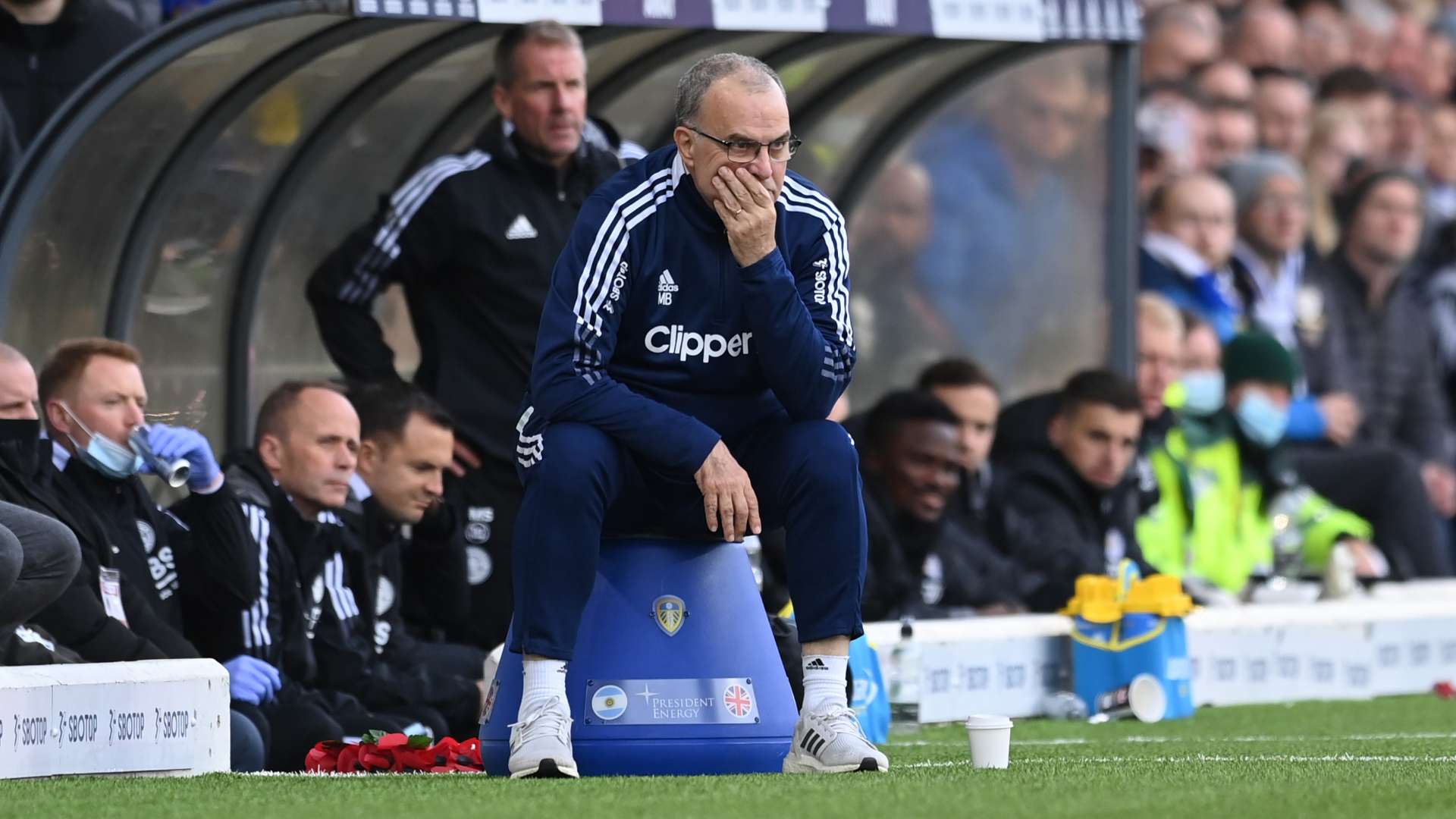
  • Marcelo Bielsa LeedsGetty

    Bielsa's demise

    Optimism of challenging for Europe soon dissipated at Elland Road. Beaten 5-1 on the opening day by Manchester United, Leeds would not taste victory in the Premier League until early October and won just two of their opening 13 matches, both against newly-promoted clubs.

    A stoppage-time victory over Crystal Palace and last-minute equaliser against Brentford in early December lifted the mood somewhat, but from that draw against the Bees emerged Leeds fans’ worst nightmare. Phillips limped off with a hamstring knock in the first half while Bamford, making his first appearance for two-and-a-half months, picked up another injury while celebrating his late goal. Both players credit Bielsa for helping them break into the England squad, but that would be the final time either played for his Leeds team.

    In their absence, Leeds’ already difficult season began to spiral out of control. With James now playing up front, a midfield with little to no control of the game and defence that was having to make do without injured club captain Liam Cooper, Leeds were soon being torn apart on a regular basis.

    They shipped seven at Manchester City, lost 4-1 at home to Arsenal and suffered defeats to fellow strugglers Newcastle and Everton as Bielsa’s man-marking system of defending began to be countered by opposition managers. The final straw came when Leeds conceded 14 goals in three games over the course of seven days against Manchester United, Liverpool and Tottenham. Bielsa was sacked two days after the Spurs loss, leaving a fanbase divided and the team 16th in the table, just two points above the relegation zone.

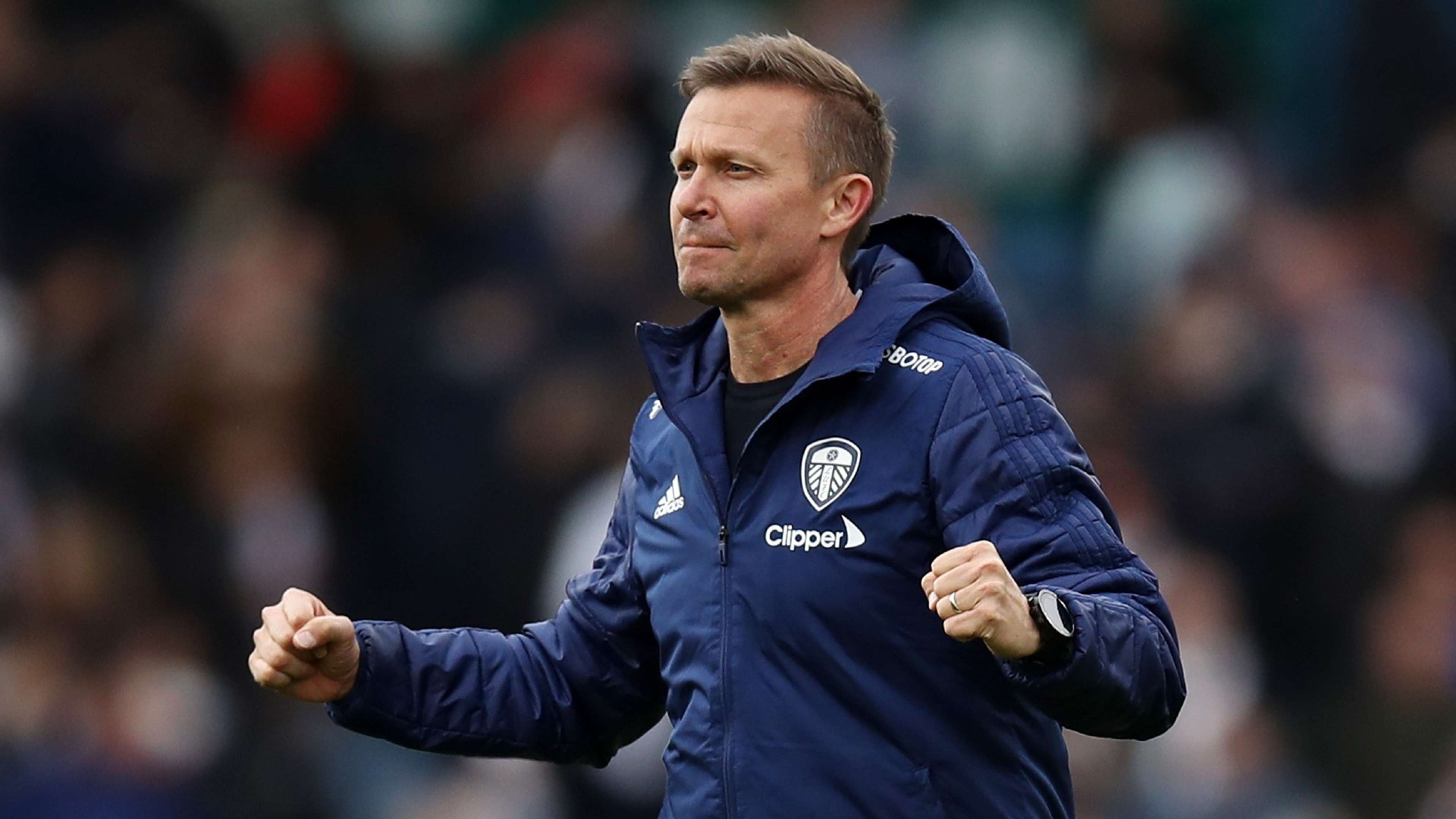
  • Jesse Marsch Leeds 2021-22Getty Images

    Marsch 'masterminds' survival

    Bielsa’s replacement was Jesse Marsch, a coach who had long been identified by Orta as the right man to continue the Argentine’s great work when he inevitably moved on. Marsch had tasted success as Red Bull Salzburg, but had been sacked after just 17 games in charge of RB Leipzig earlier in the campaign.

    An American who was keen to shake off any Ted Lasso comparisons (though his love of inspirational quotes was not unlike that of the AFC Richmond boss), Marsch had a reputation for playing up-tempo, in-your-face football that was not unlike Bielsa’s in energy, but clearly differed in overall style. Given the way Leeds’ season had been trending, he had already spoken to the club about taking over in the summer of 2022, but instead arrived three months early with the task of keeping them afloat in the Premier League.

    To that end, he succeeded, but the signs were already there that Marsch might not be the right man to take Leeds to the next level. Of the 15 points he picked up in the final 12 games of the season, seven came via stoppage-time goals, including in wins over Norwich City, Wolves and on the final day at Brentford, when Leeds survived while Burnley dropped into the Championship.

    Though there is something to be said of a team who doesn’t know when it’s beaten, Leeds’ performances were far from convincing, and sections of the fanbase felt that Marsch had kept them up more by luck than judgement. The return of Phillips to the fold also helped, leaving some questioning whether Bielsa would have earned similar results with his key midfielder available to him in the closing weeks of the campaign.

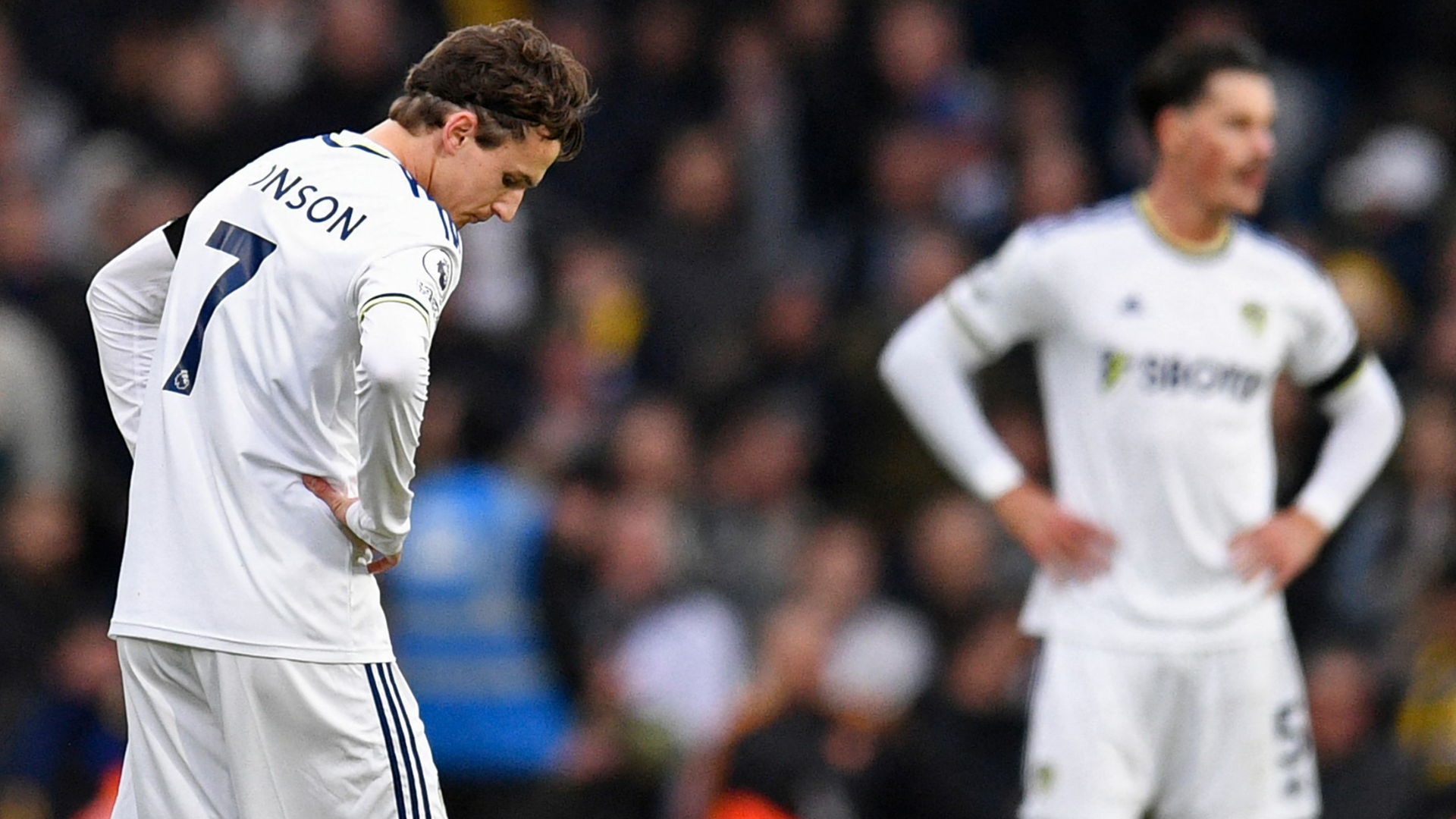
  • Brenden Aaronson Leeds Manchester United 2022-23Getty

    'Penis formation' falls flat

    If the summer of 2021 was too quiet for many Leeds’ fans liking, then the 2022 transfer window was perhaps too busy. Out went the club’s two best players, Phillips and Raphinha, and in came seven new faces. Of them, three - Brenden Aaronson, Tyler Adams and Rasmus Kristensen - had played for Marsch before, while the increased American influence on a team whose board were in takeover talks with their U.S.-based minority shareholders, 49ers Enterprises, was not lost on supporters

    “This year, in my opinion, we’ve done a great job in the market and we have a very competitive team”, Radrizzani told The Athletic on the eve of the season. “The target I set is between 10th-14th position. If we’re lucky, we are close to 10th or higher. If we aren’t lucky, we are 15th, but I think we are in that range. I don’t want to have any more heart-attack risk. I don’t have any doubt that we’ll avoid a situation similar to last season. It’s impossible.”

    In fairness, things began well. Leeds picked up seven points from their opening three games, only coming up short of the maximum nine after throwing away a 2-0 lead away at Southampton. A rousing 3-0 home win over Chelsea raised suggestions that Marsch’s squad overhaul would allow him to fully showcase what his style was about and that Radrizzani’s claim of a relegation battle being “impossible” would come to fruition.

    Alas, that was not the case. Leeds followed up their strong start by embarking on an eight-match winless run in the league, with fans growing increasingly frustrated at Marsch’s tactics. His insistence that his team play without much, if any width led to his favoured 4-2-2-2 system being dubbed ‘the penis formation’ by angry supporters, while their high-energy style led to a feeling of chaos out of possession, rather than an organised press that teams would struggle to deal with.

    A 3-2 home defeat against Fulham on October 23 led to chants of ‘sack the board’ by the Elland Road faithful, and it felt inevitable that Marsch would be shown the door, too. Instead, he surprisingly hung onto his job, and responded by overseeing back-to-back wins at Liverpool (the only time the Reds lost at Anfield in the league all season) and at home to Bournemouth. Perhaps unsurprisingly given his previous successes, both victories were secured by goals in added time, while the Bournemouth win, which saw Leeds come from 3-1 down at Elland Road, was met with an outraged Orta ironically singing ‘sack the board’ back to supporters in an act of defiance from the infamously emotional Spaniard.

    It is understood that Radrizzani had wanted to sack Marsch after that Fulham loss, but Orta insisted that the American be kept on. He clearly saw the two wins that followed as proof that his blueprint for eventual success could still work. That, though, would be the final time Marsch tasted Premier League victory as Leeds boss.

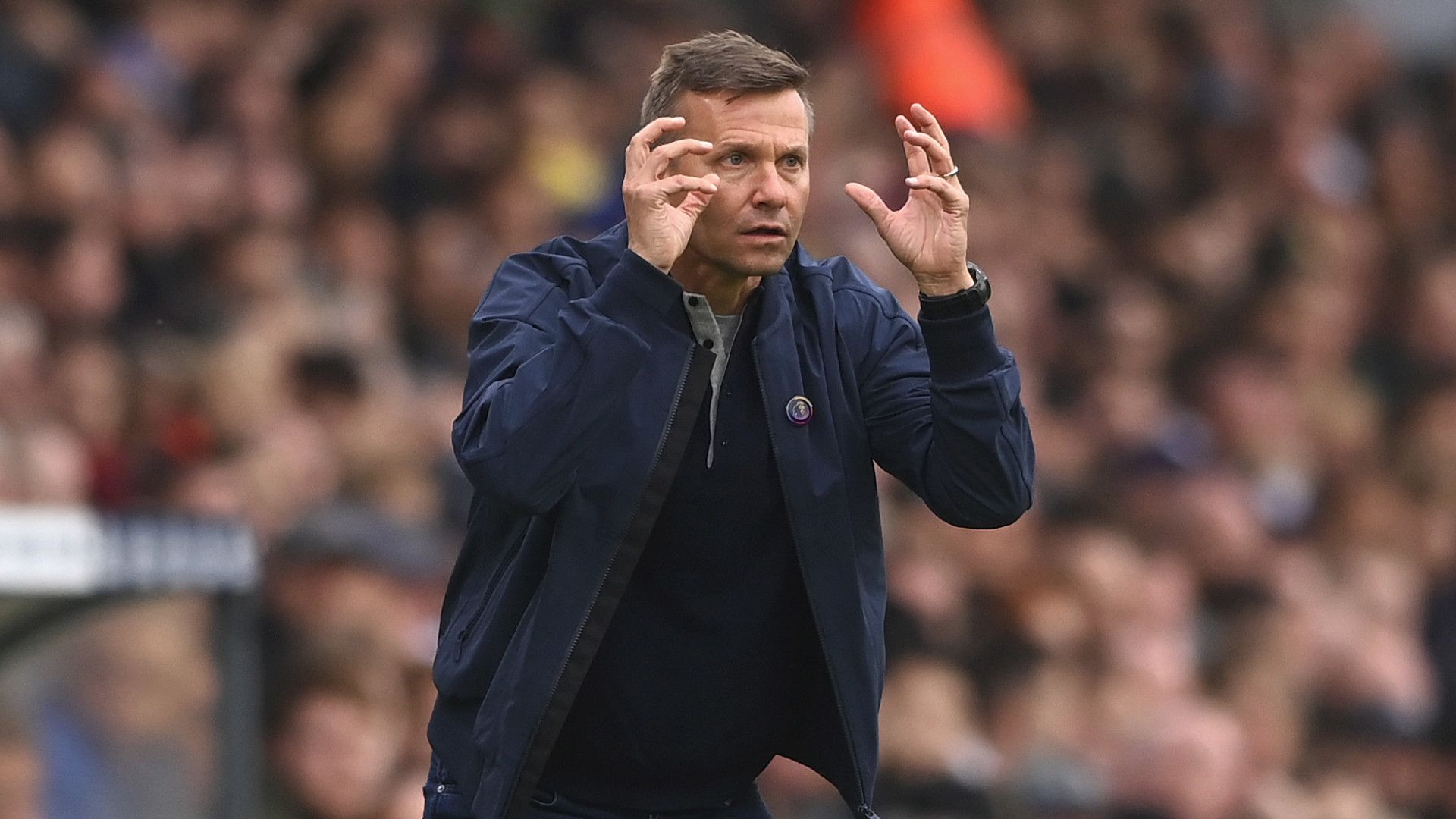
  • Jesse Marsch 2022-23Getty

    Miserable January finishes off Marsch

    In a tale of three transfer window failures, perhaps January 2023 will go down as the one that truly killed Leeds United’s Premier League status. Clearly struggling for form and needing some extra quality, particularly in the defensive third, there was always the possibility that it would be make-or-break.

    Despite some encouraging signs from certain players, the summer window hadn’t improved the squad enough, and Orta should have learned his lesson and cast his net wider. Instead, he brought in another former Marsch player in Salzburg defender Max Wober, and another United States international, Weston McKennie from Juventus.

    His third signing in January, however, could go down as one of the worst in the club’s history. Georginio Rutter’s arrival from Hoffenheim was greeted with great fanfare, and for good reason. At £35 million ($43m), the forward was Leeds’ new club-record signing, and Orta posed for pictures with Rutter at his unveiling clad in San Francisco 49ers gear in a sure sign that the prospective new owners had played a key role in financing the deal.

    Aged 20 when he arrived, Rutter had been talked about as a top talent for a couple of years, having impressed in the Rennes academy before enjoying some breakout performances in the Bundesliga. Was he, though, the right player to bring in at such a cost given Leeds’ league position and need for proven quality in key areas? That he has started just one Premier League game - and has spent more time during the final weeks of the season earning promotion with the club’s Under-21s than in the first team - suggests not.

    On the pitch, meanwhile, Marsch’s team was again found wanting. Increasingly easy to defend against and wide open at the back themselves, a 1-0 defeat at Nottingham Forest on February 5 stretched Leeds’ winless run in the Premier League to seven games, and the American was sacked after less than a year in charge with his team only outside of the relegation zone on goal difference.

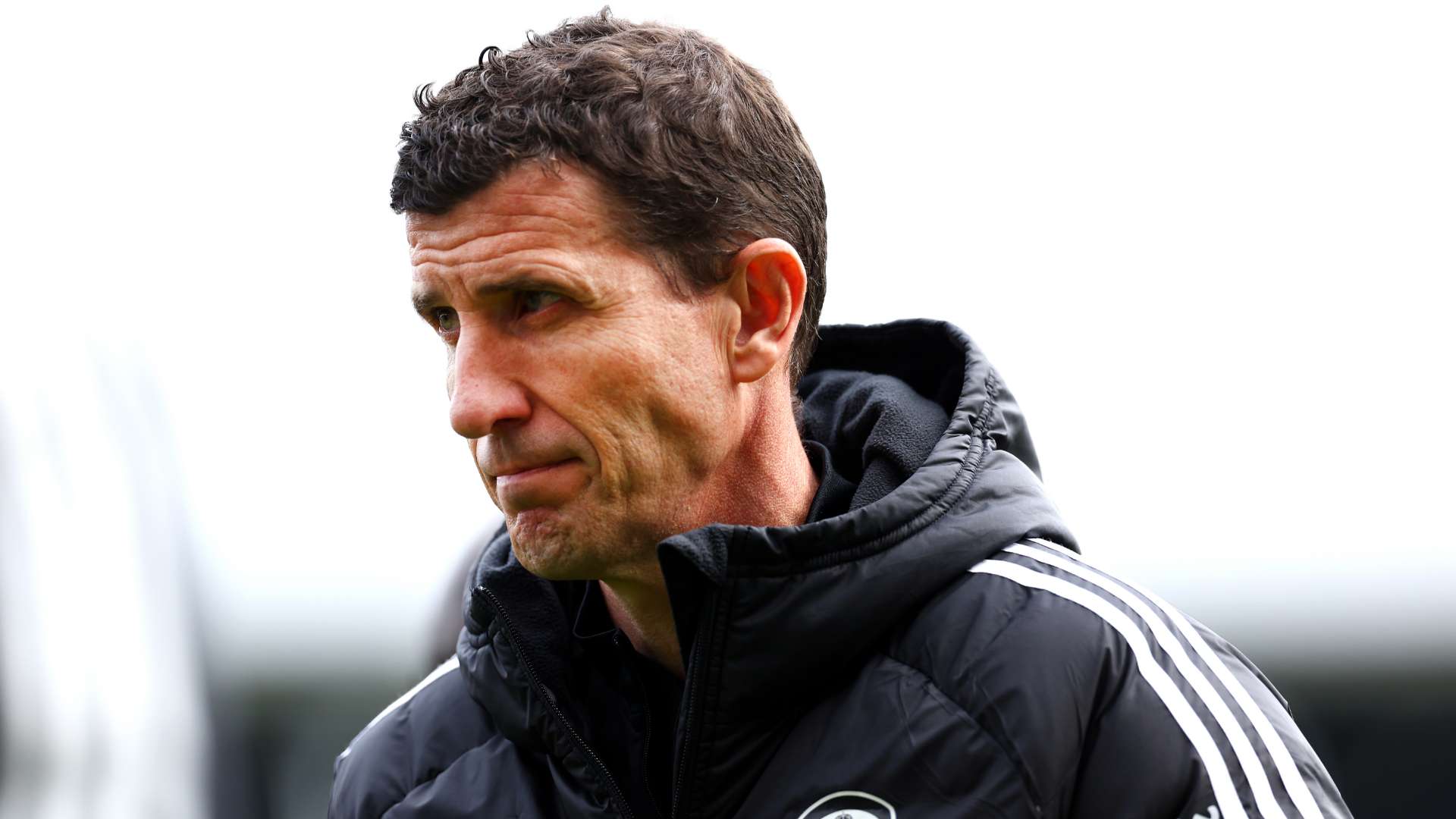
  • Javi Gracia Leeds 2022-23Getty

    Managerial merry-go-round

    Leeds’ process of appointing a successor for Marsch was farcical at best. Though there was a clear shortlist of candidates, a lack of due diligence on whether the coaches they wanted would be available made the club look amateurish.

    West Brom openly mocked them on social media after Bielsa’s former assistant Carlos Corberan opted to sign a new contract with the Baggies over returning to Elland Road, while Orta was turned down by Rayo Vallecano boss Andoni Iraola having travelled to Spain to try convince him himself. Feyenoord manager Arne Slot and Monaco’s Philippe Clement also rejected the club’s advances, leaving Leeds to appoint former Watford boss Javi Gracia on a contract until the end of the season.

    Things started well with a 1-0 win over relegation rivals Southampton, and Leeds certainly looked more organised in defence than they did under Marsch. Victories over fellow strugglers Wolves and Nottingham Forest soon followed, and with games against other sides towards the bottom of the table to come in April, confidence began to grow that Leeds could pull away from danger.

    Instead, they crumbled in alarming fashion. They conceded 11 goals across back-to-back home games against Crystal Palace and Liverpool before throwing away a lead late on at home to Leicester and shipping another four away at Bournemouth. The 23 goals they conceded in April was a record for a calendar month in Premier League history, breaking the record they previously set themselves in the final weeks of Bielsa’s tenure 14 months earlier.

    With players having lost confidence in Gracia’s methods, he, along with Orta, were fired with four games of the season to go. Allardyce, who worked with Leeds managing director Angus Kinnear at West Ham, was drafted in to perform a rescue act, and though there were some initial improvements made under the ex-England manager, he could only muster one point from his quartet of matches.

  • Victor Orta Leeds United 2022-23Getty Images

    Who's to blame?

    Apportioning blame for Leeds’ demise is difficult. Players and coaches have certainly not been up to the task over the past two seasons, and that includes both Bielsa and the much-loved players who were part of his Championship-winning side of 2020 that remain with the club. But those above them in the boardroom should be taking a long look at themselves.

    The hubristic way in which they have approached the past 20 months or so should be a lesson to all owners of clubs who believe they are back among the established elite after just one strong season in the top flight. Radrizzani, Kinnear and Orta have all regularly and aggressively defended the club’s actions (or inactions) against fan unrest, but it’s clear that they have all failed in ensuring Leeds’ return to the Premier League was a permanent one, rather than something much more fleeting.

    Orta’s transfer dealings and selection of managers since Bielsa’s sacking will come under the most scrutiny, especially since he has already paid for them with his job, but that should not let the roles of those whom he used to sit alongside in the Elland Road director’s box within the West Stand be forgotten. Radrizzani, who missed the Spurs game as he closes in on buying Sampdoria in his native Italy, has been focused on the looming takeover rather than what is happening on the pitch, and he could now be hit in the pocket because of it.

    The great unanswerable question that many Leeds fans will ask is whether sacking Bielsa was the wrong call, and would they be in this mess had they stuck by the man who returned them to the Premier League in the first place. It’s certainly true that those who have come since have undone a lot of his good work, and he by no means had a full-strength squad to work with by the end of his tenure, but that ignores just how easy his team had become to play against in the final weeks of his time at Leeds. Might he have turned it around? Possibly. But did things look dire beforehand? Absolutely.

    Needless to say, what has happened since should not taint his legacy. Marcelo Bielsa is, and always will be, a Leeds United legend.

  • Leeds(C)Getty Images

    What happens next?

    There are those who argue that relegation might be what Leeds need, at least on the pitch. Allardyce laid out the squad’s shortcomings in terms of both quality and depth following the 3-1 loss to West Ham on the penultimate day of the season, and Leeds are clearly a team that require major surgery.

    They also need a forward-thinking coach who can perhaps hark back to some of what Bielsa instilled in these players, but who is also able to ensure they have much more control, both in possession and out of it. A manager in the mould of Vincent Kompany, who worked wonders at Burnley in his first season in the Championship, is ideally what Leeds are now looking for.

    The bigger concerns, of course, come off the field, with the financial gap between the Premier League and Championship ever-growing. That is exacerbated with Leeds, given they are in the midst of takeover talks that were set to conclude in the coming weeks with 49ers Enterprises taking over majority control of the club from Radrizzani.

    Reporting by The Athletic has found that the current takeover agreement will be voided upon relegation, at least throwing into doubt what comes next for the club off the field. There is an understanding that all parties would be keen for the takeover to still go through even with Leeds in the EFL, but there is a presumption that the terms will have to be renegotiated, and that may in turn delay potential transfer plans.

    Leeds, then, are back in a mess of their own making, back looking up at the Premier League. Given where they were just two years ago, it all feels like a gargantuan missed opportunity.

0