+18 | Play Responsibly | T&C's Apply | Commercial Content | Publishing Principles
Legacy Spain 3 GFX (withouw WCHQ)Getty/GOAL

LEGACY: How David Beckham legitimised MLS and changed U.S. soccer forever

They said he was "going to Hollywood to be half a film star". Those were the words, at least, of Real Madrid president Ramon Calderon, who explained David Beckham’s departure from the club in January 2007. The England captain’s future at the Bernabeu had been in jeopardy for months. Beckham wasn’t playing consistent football, having fallen out of favour under Fabio Capello, and his departure had been on the cards for months.

Calderon was right, too. Beckham’s arrival in Los Angeles to pen a five-year contract with the LA Galaxy was a glitzy affair. He had never been able to dodge the celebrity culture that had informed his footballing life for years, and in joining the Galaxy he simply embraced it. What detractors in Spain had long used as a stick to beat him with, Beckham now owned, with the right amount of soccer sprinkled in.

The European perspective was - and still remains - deeply cynical. To some, this seemed like a cop-out, a retirement move, an acceptance that he could no longer cut it. In hindsight, though, it looks much more like the move of a trailblazer. Beckham wanted something new, something different. There is a clear through line between the mohawk haircut, the fancy cars, the sunglasses and his arrival in Los Angeles. It wasn’t random; it was Beckham.

And for America, what a deal it was. Major League Soccer was still in its early phases. There was a semblance of stability by then, but not much in the way of quality. Beckham was not the starting point, but he was absolutely the catalyst MLS needed. His arrival changed how the league was perceived and forced the setup itself to evolve. MLS could no longer afford to be small; it had to think bigger, market itself better and begin the long, arduous path toward global legitimacy.


  • Real Madrid's British midfielder David BAFP

    Right move at the right time

    To this day, Beckham is criticised within Europe for making his move to the U.S.. Watch his Netflix documentary, and he is still cast in a negative light by some for electing to go to America. Capello famously suggested that playing in MLS would ruin his chances of representing the England national team.

    MLS, at the time, was a league well outside the global consciousness while Beckham’s future at Madrid was uncertain. But he was still an excellent footballer who would have had his pick of clubs across Europe. Sure, he would never play for another Premier League side given his ties to Manchester United. But Italy? France? Germany? Those leagues were always possible, and, in the case of the former two, later dabbled in anyway.

    One meeting changed everything. In 2006, Tim Leiweke, then-co-owner of the LA Galaxy, told MLS Commissioner Don Garber that Los Angeles was ready to make a big swing and bring in a European name. Beckham, he said, could be not only the main man for the Galaxy, but also the face of the league. There would be technicalities, but Garber was sold.

    What wasn’t clear immediately, though, was which club Beckham would join. With that in mind, Garber flew to Madrid with Leiweke and another league executive to pitch a plan: Beckham would be the face of their league and they would find ways to make him good money.

    It always felt like it had to be Los Angeles, not least because of Beckham’s celebrity lifestyle and the fact that his wife, Victoria, was arguably more famous than he was. Garber, Beckham, and Victoria met for dinner and the vision was laid out. Beckham, aged 31, was sold easily enough.

    Beckham had always carried a trendsetter’s streak. MLS insisted, too, that his contract and commercial values would total over $250 million. That figure was likely excessive, but the point was that this was a change of pace for someone perhaps growing jaded with the European football scene.

    Beckham insistedd that the move was by no means a hint at retirement, though: "I'm coming there not to be a superstar. I'm coming there to be part of the team, to work hard, and to hopefully win things. With me, it's about football. I'm coming there to make a difference. I'm coming there to play football."

    That was January 2007, and everything was wrapped up. Upon the expiration of his Madrid contract, Becks would leave.

  • Advertisement
  • David Beckham Announced As An LA Galaxy PlayerGetty Images Sport

    'The Beckham Rule'

    But there were things to be resolved, the most obvious of which were the finances. MLS, no matter which way you swing it, simply couldn’t afford Beckham. When Garber first pitched the league’s project to Beckham, the MLS salary cap - the total money available to assemble an entire team - hovered around $2m. Beckham earned roughly five times that in a single season at Real Madrid. Something, then had to change.

    So MLS did something that would go on to outlast Beckham’s playing impact. The league tweaked its financial regulations and established the Designated Player rule - quickly dubbed 'the Beckham Rule' - which allowed teams to sign players outside of their normal cap restrictions. It got complicated, fast, but it allowed the Galaxy to throw a significant chunk of cash at the England captain. The upshot? Beckham earned $6.5m per year.

    Other clubs followed suit. Chicago Fire, New York Red Bulls and FC Dallas all spent big in the first year the rule was active. D.C. United and Sporting Kansas City soon followed. U.S. men's national team star Claudio Reyna joined the Red Bulls while Mexico legend Cuauhtemoc Blanco signed for the Fire and Brazilian Denílson penned a deal with Dallas. For the first time, MLS could sign stars in a meaningful way.

    Beckham’s arrival was met with something close to madness. His introductory media duties alone stretched for nearly four hours while then-Galaxy GM Alexi Lalas claimed Beckham’s presence would shine a light on the league itself.

    "One of the interesting things that I think people are going to see is, first off, the attention he's going to bring to the sport and to American soccer. People are going to see the quality that exists over here, and I fully recognise that many people over in England don't have a grasp of what's going on with Major League Soccer on or off the field," Lalas said. "But the fact is that we have competitive teams, competitive individual players, and a very good and growing league. It's not that we can't get better, and I would put our teams up against some Premiership teams in a second."

    Then came the celebrity element, something Lalas later admitted the Galaxy were not fully prepared for. Both David and Victoria were comfortable among the most famous faces in the world. Within weeks, they partied with Tom Cruise and Will Smith, among others.

    It did, however, take some adjustment for those now in the Beckham bubble. His Galaxt team-mate Chris Klein, for example, later admitted it was jarring to go from anonymity to Hollywood access almost overnight.

    "[Beckham] was a gentleman and very gracious, someone who wanted to be part of the team. But even in the first couple of weeks, we were being invited to parties being thrown by Tom Cruise and Will Smith. It was all just a bit overwhelming," he said.

  • 2011 MLS Cup - PortraitsGetty Images Sport

    Solid Stateside success

    Dax McCarty remembers one of the first times he came up against Beckham well. His FC Dallas side were playing LA Galaxy on a hot summers day in 2008 when team-mate Adrian Serioux made a point of going after the opposition's star man. Early in the first half, the Canadian went in studs up, well after the ball had left, crunching Beckham. The Englishman popped straight back up and immediately started a shoving match.

    "He gave Beckham a tackle that I don’t think he will soon forget. It was borderline assault, and he got red-carded," McCarty told GOAL. "[Beckham] popped right back up and got in the guy’s face… You could tell in that moment that he cared."

    That moment lined up neatly with Beckham’s rhetoric. For months, he had insisted that he wasn’t in MLS for a holiday. Beckham loved football, and he was determined to show he could still play at a high level. His ambitions were bigger still; "I want to change history, really," he said in 2007.

    On the field, however, the results were mixed. Across five seasons, with loan spells at AC Milan and injuries mixed in, Beckham made 117 appearances, scoring 20 goals. He made the MLS Best XI just once, was never shortlisted for MVP and never won LA Galaxy’s Player of the Year award.

    There was locker-room tension, too. Beckham assumed the captaincy from USMNT icon Landon Donovan upon arrival, a decision Donovan later admitted he should "never have taken" nearly two decades on.

    Still, there were tangible successes. Beckham won two MLS Cups and two Supporters’ Shields, helping turn a struggling Galaxy side into a contender. His biggest impact, though, came off the field. The Galaxy saw a surge in season-ticket sales, secured major sponsorships and watched the ownership group’s business spike. League-wide, average attendances rose from roughly 15,500 in the year before Beckham arrived to 18,800 in the year he left.

    Perception is harder to measure, but at the very least, Beckham’s presence helped convince the wider football world that there was legitimate soccer being played beyond Europe and South America. Stars had come before - Pele famously suited up for the New York Cosmos in the old NASL - but few global names followed. Almost every major figure who later arrived in MLS did so in a league Beckham helped legitimise.

    "It’s good for the game, it’s good for the sport in this country," Beckham said in 2011. "Me and Thierry [Henry] have come up against each other because we’ve done it before for Manchester United and Arsenal… So people will talk about that. It gives football in this country a lot of publicity in different countries."

  • ENJOYED THIS STORY?

    Add GOAL.com as a preferred source on Google to see more of our reporting

  • TOPSHOT-FLB-MLS-MIAMI-VANCOUVERAFP

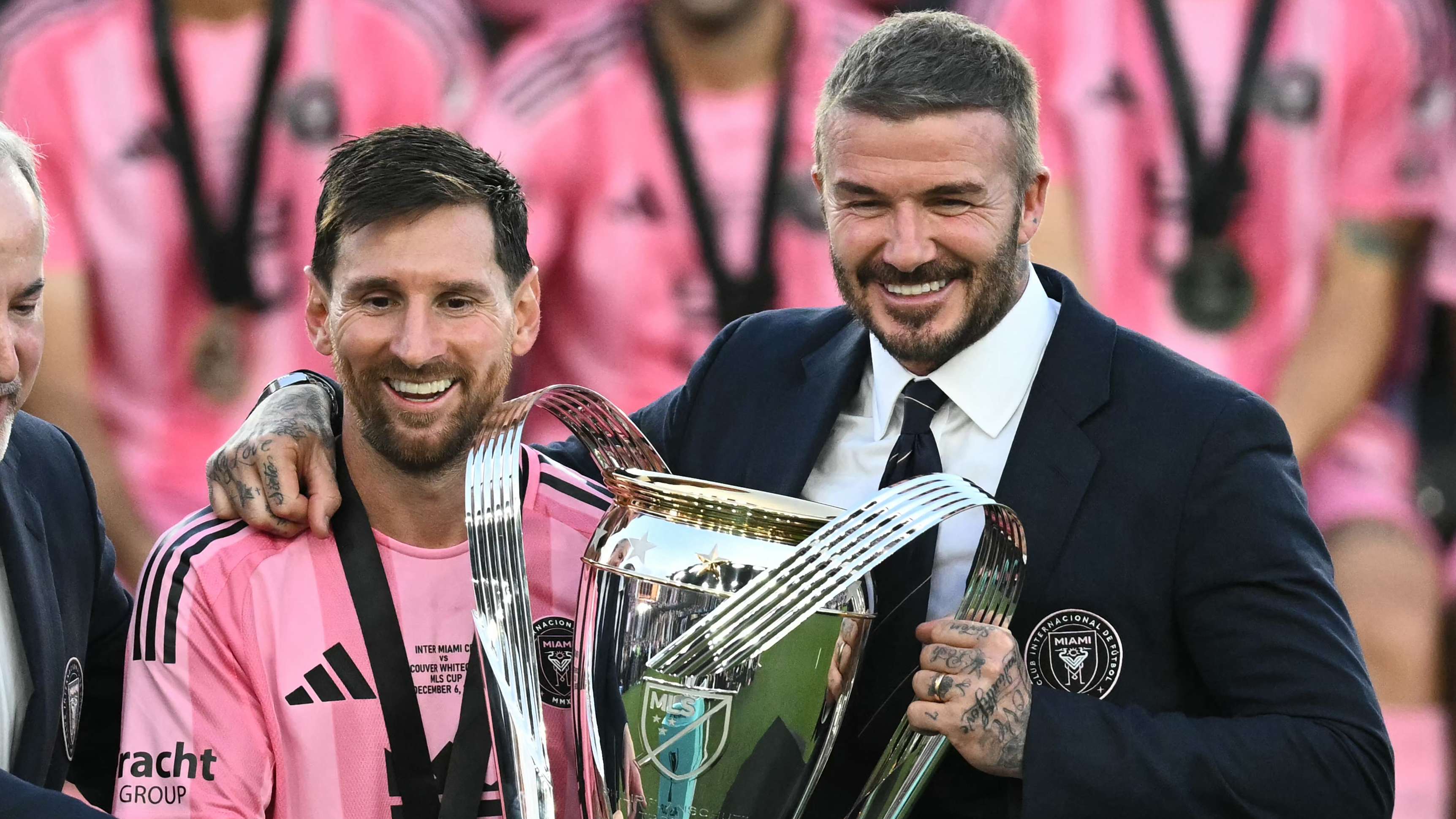
    Miami, Messi & what came next

    There was one final piece of the puzzle. As part of Beckham’s original Galaxy deal, he was granted the right to purchase an expansion franchise at a cut-rate price. There were just 13 MLS teams when Beckham arrived, with the league still recovering from the loss of two clubs in the early 2000s. During his playing career, six more side joined. From the outset, there was a sense that Beckham would eventually own a club.

    The terms were simple. It would cost him 'just' $25m and every market was available except New York City. Miami thus emerged as the most logical destination. The city had deep footballing roots, and a previous franchise, the Miami Fusion, had already tested the waters before folding. In 2014, Beckham exercised his option and made clear his intention to bring a team to South Florida. It was a bargain even then, especially given LAFC paid $110m for their expansion slot around the same time.

    Beckham’s ambitions were never modest. Yes, he wanted the club, later named Inter Miami, to be competitive. But there was also a sense it would reflect his own celebrity-driven vision of the sport. This was football as entertainment, built around the biggest names in the game.

    Which brings us to the summer of 2023. Lionel Messi had grown weary of life in Paris. He never truly wanted to be a Paris Saint-Germain player after his Barcelona exit was forced by the club’s financial collapse. An MLS move had long been rumoured and in early August, it became reality.

    If Beckham’s arrival in 2007 was transformative, Messi’s was seismic. Miami paid him handsomely and reportedly guaranteed him an ownership stake upon retirement. In a fitting twist, Beckham did for Messi what MLS had once done for him, setting up a business future beyond his playing career. That, ultimately, is how Beckham’s legacy endures. He went first and he changed the rules. And nearly two decades later, the biggest player in the world followed the path he helped create.

    When Beckham initially arrived, Don Garber framed the move in sweeping terms: "David Beckham is a global sports icon who will transcend the sport of soccer in America. His decision to continue his storied career in Major League Soccer is a testament to the fact that America is rapidly becoming a true 'Soccer Nation' with MLS at the core." Nearly 20 years on, Garber may well have been right.