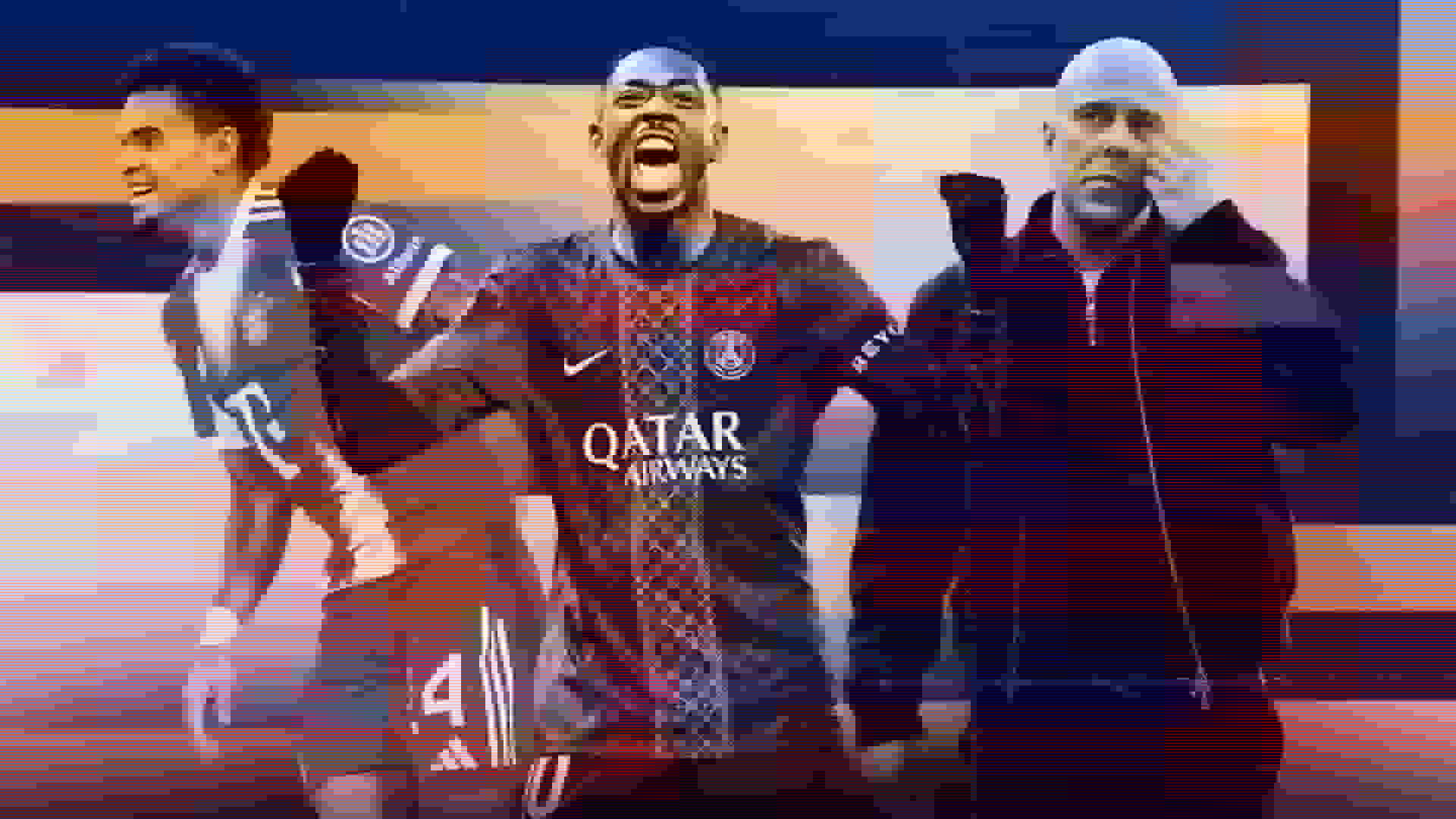
Younes Ebnoutalib pourrait créer la surprise dans l'équipe allemande participant à la Coupe du monde. Va-t-il plutôt jouer pour le Maroc pendant le tournoi ?
Michael Ballack, légende du Chelsea FC et de l'Allemagne, a retenu ses larmes en évoquant pour la première fois le décès de son fils âgé de 18 ans. L'ancien milieu de terrain a vu sa vie basculer en 2021 lorsque son fils Emilio est décédé à la suite d'un tragique accident de quad pendant des vacances en famille au Portugal.
Le sélectionneur allemand Julian Nagelsmann a lancé un avertissement clair à son équipe avant la Coupe du monde 2026, laissant entendre que des joueurs de renom pourraient être écartés de sa sélection finale. Alors que le pays se prépare pour les prochains matchs amicaux contre la Suisse et le Ghana à la fin du mois, Nagelsmann a indiqué que le statut au sein d'un club ne garantirait pas une place dans l'avion pour l'Amérique du Nord, soulignant que la cohésion de l'équipe et les profils tactiques spécifiques primeraient sur la réputation.
Au Bayern Munich, on appelle ça une erreur industrielle. Jochen Sauer, directeur du campus bavarois, l'admet sans détour : le départ gratuit d'Angelo Stiller est un échec qui "ne doit plus jamais arriver". Formé au club pendant onze ans, le milieu de terrain de 24 ans fait aujourd'hui le bonheur de Stuttgart, qu'il a mené à une historique deuxième place devant... le Bayern la saison passée. Devenu l'un des meilleurs passeurs d'Europe, ce "stratège" au profil cérébral rappelle furieusement Toni Kroos, son idole absolue. Alors que le Real Madrid surveille de près ce profil rare, retour sur l'ascension d'un joueur façonné par un seul coach, Sebastian Hoeneß, et qui prouve que l'intelligence bat souvent le physique.
Pour le monde entier, la finale de la Ligue des champions 1999 reste le théâtre du plus grand traumatisme de l'histoire du Bayern Munich, renversé par Manchester United dans les arrêts de jeu. Mais pour Mario Basler, cette nuit-là a une tout autre saveur. Buteur sur coup franc, sorti à la 89e minute alors que son équipe menait, et ivre la veille du match, l'enfant terrible du football allemand a vécu cette soirée selon ses propres règles. Figure de proue du légendaire "FC Hollywood", Basler incarne une époque révolue où le talent pur pouvait coexister avec un mode de vie dissolu fait de bières, de cigarettes et de bagarres de pizzeria.
C'est Legacy, la série de GOAL sur la route de la Coupe du Monde 2026. Chaque semaine, nous explorons les histoires et les héritages qui définissent les plus grandes nations du football.
Manchester United, often simply referred to as "United," are one of the most iconic and successful football clubs in the world, based in Old Trafford, Greater Manchester, England. The club was founded as Newton Heath LYR Football Club in 1878 by the Lancashire and Yorkshire Railway depot at Newton Heath. The team changed its name to Manchester United in 1902 and moved to its current home, Old Trafford, in 1910.
Famous players
Manchester United have been home to some of the greatest footballers in history. Sir Bobby Charlton, a World Cup winner with England in 1966, is arguably the most iconic figure in the club's history. Other legendary players include George Best, known for his flair and skill, and Eric Cantona, who brought a winning mentality to the club during the 1990s. More recent stars like Cristiano Ronaldo, Wayne Rooney, and Paul Scholes have also contributed significantly to the club's success.
Honours
Manchester United are one of the most decorated clubs in English football, having won a record 20 Premier League titles (formerly the First Division). They have also lifted the FA Cup 12 times, the League Cup five times, and the UEFA Champions League three times. The club's dominance in English football was particularly evident during the 1990s and early 2000s under manager Sir Alex Ferguson.
Managers
Sir Alex Ferguson is undoubtedly the most successful manager in Manchester United's history. He spent 26 years at the club, leading them to an unprecedented era of success. Before Ferguson, managers like Matt Busby and Wilf McGuinness played crucial roles in shaping the club's identity. More recent managers, including David Moyes, Louis van Gaal, and José Mourinho, have faced the challenge of maintaining the club's high standards.
Stadium
Old Trafford, often referred to as the "Theatre of Dreams," is one of the most famous stadiums in the world. With a capacity of roughly 75,000, it is among the largest football stadiums in the United Kingdom. The stadium has hosted numerous major matches, including UEFA Champions League finals and FIFA World Cup matches.
Location
Manchester United are based in the city of Manchester, which is located in the northwest of England. The club's home ground, Old Trafford, is situated in the Trafford borough. Manchester is a major industrial city with a rich footballing heritage.
Owners
In February 2024, British billionaire Sir Jim Ratcliffe's company, INEOS, acquired a significant 25% stake in Manchester United. This acquisition granted Ratcliffe sporting control over the club, placing him in a position to influence key decisions related to its operations.
Ratcliffe has already made a substantial financial commitment to Manchester United. His large investments demonstrate his dedication to the club's success and his willingness to provide the necessary resources for its growth.
Frequently asked questions
When were Manchester United founded?
Manchester United were founded in 1878, although under a different name at first - Newton Heath LYR. The name Manchester United was born in April 1902, beating alternative suggestions like Manchester Central and Manchester Celtic.
Who are the owners of Manchester United?
Manchester United are currently co-owned by the Glazer family, as well as INEOS founder Sir Jim Ratcliffe. In February, Ratcliffe bought an initial 25% stake in the club, ganing control over all the sporting operations.
What is Manchester United's stadium called?
Manchester United play their home games at the Old Trafford, which is also known as the 'Theatre Of Dreams' among fans and pundits.
What is Old Trafford's capacity?
Old Trafford has a capacity of 74,310, making it UK's second-biggest football stadium in terms of capacity (behind Wembley).
How many trophies have Manchester United won?
Manchester United have an impressive haul of 68 trophies in their prestigious history, which includes 20 league titles, three Champions Leagues, as well as 13 FA Cups.
How many Premier League (top flight) titles have Manchester United won?
Manchester United have won a record 20 English top flight titles. They have won 13 titles in the Premier League era, all of them coming under Sir Alex Ferguson. United, though, haven't lifted the Premier League trophy since the 2012-13 season.
Who has made the most appearances for Manchester United?
With 963 appearances to his name, Ryan Giggs holds the record of making the most appearances for Manchester United. Giggs made his debut for the club in March 1991 and spent his entire professional career, spanning 23 years, at Old Trafford.
Who is Manchester United's all-time top goalscorer?
Wayne Rooney is Manchester United's all-time top goalscorer with 253 goals in 559 games for the club. He spent 13 years at the club, from 2004 to 2017.
Which famous players have played for Manchester United?
Eric Cantona, Cristiano Ronaldo, George Best, Paul Scholes, Wayne Rooney, Rio Ferdinand, Edwin van der Sar, Zlatan Ibrahimovic, Angel Di Maria, and Denis Irwin are some of the most famous players to have donned the Manchester United colours.
Which famous managers have been in charge of Manchester United?
Sir Matt Busby, Sir Alex Ferguson, Jose Mourinho, David Moyes, and Louis van Gaal are among the most famous to have been at the helm at Old Trafford.
What is Manchester United's nickname?
Manchester United are famously known as The Red Devils among their fans and rivals alike. The term was introduced by the legendary Sir Matt Busby in the 1960s – after the tragic Munich air disaster – seeking inspiration from a local rugby club from Salford, who were referred to as "Les Diables Rouges" (The Red Devils) when they toured France in 1934.