J.J. Watt, Tom Brady EFL ownersGetty Images

American ownership in European clubs is controversial, but expertly executed PR by Ryan Reynolds, Rob McElhenney, Tom Brady and J.J. Watt exemplifies how it can work

Todd Boehly wanted 12 players on the pitch. At least, that's what we were told. It was 2022, and with Cristiano Ronaldo out at Manchester United, the American businessman saw an opportunity. He tried to piece together a picture for then-manager Thomas Tuchel. Ronaldo, he surmised, could play in Chelsea's front line - the final piece of the puzzle.

What he didn't realize is that, after piecing together the formation, Boehly has 12 players on the pitch, a unique but yet-to-be-tried 4-4-3 formation.

That tale has been a beating stick to bash American owners by English fans in recent years. Americans don't know anything about football. They are ruining our sport. They don't even use the right word for it. And there are, indeed, plenty of examples of poor American ownership (although it is not just Americans that can be bad owners in football - see Tottenham's Daniel Levy, pride of Essex, for more!)

But in the past 12 months, something has changed. Chelsea notwithstanding - that will always be a dumpster fire until they come up with a coherent strategy, hire a manager for a long-term project, and renovate the ailing Stamford Bridge - American ownership in English soccer has looked, well, good.

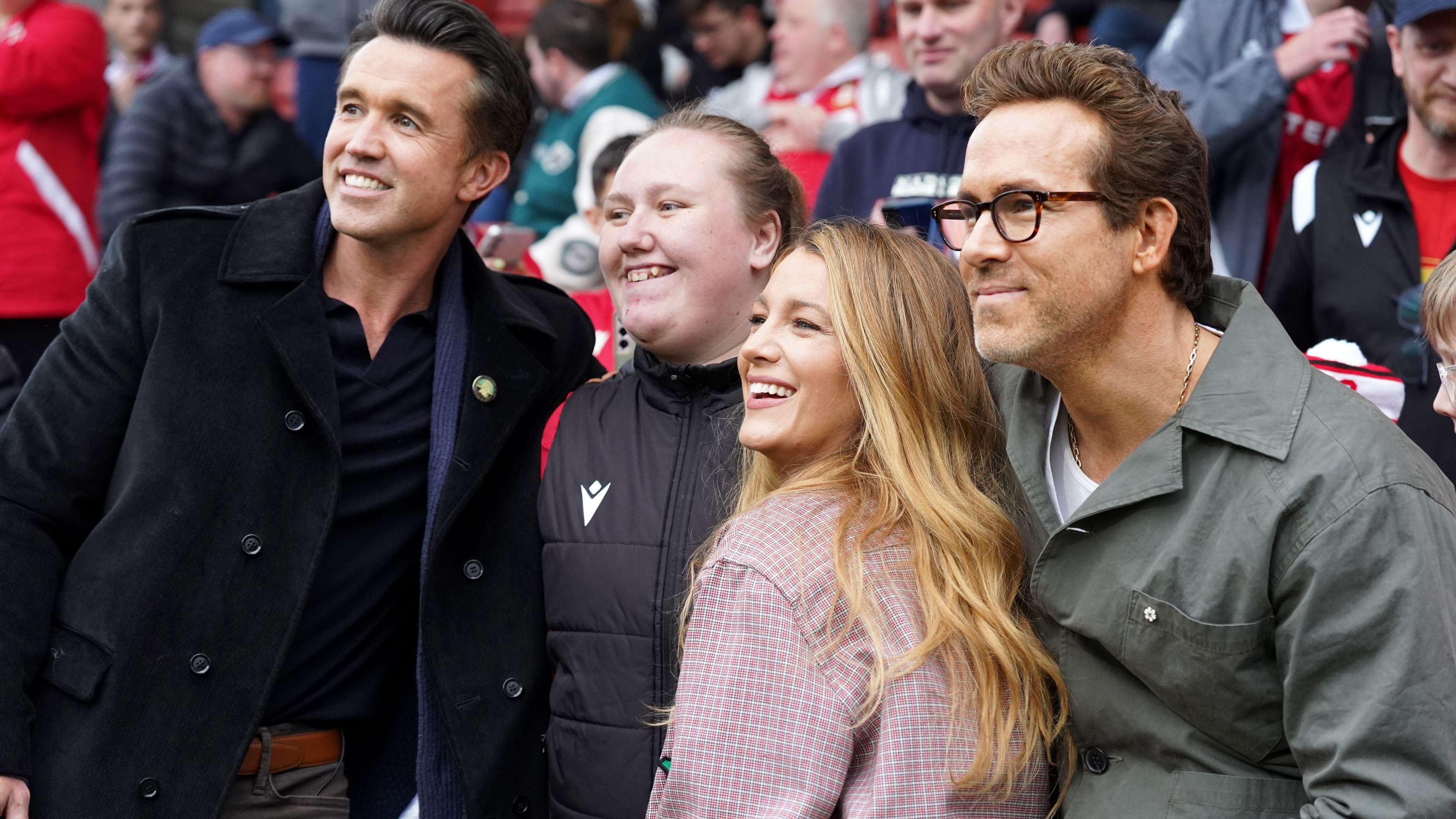
Wrexham's Ryan Reynolds and Rob McElhenney, Birmingham's Tom Brady and J.J. Watt's Burnley have all achieved promotion from their divisions. Throw in the Leeds ownership - 49ers enterprises - and Americans are four-for-four on successful seasons. Promotion is good. It makes fans happy.

And more broadly, it could prove to be vital for the growth of the game in America, with big names operating in foreign countries showing the United States how soccer in its most traditional form works - and how to be successful at doing it.

  • Manchester United Fans Protest Against Glazer Family OwnershipGetty Images News

    American ownership: Why it works

    American ownership in European sports in a relatively recent phenomenon. It has, in fact, only broken into the mainstream consciousness over the course of the last 20 years. The Glazer Family bought Manchester United in 2005. Tom Hicks and George Gilette purchased a majority stake in Liverpool two years later.

    The latter duo were booted from the club by angry fans within four years. The former have drawn the ire of supporters for their repeated mismanagement of United (although it is worth pointing out that club level decisions, not a lack of funding, have contributed to the Red Devils' decline.)

    All of that set a pretty miserable table for those who followed. Celebrity culture has changed that, though. But instead of swinging big, a series of big names did perhaps the smart thing, and got involved in lower leagues. The Hollywood duo of McElhenney and Reynolds bought Wrexham in 2021. Brady invested in Birmingham in 2023. Watt became the face of Burnley - although he owns a minority stake - the same year.

    And there's more. RedBird Capital, who also have a stake in a small baseball team known as the New York Yankees, are controlling owners of Milan. Bournemouth, Crystal Palace, Lyon and Roma all have majority U.S.-based investment.

    There's no single, sweeping generalization to be made here. United's owners are clueless. Wrexham's are creative. Bournemouth and Crystal Palace are successful and financially sustainable. Lyon and Chelsea are nightmares. But there are tangible clues as to how this can all work.

  • Advertisement
  • Rob McElhenney Ryan Reynolds Wrexham 2025Getty

    Welcome to (a sensible) Wrexham

    Wrexham, if you zoom out, have nailed it. There was plenty of reason to be skeptical when the Hollywood duo bought the club nearly five years ago. It is often forgotten that Wrexham were not their sole choice. And when it became clear that they intended to make a documentary, chronicling their ownership of the club, which would then be sold to FX and Hulu, few fans were convinced.

    It seemed a vanity project of sorts. Here were a couple of guys who used the wrong word for a sport, taking on an ailing team in a forgotten post-industrial city, and packaging it into a must-watch series. Not exactly the best way to endear yourself to defeatist Brits.

    Of course, the reality has been different. Wrexham weren't promoted in their first season, but they were stable. Since then, they have achieved three consecutive promotions, rising from non-league soccer all the way into the English Championship. They have made it all look rather easy, too. Welcome to Wrexham, season four, drops May 15, and the show remains a PR project of sorts. It's captivating, something that really scratches the American feel-good itch. The U.S. loves a plucky underdog.

    But their success is only partly due to the documentary. Wrexham are not underdogs. Or at least, they haven't been. They are richer, more willing to spend, and better run than pretty much everyone else they have faced. Promotion, given their wealth, should be an expectation.

    It helps, of course, that there are a couple of funny guys at the center of it all who have made what seems to be a sincere effort to improve the town around them. But they have money, and they're doing the basics well. Toss in a few concerts, celebrity appearances, and TikTok sponsorship, and these guys are showing how a small club can improve - regardless of where the owners are from.

  • Burnley FC v West Ham United - Premier LeagueGetty Images Sport

    J.J. Watt, Burnley, and the power of winning

    Burnley have stuck to a similar formula - albeit in a different way. J.J. Watt had a Hall of Fame career in the NFL and will go down as one of the best defensive ends of all time. His ownership in Burnley, though, is financially insignificant.

    Alan Pace - a senior figure in investment firm ALK Capital - owns 50 percent of the club. Michael Smith and Stuart Hunt own around 17 percent apiece. Watt, whose estimated net worth is $70 million, has not disclosed how much of Burnley he is invested in. But it is very much a minority stake.

    But Burnley have been smart. No one cares about Pace, Smith or Hunt, from a PR perspective. They're guys in suits. Watt, meanwhile, is the fun one who wears baseball caps, goes to games, and interacts with the players and fans. He represented Burnley's team at 7 a side tournament TST in Cary, North Carolina last summer. He's the one that Americans know and English fans are starting to like.

    This is PR mastery. Watt, like Reynolds and McElhenney, is the smiley dude who is warming to soccer, and has the kind of infectious personality that U.S. fans love. He tweeted at goalkeeper James Trafford after Burnley's historic run of clean sheets in the EFL Championship, and joked he would come out of retirement if he went the whole season without conceding a goal (Trafford went 12 games, and Watt admitted to getting a bit nervous.)

    Burnley, too, are in a similar situation. Parachute payments down from the Premier League have meant that they are far richer than their competition. They have a squad filled with talent too good for the Championship. Trafford is perhaps England's long-term starting goalkeeper. Their manager, Scott Parker, has bona fide Premier League experience. Watt is the grinning face of a winning team that has very little to lose.

  • Birmingham City v Leeds United - Sky Bet ChampionshipGetty Images Sport

    Tom Brady, celebrity, and well-timed interviews

    Brady, meanwhile, is slightly different. If Wrexham and Burnley are rich relative to their competition, Birmingham are unimaginably wealthy. They are a club that has spent 57 seasons in England's top flight. In League 1, their stadium rivals only Sunderland in terms of size and facilities.

    Birmingham have stumbled in recent years with a series of poor managerial appointments and financial mismanagement, bringing about a transfer embargo in the early 2010s. In 2023, they were purchased by American hedge fund manager Tom Wagner's subsidiary, Shelby Companies - yes, named after the family in the Birmingham-based Peaky Blinders - after two other takeover attempts fell through.

    Brady was brought on as a minority investor. They got it badly wrong in 2023, making the baffling decision to hire Wayne Rooney, who, with two wins in 15 games, took them from Championship playoff contenders to relegation candidates. They went down without much of a fight.

    Their response was to spend big. They dropped nearly $30 million last summer on new signings and have built one of the best seasons in League 1 history. Brady has not shown a deep interest in soccer, and he certainly isn't celebrating like a madman in the cheap seats. Instead, he sort of stands there in sunglasses, looking robotic, and peering over the team he had a little-to-no role in constructing.

    But Brady - as has been a theme with a lot of his post-NFL career - has been shrewd in the way he has pieced together an image. It starts with a vague interest. Wagner has insisted that Brady texts him regularly about the state of the club.

    "Tom is engaged with the club 365 days a year. Not a day goes by where he and I don’t FaceTime or talk or message about Birmingham," Wagner said in April.

    He has appeared on English TV twice in the last seven months to spill vague platitudes about team success. He has talked about "processes" and "development." He has insisted that Brimingham are "not done yet" after achieving promotion. That NFL media training, it seems, has come in handy. But his PR presence is felt.

  • leeds(C)Getty Images

    Leeds, the 49ers, and skeptical fans

    Leeds, meanwhile, are less public-facing. There is no celeb owner at the middle of it all - although Russell Westbrook has a minority stake, as do actors Will Ferrell and Russell Crowe and athletes such as Jordan Spieth and Michael Phelps. Leeds don't really have any star players, or big names, either. The only American of any note in the side is Brenden Aaronson, a polarizing presence who, despite his much-improved form, is still a scrappy No. 10 perhaps undersized and unequipped for the Premier League.

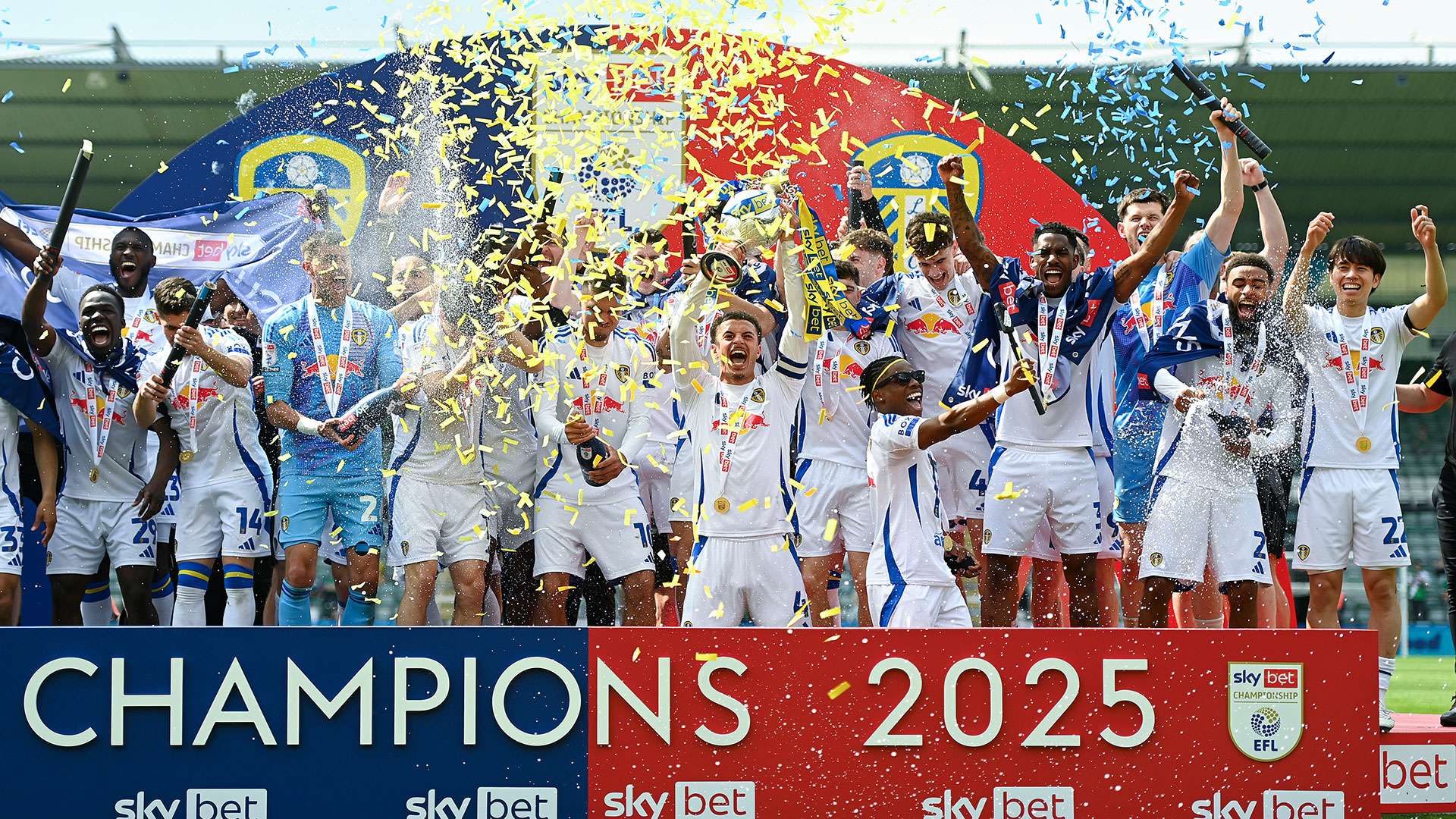
    But they, too, have been shrewd in their transfer business, and smart in their managerial appointments. Daniel Farke, who has already coached in the Premier League - albeit in a pretty dire scenario at Norwich - has shepherded the club well, and led them to a Championship title this season. Since then, the owners have not only backed the manager, who is increasingly winning over the fans, but also vowed to spend in order to stay up.

    "Every single penny we earn is going to be poured directly back onto the pitch," chariman Paraag Marathe told Front Office Sports. "We’re not taking a dividend out of this club today, tomorrow, ever. We welcome all new revenue that comes in, but we’re not making money for money’s sake. We’re making money to turn it into a striker, or midfielder, or whatever we can to make us better,"

    There are caveats here. Profit and sustainability rules mean that Leeds' spending will be capped. And this is a notoriously outspoken fanbase who will not accept anything short of total commitment. Still, so much of this is about saying the right thing. Put a few bucks in to support it and the fans will be pleased.

  • Wrexham AFC v Charlton Athletic FC - Sky Bet League OneGetty Images Sport

    Bringing 'real' football to people

    American ownership is a balancing act. In the U.K., you have to keep fans who automatically dislike you happy. In the U.S., you have to get people to care. That's not easy. But the success of Welcome to Wrexham has already helped soccer penetrate the mainstream consciousness. Having two NFL legends appear as the face of successful teams has also undoubtedly been a massive help.

    Even Leeds' Marathe marveled at the Wrexham and Birmingham promotions, saying "Really awesome what they’ve been able to do."

    But this season, in particular, has felt like a crucial juncture. The concept of promotion and relegation has long been part of the dialogue in American soccer. It's the thing that Major League Soccer has never wanted to touch. The U.S.'s top flight league is sustainable, but it is also very American. They is a playoff system that increasingly mimics other U.S. sports (just look at the implementation of a best-of-three first round playoff series).

    Teams can afford to be bad, and not spend much money. That is not the case in Europe, where if you take your foot off the gas, you go down. The USL has made strides in recent months to change that, and has promised a Division I league and promotion-relegation within a few years.

    Detractors argue that MLS "isn't real soccer." Some American owners in Europe are giving that perception a real backing.

    "Whatever it takes for people to understand how real football is is good, because popular culture can help with these things," Orange County SC president Dan Rutstein told GOAL. "So in America, real football fans have known about promotion and relegation from the start. But there are not enough of them to support the game. In this country, it's getting better, so you need some more popular support. So if somebody wants to go and watch football either live or even just on TV, because of Ted Lasso, because of Ryan Reynolds, because of Tom Brady, because of J.J. Watt, that's fine as long as they get into football."

    The flip side is, of course, that relegation is a real possibility. Wrexham will likely need additional investment to stay up. Recent history has told us that Burnley and Leeds could go right back down (all three promoted sides in the Premier League were relegated this year.) The positive vibes - at least, the ones brought about by winning - might soon disappear.

    But perhaps those three might have done enough to show that winning alone isn't the real appeal of supporting European soccer. The jeopardy is in the journey, and when you manage things right, the drama is captivating - no matter where the face of the club hails from. For American soccer, that fact could be vital as the sport continues to grow.