+18 | Play Responsibly | T&C's Apply | Commercial Content | Publishing Principles
MLS 3.0 GFXGOAL

‘Let the games begin’ - MLS GMs and CSOs welcome 3.0 initiative but warn league must move faster in Lionel Messi, World Cup era

As soon as Charlotte FC’s season ended, Zoran Krneta was gone. No, the immensely successful General Manager and Chief Soccer Officer was not let go. Rather, he dove into offseason mode. 

And it was a pretty global adventure, too. A visit back home was accompanied by travels around England, engaging in conversations with top clubs about pretty much everything - from footballing philosophies to transfer business. 

This is, in effect, the modern version of MLS. American soccer has perhaps been a little more connected than most have given it credit for. The league is not some isolationist backwater of the soccer sphere. Even in the pre-David Beckham, designated player era, footballers from all over came to the States. 

But now, this place is filled with Krneta’s archetype, well-connected executives who serve as not only smart soccer minds but also ambassadors for the league. And so we arrive at MLS 3.0 - unveiled, in full, by commissioner Don Garber at MLS’s All-Star Game in 2025. 

“We have focused on what we're calling MLS 3.0,” he said last summer. "MLS in the next 30 years, a comprehensive strategy to drive our next era of growth, of innovation, global competitiveness, which we think is very important." 

This is, we are told, the third iteration of a setup that just surpassed its 30th birthday - the next evolution of a league that is entering a new phase of growth. Yet, as ambitious as the league’s announcement of its future is, there are still overall concerns that it isn’t doing enough. 

“We've been talking for the past three years [about] what to do, and now the first changes are starting, and I'm just hoping that it's not going to be the last of the changes,” Krneta said. 

Following Garber’s continued pushing of MLS 3.0 and the advent of the 2026 season, GOAL spoke to a number of MLS General Managers, Chief Soccer Officers, and lead executives to get their insights on what they believe the next evolution of the league should look like - and what challenges still remain.
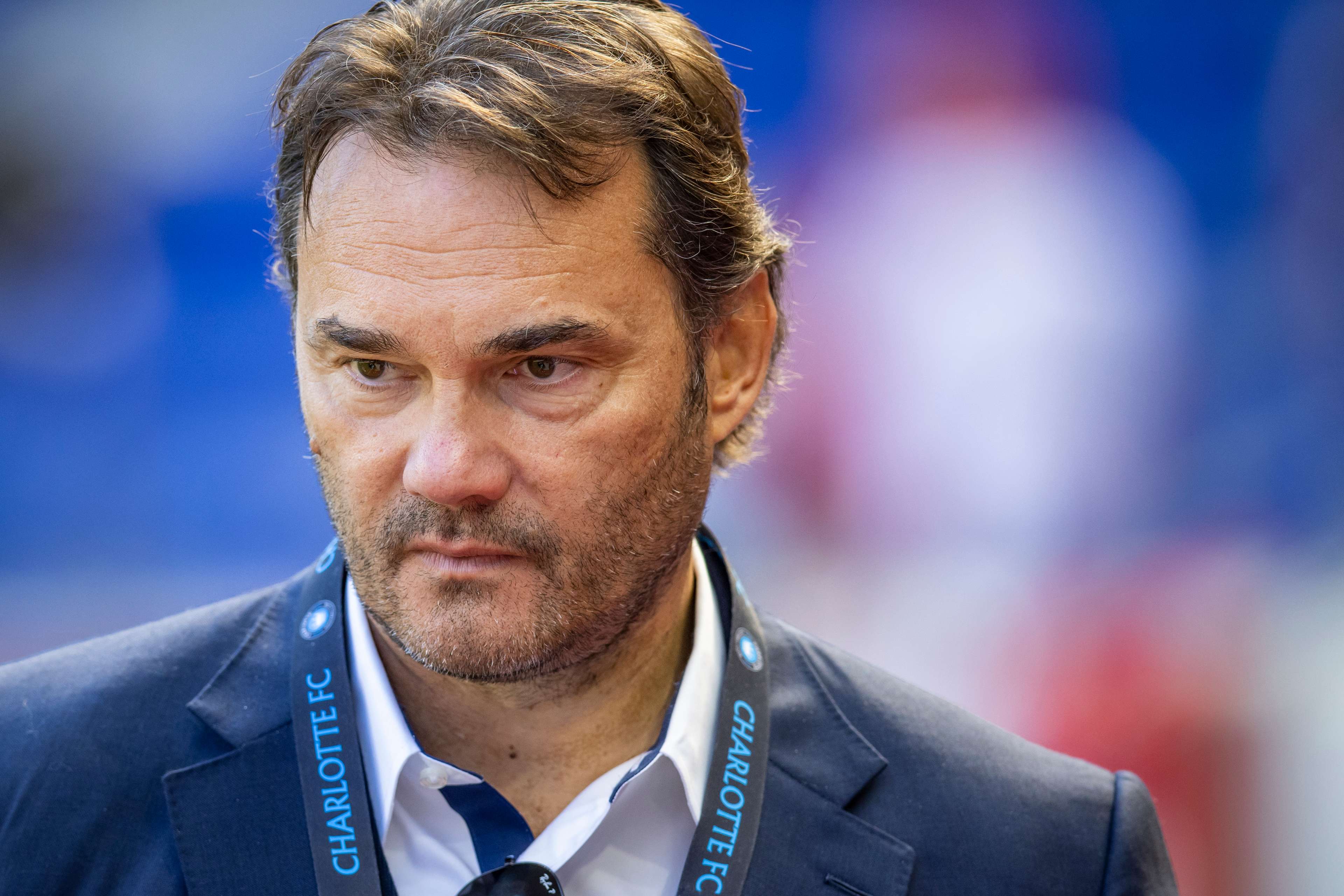

  • Zoran Krneta, Charlotte FCGetty

    The basics of MLS 3.0

    Context is necessary here. MLS has grown step by step since its first year of play in 1996. There have, to be sure, been a fair few mistakes along the way. Franchises folded. The league was supposedly near bankruptcy in 2001. For all of the interest that is clearly growing, this is still very much a startup enterprise figuring out how to mature in real time. 

    Of course, it wasn’t like this originally. In fact, the original conceit for MLS was a 10-team league played entirely in soccer-specific stadiums that had yet to be built. Alan Rothenberg, one of the architects of American soccer, pitched that exact model to a series of wealthy businessmen back in the mid 1990s. 

    The reception wasn’t exactly positive. 

    “They said, ‘If you tell me I have to build a stadium, and for some reason, the soccer league is a failure, I would be stuck with this white elephant of a stadium.’ So we pulled it out of the ultimate draft business plan,” Alan Rothenberg, co-founder of MLS, recalled. 

    But over the years, things have changed. There are now 30 teams. Twenty-three of them operate in permanent soccer-specific stadiums.   Miami will play for the first time at Miami Freedom Park in April, which will make it 24. NYCFC’s Etihad Park is set to open in 2027. Chicago and New England have announced plans for a stadium of their own, with planned opening dates of 2028 and 2029, respectively. Designated Player rules and salary cap adjustments have made MLS clubs more competitive in the global market. And perhaps most importantly, Lionel Messi and his eight Ballons d’Or play football here. 

    Garber has promised that the league will kick on in accordance with the rate of change around it. More simply, MLS is moving quickly, and the league itself needs to be able to keep up. 

    “We're not just aligning with the world's best. We're aiming to compete with them," Garber said at his state of the league address in Washington in December. 

    MLS 3.0, then, is the league’s attempt to continue to evolve. The key tenets are a switch to a Euro-esque fall-spring calendar, a revamp of roster rules and regulations, a stronger push for soccer-specific stadiums, and perhaps, a tweak of the regular season and playoff structure. MLS is very good. This is where it becomes world class. One of those steps has already taken place, with the league announcing that a fall-spring calendar will be implemented starting in 2027. The rest will undoubtedly take some time - with the league yet to indicate when they might come. 

    And some executives are impatient. There is a sense, in fact, that these major changes should have happened years ago. “When Atlanta United started to do Miguel Almiron and Thiago Almada to Europe [for a combined fee north of $50 million], and we became a player in the real transfer market globally, that was probably the time when it would have been most efficient. But we weren’t ready,” FC Cincinnati GM Chris Albright told GOAL.

  • Advertisement
  • Moise BombitoGetty

    How a fall-spring calendar changes things

    No doubt, the biggest change here is the switch to a fall-spring calendar. The league is aiming to start its 2027-28 campaign in mid-July and conclude it in June the following year - roughly mimicking the outline of the European schedule. Some feel that it’s a no-brainer sort of change that has taken too long to come about. 

    Others simply lauded the league - and its owners - for voting to make the shift. 

    “I think this gives us the best opportunity to really start to maximize some other areas where the league can either acquire better talent or generate more revenue, or things that I think we need to really start to think about,” St. Louis CITY Sporting Director Corey Wray told GOAL

    For years, MLS clubs had acted as outsiders in the international sphere. Often, teams lost their best players during the summer, selling for significant profits but also potentially compromising their season’s hopes right when they need to kick on. 

    “Look at Moise Bombito. Selling him in the middle of the year in 2024 hurt. That was damaging. We prefer to sell him at the end of the year rather than in the middle of the season, because we just can't replace that level of talent in the midseason window. But you also don't want to stand in the boy's way,” Colorado Rapids President Padraig Smith told GOAL

    But it also saw teams lose opportunities to cash in. Most clubs are willing to sell for a profit, but need to replace their top players. However, the fact that the MLS summer window closes well before the global one made it difficult to do business. 

    “I lost a lot of money not being able to sell the players because the offer is coming on the 10th or 15th of August,” Krneta said. “They want us to be a selling league. So we can't be a selling league if you're expecting us to sell on the first of June.” 

    And, of course, it’s harder to recruit outside of the normal window. The current setup means MLS clubs often have to wait until the end of a European season, which finishes in late May, to then acquire a foreign star, and hope that they recover from a long campaign to prep for a playoff run. Even the brightest of talents can struggle under such circumstances. 

    In the winter, it gets even more complicated. MLS can go after big names during its offseason, but European clubs are often reluctant to sell because they are in-season. 

    “I heard a lot recently: this is the market value of the player, plus more to convince the club to sell him now. Or, a club says there's no chance we're going to sell him this window,” FC Dallas Sporting Director Andre Zanotta told GOAL

    This switch, then, should change things. Starting in 2027, MLS will align with a more traditional model, featuring two separate windows in the summer and in January. Recruitment and sales will both be made far easier, numerous sources pointed out. There is a general optimism that stars can be held onto and top talent can be recruited. 

    “We had an example here of a player like Petar Musa, who was in Benfica at 26. He had a lot of interest from teams in the Bundesliga and teams in Ligue 1 in France and Serie A in Italy, and he chose to come to FC Dallas, to MLS,” Zanotta said. “It's a great message when you see how Benfica is one of the top, if not the top-selling club in the football industry. I see this more and more happening.” 

    There is also a sense of legitimacy that it has brought to the league. For some time, operating outside of the European norm had been an obvious criticism of the league. After all, how could this thing be entirely legitimate if it didn’t align itself with the rest of the world? The change answers that question in full. 

    “Aligning ourselves with that European calendar is good from a perception standpoint, I think it's helpful,” Smith said.

  • Lionel Messi, Jordi Alba, Sergio Busquets 2023Getty Images

    Pushing for changes to the salary structure

    There were rumors as far back as 2017 that MLS would change its Designated Player setup, and further chatter that it might add the option for a fourth DP following Miami’s signing of Messi and three of his former Barca teammates three years ago. And although all of that noise was eventually silenced, the sentiment has remained very much alive, multiple CSOs said. 

    For some, it’s simple: 

    “We should have more than three DP options,” Krneta said. 

    Of course, there are potential drawbacks here. The MLS salary cap might frustrate teams with big-name players and wealthy owners, but it also gives smaller markets with more frugal ownership the chance to compete without overspending. In theory, it offers an ideal combination of competitive balance and league stability. 

    “It's hard because everyone's got their own situation. So, a team that's generating an exorbitant amount of revenue, I can see their stance, but I think at the end of the day, if I put my league hat on, we have to operate for what's best for the entire league,” Wray said. 

    But some think the league is past the point of having to cater to those who are more reluctant to spend. 

    “Let the games begin. Some clubs spend 30 million, some 25, some 20. If you build your squad in a smart way, you can do it. Philadelphia is a great example. Again, with one of the smallest budgets in the league, they won the Supporters’ Shield,” Krneta said. 

    There is also an argument to be made that the pull of bigger markets nullifies preconceptions of parity. If Miami can sign Rodrigo De Paul on a loan with an option to buy deal, then perhaps the regulations aren’t up to much. 

    “We want to have a gap. Why not? Every league in the world has a gap, and the leagues are functioning just about fine. Man United and Burnley will never be the same, no matter what you do, right? The Galaxy and I will never be the same, no matter what I do,” Krneta said. 

    Others disagree and argue that small-market clubs need to be kept in mind. 

    “You have to balance this incremental change that's been occurring - which is very positive - and then the opportunity to give those clubs that are at the forefront of generating new revenues, and we have to find a way that we can balance both sides - so there's not a huge group of haves and have nots,” Wray said. 

    And even if the training wheels aren’t taken off altogether, some suggested that a few tweaks might help. Simply allowing teams to spend a little bit more on individual talent - not designated players - could move the needle. 

    “I can pay a guy $1.75 million a year in salary, but I can't pay him two? Think about that. Or he's got to become a designated player, and I only have three of those slots,” Albright said.

  • ENJOYED THIS STORY?

    Add GOAL.com as a preferred source on Google to see more of our reporting

  • New York City FC v Orlando CityGetty Images Sport

    Teasing promotion and relegation

    In early 2025, the USL announced that it would undertake a system MLS has, thus far, been reluctant to touch: it would adopt a promotion-relegation model. Their declaration brought about plenty of discussion around MLS. Could they do a similar thing? After resisting the concept for years, could it be time for the league to cave - and succumb to another global norm? 

    Well, Garber refused to rule it out. “Let's see how it plays out. Maybe as the development of the lower divisions continues to grow, as they've been doing so well over the years, there will be a proper ecosystem. Frankly, I don't believe that ecosystem exists today, but who knows? I've learned to never say never," he said, before adding, "that doesn't mean we're having promotional relegation." 

    And, of course, leading executives from teams were listening. The reception to the concept of promotion-relegation was largely negative. One executive told GOAL that he was skeptical, if only because it was unfair on wealthy owners to invest heavily to promote the game - all with the threat of the heavy losses that could come with relegation. That same person went on to suggest that promotion-relegation might not have the profound impact that many have vouched for. 

    This thing might not be imminent, but there could be some strong questions if it is indeed implemented.

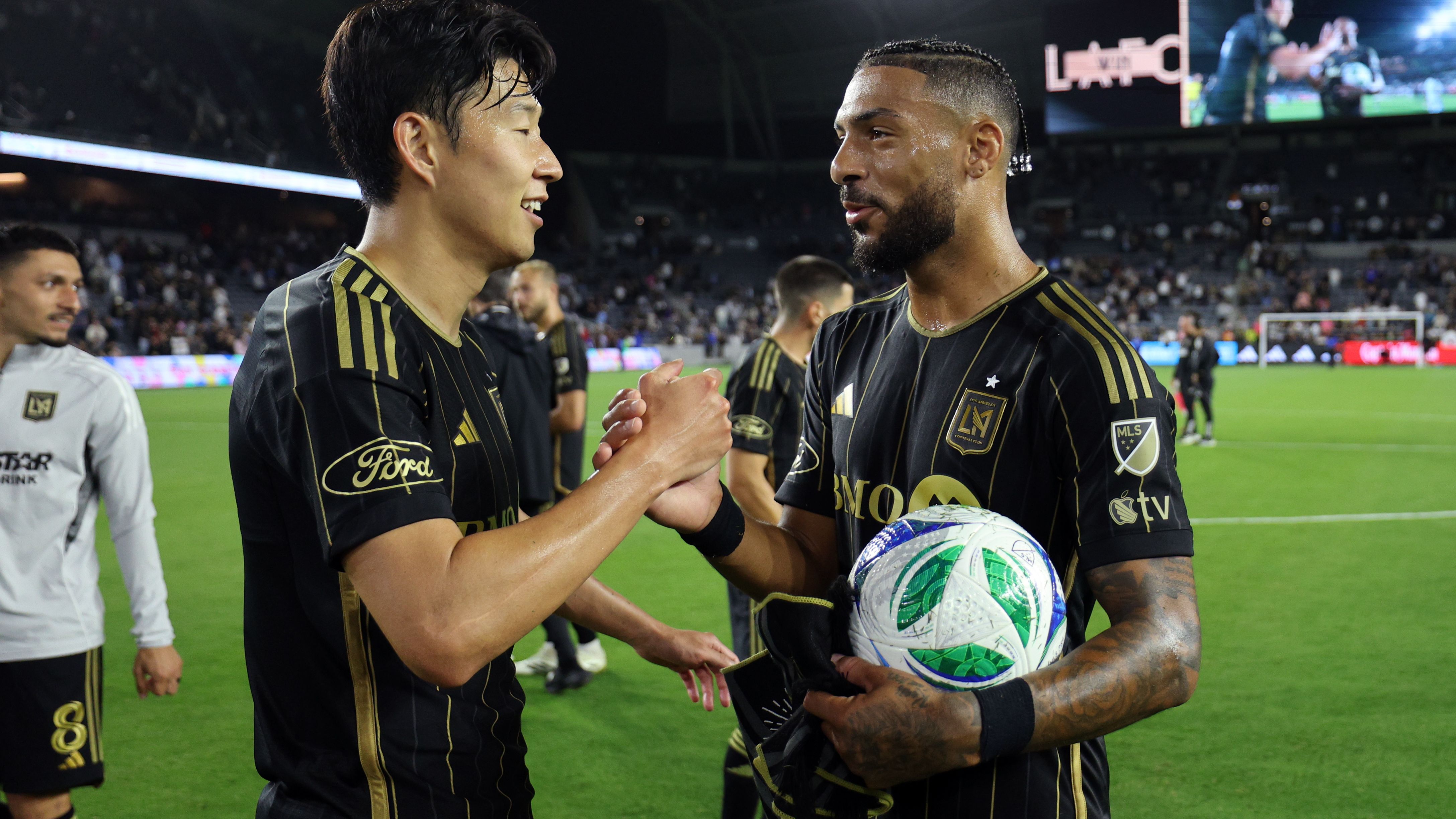
  • 손흥민, 드니 부앙가 (Son Heung-Min, Denis Bouanga)Getty Images

    An ambitious league - that hasn't always delivered

    The league has never lacked ambition or intent. But enacting the changes it alludes to has been more of a mixed bag. Perhaps it’s best summed up by an assertion from Garber in 2013 during his State of the League address at the Google Headquarters in New York. 

    “We have a very specific goal,” Garber said. “If we get the World Cup, we want to be one of the top leagues in the world by 2022… we have a 12-year plan. And that's not just by our own measure, but how we're perceived by the rest of the world.” 

    They have responded in kind with some true wins. Expansion franchises have made a splash in markets small and large - with fees rising from $100m in 2013 with NYCFC to $500m for San Diego FC in 2023, which began play last year. Soccer-specific stadiums have been built. MLS clubs spent a combined $336m on new talent in 2025. 

    Franchise values range from $1.5 billion to $480 million, with an average reported valuation of 767 million. The cash-for-player initiative saw top talent move within the league for big money. The arrivals of Messi, Son Heung-Min, Thomas Muller, Riqui Puig and more are all clear successes. Last season, MLS ranked second globally in total attendance among top flight leagues. MLS spend more than $100 million per year on its academies. 

    Yet there have also been some failures. The Apple TV deal made for a reported $1 billion, was lauded by the league at the time, but viewership figures are yet to be made public in full. National TV revenues aren’t as robust as they are for many major leagues, with clubs reportedly getting just $5 million per season after production costs. And Opta, in its most recent world rankings, has MLS outside the top 10 in global football - trailing nine European setups and the Brazilian Serie A. 

    The 3.0 plan was outlined as a ‘comprehensive strategy’ by the commissioner last July, but the exact details have been sparse. He referred to a fall-spring calendar, which has been delivered. He also insisted that the league was ‘evaluating where we fit and how our allocation of resources move forward’ when asked about roster rule changes. Yet no concrete adjustments have been announced. 

    In a recent interview with Sports Business Journal, he did mention the league’s Sporting and Competition Committee will meet next month before bringing recommendations to the board in April, calling roster reform a major priority for MLS. He added that the strategy focuses on attracting world-class players, strengthening the homegrown pathway, and giving clubs more roster flexibility as the league continues to evolve. Yet concrete details remain sparse. 

    At his state of the league address, Garber alluded to new regular season and playoff formats, but urged patience in their implementation. 

    Garber has certainly had his wins in securing a fall-spring calendar, but this has otherwise been a slow launch of an ambitious plan. 

    This is all given more attention by the arrival of the World Cup on American shores this summer. In effect, for two months, soccer will be more visible than ever in the United States. 

    That’s not uncharted territory. The 1994 tournament is often viewed as an inflection point for American men’s soccer - and indeed was the catalyst for MLS to begin. But while individual executives stressed the importance of energizing local fans - and teams have made efforts to reach into their communities with watch parties and ticket deals - the league itself is yet to follow up on what Garber described as a “comprehensive World Cup engagement strategy.”

  • St. Louis City SC v Colorado RapidsGetty Images Sport

    Confronting the rate of change

    Executives echoed that sentiment. In conversations with GOAL, there was a widespread feeling that MLS isn’t moving quickly enough. Many criticized the league for not using Messi’s arrival as an excuse to improve its marketing and branding efforts. 

    “What has been done since Messi came is not enough. It has to be more, and I’m expecting more,” Krneta said. 

    Certainly, the eye test suggests that there is a lot of Miami pink in parks and cities around the country. But MLS’s reluctance to release Apple TV viewership numbers has drawn criticism. A few executives criticized the quality of the Apple TV broadcasts to GOAL (the deal expires following the 2028-29 season). A few lead executives pointed out that MLS falls behind its competitors  - the NFL, NBA and Premier League - in failing to highlight dramatic moments of fixtures. They claimed that the general entertainment value was lacking, as fans aren’t always shown replays of controversial incidents that happen in games, such as bad calls or off-ball drama. 

    Others urged caution - and emphasized their trust in the league to keep things ticking along at the right rate. 

    “For me, it’s we’re puffing our chest out and saying ‘we belong’. It's no secret that players love the states, and we'll continue to leverage that desire. Players want to play in America, playing in great stadiums and great facilities, so I think this schedule change and contemplating roster flexibility just allows us to get in more rooms and be taken seriously,” Albright said. 

    The upcoming World Cup will, no doubt, change things. There will be more eyeballs on American soccer. There is a belief that, quite simply, foreign players will want to play in MLS after spending a summer here. 

    “We are the third most popular sport in the country, which is huge, especially for soccer to be ahead of baseball. That's big. It's the moment. We are surfing a huge wave, with the World Cup, Messi, Apple, soccer being more popular,” Zanotta said.

  • Inter Miami Freedom ParkInter Miami

    The seismic shifts to come

    Perhaps more basically, though, change is a good thing. MLS is, in effect, 100 years behind the leagues it is so often compared to. Top European setups have been around, in some form, since the early 1900s. All of those took decades to fully figure themselves out. Goalkeepers could still pick up backpasses as recently as 1992 - just four years before MLS kicked off. 

    There have been calls for further changes. Some CSOs vouched for a switch to a different playoff format - a shift away from the first round plus knockout style that awkwardly smashes together American sports and traditional elimination soccer. Multiple asserted that simplifying player categories would help, due to the widespread confusion they cause among fans and others in the soccer industry. 

    What this all amounts to is hard to determine. MLS 1.0 and MLS 2.0 took time to evolve. Its 3.0 plan doesn’t necessarily have a time constraint. Yet, there is no doubt that changes - big and small - are all part of a still evolving league confronting the realities of the modern game. But, it would seem, the time is now for them to be truly enacted.

0