+18 | Play Responsibly | T&C's Apply | Commercial Content | Publishing Principles
South Africa World Cup 2010 GFXGetty/GOAL

ICONS: How Vuvuzelas, the Jabulani and the other 'Hand of God' dogged the controversial 2010 World Cup

The 2010 World Cup, hosted by South Africa, was recently ranked as the best World Cup ever held. Depending on your views for what makes for a brilliant World Cup, that will either meet your enthusiastic agreement, or have you rolling your eyes and muttering something about vuvuzelas, knuckleballs, mutiny and that Luis Suarez handball.

This was the first World Cup to take place in the modern digital age, with social media bringing every aspect of the experience straight into your brain through your phone screen. Both Twitter and Facebook were in their fresh-faced, interconnected pomp and made this edition of the quadrennial tournament more than just a bunch of men kicking a ball around to win a gilded trophy. It turned it into an immersive pop culture experience where you could follow the action through Joe Bloggs live tweeting his views on Kaka’s scandalous red card, or the sanitised corporate experience through then-71-year-old FIFA president Sepp Blatter declaring that "I am also very happy to share my own experience of FIFA World Cup 2010 with the worldwide fans" in his first-ever Tweet on the eve of the finals.

'Thefacebook', as it was known on the day of its launch, was just three months old when, in a nondescript conference room in Zurich, Blatter did his best to inject suspense into the announcement of the 2010 World Cup hosts, insisting several times he would be learning the result of FIFA’s dubious bidding process in real time as he pulled the winning country’s name out of a plain white envelope adorned with an ostentatious red seal. However, the sight of Nelson Mandela sitting in the front row showed Blatter was being economical with the truth; you don’t invite the venerated anti-apartheid global icon to sit pride of place and then tell him he lost!

When Blatter dispensed with the theatrics and finally confirmed the winner, the South African delegation exploded with joy while several of them whipped out long plastic tubes and introduced the world to what would be a defining auditory feature of the finals themselves: the Vuvuzela.

  • International Friendly: SA v ThailandGetty Images Sport

    Wall of noise

    The origin of the vuvuzela is disputed, as ‘stadium horns’ were previously available to sports fans in the United States while the 'corneta' had been a feature of Latin American crowds since the 1960s. There is even a version of the instrument that appears a 1870 painting, ‘The Dinner Horn’ by American artist Winslow Homer. In South Africa though, the vuvuzela was born one day in 1965 when a local soccer fan named Freddie Maake added an extra tube to a bicycle horn, for reasons that remain a mystery.

    Maake developed and refined the idea over the coming decades until the fall of apartheid in the mid-1990s saw the vuvuzela becoming a mainstay of South African football culture. Then, in 2001 an enterprising plastics company in Cape Town decided to mass produce the metre-long tube, and the loud, monotonous drone quickly became the ubiquitous noise that accompanied soccer throughout the land.

    Those first few honks of the vuvuzela at the host announcement were just the first warning blast of an issue that would consume the world of football. When the prelude to the finals themselves, the 2009 Confederations Cup, rolled around, every match at the tournament was drenched in the noise of a million angry bees.

    "I find these vuvuzelas annoying," Spain midfielder Xabi Alonso moaned. "They don't contribute to the atmosphere in the stadium. They should put a ban on them."

    That was a view shared by many other players, coaches and especially European broadcasters, who attempted to develop an audio filtration technique to reduce the intensity of the vuvuzelas' sound in their telecasts. But the vuvuzela would not be silenced.

    The seemingly steady drone they emitted was actually made up of a wide range of frequencies, many of them in the same bandwidth as the human voice. If you filtered out the vuvuzelas, then you also lost the commentators, fan chants and all the other noise that gives football its unique atmosphere.

    Calls to ban the plastic horn for the World Cup finals were loud, with researchers raising various health concerns ranging from the airborne transmission of diseases to noise-induced hearing loss. At an average of 120 decibels, the vuvuzela matched the sound of a jet engine taking off just 100 feet away.

    However, those calling for a ban on the plastic trumpets were rejected outright by their South African hosts and FIFA themselves. The vuvuzela is, was, and always will be a core part of football culture in South Africa, and if you had removed them, you may as well have had the first World Cup on African soil in New York, London or Sao Paulo.

  • Advertisement
  • FBL-WC2010-ARGAFP

    'The ball is dreadful'

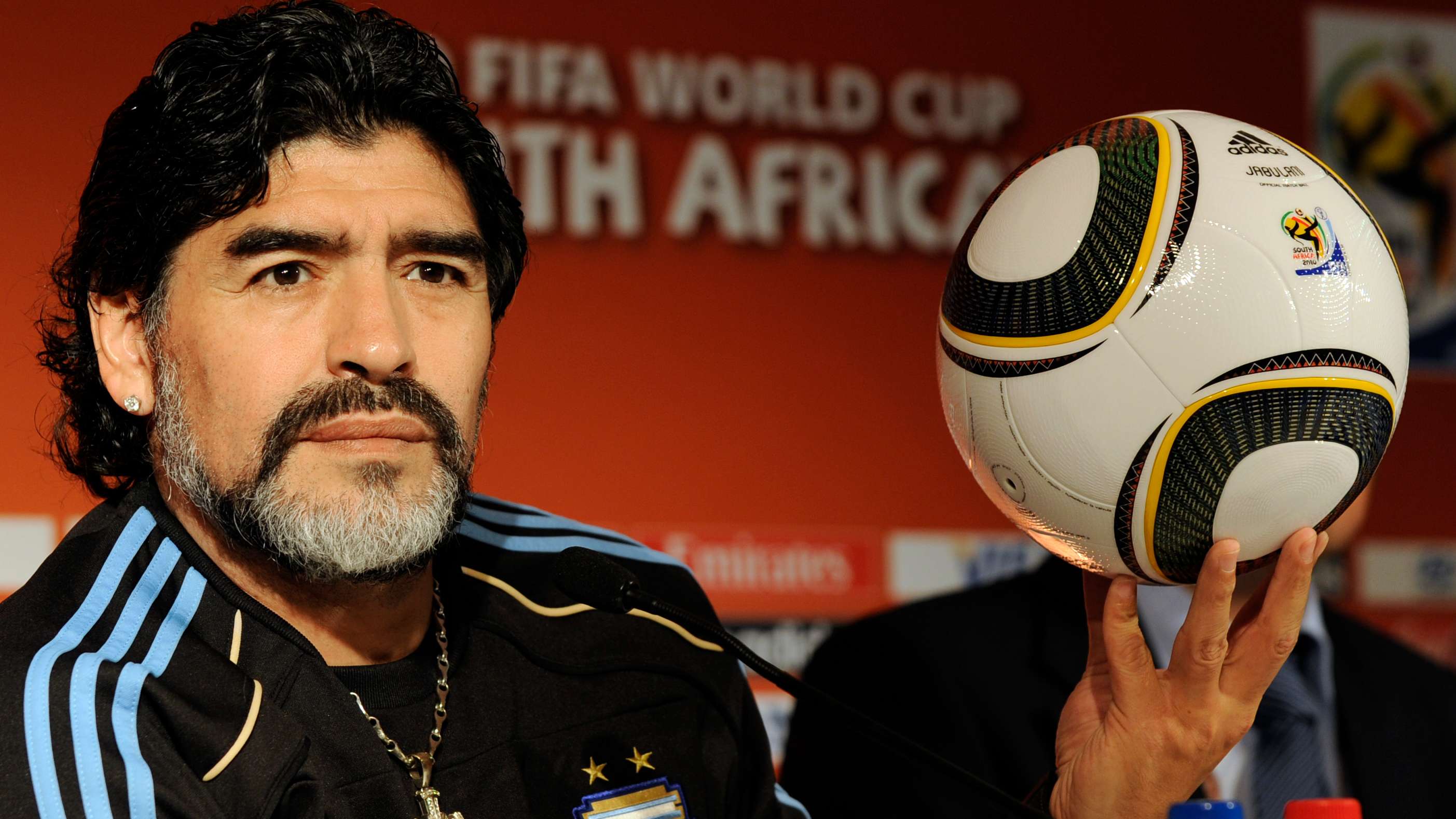
    Jabulani means 'rejoice' or 'be happy' in the Zulu language, so when adidas launched the Jabulani as the official ball for the 2010 World Cup, they were surely hoping that it would be better received than the Fevernova and Teamgeist tournament balls which had copped plenty of criticism at the 2002 and 2006 tournaments, respectively.

    They were sorely mistaken. The Jabulani had been designed with input from scientists at Loughborough University and included a revolutionary new technology dubbed ‘Grip ‘n Groove’, which meant that the surface of the ball was textured with shallow channels to make it more aerodynamic. But instead of scientists, the German sportswear manufacturers should have been consulting with players, who almost unanimously loathed the ball and its unpredictable flight path.

    "For sure the guy who designed this ball never played football," Brazil striker Robinho said. "But there is nothing we can do; we have to play with it."

    England goalkeeper David James was even more direct: "The ball is dreadful. It's horrible, but it's horrible for everyone."

    A long list of coaches and players joined in with Brazil goalkeeper Julio Cesar in comparing the Jabulani to a ‘supermarket’ ball, while the former Liverpool midfielder Craig Johnston, who had designed and created the prototype for the adidas Predator, the world’s biggest selling football boots, was so dismayed by the ball that he wrote a 12-page letter to Blatter outlining the perceived failings of the Jabulani alongside reams of feedback from professional players who criticised it for poor performance.

    Johnston begged FIFA to abandon the Jabulani, but undeterred by the criticism, the much-maligned ball was firmly planted on the centre spot at the Calabash-inspired Soccer City stadium on the outskirts of Soweto for the opening match between hosts South Africa and Mexico. Through the first 54 minutes, Bafana Bafana struggled to impose themselves in front of a boisterous, vuvuzela-blowing crowd of just under 85,000. But then a quick sequence of passes saw South Africa mount a rare counter-attack that ended with Siphiwe Tshabalala getting in down the left and, from an acute angle, he smashed a thunderbolt into the far top corner. Nobody of South African persuasion would ever allow a bad word be said about the Jabulani ever again.

  • TO GO WITH AFP STORY BY PHILIPPE GRELARDAFP

    Mutiny

    France arrived at the tournament boasting a squad of global superstars who had reached the 2006 final, only to lose on penalties to Italy after Zinedine Zidane was sent off for that headbutt on Marco Materazzi. They had, however, only qualified for the 2010 edition after an infamous play-off against Ireland, when a deliberate, double Thierry Henry handball in the build-up to William Gallas’ decisive goal led to a furore which eventually helped introduce the Video Assistant Referee into football several years later.

    Then, two months before the finals, the ‘Zahia Affair’ exploded across the world’s media. Franck Ribery, Karim Benzema and Sidney Govou were accused of paying for sex with an underage escort named Zahia Dehar. As if that wasn’t enough to deal with, the French Football Federation (FFF) announced head coach Raymond Domenech would vacate the hot seat immediately after the tournament, weakening his already fragile authority over the squad.

    All this led to the pressure points within the team starting to crack. The first sign of problems came just 24 hours before France's opening group game against Uruguay, when Florent Malouda squared up to Domenech in training before being dragged away by captain Patrice Evra. Malouda was benched for Les Bleus' limp 0-0 draw with the South Americans which moved French legend and former captain Zidane to prophetically tell the media that he thought Domenech had lost control of the team.

    In France’s next group match, a 2-0 loss to Mexico, the internal tensions in the squad boiled over during the half-time break. Nicolas Anelka had a blazing row with the head coach and, after refusing to apologise when asked to do so by the head of the FFF, was substituted and subsequently sent home in disgrace from the tournament.

    The following day, the extent of the mutinous mood in the France camp was exposed to the world. In a training session that was open to the public, the squad protested Anelka’s expulsion by refusing to take part. After signing autographs for fans, France's players moved to the training pitch where Evra almost came to blows with fitness coach Robert Duverne in full view of those watching on.

    Evra stormed off to the team bus where he was joined by the rest of the playing squad. Once inside, they pulled the curtains closed on the coach and apparently jotted down some notes. When they eventually emerged again, they did so clutching a letter which they made Domenech read out to the waiting fans and media.

    "All of the players, without exception, want to declare their opposition to the decision taken by the FFF to exclude Nicolas Anelka from the squad," he said. "At the request of the squad, the player in question attempted to have dialogue, but his approach was ignored."

    For many this was the darkest hour in French football history, but they still managed to become tournament villains before heading home. In their final group match against South Africa, all the already-eliminated France had to do was lose by three goals and the hosts would be through to the knockouts. Les Bleus were losing 2-0 and down to 10 men at half-time after Yoann Gourcuff’s 25th-minute red card, but they roused themselves from their funk and clawed a goal back when Ribery beat Tsepo Masilela to a through-ball and squared for Malouda to tap home.

    Both teams therefore lost that day as South Africa became the first World Cup hosts in history to be eliminated in the group stages.

  • ENJOYED THIS STORY?

    Add GOAL.com as a preferred source on Google to see more of our reporting

  • TOPSHOT-FBL-WC2010-MATCH58-URU-GHAAFP

    Africa's newest villain

    Despite South Africa being joined by the Ivory Coast, Cameroon, Algeria and Nigeria in getting themselves knocked out in the group stages, there was one continental representative left in the knockout rounds of the first World Cup on African soil: Ghana. And in the true spirit of Ubuntu, every African following the tournament swung their support behind their continental brothers.

    The Black Stars clawed their way into the round of 16 through a tough Group D featuring Germany, Australia and Serbia, as they pipped the Socceroos on goal difference to finish second to Joachim Low’s group winners. Ghana's reward was a knockout tie with surprise Group C winners, the U.S., who had beaten Fabio Capello’s floundering England to the top spot.

    At the Royal Bafokeng Sports Palace in Rustenburg, Ghana took an early lead through Kevin-Prince Boateng, but the Americans came back strongly after the break and equalised through a Landon Donovan penalty. Ghana hung on to reach extra-time before retaking the lead when Asamoah Gyan controlled a long ball with his chest and buried his strike from a wide angle despite the attentions of two defenders.

    The Black Stars had emulated Cameroon in 1990 and Senegal in 2002 by reaching a World Cup quarter-final, and their game against Uruguay ebbed and flowed. Ghana took the lead via a 40-yard screamer from Sulley Muntari on the stroke of half-time, but Uruguay equalised when Diego Forlan - the one player at the tournament who mastered the Jabulani more than anyone else - struck a second-half free-kick that bamboozled Richard Kingson in the Ghana goal.

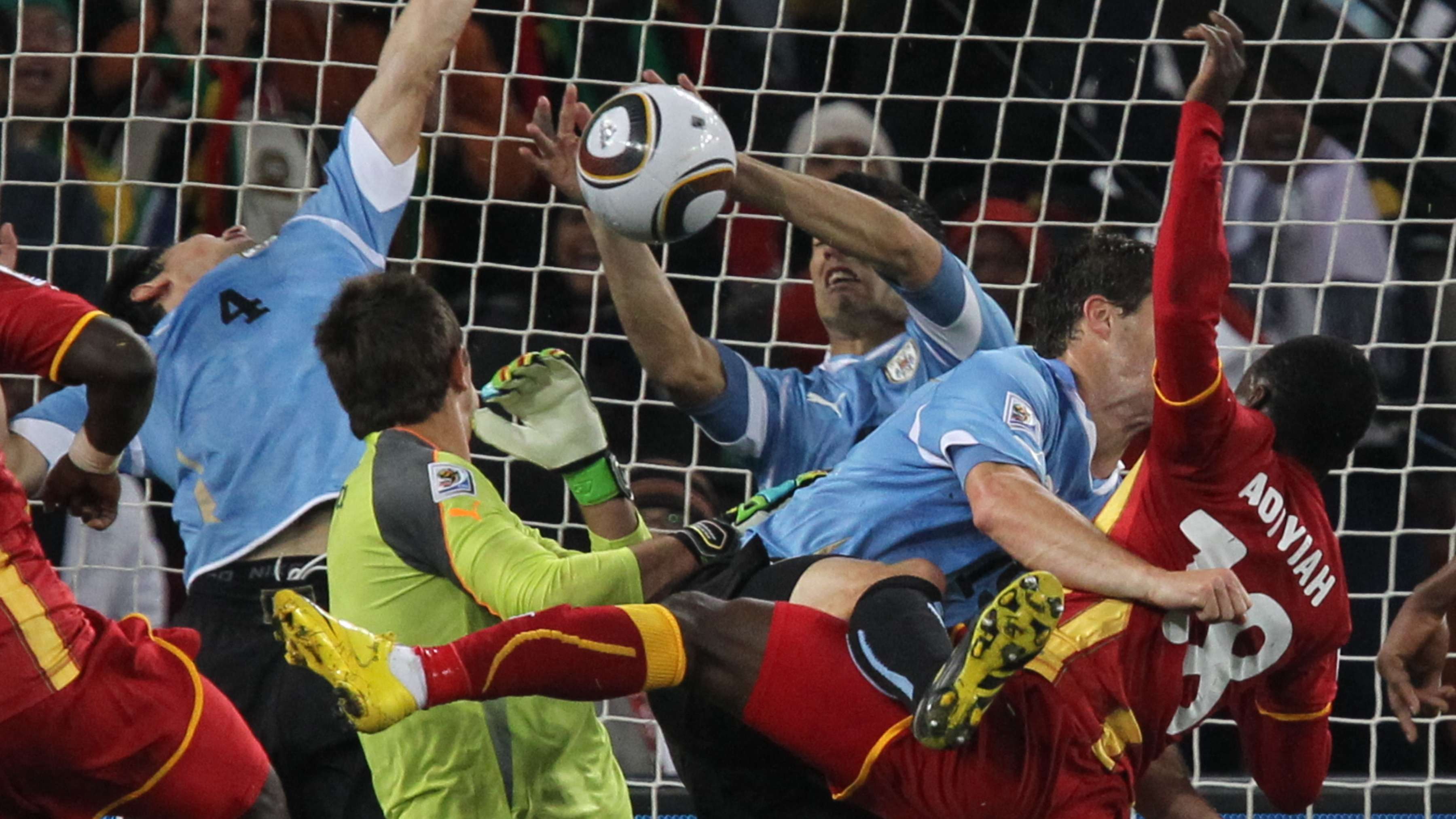
    A World Cup classic that featured 39 shots over the 120 minutes, including extra-time, will, however, always be remembered for the events of the final seconds. Uruguay had spent the final minutes pinned back by a Ghana side who were apparently desperate to avoid the looming penalty shootout. After a free-kick was whipped in from the right by John Pantsil, the ball landed at the feet of Stephen Appiah in the six-yard box. His shot cannoned off Luis Suarez's knee and sat up perfectly for Matthew Amoah to nod home, only for Suarez, in a moment he later described as "the best save of the tournament" beat the ball off the line with his fists.

    Africa erupted with fury, a tearful Suarez was sent off and Ghana were awarded a penalty to win with the last kick of the match. Gyan, though, could only hit the top of the crossbar.

    "I let the whole continent, my country down,” he told GTV Sports years later. "Anytime I’m alone in a room, it just pops into my mind. I’m going to live with it for the rest of my life."

    After Ghana lost the resultant shootout, Africa turned its rage towards their new Public Enemy Number One: Suarez. H, though, was unrepentant.

    "The 'Hand of God' now belongs to me," he said, referencing the handball goal scored by Diego Maradona against England at the 1986 World Cup. The debate over Suarez’s conduct raged on well after Ghana had departed the tournament, well after Uruguay were beaten 3-2 by Netherlands in the semi final, and well after they lost the third-place play-off to Germany, also by a 3-2 scoreline. 

    And in truth, Africa has never quite forgiven, or forgotten the man now known as 'Diablo' - The Devil.

0