+18 | Play Responsibly | T&C's Apply | Commercial Content | Publishing Principles
USWNT Moms storyGOAL

'You can be two things all at once' - Emma Hayes and the USWNT moms redefining motherhood in soccer

There have been 18 moms who have played for the U.S. women’s national team, from Joy Fawcett becoming a mother in 1994 to Sophia Wilson entering motherhood in 2025. Across those three decades, no pregnancy, postpartum journey, or road back to the USWNT has looked exactly the same.

What has changed, though, is the emphasis on support around them.

Motherhood in professional sports has long been treated as something athletes had to navigate quietly, carefully, and often without much institutional help. But in soccer, and specifically in the U.S. women’s game, there has been a visible shift and evolution. The conversation is no longer just about whether players can return after giving birth. It is about how they are supported, protected, and empowered to do so.

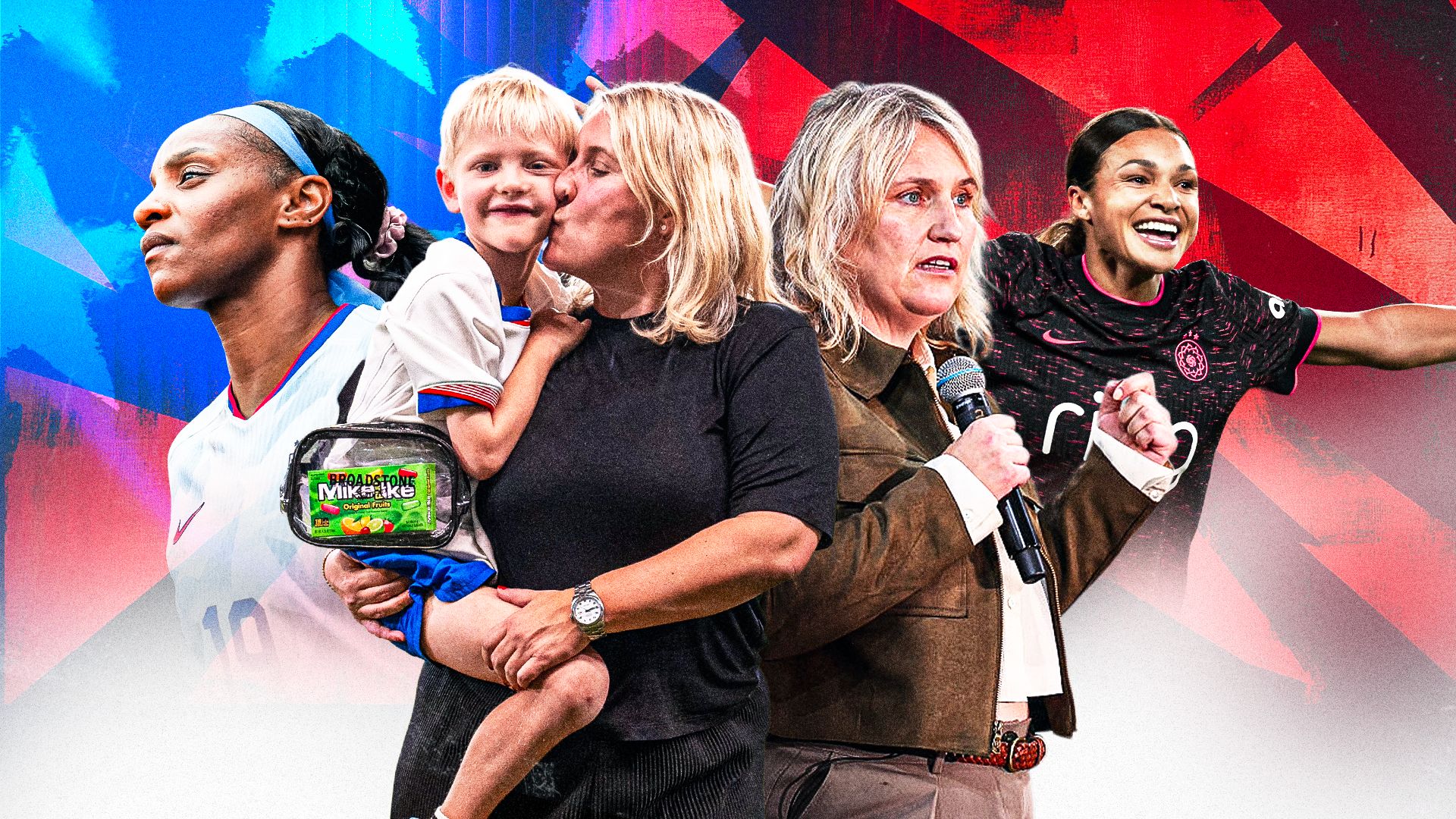
USWNT head coach Emma Hayes knows plenty about winning. She led Chelsea Women to seven Women’s Super League titles before guiding the USWNT to Olympic gold at the 2024 Paris Games. But for all the trophies, victories, and elite talent she has helped develop, Hayes has always held one role above the rest: being a mom to her son, Harry.

“I know for myself, it’s important that I have my son around for me in critical moments,” Hayes told GOAL.

That perspective has shaped the way Hayes approaches players who are mothers or mothers-to-be. She understands that there is no one-size-fits-all plan, because no pregnancy, birth, or postpartum experience is the same.

“It’s about getting it right for the individual,” Hayes said. “That’s the key thing, because there’s nothing worse. I’ve experienced it myself. You’re doing something, and you’re detached from your baby in a way that is going to hinder your own performance, and that’s only going to hurt the team.”

Coaching moms is not new to Hayes. But this current USWNT era feels different. Two members of the self-titled “Triple Espresso” attack that helped the Americans win gold in Paris, Wilson and Mallory Swanson, gave birth to baby girls in 2025. Most recently, forward and two-time Olympian Lynn Biyendolo gave birth to her son, Lucky, in April.

“I coached a lot of mums in my career, so I know how much value it brings to a team,” Hayes said.

That value has always been there. What has not always existed is the structure around it.

Today, players have clearer return-to-play protocols, along with revamped NWSL and USWNT collective bargaining agreements that include paid maternity leave, contract security, medical benefits, and other protections. Those resources, while available, weren't present in the same way for players such as Alex Morgan and Crystal Dunn. And they were nowhere near the reality for earlier USWNT legends such as Christie Pearce Rampone, Carla Overbeck, and Fawcett.

The progress has been significant, but it has also been hard-earned. Players like Wilson, Swanson, and Biyendolo are stepping into motherhood at a time when the system is finally beginning to recognize that being a mother and being an elite athlete should not be treated as competing identities. They are also stepping into it at a time when science and mental support is backed, and there is unified support for these moms from club and country.

“I think we do a tremendous job,” Hayes said when asked where U.S. Soccer stands as a trailblazer in this space. “I think we provide absolutely everything that’s necessary for them, whatever that looks like. I think we definitely lead the way on that front. I think we probably lead the way in terms of the knowledge of returning players back to full participation safely, too.”

  • United States v Colombia - SheBelieves Cup 2026Getty Images Sport

    The USWNT way under Hayes

    Since taking over as USWNT manager, Hayes has been clear that every part of the program must be viewed through a female lens. For too long, careers, systems and soccer operations have been shaped around men’s bodies, men’s schedules, and men’s experiences. Hayes is trying to build something different.

    “I want the players to feel safe. That they can speak up when they need to, if they don’t feel ready or they want more of something or less of something. That, for me, is the gold standard we’re creating. Creating a world where women feel like they can be honest and feel super supported,” Hayes said.

    Motherhood, in that way, becomes part of the larger standard Hayes is trying to set. It is not treated as an interruption or an obstacle, but as something the program has to understand, plan for, and support.

    “U.S. Soccer has been sort of trailblazers in this area, so we’re just carrying on with the traditions that are there, but I think this time, we’re providing the right support system around [the players] and knowledge so that they can make informed choices along the way instead of the guesswork that comes with it.”

  • Advertisement
  • Becky Sauerbrunn and Crystal DunnGetty Images

    The struggles of the past

    For generations, motherhood in professional soccer came with uncertainty.

    Players had to navigate careers in leagues that were not always built to support families, whether that meant traveling without their children, relocating after trades, or facing the perception that starting a family meant stepping away from the game for good. Conversations around fertility, family planning, and female health were limited, too, leaving players to figure out deeply personal decisions without much public guidance or structural support.

    Former USWNT captain Becky Sauerbrunn has watched that shift happen in real time. Sauerbrunn, who recently became a mother after retiring, spoke with Soccer Girl and GOAL about the changes she has seen in this new generation of soccer moms.

    “I just think it’s so wonderful to see these players feeling comfortable that they can now start a family when they choose. And that’s the protections that the CBA has now afforded these players,” Sauerbrunn said.

    “It’s great to see them not only having a job when they come back, but also the support that they are now getting, sport performance, medical, these teams creating family rooms within their facilities and at their stadiums. And it’s just like such a beautiful setup that is now available to these players.”

    Hayes added that the support has to be specific to each player, not just a broad policy on paper.

    “We will be beside them with their clubs and not just through their pregnancy, but depending on the type of birth, whether it’s a C-section, whether it’s natural, whether it’s been a difficult pregnancy or whether it’s been straightforward, is to actively work side by side with their clubs. It’s about meeting them where they’re at.”

  • Sophia WilsonGetty Images

    'Make sure that we support you'

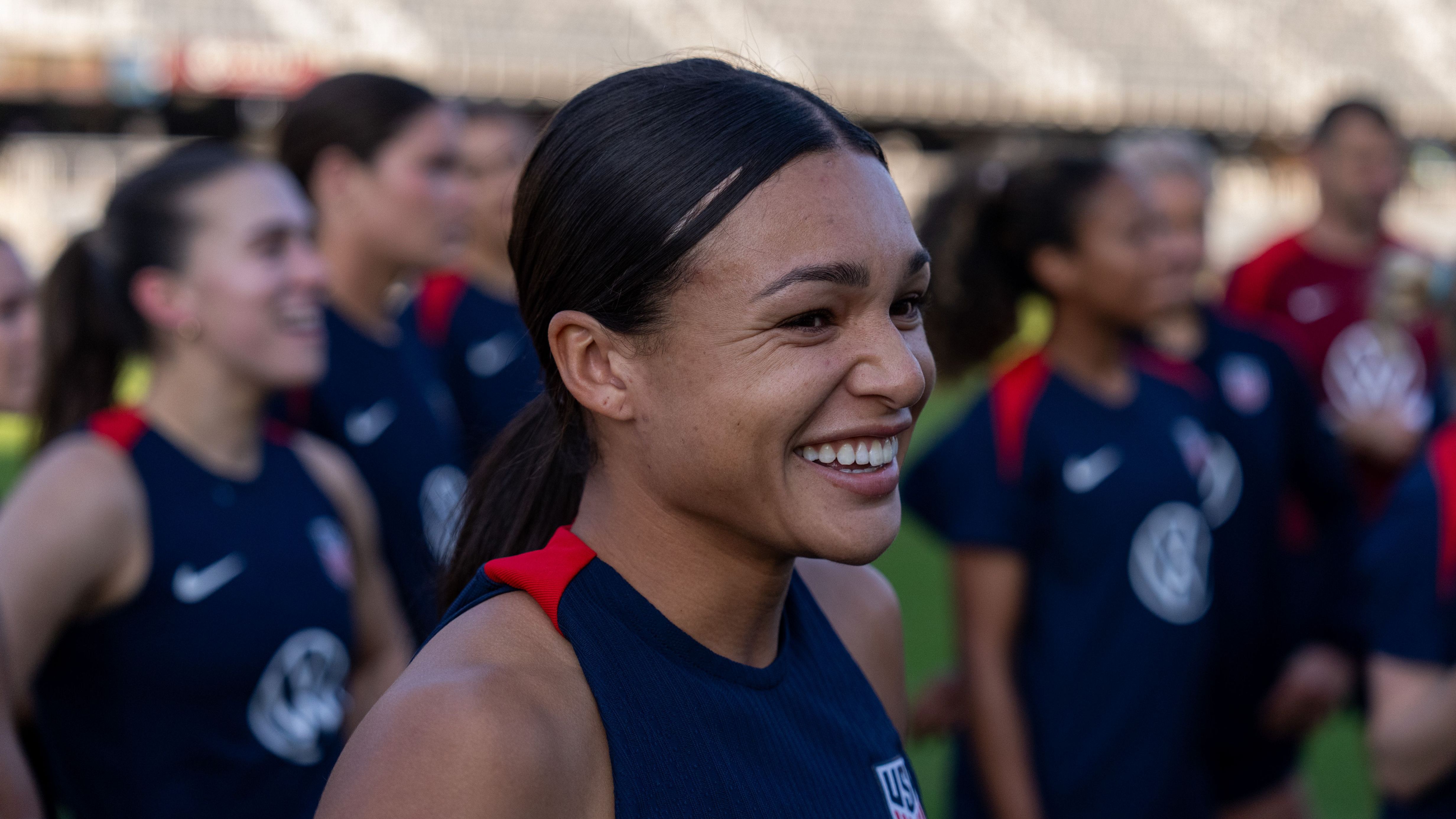
    In January, Wilson walked through the lobby of a downtown Los Angeles hotel with her baby, Gigi, while waiting for her media obligations at NWSL Media Day. She greeted teammates, caught up with people she had not seen since before giving birth and spoke openly with reporters about where she was in her return to the game.

    But even then, Wilson made it clear that she did not see her journey as something she was navigating alone. Much of her belief in what was possible, she said, came from the moms who had done it before her.

    “I could have a baby and come back and play because I saw Crystal do it,” Wilson said at Media Day.

    “She’s just such an inspiration. I mean, I can’t say enough things about what she’s done for the game.”

    Months later, Dunn smiled when asked about Wilson, telling GOAL, “That’s my sis right there.”

    In April, seven months after giving birth to her daughter, Wilson was called back into the national team. It had been 15 months since she had last played in the red, white and blue, and when she spoke with a select group of media members after her call-up, she sounded like a player who had found her footing again.

    “I feel like I’m in a really great place right now,” Wilson said. “I think I’ve taken this journey the right way. I feel like I’m in a really great place and have balanced all the things graciously because I’ve seen people before me do the same.”


    Alex Morgan, USWNTGetty Images


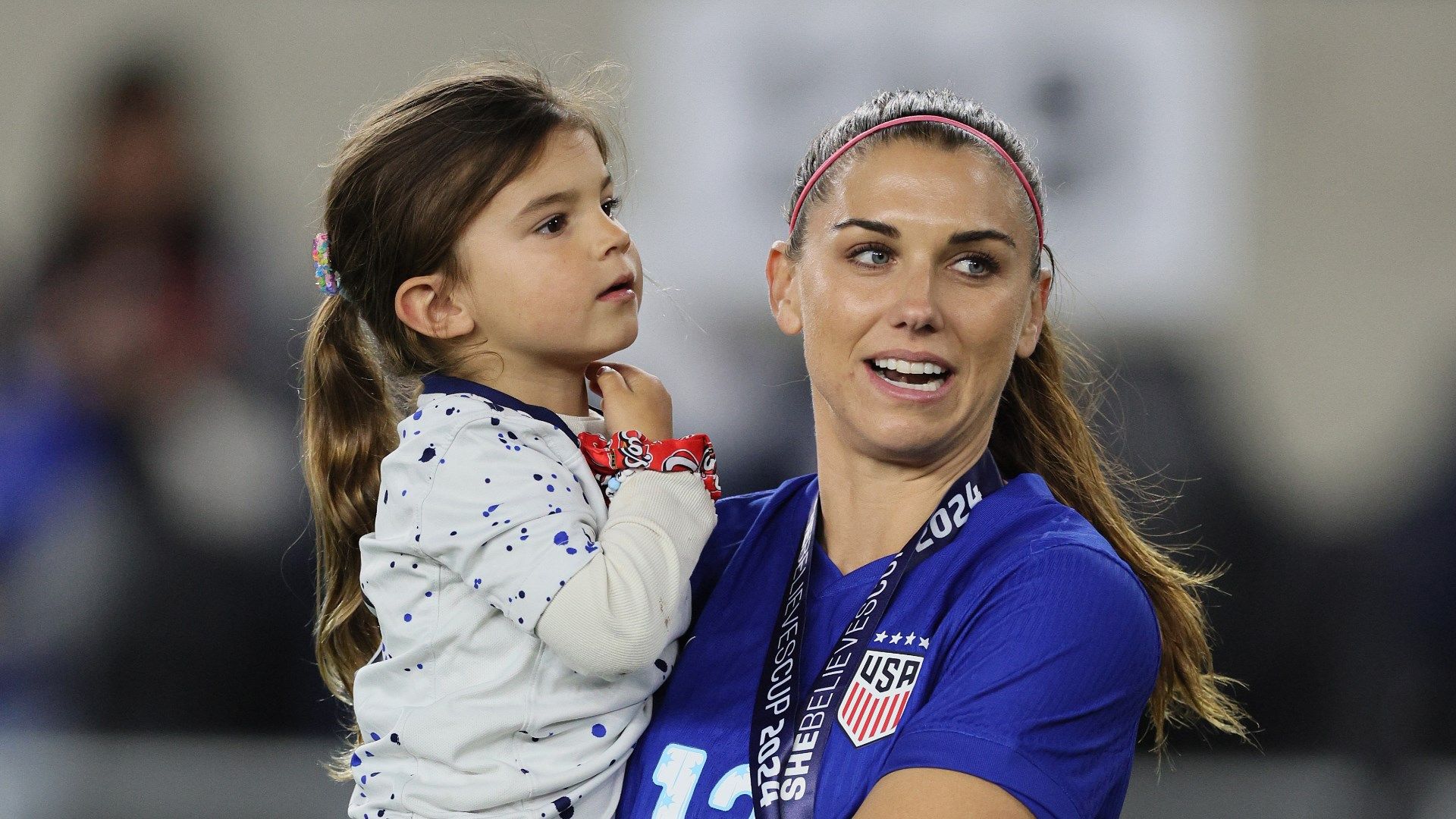
    Dunn was one example. Alex Morgan was another. Wilson said watching Morgan bring her daughter, Charlie, into a national team environment helped reshape what she thought was possible.

    “I remember her [Alex Morgan’s] first camp when she brought Charlie in and just thinking that was so inspiring and so incredible,” Wilson said. “Watching her go through that and get back to playing at a high level was my first example of someone doing that firsthand.”

    That visibility matters. Morgan and Dunn had more support than the generations before them, but Hayes has entered the USWNT at a time when that support is becoming more intentional and more formalized. Between her own approach, U.S. Soccer’s structures and the protections now included in the USWNT and NWSL CBAs, players are no longer being asked to figure out motherhood and elite soccer entirely on their own.

    “I love talking to them about their babies and how it adds more to their life,” Hayes said. “You know, you can be two things all at once. If you want to be a mum and a soccer player, you know, go for it. That’s your choice, and our job is to make sure that we support you.”

  • ENJOYED THIS STORY?

    Add GOAL.com as a preferred source on Google to see more of our reporting

  • Emma Hayes USWNT vs IrelandGetty Images

    'I just handle it like a human being'

    There is another side to pregnancy that is present in locker rooms across the world: loss, fertility challenges, and the uncertainty that can come with trying to start a family while still playing at the highest level.

    Just as there was a time when players were made to feel they had to choose between soccer and motherhood, there have also been moments when women were expected to keep showing up at training while privately dealing with loss, struggling to conceive or undergoing IVF treatments. Those experiences are deeply personal, but they are also part of the larger conversation around what real support for women in professional sports has to look like.

    “I mean, truthfully, I just handle it like a human being,” Hayes said. “I’ve been through losing a child myself, so I know I can relate, I can empathize, and whenever those situations happen for anyone, it’s about letting everybody know that, first, it’s okay to feel crap about it, to normalize it and give people the space.”

    Sauerbrunn said she is grateful she had the choice to become a mother after retiring, but also emphasized how important it is that today’s players have more freedom to decide what motherhood looks like for them.

    “I’m so glad now that people can choose whenever they want to have a baby,” Sauerbrunn said.

    “I also just want to shout out Crystal Dunn and Alex Morgan because they worked so hard with the national team CBA to make sure that there were protections, and also with the National Women’s Soccer League Players Association (NWSLPA).”

    Whether the journey to motherhood was planned, unexpected, complicated, or still difficult to define, each of the 18 mothers who have played for the USWNT has her own story. What connects them is not one shared experience, but the growing belief that players should not have to separate who they are as women from who they are as athletes.