+18 | Play Responsibly | T&C's Apply | Commercial Content | Publishing Principles
Pulisic Reijnders Okafor Milan GFXGetty/GOAL

Can 'Moneyball' Milan succeed in the Champions League - or is the American owners' data-based approach 'destined to fail'?

On June 6, AC Milan announced that club legend Paolo Maldini had been relieved of his duties as technical director in a 67-word statement. The news - and the manner of its delivery - sent shockwaves throughout Europe. Carlo Ancelotti was aghast.

“I learned at Real Madrid that the history of a club must always be respected," the former Milan midfielder and coach told Il Giornale. "Here, Di Stefano, Amancio, Gento, Puskas are still exclusive values towards which we have reverence. To preserve history at the highest levels, the memory of the past must be protected.

"What happened with Maldini demonstrates a lack of historical culture, of respect for the Milan tradition. While it is true that history does not make you win, it is also true that history teaches you how to win."

However, owner Gerry Cardinale has been "educated" in 'the art of winning' not by Maldini's Milan - but by Billy Beane.

"Billy's been in European football for 20 years and he told me I wasn't looking at the situation in the right way," Cardinale said of the revered baseball executive during a seminar at Michigan Institute of Technology in March. "I had to approach European football with the 'Moneyball' mentality, which says there is no need to sacrifice the level of performance on the field for cash flow or vice versa."

We'll soon find out if he's right...

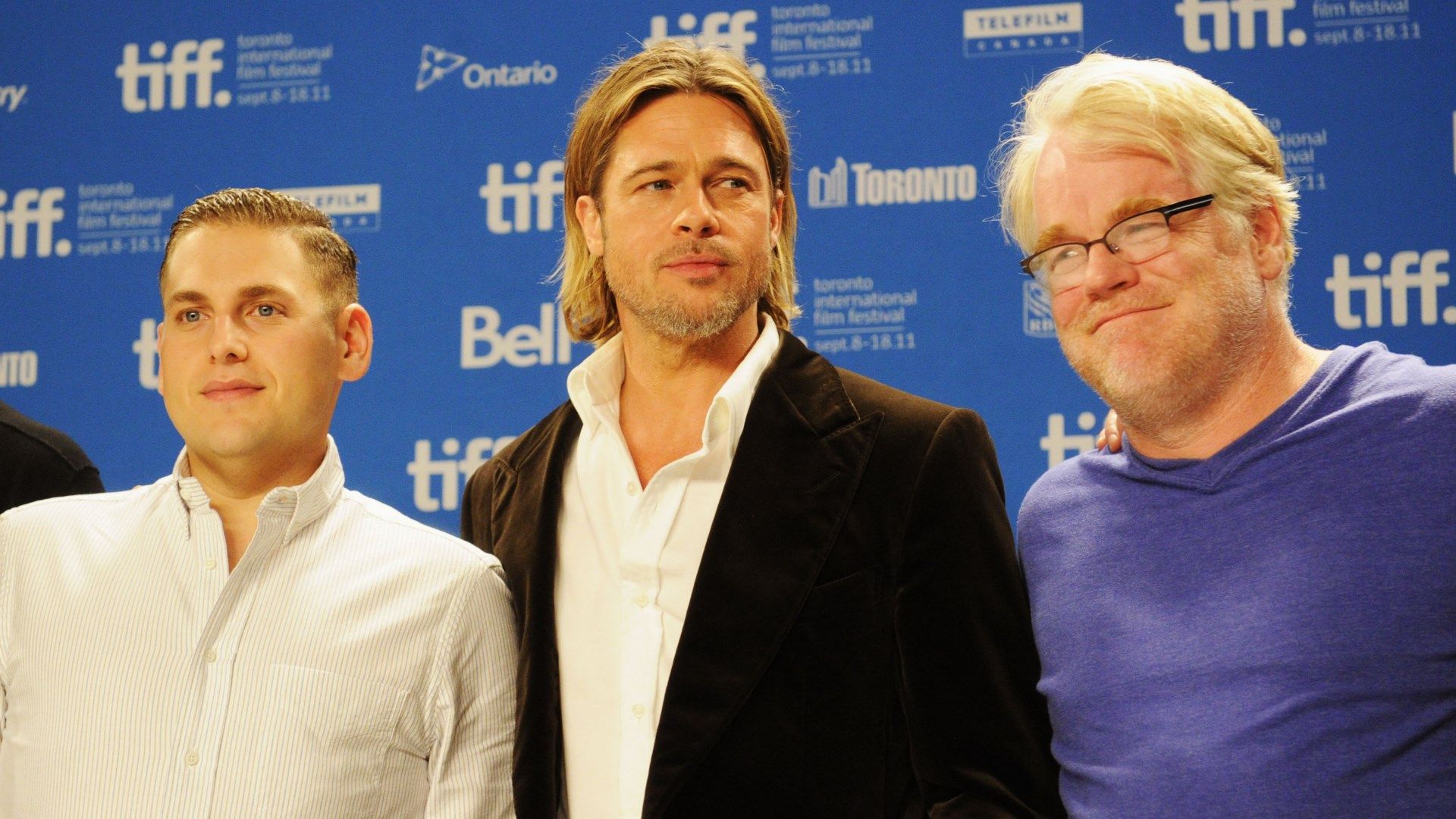
  • Brad Pitt Jonah Hill Philipp Seymour Hoffman MoneyballGetty

    What is 'Moneyball'?

    "We've got to think differently. We are the last dog at the bowl. You see what happens to the runt of the litter? He dies." - Billy Beane

    Beane gained global fame through the Hollywood-produced movie 'Moneyball', starring Brad Pitt. The plot focused on how Beane, in conjunction with Peter Brand (played by Jonah Hill), successfully implemented a stats-based scouting system known as 'sabermetrics' at the Oakland Athletics.

    The key, as Brand explained in the movie, was using in-depth data to identify "the value of players that nobody else can see" and, despite intense in-house resistance to the new recruitment strategy, including manager Art Howe (Philip Seymour Hoffman), it enabled the A's to make one shrewd signing after another.

    The net result was one of the franchises with the smallest budgets in Major League Baseball breaking the record for consecutive wins in a single season, in 2002. The following year, Michael Lewis' book 'Moneyball: The Art of Winning an Unfair Game' was published to critical acclaim and became a commercial success.

    Even more significantly, the methods employed by A's were embraced - if not always completely, at least partially - by other MLB teams.

  • Advertisement
  • Mbeumo BrentfordGetty Images

    Taking over Europe

    "If we win, on our budget, with this team... we'll have changed the game." - Billy Beane

    Moneyball's influence extended well beyond baseball, though. Football also took notice, particularly after the release of the film based on Lewis' book in 2011. For a long time, it was felt that the statistic-heavy analysis prevalent in American sports, and baseball in particular, added little to understanding 'The Beautiful Game'. Football, it was felt by traditionalists, was too fluid; there were too many variables and far greater freedom of expression. A little over five years ago, video analysts were still being derogatorily referred to both behind the scenes and in the mainstream media as "laptop gurus".

    However, attitudes began to change, particularly after the success of FC Midtjylland, the first European club to truly employ a sabermetrics-based business model. The Danes won their first Superliga in 2015 and now have three titles to their name.

    Midtjylland's data-heavy approach to transfers has since been mirrored by Toulouse, who won last season's Coupe de France - just a year after gaining promotion to Ligue 1, after nearly two decades in France's second tier.

    Then there's Brentford, who reached the Premier League for the first time in 2021 and have since established themselves as one of the best teams in the top flight. The use of stats has clearly been key to their remarkable rise, though owner Matthew Benham is wary of the term 'Moneyball'.

    "The label can be confusing, especially because baseball has always been obsessed with numbers and data - but not football," he said. "We do not use statistics at random, but in a scientific way."

  • Coutinho Liverpool Premier LeagueGetty Images

    No one right way

    "I think it's a good thing that you got Damon off your payroll. I think it opens up all kinds of interesting possibilities." - Peter Brand

    Cardinale has also stressed that "data is just one tool" Milan are using to construct a team capable of winning multiple trophies. "Moneyball was written 20 years ago and today everyone uses data, but in our portfolio there is an analytics company with 13 researchers from MIT," the American told the Corriere della Sera on Friday. "European football is not baseball; it requires a different level of sophistication and we believe we are at the forefront."

    At the very least, Milan are the most high-profile club to date to embrace Moneyball, with Beane even serving as a transfer market consultant.

    Liverpool were obviously universally lauded for the way in which they transformed a team in disarray before Jurgen Klopp took over into the 'champions of everything' with one excellent signing after another. The input of former director of research Ian Graham, who led a six-strong data analysis team, played a pivotal role in bargain buys such as Mohamed Salah and Diogo Jota, who were both (rightly) identified as undervalued and ideally suited to Klopp's specific brand of football. Liverpool also pulled off a masterstroke by effectively covering the cost of two transformative transfers in Alisson Becker and Virgil van Dijk by selling Philippe Coutinho - an outstanding talent at Anfield but one not strictly needed given Liverpool's plethora of options in attack.

    However, it's also worth remembering that Liverpool were not afraid to spend big when required. Both Alisson and Van Dijk were the most expensive players in their respective positions at one point - and Maldini was adamant that a club of Milan's ambition and stature would have to spend significant sums on certain players in order to get to the next level.

    "With two or three important signings, and the consolidation of the players we have," he said after the club's shock Serie A title win in 2022, "we can compete for something bigger in the Champions League."

    Milan instead spent just €50m that summer - the majority of which went on Charles De Ketelaere (€32m). The Belgian's first-season struggles at San Siro were subsequently used as a stick with which to beat Maldini, with the argument being that it proved he was not worth backing in the market.

    However, the fact remains that Maldini masterminded Milan's first Scudetto success in a decade by acquiring 21 players at a net cost of €75 million (£64m/$82m) - as much as Juve had paid for Dusan Vlahovic. It's hard not to argue that Milan were practising Moneyball even before Beane was brought on board.

    At the end of the day, though, Maldini's view of the way in which Milan might get to the next level was fundamentally different to that of Cardinale. As club president Paolo Scaroni told the Corriere della Sera, "We are following a more innovative model, at least for Italy, in how to run a club. That leads us to consider all our activities as collegial, we work in a team.

    "It is an organisational model that our main shareholder (Cardinale) cares a great deal about. Let us not forget, he is a specialist in sport who had success in his activities, so when he suggests something, we pay close attention, as he brings innovation.

    "We got the feeling that Paolo felt ill at ease in this organisation, so when someone is ill at ease, it is best to go our separate ways."

  • Sandro Tonali Milan 2022-23Getty Images

    Investing in both the future & the present

    "You're killing this team." - Art Howe

    Maldini quite clearly felt that Milan's new owners were more interested in turning a profit than restoring the Rossoneri to their former glory. "With a strategic vision, Milan could next season compete with the biggest clubs. However, if we were to choose a vision of maintaining our current level, without investment, without an idea worthy of Milan, we would remain in limbo among the top six or seven sides in Italy, hoping to maybe win the Scudetto again and qualify for the Champions League," he warned last year.

    So, he wasn't the least bit surprised when a relatively young and inexperienced Milan side were overwhelmed by Inter in the semi-finals of the Champions League the following year. As far as he was concerned, it was clear that a balance had to be found between prudence and ambition.

    The importance of youth was obvious to him - how could it not be given he had come through the youth-team section at Milan and made his senior debut at just 16? But he also played during an era in which Silvio Berlusconi paid big money for world-class talents such as Marco van Basten, Ruud Gullit and Frank Rijkaard, in order to assemble arguably the greatest side the club game has ever seen. So, the sale of Sandro Tonali to Newcastle for €70 million was the antithesis of everything Maldini was trying to do.

    Coming so soon after Maldini's dramatic departure, it was a transfer that sparked fear into the fans. In the final game of the 2022-23 season, they had echoed Maldini's plea for investment in a banner unfurled at San Siro that read: "Another year has passed, it is time for the transfer market. We want [to take] a step up the ladder."

    Consequently, cashing in on Tonali, a 23-year-old boyhood Milan fan considered a future captain, unsurprisingly felt like a step down to the stunned supporters. The obvious concern was that Moneyball meant Milan becoming a feeder club.

  • Paolo Maldini Stefano Pioli AC Milan 2022 Serie A titleGetty

    Unable to close the gap?

    "We are card-counters at the blackjack table and we're gonna turn the odds on the casino." - Billy Beane

    Cardinale insists that he is committed to putting Milan firmly back among Europe's elite, both in a financial and sporting sense. He says that he wants to be "Berlusconi 2.0, to have the same impact as him - but in a completely changed context. Now, with the highest turnover in the history of Milan and a budget that will close profitable for the first time since 2006, we face a new phase: we want to be No.1, but we can't do it without changes."

    And for Cardinale, that meant firing Maldini and sporting director Frederic Massara, and rather than replacing them, creating a group led by the club's revered head of scouting, Geoffrey Moncada, who was integral in the signing of the likes of Mike Maignan, Theo Hernandez and Rafael Leao. Then again, so was Maldini, as Scaroni himself has admitted.

    However, the president believes that Milan no longer needed one of the few universally respected figures in football. "It is very true that Maldini had a certain impact in negotiations and to this day I are very grateful to him, but I must also say that nowadays - and I hope it doesn’t seem ungrateful - we don’t need him as much," Scaroni told the Corriere. "At the time, Milan were just coming out of the Yonghong Li era and struggled to attract talents. Milan today won the Scudetto and reached the Champions League semi-finals, so I think the club in general is more attractive."

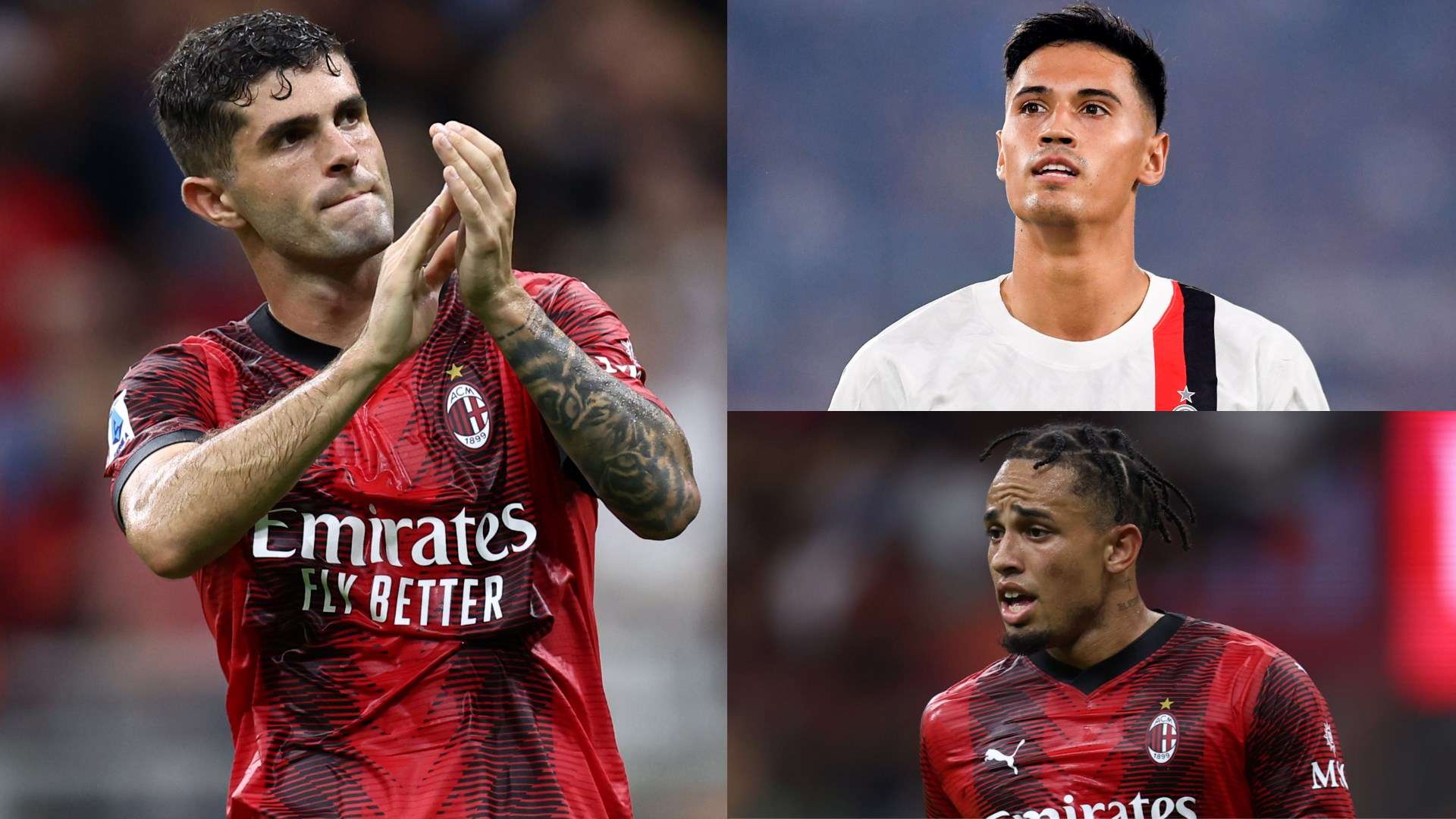
    Cardinale has also pointed to the fact that Tonali's transfer helped fund well over half of a summer outlay that he believes has already made Milan stronger than last season, with new arrivals Christian Pulisic (€20m), Ruben Loftus-Cheek (€16m) and Tijjani Reijnders (€20m) all making positive early impressions.

    When the Rossoneri lost home and away to Chelsea in last season's Champions League, the RedBird Capital Partners founder was struck by the gulf in class between the two teams - one made all the more worrying by the Blues' dreadful Premier League performances. "Therefore, I wanted a more physical, faster Milan, more intense," he explained. "And we saw it in the first few games."

    Milan certainly impressed in their first three outings of the 2023-24 campaign but, on Saturday night, they failed the first true test of the strength of their new squad - and arguably their business plan - with Stefano Pioli's side humiliated by Inter, routed 5-1 in the first derby of the season. It was a historic fifth successive derby defeat for Milan and arguably illustrated why Maldini had reportedly come to the conclusion that Pioli was not the coach the club needed to take the team to the next level.

    Indeed, on the evidence of what we saw at San Siro, the gap that Maldini flagged last season hasn't been closed - if anything, it's widened after a much-vaunted summer window, which obviously doesn't bode well for Milan's hopes of surviving the Champions League's 'Group of Death', alongside Paris Saint-Germain, Borussia Dortmund and Newcastle.

    The Rossoneri will kick off their campaign against the latter on Tuesday night, which just feels fitting, given the Tonali deal perfectly underlined the two sides' contrasting approaches to the transfer market.

  • Gerry Cardinale AC MilanGetty

    Points or profits?

    "I gotta ask you, what are we doing here, if it's not to win a championship?" - Billy Beane

    Milan obviously cannot operate like Newcastle, who are backed by Saudi Arabia, but Cardinale & Co. are adamant that with a Moneyball-inspired approach, it will still be possible to defeat state-sponsored clubs. For that reason alone, the footballing world will definitely be watching the game at San Siro - and indeed Milan's European exploits - closely.

    Even though the whole point of Moneyball is making low-cost signings, this is the riskiest implementation of sabermetrics in football we've seen so far - primarily because, with all due respect to Midtjylland, Toulouse and Brentford, they are not Milan. Just like the Oakland A's, that particular trio were never meant to win the game's most prestigious prizes. They had no history of success at the very highest level.

    For all of Milan's recent economic issues, the supporters still expect the seven-time champions of Europe to be at least competing for major honours, and they certainly won't accept a lack of ambition. They are not idiots after all. They will be well aware that while Beane has been repeatedly recognised for his brilliance in rebuilding squads, winning the MLB Executive of the Year award on three occasions, the A's have never reached a World Series on his watch.

    Of course, for Beane, it wasn't about rings - it was about changing the game, as he put it. And he undoubtedly achieved that goal. But will Milan fans be satisfied with challenging for trophies without ever actually lifting them? It was certainly telling that when Maldini was dismissed, the ultras expressed heartfelt thanks to the iconic defender, but refused to rush to any snap judgements on the obvious change in club strategy, instead reminding the owners that "building a strong team capable of competing on all fronts" must be the sole objective.

    This, then, is the most interesting aspect of the new Milan, the uncertainty surrounding RedBird's true motives: do they want to build a squad that wins matches - or generates money? Are they more interested in points - or profits?

    Because Ancelotti is adamant that "football clubs who primarily think of doing business ahead of achieving sporting goals are destined to fail". For 'Moneyball Milan' to succeed, they will need to do both.