
Venezuela

Venezuela Overview

FBL-WC-2026-AFRICA-QUALIFIER-LES-NGA

Nigeria players boycott training TWO days before crunch WC play-off

Nigeria players have boycotted training just two days before a crucial World Cup qualifying play-off against Gabon. The squad have downed tools due to issues with outstanding payments and have demanded a resolution before their next game. The Super Eagles must beat Gabon in their play-off semi-final to have any chance of securing a place at the 2026 World Cup after missing out on automatic qualification in the group phase.

Argentina v Venezuela - International Friendly

No Messi, no problem! Lo Celso shines in Argentina win

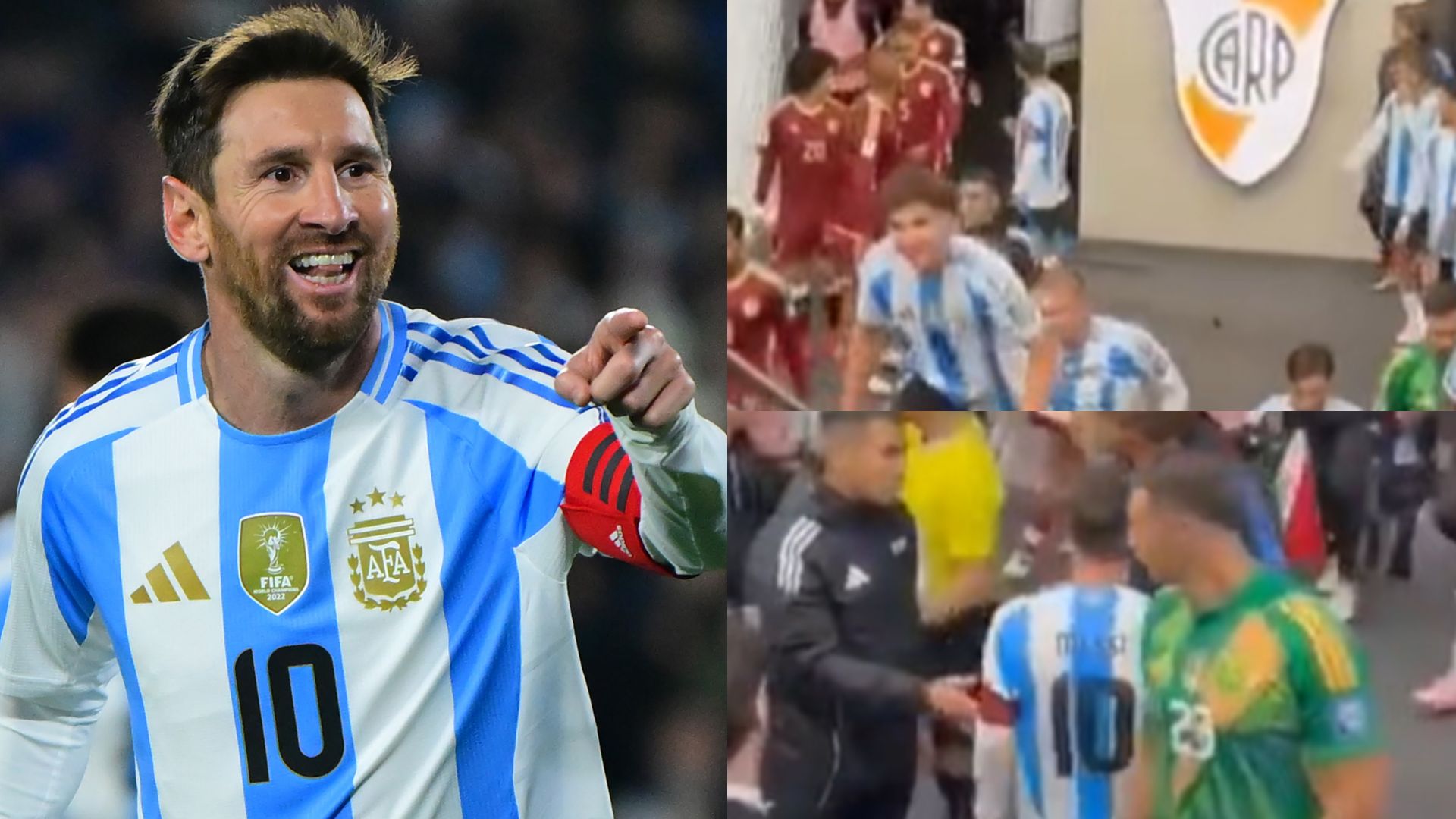
Gio Lo Celso grabbed the only goal as Argentina eased to a 1-0 win over Venezuela in a rather drab international friendly held at Miami's Hard Rock Stadium. The World Cup holders were a little languid as the game wore on in the absence of Lionel Messi, who was rested, but did enough in the first half to secure a narrow win.

More

Standings

Toppserien crestToppserien

Live
PosTeamPWDLFA+/-PTSForm
8Bodoe/Glimt crestBodoe/Glimt20201102
D
D
9Stabaek crestStabaek201123-11
D
L
10FK Haugesund crestFK Haugesund201135-21
L
D
11LSK Kvinner crestLSK Kvinner201124-21
D
L
12Molde crestMolde200218-70
L
L
Last updated 1 hour ago
More

History

Manchester United, often simply referred to as "United," are one of the most iconic and successful football clubs in the world, based in Old Trafford, Greater Manchester, England. The club was founded as Newton Heath LYR Football Club in 1878 by the Lancashire and Yorkshire Railway depot at Newton Heath. The team changed its name to Manchester United in 1902 and moved to its current home, Old Trafford, in 1910.

Famous players

Manchester United have been home to some of the greatest footballers in history. Sir Bobby Charlton, a World Cup winner with England in 1966, is arguably the most iconic figure in the club's history. Other legendary players include George Best, known for his flair and skill, and Eric Cantona, who brought a winning mentality to the club during the 1990s. More recent stars like Cristiano Ronaldo, Wayne Rooney, and Paul Scholes have also contributed significantly to the club's success.

Honours

Manchester United are one of the most decorated clubs in English football, having won a record 20 Premier League titles (formerly the First Division). They have also lifted the FA Cup 12 times, the League Cup five times, and the UEFA Champions League three times. The club's dominance in English football was particularly evident during the 1990s and early 2000s under manager Sir Alex Ferguson.

Managers

Sir Alex Ferguson is undoubtedly the most successful manager in Manchester United's history. He spent 26 years at the club, leading them to an unprecedented era of success. Before Ferguson, managers like Matt Busby and Wilf McGuinness played crucial roles in shaping the club's identity. More recent managers, including David Moyes, Louis van Gaal, and José Mourinho, have faced the challenge of maintaining the club's high standards.

Stadium

Old Trafford, often referred to as the "Theatre of Dreams," is one of the most famous stadiums in the world. With a capacity of roughly 75,000, it is among the largest football stadiums in the United Kingdom. The stadium has hosted numerous major matches, including UEFA Champions League finals and FIFA World Cup matches.

Location

Manchester United are based in the city of Manchester, which is located in the northwest of England. The club's home ground, Old Trafford, is situated in the Trafford borough. Manchester is a major industrial city with a rich footballing heritage.

Owners

In February 2024, British billionaire Sir Jim Ratcliffe's company, INEOS, acquired a significant 25% stake in Manchester United. This acquisition granted Ratcliffe sporting control over the club, placing him in a position to influence key decisions related to its operations.

Ratcliffe has already made a substantial financial commitment to Manchester United. His large investments demonstrate his dedication to the club's success and his willingness to provide the necessary resources for its growth.

Frequently asked questions

Wolves were founded in 1877 as St. Luke's F.C. by two pupils of a church school in Blakenhill. Later that year, the club merged with the football section of the Blakenhill Wanderers cricket club, forming Wolverhampton Wanderers.

Chinese conglomerate group Fosun International are the owners of Wolves, with Fosun Group Chairman Guo Guangchang, CEO Wang Qunbin and Liang Xinjun indirectly owning the majority of the shareholding in the club.

Wolves play all their home games at the Molineux Stadium, which has been the club's primary home ground since 1889. The Old Gold played at several different grounds before making a permanent switch to the Molineux.

Wolves' Molineux Stadium has a capacity of 31,750, with plans to renovate the Steve Bull Stand, Sir Jack Hayward Stand, and Billy Wright Stand, which will see the capacity shoot upwards of 50,000.

Wolves have won 13 titles throughout their history, which includes three top-flight titles as well as four FA Cups.

Wolves have won the English top-flight title thrice, with their most recent title triumph coming all the way back in 1958-59.

Signed from Huddersfield Town in 1968 for a then-record fee paid for a full-back, Derek Parkin has made the most appearances for Wolves in club history. In his 14 years with the club, Parkin made 609 appearances.

Steve Bull, with 306 goals in 561 games between 1986 and 1999, is Wolves' leading goalscorer of all-time.

Bert Williams, Steve Bull, Joao Moutinho, Ruben Neves, and Diogo Jota are among the biggest stars to have put on the Wolves shirt.

Walter Zenga, Graham Turner, Glenn Hoddle, and Julen Lopetegui are some of the most famous managers to have been in charge of Wolves.

Wolverhampton Wanderers are known as The Wolves. While it is a basic shortening of the name Wolverhampton, the story behind the nickname is quite intriguing. The name originates from Lady Wulfrun, a prestigious landowner in the City of Wolverhampton in the late 10th century.