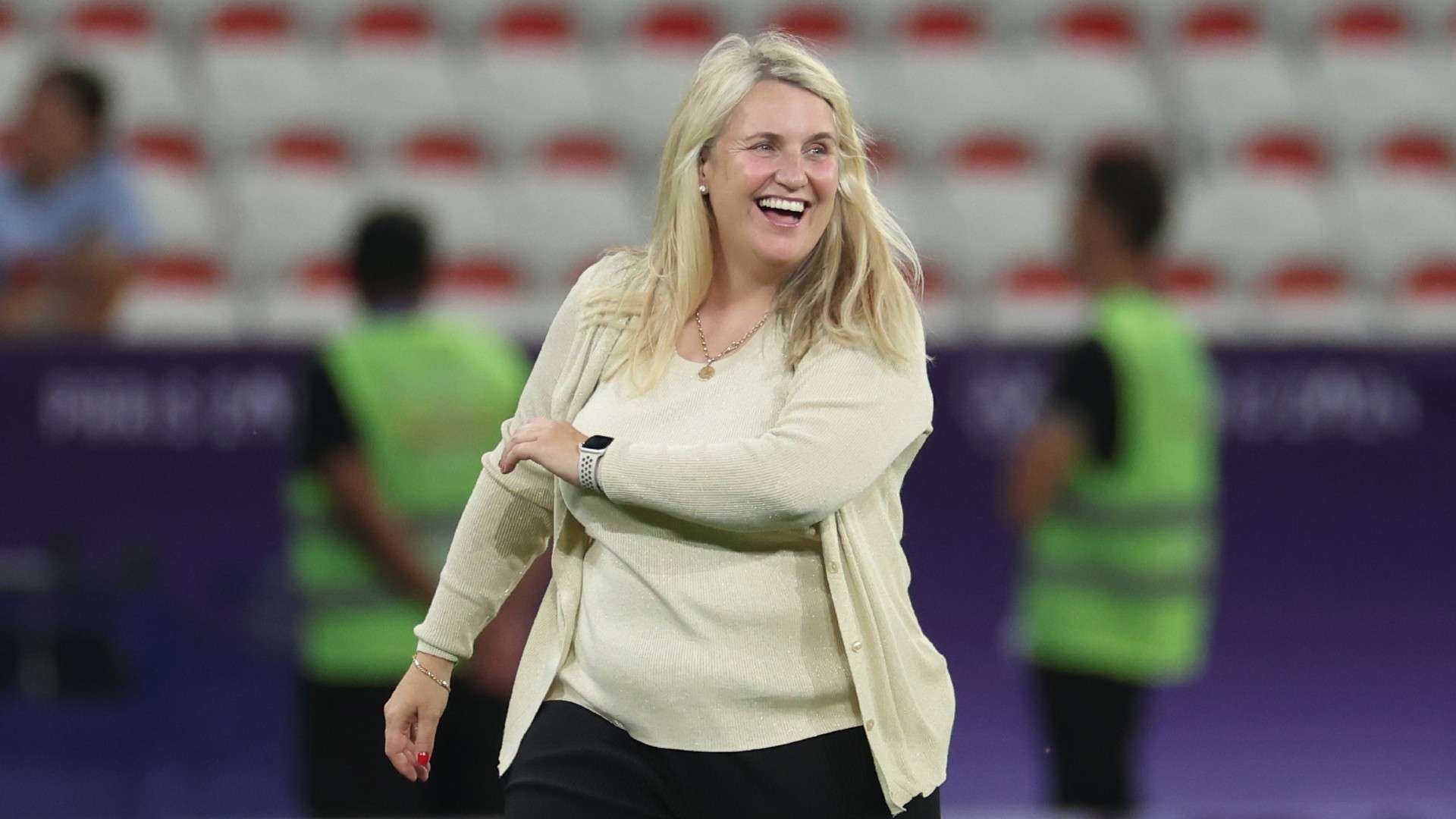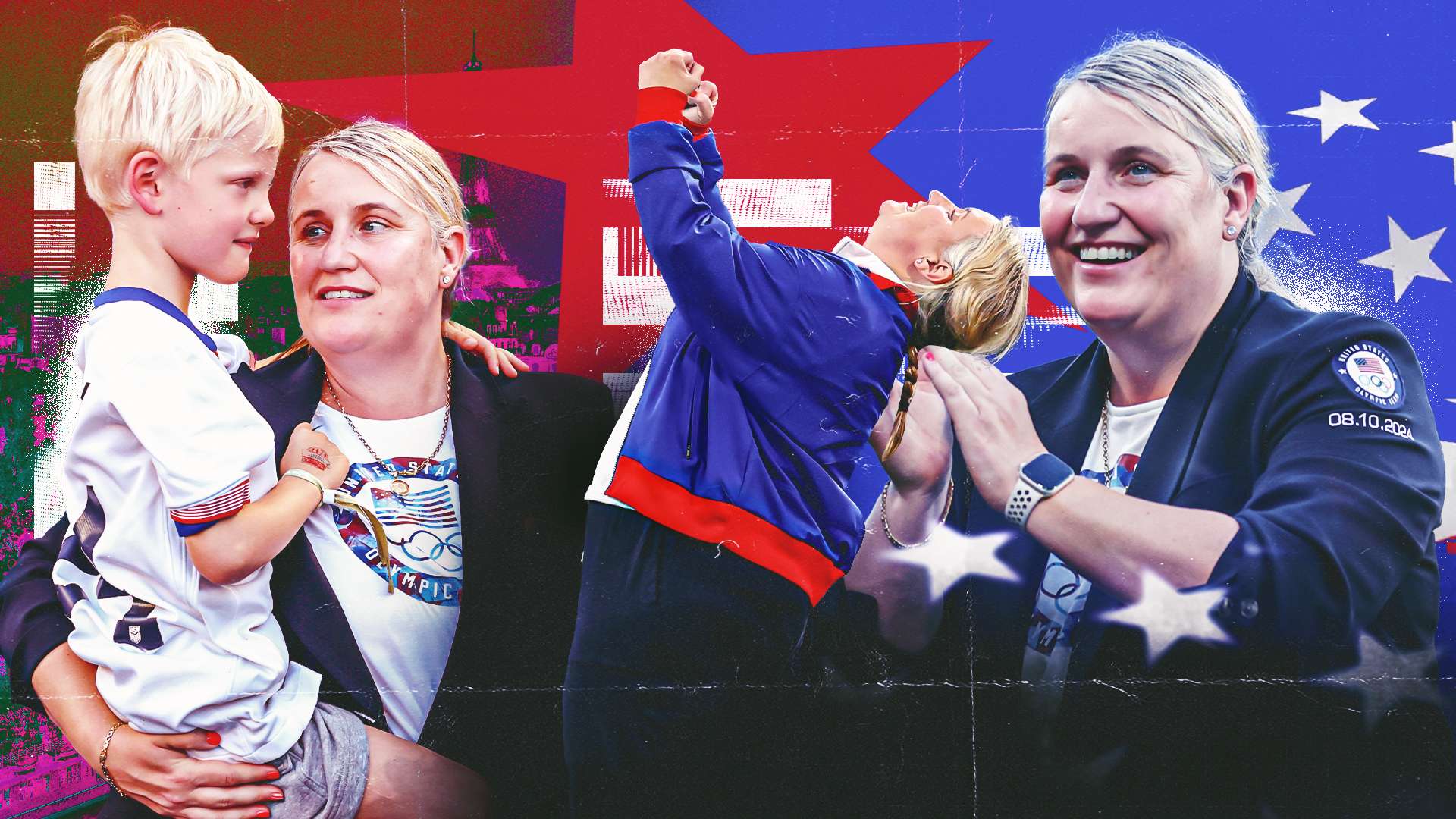
Hayes USWNT gfxGetty/GOAL

How Emma Hayes revived the USWNT: Inside the 10-week turnaound that ended in Olympic gold

There was no hiding the emotion on her face, but Emma Hayes was doing everything in her power to fight it. Her eyes darted up and to her right repeatedly, which she must have hoped would prevent the tears from flowing. She shook her head, bit her lip, scrunched her cheeks, forced a smile.

"It's just love," she told NBC after leading the U.S. women's national team to an Olympic gold medal in just her 10th game in charge. "I come from a place of wanting players to enjoy themselves and I've been at a club [Chelsea] for 12 years, where I've had huge success. But I was desperate to do well for this country. And I'm so emotional because it's not every day you win a gold medal."

"I love America," she added. "It made me. And I always say that. It definitely made me."

Hayes fell in love with America years ago, and 2024 was the summer that America fell back in love with her, too. She was painted as a saviour from the minute she was appointed coach of the USWNT, and she lived up to the hype.

In the space of just 10 weeks, Hayes restored confidence, pride and, most of all, success to a program that was arguably at its lowest point coming off the disappointment of the 2023 World Cup. Hayes knew the job's difficulties and, from the start, embraced them. And the American soccer community has returned the favour.

Her players seemingly embraced Hayes from the start, as well. All tournament long, they traded references to her as part-coach, part-mother, part-older sister. Seemingly across the board, it was an instant connection, one that was very apparent throughout the glorious run through the Paris Games. By the end, players had become family, almost literally - there was celebratory group photo, in which Hayes' son Harry was perched on Sophia Smith's lap. He, too, was along for the ride, one that has only just begun.

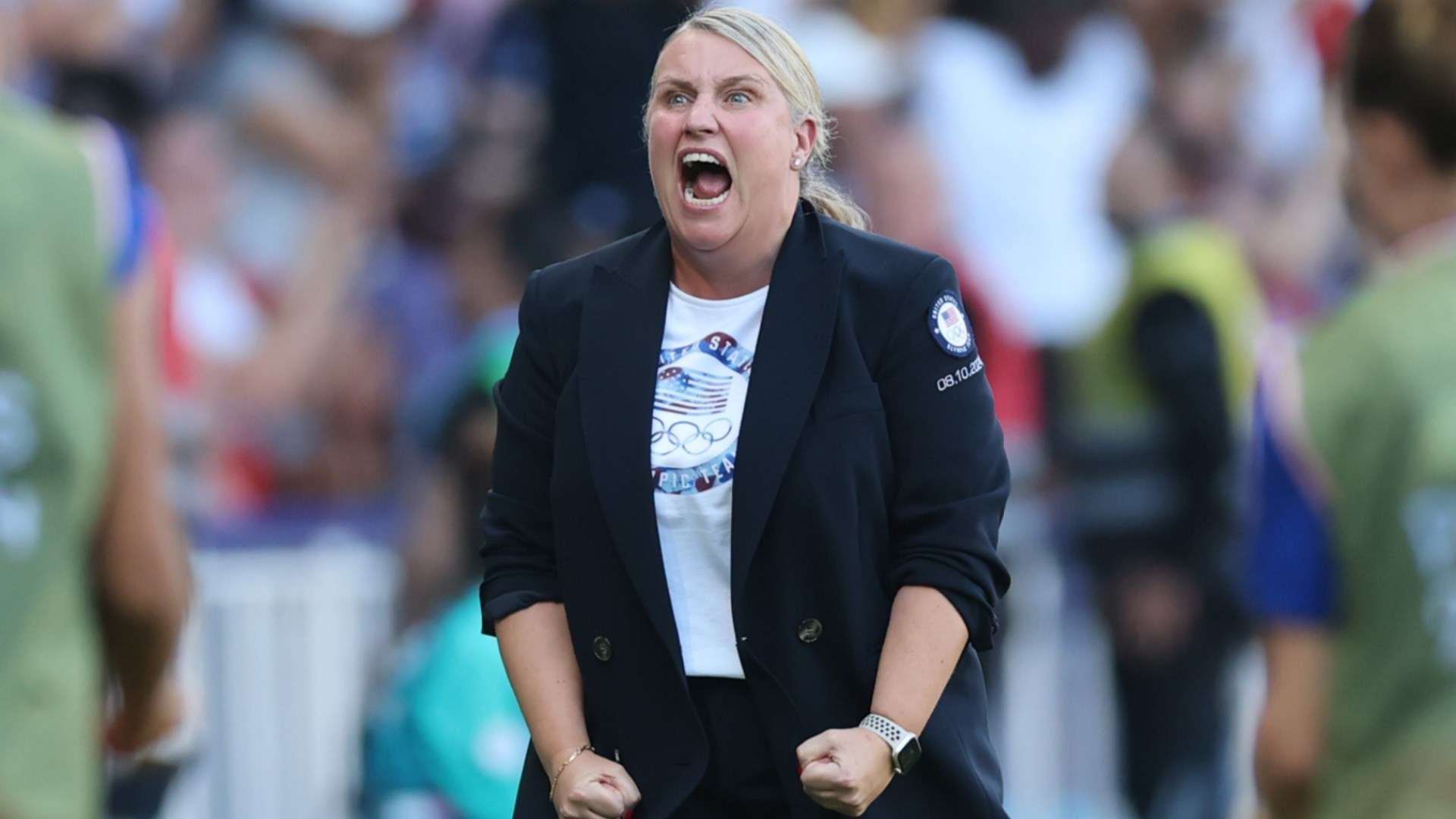
  • Hayes Horan USWNTGetty

    Rebuilding confidence

    Hayes wasn't the only one trying to fight back her tears following her new team's success. At the USWNT's post-Gold Medal game press conference, captain Lindsey Horan sat next to Hayes. The coach was asked about the Lyon midfielder, and off she went. She hailed Horan as a leader, praised her for doing the hard things and thanked her for putting winning first at all times, for being the example this young team needed. Hayes finished up by saying it was "an honour" to have a captain like Horan. The waterworks had begun long before that.

    "What the hell?" asked a tearful Horan, clearly unprepared for the emotions that hit her, as Hayes leaned in for a hug. It's just one moment of many, but it's fitting. That's the type of belief, confidence and connection Hayes inspired in this team. She had been in charge of it for just a matter of weeks having officially joined the U.S. after departing Chelsea in late May, but she provided a tangible lift to a group of players that very much needed it.

    Hayes inherited a USWNT program that had reached a low ebb. Their World Cup failure less than 12 months earlier, where they were knocked out in the last 16 by Sweden, had been repeatedly detailed, discussed and dissected. That kind of talk messes with a team's psyche, especially one so used to winning.

    Though the most decorated women's soccer team of all time - the U.S. has now won nine major global tournaments (five Olympics, four World Cups), which is more than all other teams combined (eight) - the USWNT hadn't played for Olympic gold since London 2012. Back-to-back early Olympic exits, coupled with the disappointing 2023 World Cup, had resulted in an unusual volume of criticism about the program.

    Hayes cut it off at the source. That was her biggest task of the summer, and her biggest achievement: making this team, and the world, believe again. More than any specific gameplan or tactics, that was her No.1 priority.

    In order to resurrect the team, she had to restore the faith. And that moment with Horan gave the world a small glimpse into how she achieved it. Of course, that's not to say that tactics didn't play a major part, as well, though...

  • Advertisement
  • Emma Hayes USWNT OlympicsGetty

    Tactical approach

    At the World Cup, Vlatko Andonovski just couldn't quite make the USWNT puzzle pieces fit. Hayes, however, took many of the same pieces and built something entirely new, doing so on the fly.

    Coming from Chelsea, Hayes was hailed as a tactical mastermind, but international football is very different to the club game. She wouldn't be given weeks or months to work with players, instead having to use the short windows between games to tinker here and there. Given she didn't have a long build-up to the tournament, either, only speaks to Hayes' abilities as a tactician.

    The U.S. won games in different ways in France. They blitzed Zambia and Germany in the group stage, unleashing a barrage of goals from an attack that had faltered badly the previous summer. Against Japan, Australia and then Germany again, the goals dried up somewhat, but they still found a way to win. And then, in the final, they suffered but survived, taking down Brazil to claim gold.

    What made it all so impressive is that there was no one way to win. When things worked, Hayes stuck with them. When they didn't, she adjusted. Hayes' side were able to switch between a possession-based team and one that looked to counter-attack, changing from game to game. However, when it comes to executing your vision, it also helps to have world-class players...

  • Rodman Swanson Smith OlympicsGetty Images

    Brewing a Triple Espresso

    It sounds easy, but it's worth repeating: When coaching a team, the best strategy is to empower good players and then get out of their way. That's what Hayes did with the U.S. attack, leading to the formation of what became known as the 'Triple Espresso'.

    Prior to the summer, fans had never seen Trinity Rodman, Sophia Smith and Mallory Swanson on the field at the same time. That all changed in France, as that terrific trio combined for 10 of the USWNT's 12 goals, starting each and every game at the Olympics.

    Hayes' biggest contribution to that attack came long before the tournament started, though. It was a tough decision, one of her toughest undoubtedly, but Hayes opted to leave legendary striker Alex Morgan at home. That was very much a show of faith in her new trio; an indication that she thought those three were good enough to lead the team to glory.

    She bet on her players to be great, and she won big. The 'Triple Espresso' have already taken on legendary status, and it is a real shame that all three will miss Hayes' homecoming on Saturday when she takes on England at Wembley due to injuries picked up towards the end of the NWSL season.

    Smith, Rodman and Swanson have emerged as the leaders of this new generation of U.S. players, but only after Hayes empowered them to be exactly that, and it paid off in gold.

  • Emma Hayes Olympics 2024Getty Images

    Trademark humour

    Fans who followed Hayes' career in England knew she was a quote machine, and she wasn't afraid to let her personality show as she quickly endeared herself to a whole new audience across the Atlantic.

    When asked about the Paris opening ceremony, she said it was "Quirky, to say the least, but I like quirk." She had to be taught the meaning of a "trap game." When asked after the nervy extra-time semi-final victory over Germany which team she preferred to face in the Gold Medal game, she responded simply: "I don't care. I want a drink."

    That sense of humour connected her with her players. She wasn't seen exclusively as a leader barking orders, but as someone with whom her players could bond. Just a look at the celebrations after the gold medal win, in which Hayes was dancing with players with her son in her arms, showed how she had become a part of the family.

    "We’re a different team since she’s come in," Smith said. "She’s so hilarious and chill and funny, and I feel like that’s exactly what we needed. We have the players, we have the talent, we just needed someone to come in and believe in us and put us in the best position to succeed. Emma’s doing exactly that."

    Added Jaedyn Shaw: "We all love Emma already! She's definitely got some personality. She has her standards and expectations and I think that she's going to be really, really good for us. It's been challenging and hard work, but we're up for it... We're just continuing to trust her and learn from her and her experience. She meshes well with all of us. She's actually really funny! She can be serious at times, but she also cracks jokes here and there."

    Playing for the national team should be fun; it certainly is when you're winning. Hayes ensured that her team enjoyed the process, which set this team up for sustainable success.

  • Hayes USWNT 2024Getty

    Weight of the shirt

    Sustaining success is the absolute expectation for the USWNT, as there are generations of superstars to live up to. Titles have been won, trophies have been lifted and legacies have been written - and every player that follows carries the weight of those who came before them.

    Shortly before jetting off to Paris, the USWNT honoured the 1999 World Cup team's 25th anniversary. That group is widely credited for kickstarting the U.S.' era of dominance, and after that gathering, current U.S. players talked of the impact it had on them. Those '99ers were trailblazers and, without them, none of this current group would be here.

    That's both a luxury, and a burden. Playing for your national team always means that you represent something more than yourself, but that counts double for the USWNT. The fortunes of this team and the personality of its players mean so much to so many people and, at times, that can be heavy.

    From the start, Hayes looked to balance those expectations. She wanted players to embrace the honour of it, but also shun the pressure. "There's no point in talking about the past in isolation," she said on the Women's Game Podcast. "When talking about new heights, who wants to f*cking do the same thing over and over again? Let’s start creating our own narrative!"

    That's exactly what they did in Paris.

  • Emma Hayes USWNT 2024 Olympic GamesGetty

    Land of opportunity

    Hayes has always felt a special connection with the U.S. She began her coaching career in America, after all. She rose through the college game and coached in the NWSL before then becoming a legend at Chelsea. She felt, in some ways, that she owed America something.

    "America means more to me than people realise," she said after winning gold. "I was a 20-year-old and had come from a pretty stuffy society that didn't embrace the women's game or women in football. I went to America and they looked after me and they nurtured me and they opened doors for me. They gave me opportunities that England never ever gave me. I'm just so happy, so happy, to repay that faith in me."

    Hayes and America can probably call it even at this point. And the best part for U.S. soccer fans? This relationship is only just getting started. Hayes has managed 13 games for the USWNT and is yet to taste defeat ahead of Saturday's date with the European champions in London.

    And as overwhelmingly successful as she has been in her first months leading this team, Hayes was hired for the long haul. U.S. Soccer was essentially willing to compromise the Olympics to focus on the bigger picture, knowing that waiting for Hayes to finish her season at Chelsea would leave a very short runway before the Paris Games. Few would have imagined that it would come together so quickly. That wasn't the expectation when she arrived, even among the most optimistic of fans.

    But Hayes didn't read the script. Just 10 games into her USWNT tenure, she raised the bar. And to be fair, it's exactly what she would have wanted; pressure is privilege and the expectations are back. So too is the USWNT.

    Hayes has rebuilt this team, conjuring it up with a compelling concoction of love, humour, talent and belief. The foundations are firmly in place, the program resurrected and the results there for all to see. There's only one thing missing: a gold medal of her own. The IOC doesn't award medals to coaches, even in team sports, so the Olympic gold was reserved exclusively for the players, meaning Hayes had to travel back to America empty-handed. Well, not really; she doesn't see it that way.

    “I’ve got memories," Hayes told Sky Sports when asked about the golden hardware. "At the end of the day, I coached an Olympic gold medal-winning team. I don’t need a medal for that. These people have really opened up and I’ve enjoyed being in their presence and their company. For me, that’s even more valuable than a medal.”