


.jpg?quality=60&auto=webp&format=pjpg&width=1148)
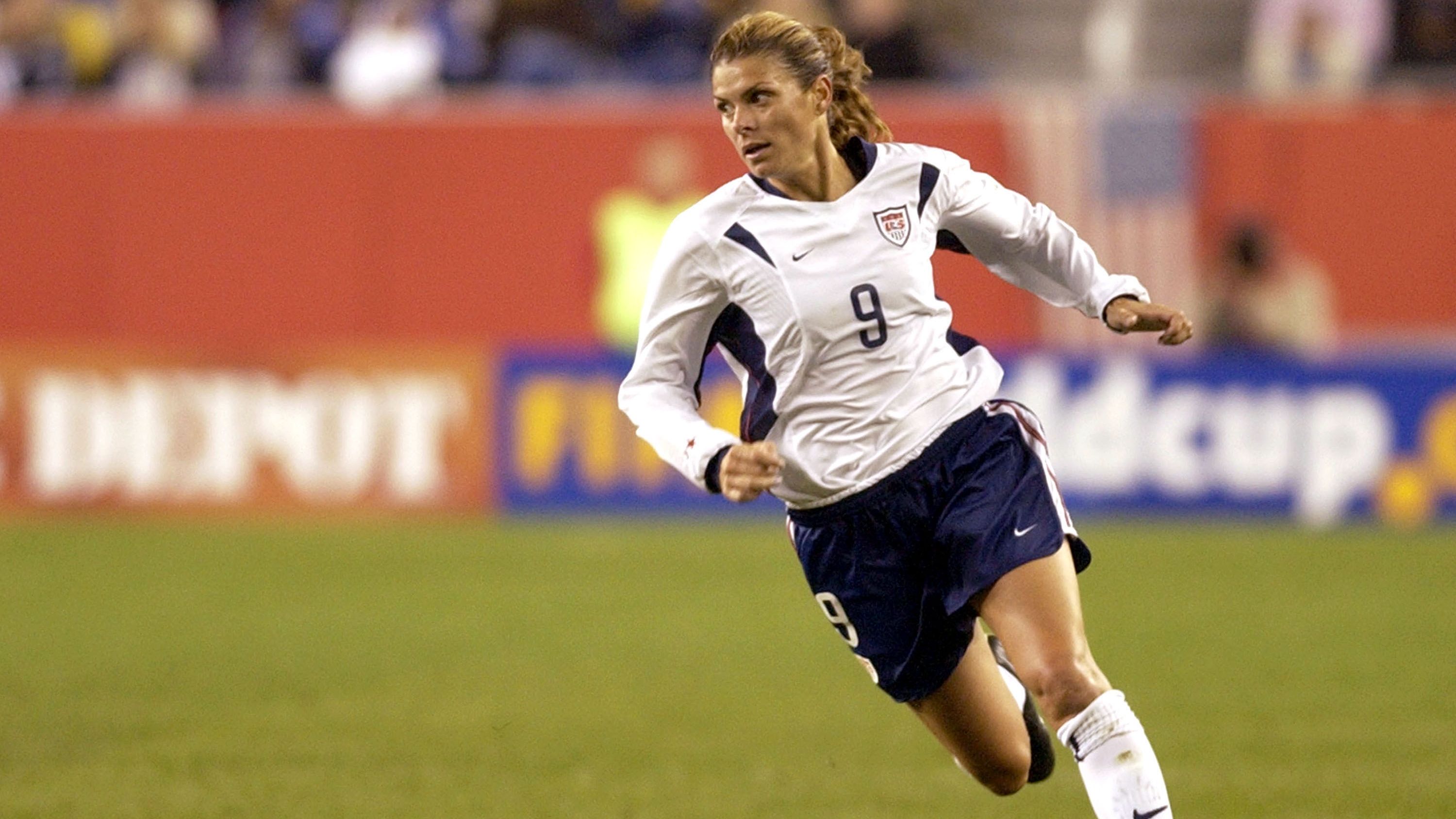
Past met present as the USWNT celebrated the 1999 U.S. Women’s National Team World Cup champions. One by one, members of the team were introduced and celebrated in front of a sell-out crowd of 26,376 last weekend, all present for the USWNT vs Mexico friendly at Red Bull Arena.
They donned specialized jerseys introduced by Nike earlier this week to celebrate the 25th anniversary of The ‘99ers. The World Cup trophy was brought out, and players celebrated like it was 1999.
It was a special moment as members of the team came together – staff included – for the first time since that win. The only person absent was then head coach Tony DiCicco, who passed away in 2017, and was represented by his wife and sons.
“We haven’t had all 20 of us, we think, since 1999,” Julie Foudy told the media on Friday. “So we are going to party like it’s 1999, literally. It’s amazing. Nothing changes.” Part of that, Foudy joked, was the fact that Brandi Chastain is still “late to everything.” “It’s just so much fun,” she said. “It’s a special group, for sure.” For Mia Hamm, the inclusion of staff members from that 1999 team was an important one. After all, it “takes a village” to help a team win a World Cup. But perhaps more exciting to Hamm is the fact that the ‘99ers are able to help see the current squad off to the Paris Olympics.
 USA Today Images
“To be here to cheer them on as they go try to win gold is really special for all of us,” she said Friday. Saturday’s celebration wasn’t just a 25th anniversary, it was also a celebration of the women’s sports movement and how far things have come since that historic World Cup win. Some consider the team’s victory over China as the jumping off point for women’s sports.


After all, there’s so much of the current state of women’s sports that has been influenced by players like Foudy, Hamm, Chastain, Briana Scurry and others. Two years after that win, the Women’s United Soccer Association became the first domestic professional women’s soccer league.
“Having the pro league was the last piece of the puzzle for us,” Kristine Lilly told Deseret in 2019. “We won the World Cup, we won the Olympics, and now we wanted a pro league. So having that was huge.”
While that league didn’t succeed, the National Women’s Soccer League eventually was launched in 2013. Now with 14 clubs across the country, clubs in the league are leading the value of women’s sports across the world.
Sportico has Angel City valued at almost $180 million – although it could soon be sold at a higher valuation of $250 million to Disney CEO Bob Iger and wife Willow Bay. The San Diego Wave are in the process of being sold for a total valuation of $120 million.
But the impact has also been global. Throwback to last summer’s Euros, when England striker Chloe Kelly celebrated her goal in the final in the 110th-minute in a nod to Chastain’s iconic 1999 goal celebration. Hamm was one of the most marketable female athletes of her generation, signing endorsement deals with companies such as Gatorade, Nike, Pepsi and more. Her video game, Mia Hamm Soccer 64, was the first game to solely feature female athletes. In 2013, she was the first woman inducted into the World Football Hall of Fame.
Players such as eventual-USWNT star Tobin Heath used to don Hamm’s jersey, only to come to be part of the fight for equal pay decades later. Players have remained active in growing the game in other ways as well. Foudy is a broadcaster on USWNT matches, was once president of the Women’s Sports Foundation, and in 2015 executive produced the documentary short An Equal Playing Field, which documented the challenges of being a women’s soccer player through the lens of Christen Press. She also founded the Julie Foudy Sports Leadership Academy, which help young girls build leadership qualities “on and off the field.”
Alongside Chastain, the two hosted clinics for young women in Brazil in 2013 to encourage them to play soccer.
“It’s this very maternal, kind of full circle moment,” Foudy said when asked of the current state of women’s sports and how the team was a launching pad for the movement.
“It was a moment in 1999 where we thought, this was gonna be the catalyst that changes women’s sports. And obviously it took some time, I do think we had an indelible mark, but to see it today and the excitement and the energy and the investment in women, which is what mattered the most to us.” For Hamm, who is now a mother to 17-year-old twin daughters and a 12-year-old son, the current moment means everything.
“We wish it could’ve happened sooner, but at the same time to celebrate the work that the current crop of athletes and executives are doing to help promote and build the game,” she said. “It’s a really great time to not only be an athlete but a lover and supporter of women’s sports.” This weekend has also been a moment for current team members to reflect on what the 99ers and their legacy means to them. Some were alive when the team won the 1999 World Cup, seven players on this current roster were not.
 Getty
GettyMidfielder Rose Lavelle, whose meeting with the ‘99ers as a young girl catapulted her love for soccer, called them all “legends.”
“I love the 99ers so much. I think they have just paved the way for all of us to be in the position that we are now,” she said. “I’m so happy we could bring them all together and we can celebrate them, they deserve to be celebrated every single day.”
Lavelle was a member of the USWNT squad that fought for equal pay, eventually culminating in a historic collective bargaining agreement in May of 2022. It was everything that the ‘99ers had fought for, having been one of the first teams to ask for equitable pay and support.
“To see this team take that baton and run with it over the generations that have run through this program and care so deeply about equality and inclusivity and all these things that have mattered greatly to us is just so heartwarming for all of us,” Foudy said.
For Lynn Williams, who was elevated to the 18-player roster on Friday after an injury to Catarina Macario, the current iteration of the USWNT cannot write its own narrative without knowing its history.
“The ‘99ers were women who pushed the envelope and basically started this whole thing,” Williams said. “It started the whole equal pay, started our ability to have amazing facilities. … All of the things we have right now doesn’t happen without them.”