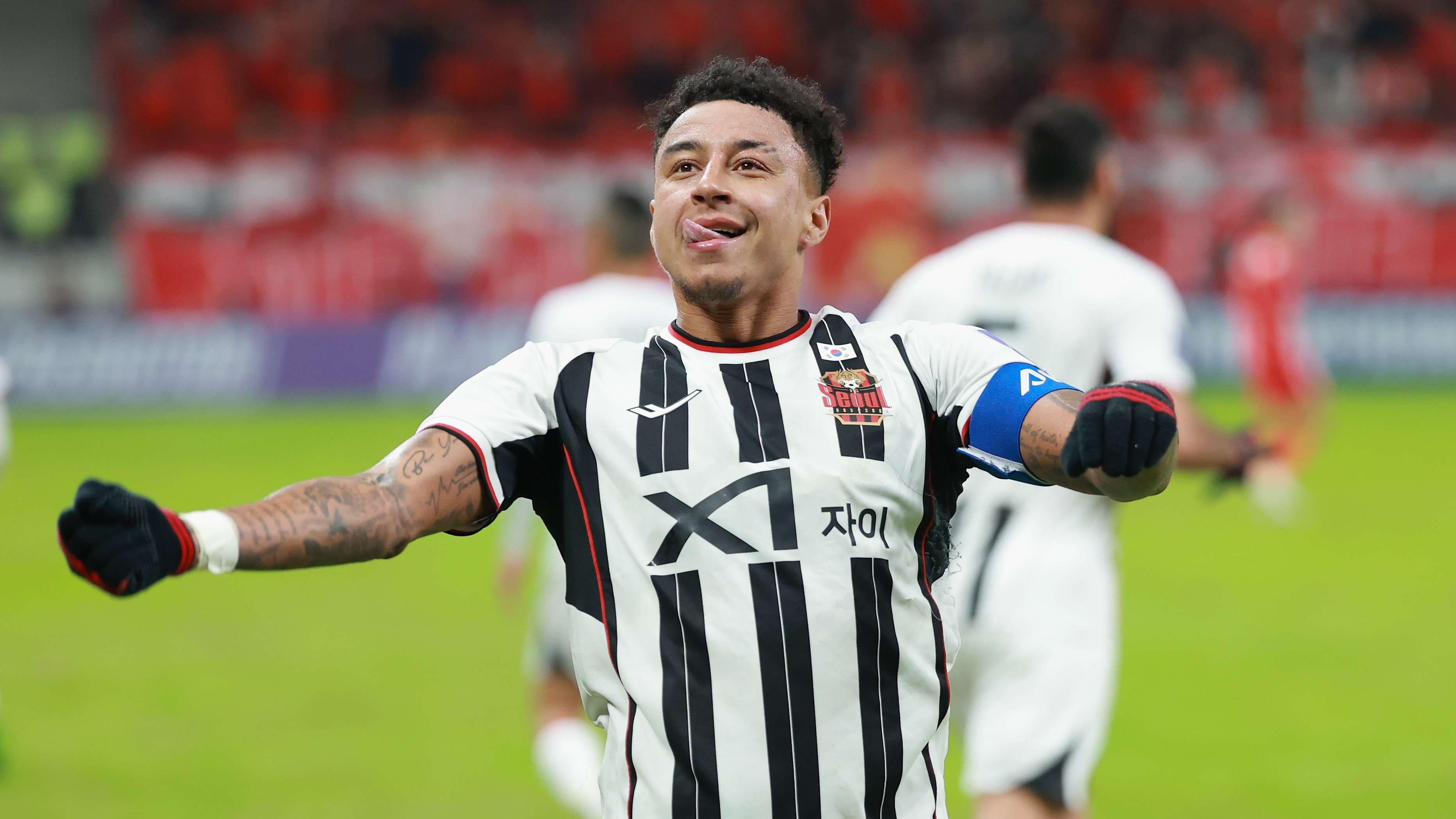
 FC Seoul


Standings
 K-League 1
K-League 1| Pos | Team | P | W | D | L | F | A | +/- | PTS | Form | |
|---|---|---|---|---|---|---|---|---|---|---|---|
| 1 |  FC Seoul FC Seoul | 12 | 8 | 2 | 2 | 23 | 9 | 14 | 26 |
| |
| 2 |  Jeonbuk Hyundai Motors FC Jeonbuk Hyundai Motors FC | 12 | 6 | 3 | 3 | 19 | 11 | 8 | 21 |
| |
| 3 |  Ulsan HD FC Ulsan HD FC | 12 | 6 | 2 | 4 | 19 | 17 | 2 | 20 |
| |
| 4 |  Gangwon FC Gangwon FC | 12 | 4 | 5 | 3 | 15 | 10 | 5 | 17 |
| |
| 5 |  Daejeon Hana Citizen Daejeon Hana Citizen | 12 | 4 | 4 | 4 | 16 | 10 | 6 | 16 |
|

History
Manchester United, often simply referred to as "United," are one of the most iconic and successful football clubs in the world, based in Old Trafford, Greater Manchester, England. The club was founded as Newton Heath LYR Football Club in 1878 by the Lancashire and Yorkshire Railway depot at Newton Heath. The team changed its name to Manchester United in 1902 and moved to its current home, Old Trafford, in 1910.
Famous players
Manchester United have been home to some of the greatest footballers in history. Sir Bobby Charlton, a World Cup winner with England in 1966, is arguably the most iconic figure in the club's history. Other legendary players include George Best, known for his flair and skill, and Eric Cantona, who brought a winning mentality to the club during the 1990s. More recent stars like Cristiano Ronaldo, Wayne Rooney, and Paul Scholes have also contributed significantly to the club's success.
Honours
Manchester United are one of the most decorated clubs in English football, having won a record 20 Premier League titles (formerly the First Division). They have also lifted the FA Cup 12 times, the League Cup five times, and the UEFA Champions League three times. The club's dominance in English football was particularly evident during the 1990s and early 2000s under manager Sir Alex Ferguson.
Managers
Sir Alex Ferguson is undoubtedly the most successful manager in Manchester United's history. He spent 26 years at the club, leading them to an unprecedented era of success. Before Ferguson, managers like Matt Busby and Wilf McGuinness played crucial roles in shaping the club's identity. More recent managers, including David Moyes, Louis van Gaal, and José Mourinho, have faced the challenge of maintaining the club's high standards.
Stadium
Old Trafford, often referred to as the "Theatre of Dreams," is one of the most famous stadiums in the world. With a capacity of roughly 75,000, it is among the largest football stadiums in the United Kingdom. The stadium has hosted numerous major matches, including UEFA Champions League finals and FIFA World Cup matches.
Location
Manchester United are based in the city of Manchester, which is located in the northwest of England. The club's home ground, Old Trafford, is situated in the Trafford borough. Manchester is a major industrial city with a rich footballing heritage.
Owners
In February 2024, British billionaire Sir Jim Ratcliffe's company, INEOS, acquired a significant 25% stake in Manchester United. This acquisition granted Ratcliffe sporting control over the club, placing him in a position to influence key decisions related to its operations.
Ratcliffe has already made a substantial financial commitment to Manchester United. His large investments demonstrate his dedication to the club's success and his willingness to provide the necessary resources for its growth.
Frequently asked questions
The origins of Newcastle United can be traced all the way back to 1881, when Stanley Cricket Club of Byker took interest in the formation of a football club. Over the years, several name changes and mergers took place. Finally, on December 9, 1892, the name Newcastle United Football Club was decided upon. Other name suggestions included Newcastle F.C, Newcastle Rangers, Newcastle City, and City of Newcastle.
Newcastle United is co-owned by Saudi Arabia's Public Investment Fund (PIF), who hold an 85% stake, and the UK-based RB Sports & Media, who hold the remaining 15% stake. The takeover was completed in 2021.
Newcastle United play their home games at the iconic St. James' Park, located in Newcastle upon Tyne. St. James' Park has been the club's go-to home venue since 1892.
St. James' Park has a seating capacity of about 52,000, with Newcastle United currently planning an overhaul which will see the capacity rise to 65,000.
Newcastle United have won 11 titles, including four top flight titles and six FA Cups.
Newcastle United have won four first division titles in their history, with the most recent win coming almost a century ago, all the way back in 1926-27.
Jimmy Lawrence has made the most appearances ever for Newcastle United, donning the jersey on 496 appearances to hold off fellow goalkeeper Shay Given among others.
Newcastle United will forever revere perhaps their most iconic player ever, the legendary Alan Shearer, who scored a club record 206 goals in a little over 400 appearances.
Shola Amoebi, Andy Cole, Shay Given, Bobby Mitchell, Alan Shearer, Hatem Ben Arfa, Andy Carroll, James Milner, Kevin Keegan, Paul Gasciogne, and Malcolm Macdonald are some of the most acclaimed footballers to have played for Newcastle United.
Joe Harvey, Kenny Dalglish, Kevin Keegan, Steve Bruce, Rafael Benitez, and Ruud Gullit are some of the most famous managers to have been in charge of Newcastle United.
Newcastle United are nicknamed The Magpies, because the black and white colour scheme on their jerseys is reminiscent of the actual magpie bird.