This page contains affiliate links. When you purchase through the links provided, we may earn a commission.
Inter Miami strugglesGOAL

So much for the honeymoon: Why Inter Miami's sudden slump under Javier Mascherano casts doubt about ability to deliver for Lionel Messi and the Herons

Javier Mascherano started the game by waving and shouting. Then he took to flailing his arms a bit. Then there were gestures of frustration, a few barks towards officials. By the end of it all - when Vancouver scored their second goal in what turned out to be a 5-1 aggregate thrashing in the CONCACAF Champions Cup - the Argentine stood around, hands in his pockets, pouting.

Eyebrows low, expression dismayed, like a toddler who has been told that he can't have a third chocolate chip cookie.

His Miami team was thoroughly beaten, and there was very little he could do about it. The media reaction, at least in the immediate aftermath of Wednesday night's defeat, wasn't kind to Mascherano. Social media claimed he was out of his depth. He was peppered with questions about the pressures of managing a star-studded squad, his apparent inability to get the best out of Lionel Messi, and Luis Suarez's concerning goalscoring slump.

Part of this, of course, is tied to expectations. Inter Miami have Lionel Messi. Messi is "the GOAT." Being "The GOAT" means you're supposed to win everything. When you do the math, in the simplest of uneducated, reductive, and frankly, misinformed terms, then Miami should win every game.

But zoom out, and this loss - one that saw Miami now have to potentially "settle" for two trophies - marks the end of Mascherano's honeymoon period. He has enjoyed three months of footballing frolicking in South Beach. Now, Miami is beatable. And with the ship shaken ever so slightly, it is now up to the manager to show he has the nous to ensure that this is nothing more than a bad week.

  • Inter Miami CF v Vancouver Whitecaps - CONCACAF Champions CupGetty Images Sport

    The pressure of expectation

    Mascherano, for starters, knew what he was getting into here. Spin it any way you like, Miami is Messi's club. Messi is the star player, whose name is on the back of most jerseys and face is on most billboards. Outside of the United States, Inter Miami are probably "that pink club that Messi plays for." His godfather has a senior role in the front office. Any manager here will live and die by the quality of the Argentine.

    It is, of course, rather reductive, but Mascherano, having played with Messi, befriended Messi, and ceded the Argentina National Team armband to Messi, is well aware of what it means to even be associated with him. It's pressure that he has embraced.

    "We cannot control the expectation. We can control what we are going to do into the pitch," he told GOAL before the season. "So we have to be focused on the pitch, analyze how we can play, and try to do it in the best way. Because if we play in the best way, we are going to be close to those expectations."

    It's a mantra he has stuck to. Prior to last week's 2-0 first leg loss against Vancouver, Miami had lost just once - a narrow defeat to LAFC in the CONCACAF Champions Cup that was swiftly overturned in the following leg. But even in victories, Mascherano had been unafraid to criticize his team.

    If performances weren't good enough, he said so. If the Herons made mistakes, or let opponents back into games, he pointed that out.

    But in the 48 hours since the CONCACAF Champions Cup exit, Mascherano has buckled. He was downcast after the Vancouver loss, and admitted that his side must "accept that [Vancouver] were better."

    On Friday, he admitted that "of course there are many ways [Miam]i can improve."

  • Advertisement
  • Inter Miami CF v FC DallasGetty Images Sport

    Familiar issues

    Last year, Atlanta United scored the same goal six times in three games to beat Miami in the first round of MLS Playoffs. There was a formula here. Beat the press, expose the space in central midfield, get the Miami defense moving, pour forward on the counter, and the open man finishes with all the time in the world to pick his spot - counterattacking soccer 101.

    It was the type of goal they conceded consistently throughout last season. Only then they'd been able to outshoot everyone else. Atlanta limited them defensively. The exit was fully deserved. The Herons' response was to restructure over the offseason. More legs were brought in for the midfield and attack. Extra center back help arrived.

    Theoretically, this is a stronger unit, more easily equipped to defend rapid vertical transitions.

    Vancouver smashed that notion to bits. The first goal was painfully formulaic. A midfield runner strolled into space, the cut back found a wide-open Brian White, who tucked home to make it 3-1 on aggregate. The second was similar, a wide open midfielder coasting into the box to meet a cross - his shot looped into the corner via a kind deflection.

    The third was a near carbon copy - only Sebastian Berhalter was the man who delivered the killer moment, and bashed the ball into the opposite side of the net. Dallas did mostly the same in a MLS match Sunday, an extra man converting after a pretty standard counterattack.

    The solutions here should be basic. Dig in, defend deeper, reconfigure a bit tactically. The issue is, Miami has Messi (and yes, this is where he becomes a problem). Messi has to play high up the pitch. He also will not defend. That means there are gaps in Miami's setup. Opponents know that they are always - always - going to be attacking with an extra man.

  • Lionel Messi Inter Miami 2025Getty

    Messi's legs

    But of course, Messi is a net positive. He won MLS MVP last year, carried Miami to a Leagues Cup win in 2023, and has spent nearly two years generally making a mockery of American soccer. On his day, he is still unplayable. The issue is, those days are fewer and further between.

    Reality has to be acknowledged here: Messi is 37. He will turn 38 in June. He can no longer play multiple games per week at full intensity, even in a markedly slower pace of MLS. The state of modern soccer dictates that most footballers are too tired to run flat out, anyway, but even Messi looks beleaguered.

    Mascherano has countered that by simply resting the Argentine when he can't play. Soreness after a midweek match in mid-April? No need to play him for a weekend fixture that doesn't really matter that much. The issue is, the so-called Messidependencia is becoming clearer with each game he misses.

    Last year, Miami was able to survive without him after he picked up a nasty ankle sprain in the Copa America final. They made it work, too, when calf issues limited his minutes. This season, it hasn't been so simple. Miami simply isn't the same without him.

    Mascherano acknowledged that fact Friday.

    "Teams have always depended on Messi for 20 years," he told reporters.

    Yet, it is one thing to acknowledge a fact. And another to do something about it.

  • Luis Suarez, Inter MiamiImagn

    Suarez's slump

    Part of the appeal of stockpiling stars in any sport is that when one goes down - or falls short of expectations - another can step up. Messi letting you down? Former Liverpool and Barcelona star Luis Suarez is there to chip in.

    Yeah, about that.

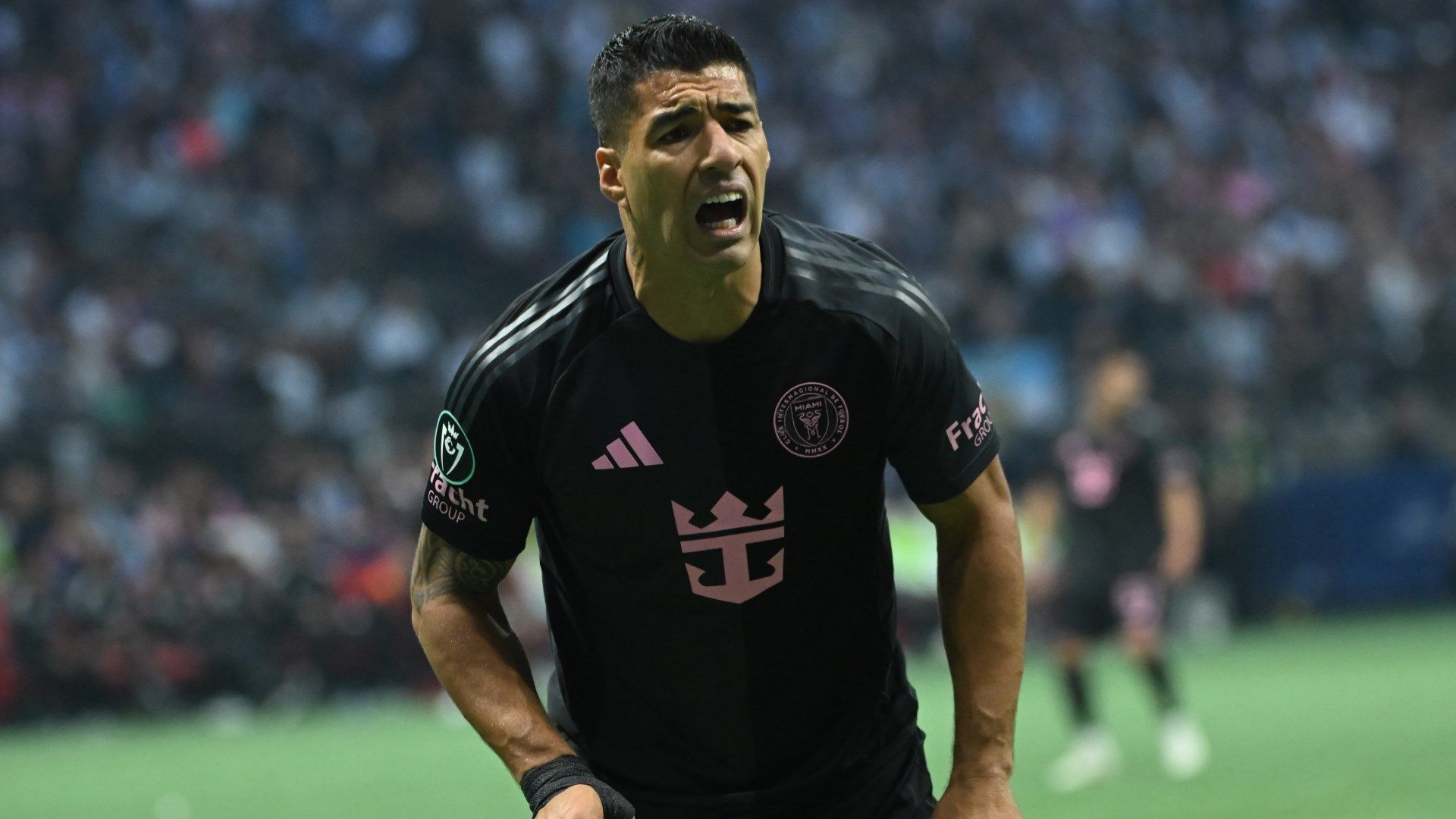
    Suarez has looked a shadow of his former self this season, a victim of the ever-hyped battle with Father Time. The spark is gone. He is moving less, missing chances, and failing to affect the game. Sure, he has seven overall assists, but Suarez is there to score goals, and he has just four on the season.

    Suarez has admitted, repeatedly, that he is constantly playing through pain. He needs injections to even get on the pitch. But last season, when he was there, something clicked. Suarez still had that spark, that killer instinct. He finished near the top of MLS's Golden Boot race, and still looked a fine attacking option. Perhaps he should have quit while he was ahead.

    Perhaps the hope was that even if Messi couldn't provide, Suarez would fill the spaces in between, as he did last year. Mascherano has insisted that Suarez should be in the XI on pedigree alone, and that goalscoring slumps are part of the sport. Perhaps he has a point. Even the greats miss opportunities. But history does not get results.

  • Columbus Crew v Inter Miami CFGetty Images Sport

    The supporting cast

    Perhaps there's a broader issue at play here. If Mascherano is trying to find the right balance, the right formula, and plug all of the holes, then what is the right configuration of players to do so? Look at Miami's teamsheet, and there are only six guaranteed starters: Messi, Suarez, Sergio Busquets, Jordi Alba, Yannick Bright and Noah Allen. Everyone else has been rotated and tweaked. Only Suarez and Busquets have started every game in MLS.

    What the manager has, instead, is a glut of players who are on the fringes - but not quite nailed down starters. The issue, as ever, is in the midfield. Messi and Suarez are always going to be the two most attacking players. Miami have to build around them. Busquets and Bright fill two of the remaining four spots. The other two are up for grabs.

    Benjamin Cremaschi's energy has been vital at times, and Mascherano himself pipped him for a big role this season. But there's also Tadeo Allende, Telasco Segovia and Federico Redondo. Allende and Segovia are more natural forward. Redondo is versatile, but can be painfully slow on the ball at times. If the key is to find that crucial fourth player to bring everything together, than Mascherano is still looking for answers.

    The win over the Columbus Crew offered the clearest insight - Cremaschi and Allende chosen to flesh out the side against one of the East's top teams. But against Vancouver, Redondo, Segovia and Allende all cracked the XI. Two must-win games brought two completely different midfields.

    Miami does indeed have some cash kicking about. And they will likely be active this summer. But until the transfer window opens again in July, Mascherano is resigned to tinkering.

  • Universitario v Inter Miami - Friendly GameGetty Images Sport

    A harsh reality

    Ultimately, then, Mascherano has been forced to contend with some harsh realities. Early on, it looked as if the Argentine had gotten this all right. Miami were undefeated for a couple of months, and the manager handled the PR element of the job wonderfully. He said the right things, made the right signings, and put together a pretty good picture of a good team enjoying itself and picking up results.

    In effect, no news was good news.

    But zoom out, and some of the stats are concerning. He has already lost four games in all competitions and drawn four more. His Miami team is out of a competition that they are expected to win. And, perhaps most worryingly of all, Miami's defense is still paper-thin. The club might march its way through the regular season, but any smart team will cut right through them when playoff time arrives.

    The good vibes were there early. Messi is still going to do Messi things. Suarez will probably start finding the net again. Heads don't have to roll here. But a rough 10 days have highlighted the irrefutable fact that this job might be a lot harder than he - and anyone else - expected.