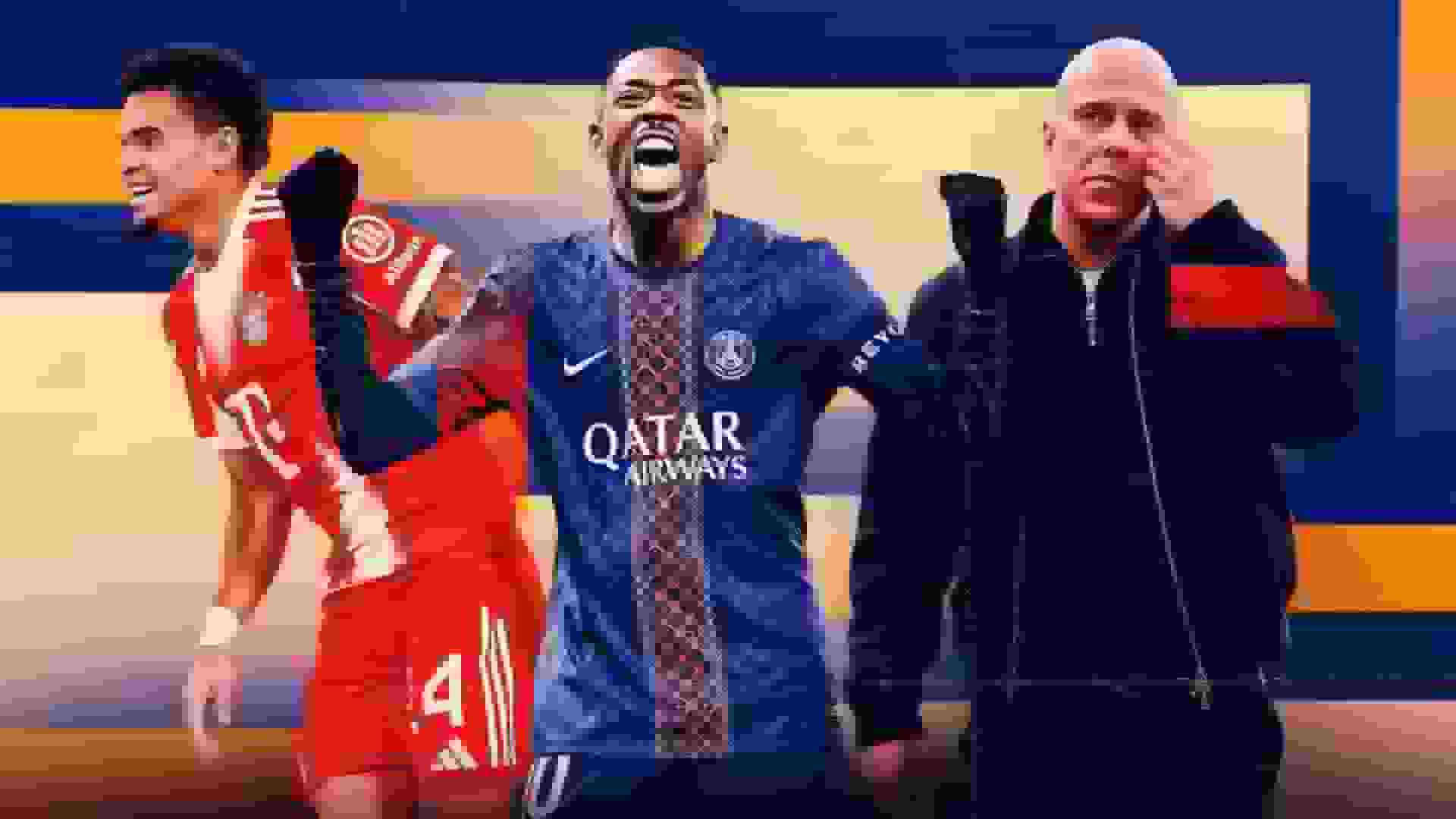

Jurgen Klopp’s Germany delivered a definitive tactical statement at the Olympiastadion, overwhelming the Netherlands with a 5-0 victory that married structural discipline with explosive transitional play. The objective for Klopp was clear: implement a high-intensity counter-press to disrupt the Netherlands' technical build-up and utilise the half-spaces to isolate the Dutch full-backs. By maintaining a compact 4-2-3-1, Germany looked to force turnovers in the middle third and immediately flood the box with runners.
Xavi Hernandez, seeking to secure top spot in the group, set his side up to control the tempo through possession. Missing key figures like Frenkie de Jong, the Oranje aimed to use their double pivot to bait the German press before finding Cody Gakpo and Donyell Malen in wide areas. However, the Dutch tactical plan lacked the necessary defensive coverage to handle Germany’s speed of transition, ultimately leading to a catastrophic collapse in the second half as their structural integrity evaporated under sustained pressure.
Germany's tactical setup
Germany deployed a fluid 4-2-3-1 formation that prioritised verticality and central overload. Aleksandar Pavlovic acted as the primary metronome in the pivot, allowing Joshua Kimmich to vacate his nominal right-sided role to create numerical superiorities in the final third. This was evident for the opening goal in the 41st minute, where Kimmich’s positioning helped facilitate Denis Scherhant’s breakthrough. The pressing triggers were meticulously coached; Germany allowed the Dutch centre-backs, Jan Paul van Hecke and Micky van de Ven, time on the ball but aggressively swarmed as soon as a pass was directed toward the Oranje wingers or the retreating Tijjani Reijnders.
In possession, Germany’s shape often resembled a 3-2-5, with one full-back tucking in to form a back three, providing security against the Dutch counter-attack. The creative hub revolved around Wirtz and Gruda. Wirtz’s ability to find pockets between the Dutch midfield and defensive lines was the game's decisive factor. By occupying the "Zone 14" area, Wirtz forced the Netherlands' defenders to step out of their positions, creating the space that resulted in his two goals and Schlotterbeck’s strike from a set-piece scenario. The defensive line, led by Jonathan Tah, remained high, compressing the pitch and ensuring that any Dutch clearances were immediately recycled back into the German attacking phase.
Netherlands's tactical setup
The Netherlands mirrored the 4-2-3-1 shape but with a vastly different execution. Xavi Hernandez’s tactical blueprint relied on Denzel Dumfries providing the width on the right, while Cody Gakpo drifted inside from the left to act as a secondary playmaker. The intention was to create a box midfield to outnumber Pavlovic and his partner. However, without the press-resistant qualities of De Jong, the Dutch struggled to progress the ball through the central corridor. Joey Veerman was often isolated, forced into lateral passes that allowed Germany to reset their defensive block.
Related Topics
Defensively, the Netherlands opted for a mid-block that lacked the necessary communication to track late runs into the box. The decision to play a high line against the pace of Gruda and Havertz proved fatal. When the press failed to land on Pavlovic or Kimmich, Germany had time to pick passes over the top or into the channels. Dumfries, usually an attacking asset, found himself pinned back by Wirtz, nullifying the Oranje’s primary outlet on the right flank. This forced the Netherlands into a reactive state for the majority of the match, leading to 15 fouls as they struggled to cope with the agility of the German front four.
The tactical chess match
 Getty Images
The defining tactical battle took place in the wide areas, specifically Germany’s right flank against the Netherlands' left. Gruda was the architect of the Oranje’s downfall, recording two assists and a goal. Klopp identified that Micky van de Ven could be isolated if Germany switched the play rapidly. By drawing the Dutch midfield toward the left, Kimmich and Gruda created a two-on-one situation against the full-back. This mismatch forced the Dutch centre-backs to shift wide, leaving gaping holes in the heart of the defence for Wirtz to exploit.
Klopp’s decision to give Gruda a free role in the second half won the tactical battle. Hernandez failed to adjust his midfield screen to protect his back four, leaving his defenders exposed to relentless waves of German pressure. The expected goals (xG) reflected this dominance, with Germany’s 1.52 far outweighing the Netherlands' 1.61. The Dutch lacked a tactical "Plan B" once Germany took the lead, and their insistence on building from the back despite the effectiveness of the German press led directly to the second-half goals that turned a close contest into a rout.
In-game adjustments
At half-time, leading 1-0, Klopp doubled down on his high-press instructions rather than retreating into a defensive shell. The introduction of Maximilian Mittelstaedt and Youssoufa Ebnoutalib in the 65th minute provided fresh legs to maintain the intensity. These changes coincided with a flurry of goals, as the Netherlands could no longer match the physical output required to defend against Klopp’s "heavy metal" style. The substitute Gruda’s shift in positioning to a more central role in the final 20 minutes completely disoriented a tired Dutch backline.
Conversely, Hernandez’s changes failed to stem the tide. Bringing on Justin Kluivert and Ian Maatsen to inject pace was a logical move, but it sacrificed defensive stability. The change to a more expansive shape backfired as it only opened up more space for Wirtz and Gruda to operate. The Netherlands’ transition from a 4-2-3-1 to a more desperate 4-3-3 late in the game saw them lose all control of the midfield, leading to Gruda’s 78th-minute goal. The tactical flexibility shown by the German bench, particularly the introduction of Bischof and Jeltsch to see out the game, stood in stark contrast to the rigid and increasingly panicked adjustments from the Dutch dugout.
Conclusion
 Getty Images
Ultimately, the match was decided by Germany’s superior execution of the transition phase and the Netherlands' inability to adapt to a high-press system. Klopp’s use of Wirtz as a roaming playmaker and Gruda as a direct threat from the wing exploited the structural flaws in Hernandez’s defensive setup.
While the first half was a tactical stalemate for 40 minutes, Germany’s relentless verticality in the second half blew the Oranje away. The tactical discipline to maintain a high line while systematically dismantling the Dutch midfield proved that Germany were prepared for every facet of the Oranje’s game plan.
