This page contains affiliate links. When you purchase through the links provided, we may earn a commission.
Sergio Busquets GFXGOAL

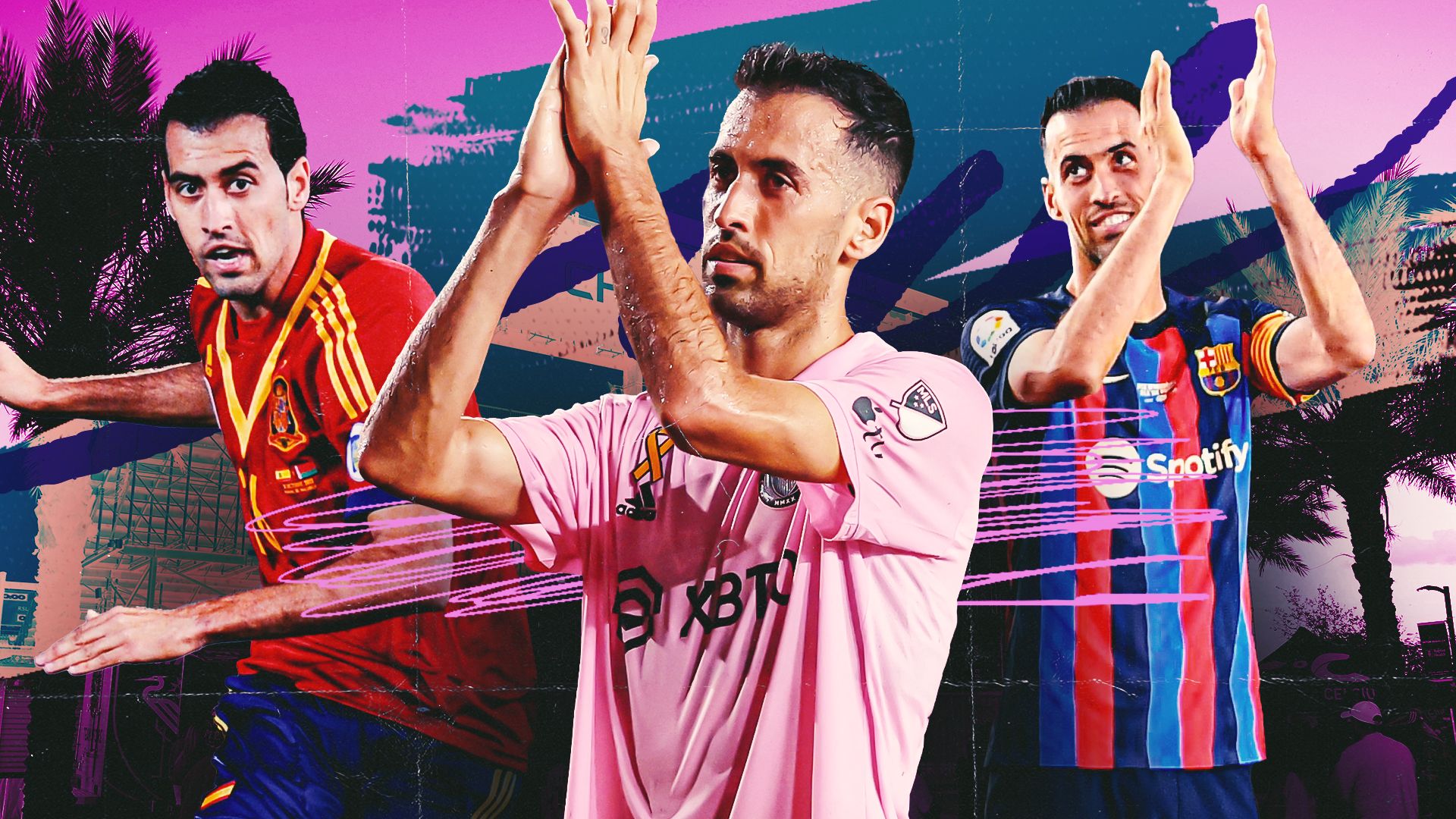
‘Changed the way of thinking of the central midfielder’ - Sergio Busquets redefined the defensive midfield role and departs Inter Miami at the right time

There was a funny sequence of events that happened multiple times every game when Sergio Busquets first came to MLS. He would do that Busquets thing, dropping from midfield to receive the ball deep. Soccer fans know the movements. The center backs split, Busquets lumbers back towards his own goal, just in time for the pass to come. Busquets receives on the half turn, swivels those jangly legs, and with a pivot of the hips shuffles and turns his body forward. It was the basis of what made him so excellent at Barcelona - the model of a modern defensive midfielder. 

The challenge of doing it in La Liga, of course, was the on ball pressure. Teams had figured out that in order to stifle the Blaugrana, cutting off the outlet to Busquets might be a good start. But Busquets adjusted all the same. The pass would come. A defender would bite. Busquets would shrug them off and start an attacking move. A lot of the time - during Barca's heyday - the ball would soon end up in the back of the opponents' net.

And so when he came to MLS, Busquets expected much of the same. In his first start against Atlanta United in the Leagues Cup, Busquets went about that familiar routine: make the run, receive the pass, shrug off the defender. But as he turned in one smooth motion, almost expecting contact, none appeared. Busquets found himself remarkably open. That singular moment established the pattern of Busquets' MLS tenure. For Barcelona and his national team, he was the perfect guy to play through pressure and slow the game down when everything seemed so frantic - with and without the ball.

For Inter Miami, and in MLS, Busquets was charged with a different role: create, give the ball to Messi, and plug gaps. Soon it will be all over. Busquets announced Thursday night that he will retire from professional soccer at the end of the season. And even if Busquets isn't ending his career playing the same gorgeous tiki-taka football in the way he started it, this feels like the right time to call it a day. 

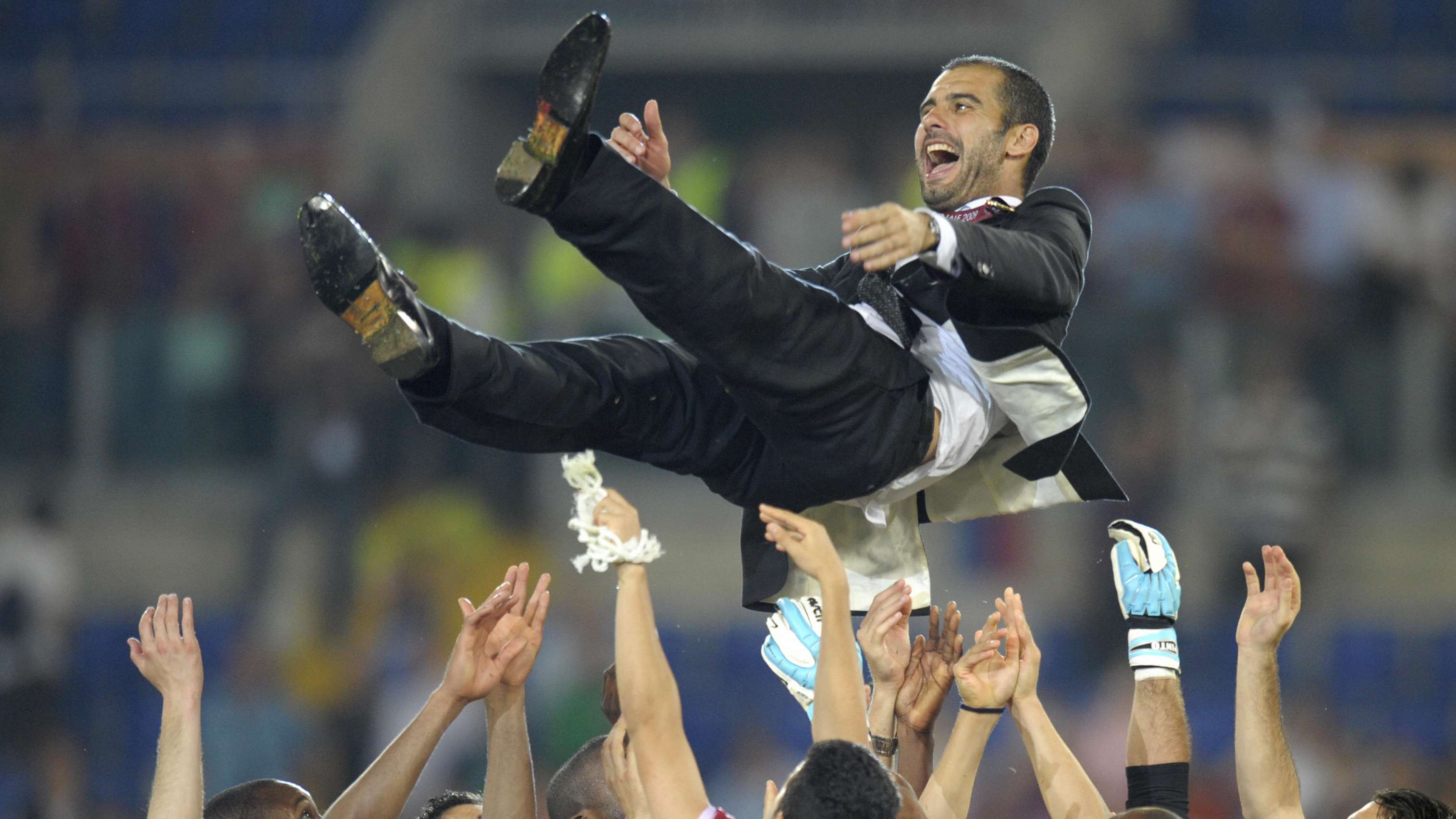
  • Pep Guardiola Barcelona 2009Getty Images

    The glue that held it all together

    You've probably heard the Pep Guardiola quote by now. Except, Pep Guardiola never said it. Vincente Del Bosque, then Spain's manager, uttered the words that became part of the Busquets lore: "If you watch the game, you don’t see Busquets. But if you watch Busquets, you see the whole game.”

    Those words became the cop-out for describing the defensive midfielder, a part of soccer canon. Football is more complex than 19-word platitudes. But this one has stood the test of time. Del Bosque is right, in some ways. The broader point, the bit that sticks, is that Busquets isn't always the most eye-catching footballer. But everything runs through him. For Spain, you were probably watching Xavi or Andres Iniesta. For Barcelona, you were probably watching Messi, or Xavi or Iniesta (an all-time team, by the way). For Miami, you were, once again, probably watching Messi. 

    But Busquets was the glue that held it all together. He was, in many ways, the early embodiment of Pep Guardiola's footballing philosophy. Guardiola was an excellent defensive midfielder in his own right, and knew that when he took charge of Barca that he needed a No. 6 to pace his side. The story of his discovery is a bit apocryphal. Supposedly, Guardiola happened to be at a Barcelona reserve game one day, when then-youth coach Tito Vilanova poked fun at a gangly center back for being far too slow. Guardiola was awestruck, though, by his ability to play under pressure. So he called him up to Barca's senior side, made him a defensive midfielder. And the rest is history. 

  • Advertisement
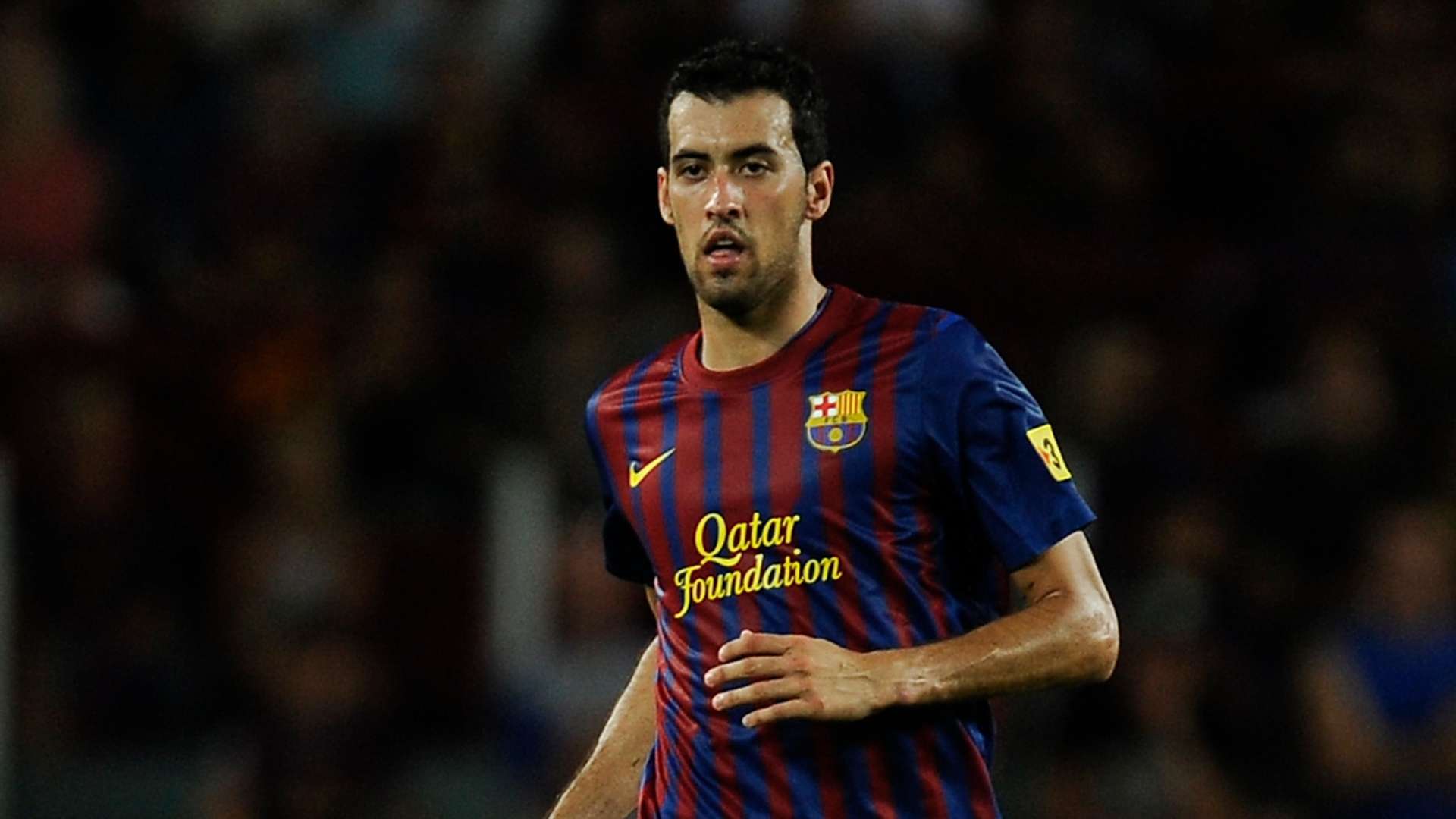
  • Sergio Busquets Andres Iniesta Barcelona 2011Getty

    Xavi-Iniesta-Busquets

    The ensuing years were, effectively, a masterclass of what a modern midfield could look like. Guardiola, as Barcelona manager, changed the way that many viewed football. It was no secret that he drew inspiration from the total football of Ajax and Holland. But his version of that approach was a little different. Guardiola wanted control of all three thirds of the pitch. Simplistically, the best way to do that was by having the ball and going forward as much as possible. You can't concede if your opponent never has possession. It's called Tiki-Taka. And of course, that's what made headlines. After all, this was the sexy stuff: Xavi, Iniesta, Busi - the perfect midfield triangle for club and country. You couldn't get the ball off them. 

    But what was more important for Busquets, perhaps, was the role he played when opponents did have the ball. Guardiola, to this day, has a fundamental fear of being counterattacked. In his vision of football, transitions are deadly. Defensive shape is vital, and can be coached. But transitions are when chaos ensues. You really can't prepare for how an opponent might hit you on the break. Well, Busquets went part of the way to solving that. Guardiola decided as Barca manager that the best solution to losing the ball was to win it back as soon as possible. 

    If his team couldn't - whether that be due to defensive inefficiencies or the opponent just being good in possession - he would ask them to drop. And Busquets was the architect of that. He knew when to step and cut a passing lane. He knew when to foul at the right time and gleefully take some of the best yellow cards you will see. This is where those defensive instincts came in. Busquets' reading of the game was unparalleled.

  • SERGIO BUSQUETS BARCELONA PORTO SUPERCOPA EUROPA 2011Getty Images

    Results, influence, and remarkable success

    The results were accordingly immense. Barca, under Guardiola, were the best team on the planet. And it wasn't particularly close. They won a treble in his first season in charge. He won the La Liga title three times in a row. His crowning achievement, perhaps, was the 2010-11 Champions League final win over Man United, a game that left even the great Sir Alex Ferguson in awe. And Spain weren't bad, either. They won the World Cup in 2010 and the European Championship in 2012, Busquets anchored the side in both triumphs. 

    At a club level, Guardiola kept innovating, toying with different combinations. Messi played on the wing, and then as a false nine. He experimented with Xavi playing a little higher up and Iniesta dropping deep. He got rid of Zlatan Ibrahimovic because he didn't fit the system and famously hooked Thierry Henry when he didn't follow instructions, despite the Frenchman having scored two wonderful goals in the game. But for every change, Busquets was the one constant, anchoring the team. 

    Accordingly, everyone decided to try to find the next version of the player. It gave birth to a whole generation of finely tuned defensive midfielders, all trying to do the same thing. There is a thread to be drawn from Busquets, to N'Golo Kante, to Casemiro, to Fabinho, to Rodri. None, of course, is quite the same. But imitation was the purest form of flattery. 

    "He was a player who changed the way of thinking of the central midfielder," Javier Mascherano said in a media availability Friday morning. "There would be no Rodri without Busi. That's my opinion. And well, he has created a school." 

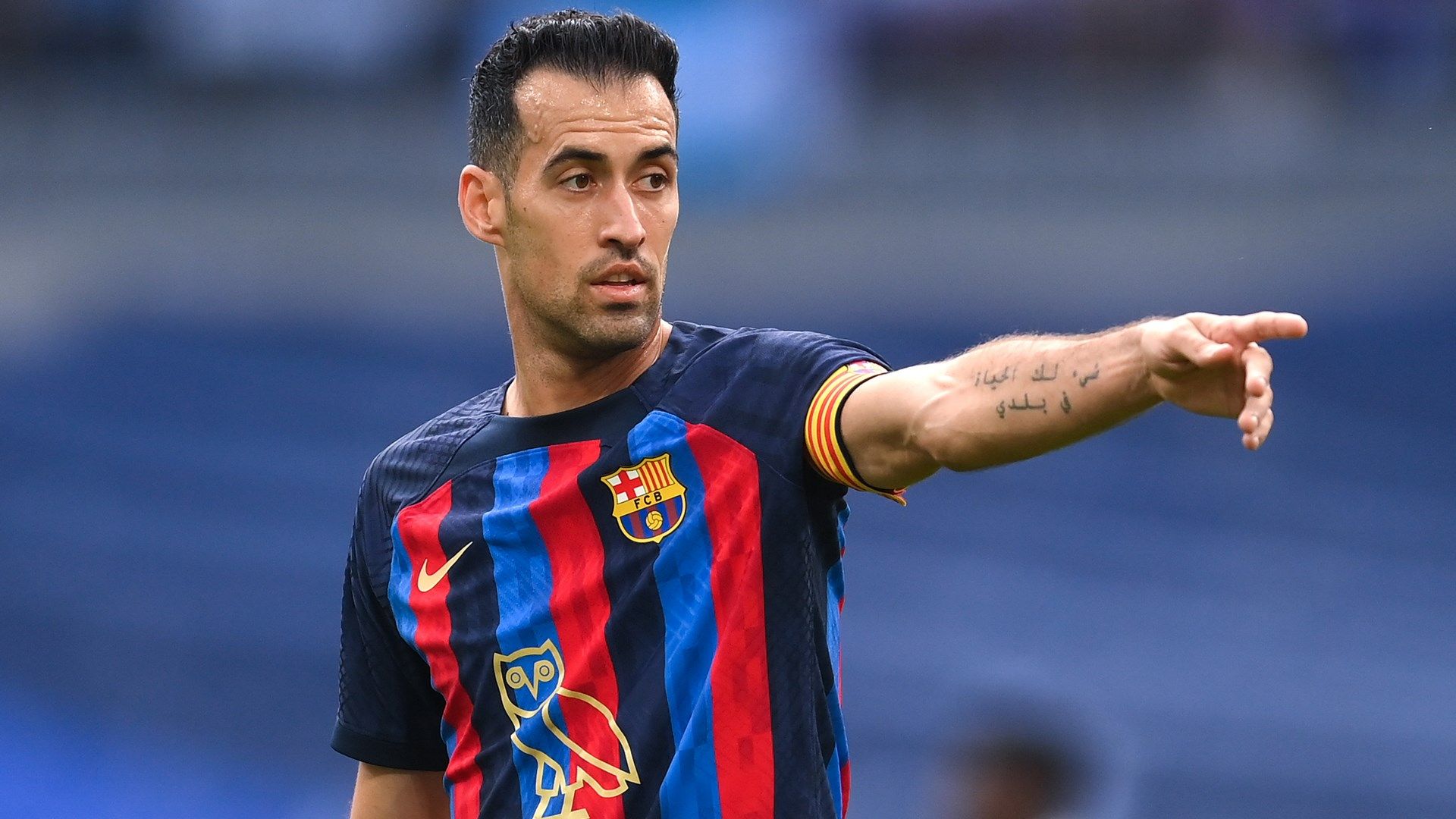
  • Sergio Busquets Barcelona 2022Getty

    The final days at Barca

    But as Busquets aged, his athletic deficiencies became more pronounced. Luis Enrique figured out how to use him effectively from 2014-2016 while at Barcelona. After that, though, a series of managers failed to protect his gangly legs. Barca were no longer as effective on the ball and too disorganized without it. There were calls from some in the Barca fanbase to move Busquets on. Perhaps his time was done. 

    There would be one last swan song, though. Xavi, his old teammate, figured out a formula to get the last juices of football out of him at an elite level during Barca's title winning season in 2023. Busquets could no longer cover so much ground. But Frenkie De Jong could. So, Xavi set up a box midfield and played De Jong alongside Busquets. 

    The result was a fine last season in Catalonia. De Jong put out fires here, there and everywhere. Busquets won tackles and shuffled the ball around. He left Barcelona with a La Liga winner's medal around his neck. It was a perfect farewell. Then it was off to South Beach.

  • Inter Miami CF v FC CincinnatiGetty Images Sport

    Time to go?

    Inter Miami made sense as a destination. Busquets had some football left in him. MLS was always going to be appealing. Throw in the fact that Messi had already pledged his future to the Florida club, and it was a no-brainer. And for a while, Busquets was everything Miami could have hoped - albeit in a different way. He anchored the midfield and adjusted well to the slower pace of play. 

    In MLS, he could take the shortcuts that European football never quite allowed. There was no sense of moving sideways to go forward then. Instead, he could pick the passes that would otherwise be blocked. He could find the gaps that higher-level players might be able to anticipate. And if all else failed, he could dump the ball off to Messi - a pattern that had developed throughout his career.

    Miami tapped into his versatility, too. When injuries struck last year, Busquets played as a centre-back, or even in the middle of a back three. He played eight games in a defensive role, and Miami won over half of those contests. 

    This season, though, things have started to slow a bit. Busquets still has eight assists to his name, but as players have picked up knocks around him, Busquets started to look a little exposed at 37 years old. Which likely led to his announcement Thursday night. 

  • Inter Miami CF v Seattle Sounders FCGetty Images Sport

    Calling it at the right time

    Rumors cropped up a couple months ago that Busquets planned on retiring at the end of the season. It was mostly just talk - there's plenty of that kind of thing in soccer these days. But zoom out, remove the snobbery, ignore the skepticism that has to come with social media and sports, and it all makes a lot of sense. 

    Busquets' age is an issue. Miami have signed Rodrigo De Paul. Yannick Bright is already one of the best defensive midfielders in MLS - even if he admits that the Spaniard's talents are beyond imitation.

    "It's Busi. You don't learn those things because it's just him. It's really, really, really hard to play like him," Yannick Bright told GOAL. "If you try to play like him, you're not going to do it."

    There is also the money issue. Busquets is a designated player, and on massive wages

    He has earned that right, to be sure, but certain salary designations simply have to have their talent maximized. If Miami are to retool, go again, and try to give Messi silverware before he leaves, Busquets probably had to walk with grace. And that's just what he has done. 

    There is some more football to be played. Miami could yet win the Supporters' Shield. There are more complete teams in MLS, but they are certainly contenders to win the Cup. Just as he did in Catalonia, there is every chance that Busquets, too, could finish another tenure with a trophy. And if not, there will still be the signature swivel, the look up, and the killer pass - right until the final whistle of his last game.