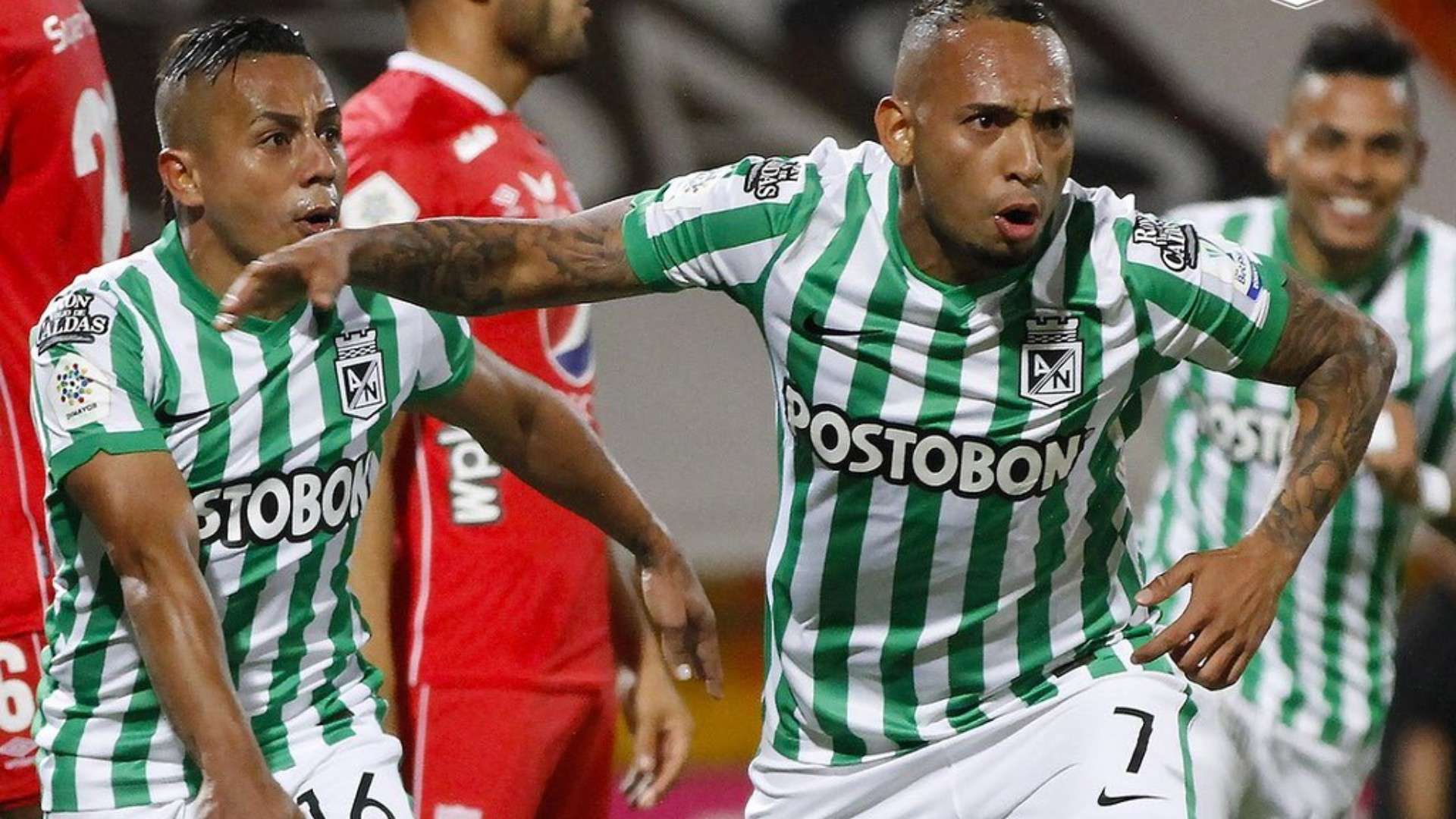
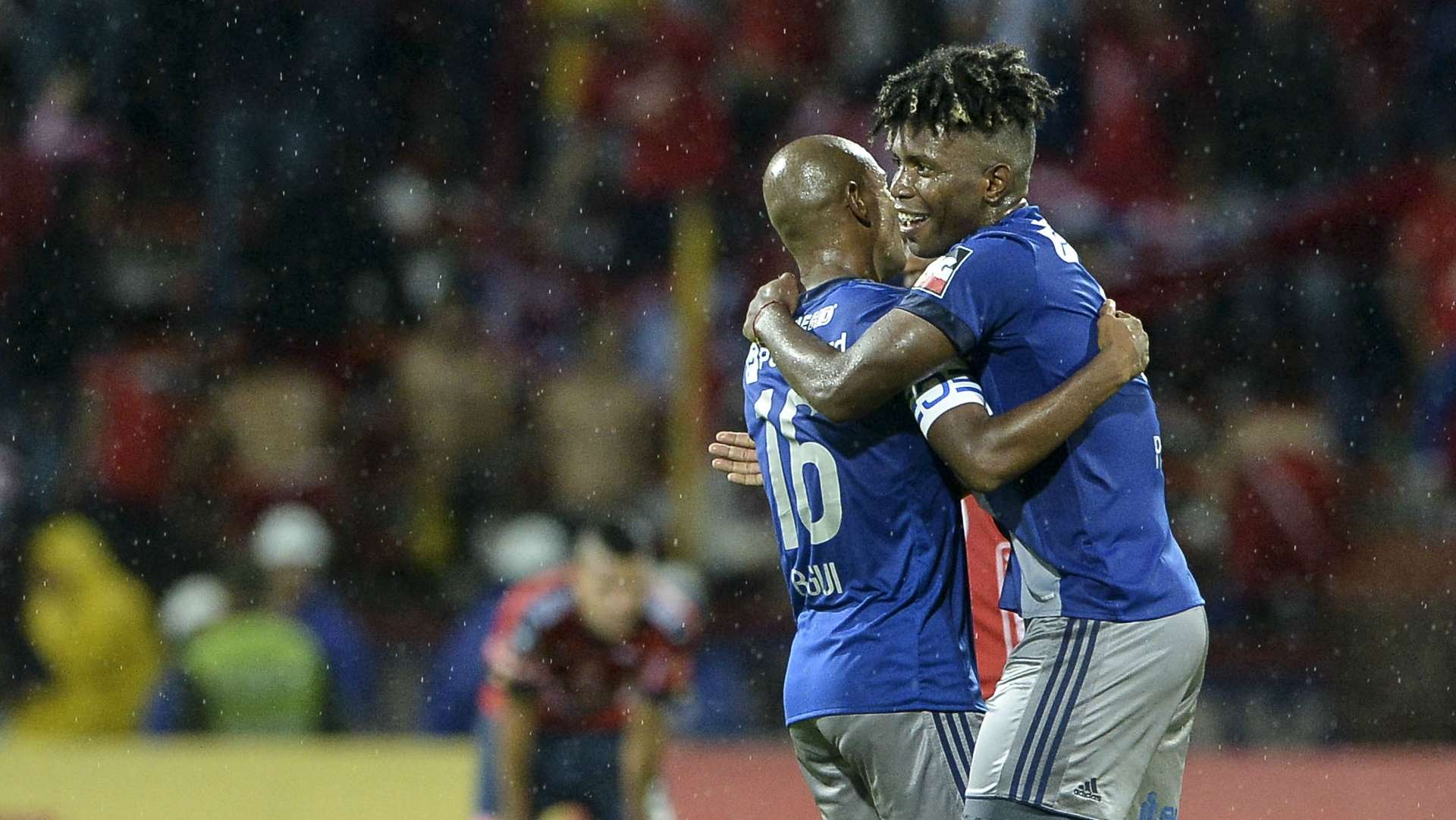
 Independiente Medellin
Independiente Medellin Overview



Standings
 Primera A
Primera A| Pos | Team | P | W | D | L | F | A | +/- | PTS | Form | |
|---|---|---|---|---|---|---|---|---|---|---|---|
| 8 |  Santa Fe Santa Fe | 18 | 6 | 8 | 4 | 26 | 21 | 5 | 26 |
| |
| 9 |  Deportivo Cali Deportivo Cali | 18 | 7 | 5 | 6 | 19 | 15 | 4 | 26 |
| |
| 10 |  Independiente Medellin Independiente Medellin | 18 | 7 | 5 | 6 | 25 | 22 | 3 | 26 |
| |
| 11 |  Millonarios Millonarios | 18 | 7 | 4 | 7 | 29 | 21 | 8 | 25 |
| |
| 12 |  Bucaramanga Bucaramanga | 18 | 5 | 8 | 5 | 25 | 18 | 7 | 23 |
|

History
Manchester United, often simply referred to as "United," are one of the most iconic and successful football clubs in the world, based in Old Trafford, Greater Manchester, England. The club was founded as Newton Heath LYR Football Club in 1878 by the Lancashire and Yorkshire Railway depot at Newton Heath. The team changed its name to Manchester United in 1902 and moved to its current home, Old Trafford, in 1910.
Famous players
Manchester United have been home to some of the greatest footballers in history. Sir Bobby Charlton, a World Cup winner with England in 1966, is arguably the most iconic figure in the club's history. Other legendary players include George Best, known for his flair and skill, and Eric Cantona, who brought a winning mentality to the club during the 1990s. More recent stars like Cristiano Ronaldo, Wayne Rooney, and Paul Scholes have also contributed significantly to the club's success.
Honours
Manchester United are one of the most decorated clubs in English football, having won a record 20 Premier League titles (formerly the First Division). They have also lifted the FA Cup 12 times, the League Cup five times, and the UEFA Champions League three times. The club's dominance in English football was particularly evident during the 1990s and early 2000s under manager Sir Alex Ferguson.
Managers
Sir Alex Ferguson is undoubtedly the most successful manager in Manchester United's history. He spent 26 years at the club, leading them to an unprecedented era of success. Before Ferguson, managers like Matt Busby and Wilf McGuinness played crucial roles in shaping the club's identity. More recent managers, including David Moyes, Louis van Gaal, and José Mourinho, have faced the challenge of maintaining the club's high standards.
Stadium
Old Trafford, often referred to as the "Theatre of Dreams," is one of the most famous stadiums in the world. With a capacity of roughly 75,000, it is among the largest football stadiums in the United Kingdom. The stadium has hosted numerous major matches, including UEFA Champions League finals and FIFA World Cup matches.
Location
Manchester United are based in the city of Manchester, which is located in the northwest of England. The club's home ground, Old Trafford, is situated in the Trafford borough. Manchester is a major industrial city with a rich footballing heritage.
Owners
In February 2024, British billionaire Sir Jim Ratcliffe's company, INEOS, acquired a significant 25% stake in Manchester United. This acquisition granted Ratcliffe sporting control over the club, placing him in a position to influence key decisions related to its operations.
Ratcliffe has already made a substantial financial commitment to Manchester United. His large investments demonstrate his dedication to the club's success and his willingness to provide the necessary resources for its growth.
Frequently asked questions
With the Premier League's popularity arguably never as big as it is now, it can be a fight to get tickets to catch a match. However, it is not impossible to land a seat.
Explore all options available through the club's ticket portal for official tickets, as well as through secondary ticket hubs like StubHub and Ticombo. There may be late-breaking ticket drops or varied resale options available the nearer you get to a particular fixture.
On some occasions, you can buy Fulham tickets without a club membership. However, you will not be in an advantageous place to get the jump on other fans who are. Club membership gives you priority when purchasing tickets for games at Craven Cottage.
Below, you can find the membership tiers available for supporters this season:
- Adult - £50.00
- Junior - £30.00
The club has introduced a Membership+ option as well, albeit for a limited time. You will get all the facilities of a standard membership and a £20 online retail voucher and an exclusive member gift. However, you have to use the retail voucher by August 31, 2025. Prices are:
- Adult - £65.00
- Junior - £45.00
Demand for Fulham tickets is expected to outstrip availability this season, with old and new fans all likely looking to cheer them on at Craven Cottage.
The easiest way to check availability for Fulham matches will be through the club's official website.