Paternity leave GFXGetty/GOAL

Football's paternity leave problem: Top clubs accused of treating players like 'gladiators in the Roman Empire' and robbing them of 'transformational' fatherhood period

When Erling Haaland scored against Leicester last year to end a four-game goal drought, Pep Guardiola sought to explain the Norwegian's erratic form by announcing some huge news about the striker’s personal life.

"He's tired, he's played a lot of minutes. He's become a father for the first time in the last few days," the Manchester City boss said. "A lot of emotions and an exciting few days for him."

Anyone who has had children and can recall the manic few days after a birth would have immediately felt sympathy for Haaland. So on one level, Guardiola's revelation put all discussions about the striker's form into perspective. But it also begged another question: whether Haaland should have been playing at all so soon after such a significant life event.

Every father in the United Kingdom is entitled, by law, to at least two weeks of paternity leave. But in football almost no one takes it. Indeed, those who try to have any meaningful time off to care for their brand new arrival and their partner are vilified...

  • Jack Grealish EnglandGetty

    'Massive deal for player and partner'

    Haaland is by no means alone in having to continue to play elite football so soon after a birth. His team-mate Phil Foden left England's Euro 2024 camp on June 26 to attend the birth of his third child. England at first announced he was leaving due to "a pressing family matter". He was back with the squad by June 27, resuming training the very next day and then starting the last-16 game against Slovakia on June 30.

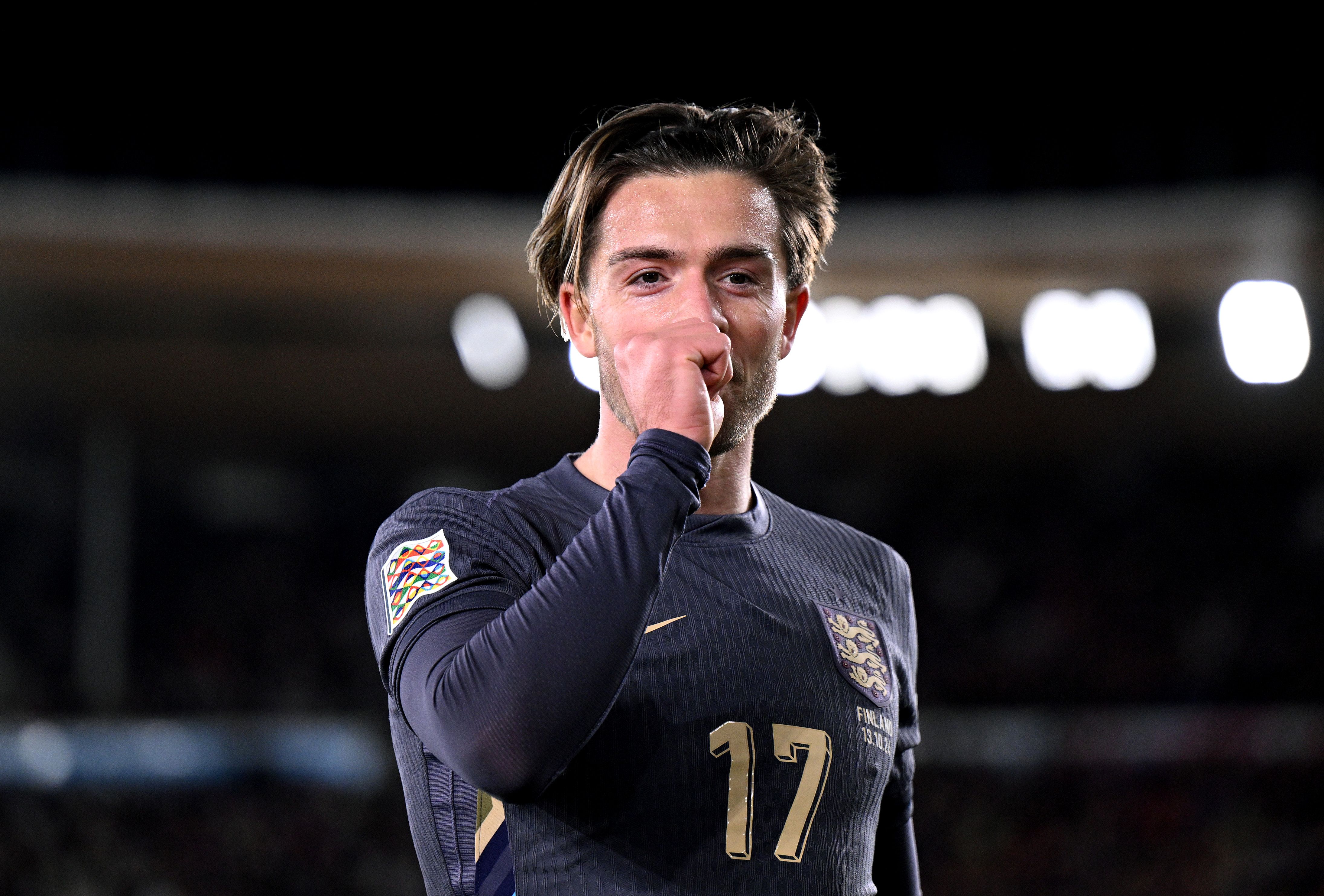
    Jack Grealish's daughter was born on September 27 last year. He was thrust straight into the starting line-up the very next day for the early kick-off at Newcastle. Incidentally, Grealish played well, setting up Josko Gvardiol's strike in the 1-1 draw, which is a miracle considering the life-changing event that had occurred the previous day both for Grealish and his girlfriend Sasha Attwood, who he has been with since he was 16.

    "I can't think of a bigger experience in life for men than becoming a father, especially for the first time," Jeremy Davies of the Fatherhood Institute tells GOAL. "It's a massive deal just for them but it's not just about them, it's about their partner who has just gone through this amazing, scary and painful and potentially very risky experience of being pregnant and giving birth. So it seems totally unreasonable to me to expect men to go through that and remain focused on their work in an unblinkered way when they are going through this massive emotional and physical change.

    "If you're a hands-on father there is a physical transformation in you which derives from the contact with the baby. Even if you do a small amount of that your hormones are racing, your testosterone dips, oxytocin increases. That stuff transforms us for the long term. There's a lot of physical transformation and that's before you get on to the emotional stuff. There are many social reasons why you'd want to be a hands-on dad, it's good for the mother, it helps her have a better time of it, helps her recover from the birth which can take quite a while. The wife or partner's career, all of that stuff is affected by his capacity to take a share in the care-giving. So what are we saying? That football is so important that he doesn't get to experience that transformation, the baby doesn't get to have a chance to have a really close relationship with him because he's too busy on the football pitch? It doesn't make sense."

    The Professional Footballers Association has said that "the decision to take paternity leave will vary from player to player depending on their unique personal circumstances. However, it is important for players to know that they have a statutory right to take a period of paid paternity leave if they wish to do so."

  • Advertisement
  • Dan James LeedsGetty

    A 'crazy decision' and a helicopter

    The reality is very different, of players rushing from hospitals to stadiums, juggling the emotions of bringing a new life into the world with trying to help their team. Last year Sammie Szmodics' wife gave birth at 11.15am after going into labour at 2am. But by 3pm he was on the pitch at Ewood Park playing for Blackburn against Norwich. "I'd had about three hours kip but luckily the baby arrived happy and healthy. After it had calmed down, your emotions are through the roof," the now-Ipswich Town forward said afterwards.

    "On the way from the hospital to the game, I remember ringing my agent and him laughing and looking back, it was a crazy decision. The first couple of minutes of the match I was sprinting and realised that I was playing on adrenaline because I was absolutely exhausted."

    Of course he was. He did at least have a shorter journey to make to the game than Leeds United winger Daniel James, who in 2021 was flown via helicopter from a Manchester hospital to Craven Cottage to play for Leeds at Fulham in the Carabao Cup hours after his wife had given birth to their son. Davies can understand why players would not want to take paternity leave at a key moment of the season or during a major tournament but believes they must be allowed, and encouraged, to take it later.

    "I can see from an individual footballer's point of view the timing of the baby's arrival would be absolutely terrible. If there's an important match, take the paternity leave after the match," he says. "You have the right to take the leave until 56 days after the birth. Between them, the mother, father and club should work it out."

  • Andy ColeGetty Images Sport

    Foster's anger, Cole's torment

    The sad fact is that players simply being able to attend the birth is a victory nowadays, given previous precedents. Queens Park Rangers boss Trevor Francis infamously fined Martin Allen two weeks wages in 1989 for missing a game to go to hospital to attend a birth. In 2011 Ben Foster missed the birth of his second child while he tried to race back from England training. Fabio Capello had only reluctantly given him permission to miss the session and ordered him to return the next day to play in a friendly. He was told he would play the second half but was never brought on. The saga led to Foster quitting England for a two-year period, eventually returning to the squad in 2014 when Roy Hodgson was in charge. He later said: "Playing for England is the proudest moment ever. But the manager (Capello) ruined it completely for me."

    Andy Cole, meanwhile, ended up siding with Sir Alex Ferguson over his own partner when deciding whether or not to play for Manchester United against Southampton in 1995 just as she was going into labour. The striker had endured an uneasy start to life with United and after speaking to Ferguson he decided to play the game. He was informed of the successful delivery of his son in the 15th minute and went on to score.

    Cole said in the Amazon Prime documentary '99': "We were trying to win the Premier League. I remember the manager calling and saying to me: ‘What are you thinking?’ [I was] 25 years of age, I had only been at United for four months, how do I turn round and say 'no'? Obviously, she [his partner Shirley Dewar] saw it from her point of view. She said 'I can’t believe you left me to go and play the game'. I’m trying to manage it to the best of my capabilities, as a young man who had had his first child. [I said] 'But, we were trying to win the league as well, I didn’t want to leave you'. The torment I was going through."

  • Roy Keane IrelandGetty

    Keane: 'He didn't have the baby!'

    Cole's team-mate Phil Neville did manage to attend the birth of his two children but his wife, Julie, revealed years later that he left her bleeding in the delivery suite just after the arrival in order to go to training. She told the Manchester Evening News: "I literally remember them (the hospital staff) going, 'Where’s Philip? somebody ring him now, he needs to come now'. He says that’s the only time, probably, football, maybe, shouldn’t have come first."

    That those two incidents took place under Ferguson should not be the biggest surprise. The legendary ex-United boss admitted in the 2021 documentary 'Never Give in' that his wife Cathy had almost exclusively brought up their three sons as he was so focused on his career. Ferguson’s captain Roy Keane showed a similar attitude towards parental leave when he was Ireland’s assistant coach in 2015 and was asked whether Robbie Keane would be playing in a European Championship qualifier against Germany so soon after his wife had given birth in the United States. "Yeah, but he didn’t have the baby, did he?" Keane said without a hint of irony. "Unless he’s breastfeeding, he should be alright."

    Attitudes aren't necessarily much better outside of the British isles. Rafa Benitez was furious with Xabi Alonso when he missed a Champions League game with Liverpool at Inter in 2009 to be with his wife for the birth of their child. Alonso left Liverpool at the end of that season to join Real Madrid.

  • David Silva Man CityGetty

    Silva 'forever in Guardiola's debt'

    Last year Villarreal striker Alexander Sorloth missed the birth of his child to play in their La Liga match at Almeria. He had been given permission by the club and his manager to miss the game but preferred to play. The Norwegian scored a last-minute winner and celebrated, as most footballers do on such occasions, cradling his arms and sucking his thumb. Villarreal's social media summed up the events in a post, signing off by saying "Great story, huh?"

    Users did not agree. "No goal in his life will compensate for what he has missed. And on top of that you say it like what he did was marvellous," wrote one commenter. "If I were his wife he'd be sleeping in the dog house," read another post. It was a strange occasion to choose football over family, as Villarreal were in mid-table at the time and the result was not going to have much influence on European qualification or relegation. Perhaps the real motivation was the race to win the Pichichi, the award for the top scorer of the season. Sorloth ended up coming second to Girona's Artem Dovbyk by just one goal.

    Gareth Southgate showed a more caring attitude than many coaches when he allowed Fabian Delph to miss England's World Cup knockout clash with Colombia to attend the birth of his third child. "Everybody says you only get one chance to be in a World Cup, but also there’s only one day in your life when your children are born," Southgate explained. "I know my father’s generation and those before them would view that differently, but you have got to be there for your family and that’s very important."

    Guardiola also showed how a manager should act when he gave David Silva extended leave when his son Mateo was born prematurely in December 2017 and had to spend the first five months of his life in hospital in Valencia. Silva recalled a conversation he had with his coach at the time. "He said 'Listen, go and spend a few weeks with your family and do whatever you need to do. Please do it. I'm not going to put you in any problems. Look after your family first...football second." Silva said he would "be in debt forever" to Guardiola for how he treated him. City rallied around Silva during that campaign and Guardiola said he and Mateo were their inspirations as they earned a record-breaking 100 Premier League points.

  • Anthony Martial Jose MourinhoGetty

    Mourinho hangs out Martial to dry

    Silva suffered more than most fathers in that period but every birth has its own story and even after so-called natural deliveries mothers are left physically and emotionally impacted for weeks, if not months, afterwards. More than one in 10 women in the UK suffer from post-natal depression. New fathers are also vulnerable to feelings of anxiety and depression in the first year of parenthood. In such situations a footballer’s lucrative salary is of little use and what their partner needs is for them to be around so they can support them, not travelling up and down the country playing football matches.

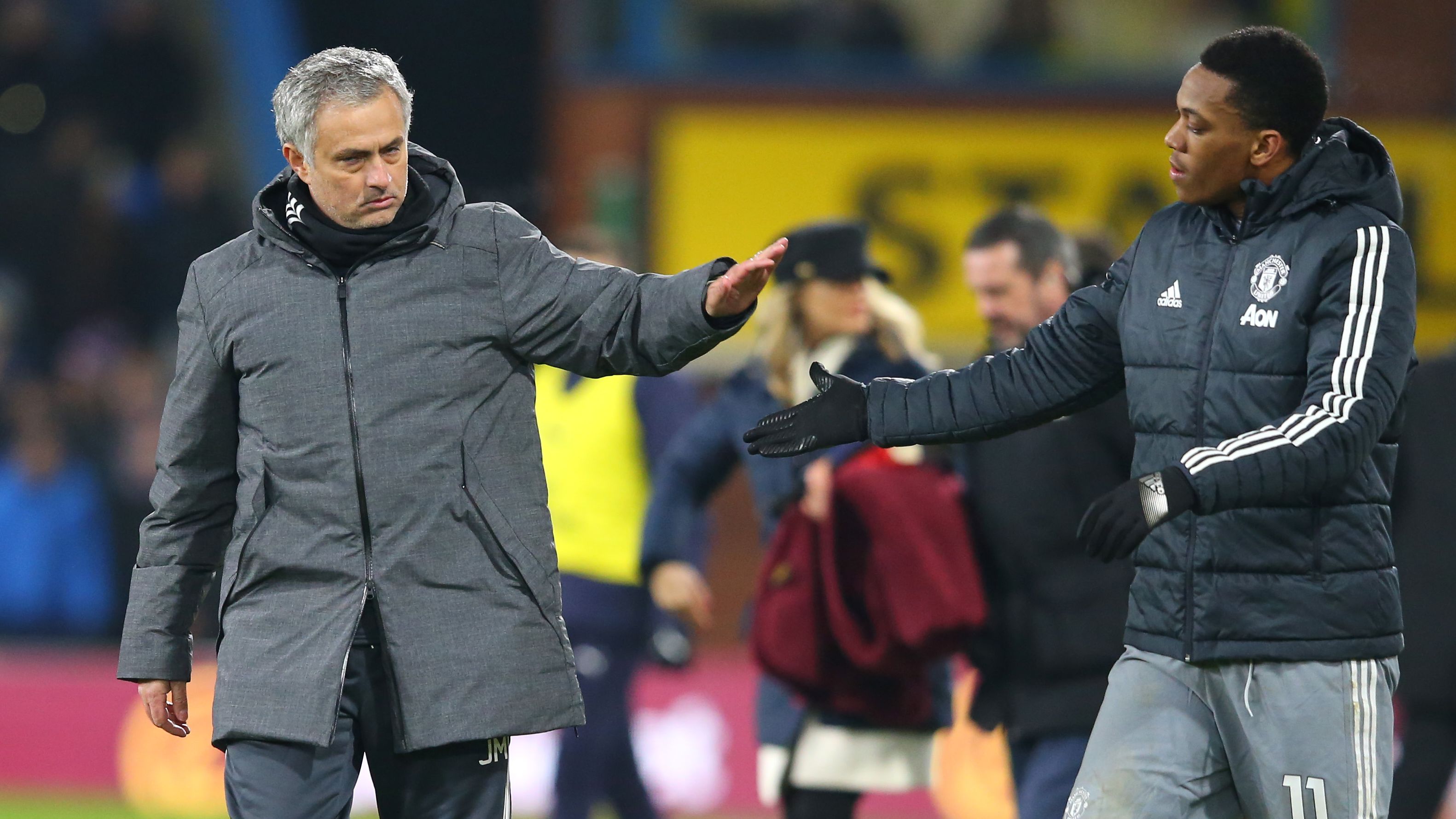
    But good luck trying to take some time off to support your partner in such a time. Just ask Anthony Martial, who was given a public scolding by Jose Mourinho for not immediately re-joining Manchester United's pre-season tour of the USA in 2018 after the birth of his first son and was later fined £180,000 ($223k) - the equivalent of two weeks wages. Mourinho showed no sympathy at all to the French forward, telling a press conference at the time: "He has the baby and after the baby is born - beautiful baby, full of health, thank God. Now he should be here, and he is not here."

    Martial did not back down and fired back on social media: "Thank you all for your posts. My little Swan is fine, for the mom it was harder but thanks to God she's better now. Sorry but my family will always come first... Back tomorrow in Manchester."

    Davies was horrified when he read about Martial's punishment, calling it "outrageous". He adds: "Good employers in many industries have got their heads around this and I'd have thought a high quality football club in 2025 should be seeking to do the same. Otherwise what are they saying? They're saying they don't care about these men's mental health, their work-life balance, their ability to form strong relationships with their children.

    "I can see on a practical level for an individual footballer sometimes it might feel like a struggle to take this time at the point you want to take it but the organisation that employs you should be doing everything it can to help you do the best job of combining your amazing footballing talent with becoming a half-decent father."

  • Alejandro Garnacho Man Utd 2024-25Getty

    'You need to care about your players'

    A sign of how behind the times the game is can be seen in the fact that maternity leave policies for women’s football only became a reality very recently, with the right to paid maternity leave only introduced by FIFA in 2021. Last year more changes were made, extending maternity rights to mothers as well as granting eight weeks of paid absence to players and coaches other than the biological mother, plus eight weeks absence for those adopting children. The changes followed years of campaigning from FIFPRO, the global players' union.

    FIFPRO lawyer Alexandra Gomez Bruinewoud welcomed the changes and called for the men’s game to follow suite. "What is still missing? We would say all these protections regarding parental rights have been focused only on women’s players in FIFA's regulations. We deem that, of course, men’s players also have the right to paternity leave, to have paid time off to be with their new-born child,” she said. "There is no clear justification, in our point of view, not to include professional men’s football players into these protections. And this should happen urgently."

    There is little momentum, however, within the men’s game to make such changes. Davies is calling for a cultural change. "Football is an extreme example of this version of masculinity, you're expected to be heroic and doing this soft stuff of looking after babies doesn't seem to fit with that," he says.

    "But in this day and age, even in those heroic roles, surely we understand that maleness is something more wide ranging and does involve softness, caring? You need to care about the team, your fellow players. You need to look after your health and your mental health in order to perform well. It seems very archaic to treat these men as if they're gladiators in the Roman Empire."