Luxembourg

Luxembourg Overview

Luxembourg v Germany - FIFA World Cup 2026 Qualifier

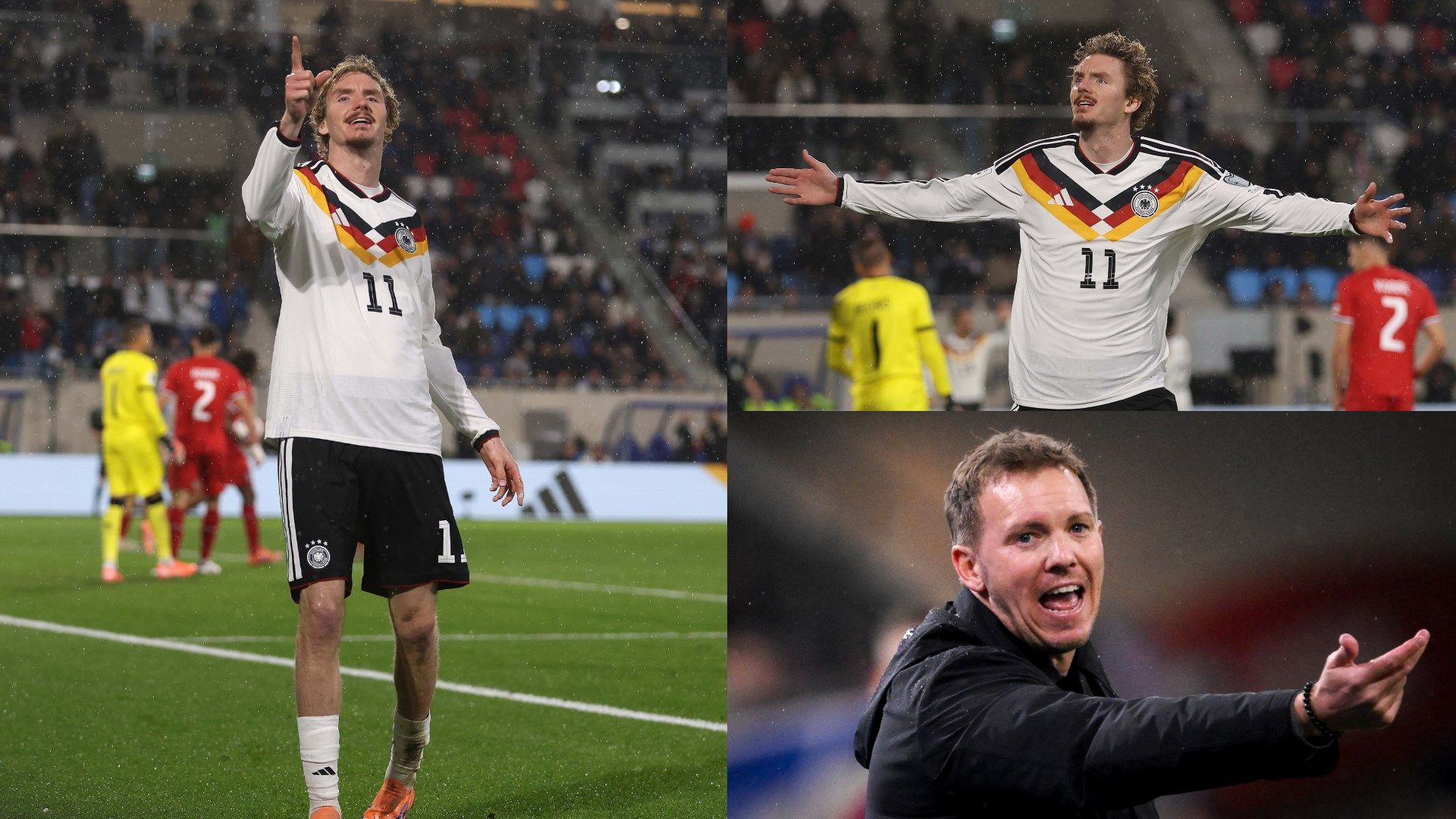
Confident Woltemade revels in scoring key goals for Germany

Nick Woltemade spoke with confidence after bagging both goals in Germany's 2-0 win over Luxembourg. The towering striker saved Die Mannschaft's blushes after a goalless first half against the international minnows. His manager Julian Nagelsmann praised his first choice goal scorer's work ethic, saying the 23-year-old deserved "special praise" after his tireless performance.

Luxembourg v Germany - FIFA World Cup 2026 Qualifier

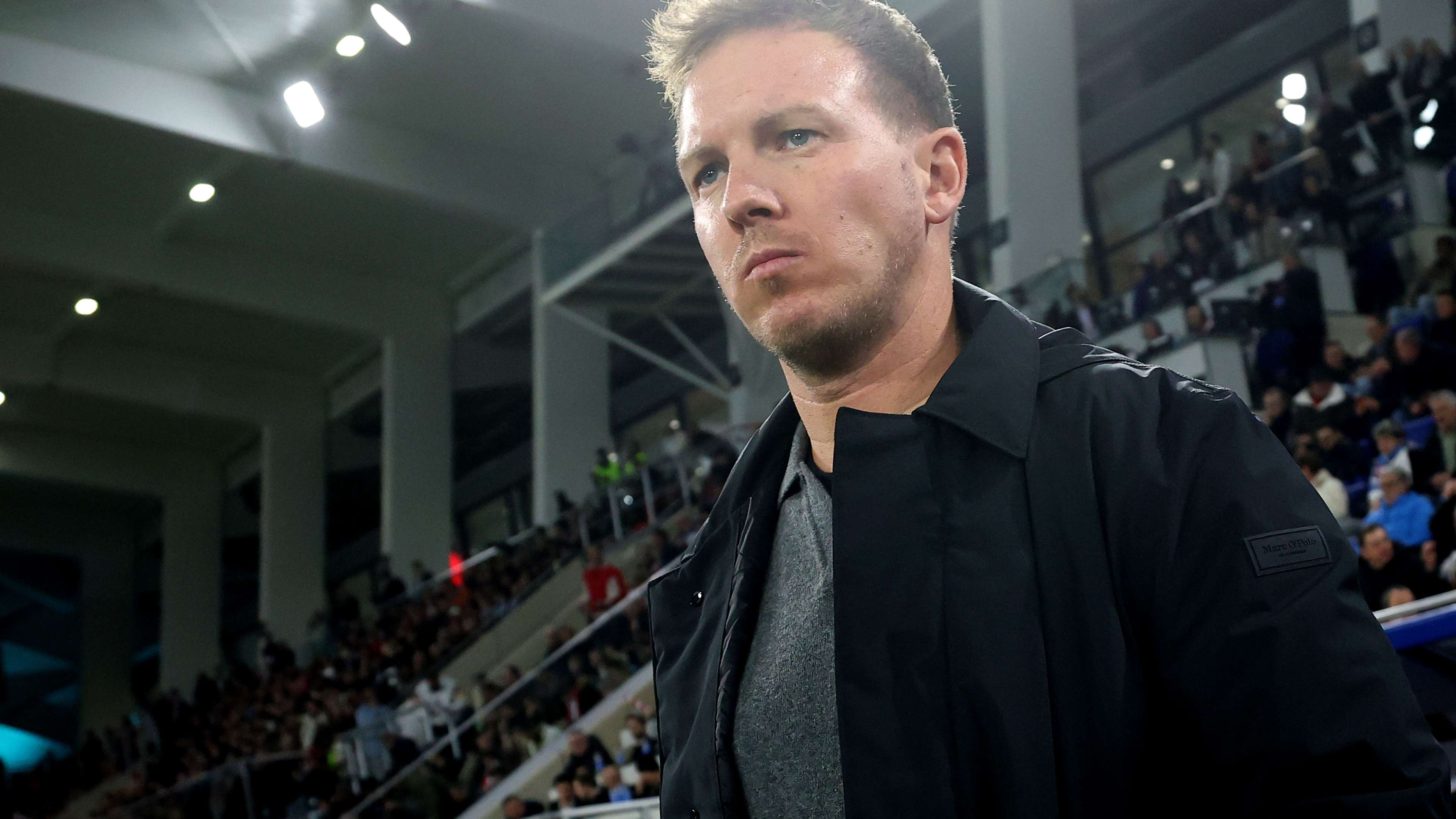
Nagelsmann refuses to shout as Germany players 'can't stand being attacked'

Julian Nagelsmann revealed that he did not shout at his players after a lacklustre first-half performance against Luxembourg, as the manager claimed that the squad could not have handled being attacked at that point. Germany eventually clinched the tie 2-0 thanks to a brace from Newcastle forward Nick Woltemade as they continued to remain favourites to seal a direct World Cup berth from Group A.

Luxembourg v Germany - FIFA World Cup 2026 Qualifier

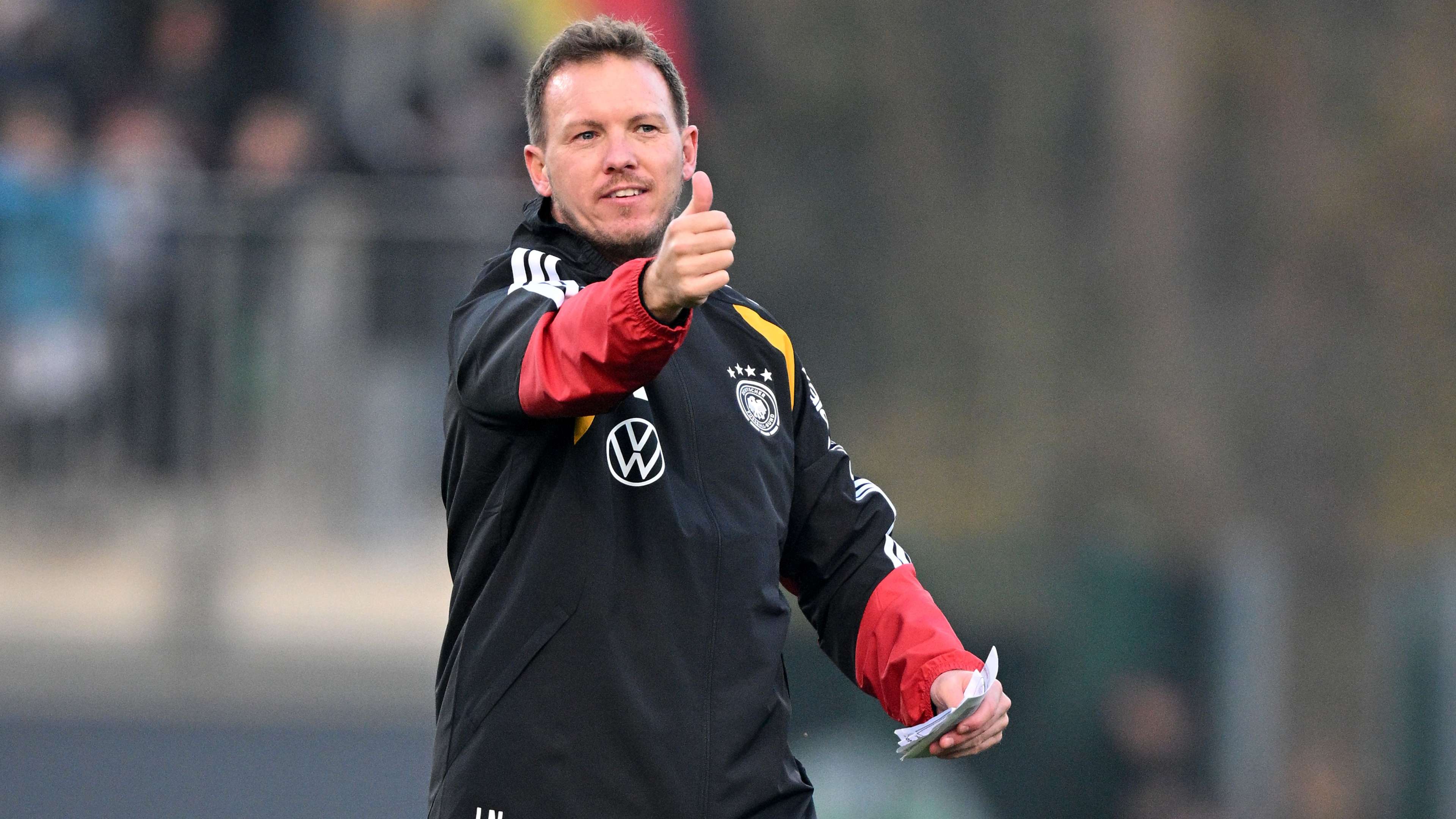
'Decisive' Sane earns Nagelsmann's praise after starring role for Germany

Leroy Sane earned praise from Germany boss Julian Nagelsmann after starring in the four-time world champions' hard-fought 2-0 win over Luxembourg in a 2026 World Cup qualifying match on Friday. Nagelsmann had earlier issued a public warning to former Bayern Munich and Manchester City winger that he could lose his place in the national if he did not perform consistently.

Germany GFX

Woltemade to the rescue for disjointed Germany

Germany survived an unsettling evening in Luxembourg as a Nick Woltemade brace proved decisive in a match that will raise far more questions than it answers for Julian Nagelsmann. A 2-0 win was ultimately enough to keep Germany on track in their qualifying campaign for the FIFA 2026 World Cup, but the performance itself was scattered, lethargic and lacking cohesion.

Germany Press Conference And Training Session

Nagelsmann breaks with Germany tradition with Sane captaincy snub

Julian Nagelsmann has broken with Germany's traditional captaincy protocol, opting to name Bayern Munich defender Jonathan Tah as the stand-in captain for the injured Joshua Kimmich against Luxembourg. This decision means Nagelsmann overlooked Leroy Sane, the most-capped player in the current squad, despite the customary practice of awarding the armband to the most experienced figure in the absence of regular captains.

Germany v Luxembourg - FIFA World Cup 2026 Qualifier

Nagelsmann calls Gnabry a role model for 'top players'

Serge Gnabry's superb performance in Germany's 4-0 win over Luxembourg has sparked high praise from coach Julian Nagelsmann, who lauded the winger's 'feistiness' and work rate as a crucial role model for 'top players.' The German coach declared the display Gnabry's best international game in a long time, noting his hunger both offensively and defensively.

More

Standings

Super Lig crestSuper Lig

PosTeamPWDLFA+/-PTSForm
3Ratchaburi FC crestRatchaburi FC23134638231543
D
L
W
D
W
4Bangkok United crestBangkok United23119334221242
D
D
D
W
W
5BG Pathum United crestBG Pathum United25118638281041
D
D
L
W
W
6Prachuap FC crestPrachuap FC2581253230236
D
D
W
W
W
7Ayutthaya United FC crestAyutthaya United FC258893135-432
L
W
L
W
L
More

History

Manchester United, often simply referred to as "United," are one of the most iconic and successful football clubs in the world, based in Old Trafford, Greater Manchester, England. The club was founded as Newton Heath LYR Football Club in 1878 by the Lancashire and Yorkshire Railway depot at Newton Heath. The team changed its name to Manchester United in 1902 and moved to its current home, Old Trafford, in 1910.

Famous players

Manchester United have been home to some of the greatest footballers in history. Sir Bobby Charlton, a World Cup winner with England in 1966, is arguably the most iconic figure in the club's history. Other legendary players include George Best, known for his flair and skill, and Eric Cantona, who brought a winning mentality to the club during the 1990s. More recent stars like Cristiano Ronaldo, Wayne Rooney, and Paul Scholes have also contributed significantly to the club's success.

Honours

Manchester United are one of the most decorated clubs in English football, having won a record 20 Premier League titles (formerly the First Division). They have also lifted the FA Cup 12 times, the League Cup five times, and the UEFA Champions League three times. The club's dominance in English football was particularly evident during the 1990s and early 2000s under manager Sir Alex Ferguson.

Managers

Sir Alex Ferguson is undoubtedly the most successful manager in Manchester United's history. He spent 26 years at the club, leading them to an unprecedented era of success. Before Ferguson, managers like Matt Busby and Wilf McGuinness played crucial roles in shaping the club's identity. More recent managers, including David Moyes, Louis van Gaal, and José Mourinho, have faced the challenge of maintaining the club's high standards.

Stadium

Old Trafford, often referred to as the "Theatre of Dreams," is one of the most famous stadiums in the world. With a capacity of roughly 75,000, it is among the largest football stadiums in the United Kingdom. The stadium has hosted numerous major matches, including UEFA Champions League finals and FIFA World Cup matches.

Location

Manchester United are based in the city of Manchester, which is located in the northwest of England. The club's home ground, Old Trafford, is situated in the Trafford borough. Manchester is a major industrial city with a rich footballing heritage.

Owners

In February 2024, British billionaire Sir Jim Ratcliffe's company, INEOS, acquired a significant 25% stake in Manchester United. This acquisition granted Ratcliffe sporting control over the club, placing him in a position to influence key decisions related to its operations.

Ratcliffe has already made a substantial financial commitment to Manchester United. His large investments demonstrate his dedication to the club's success and his willingness to provide the necessary resources for its growth.

Frequently asked questions

Initially founded as Sunderland and District Teachers A.F.C. in 1879, the club was renamed to Sunderland A.F.C. in October 1880. The club turned professional a decade later, when it joined The Football League ahead of the 1890-91 campaign.

Kyril Louis-Dreyfus (64% stake) and Juan Sartori (36% stake) are the co-owners of Sunderland. The former first acquired shares in February 2021, joining the latter who has been associated with the club since 2018.

Sunderland's home stadium is known as The Stadium of Light, which replaced the iconic Roker Park in 1997. Roker Park served as Sunderland's home ground for almost a century, from 1898 to 1997.

The Stadium of Light has a capacity of 49,000, making it England's ninth-largest football stadium.

Sunderland have won a total of nine trophies, which includes six top-flight titles as well as two FA Cups.

Sunderland have clinched the English top-flight title on six occasions. Their first win came in the 1891-92 season, while they haven't won a single league title since going all the way at the end of the 1935-36 campaign.

Former English goalkeeper Jimmy Montgomery holds the record for making the most appearances in Sunderland history. Montgomery made 627 appearances between 1960 and 1977 and was a part of the Sunderland team that won the 1973 FA Cup.

The Sunderland faithful will never forget the contributions of legendary striker Bobby Gurney, who churned out 228 goals in 390 appearances in what is a club record.

Charlie Hurley, Simon Mignolet, John O'Shea, Jordan Pickford, Jermain Defoe, Bobby Kerr, and Jimmy Montgomery are among the most prominent players to have donned the Sunderland shirt.

Bob Kyle, Roy Keane, and Sam Allardyce are among Sunderland's most famous managers.

Previously known as The Rokermen when they played at Roker Park, Sunderland are now officially nicknamed The Black Cats based on 10,000 votes cast by the supporters through the official magazine in 2000. The nickname originates from the names of battery guns which protected the mouth of the River Wear in the 18th century.