
USMNT Golden GenerationGetty/GOAL

America expects - but are Mauricio Pochettino and the USMNT's 'Golden Generation' ready to meet their World Cup moment?

"We are the USA," he said. "We are competing against Belgium and Portugal. I think for sure Belgium and Portugal have, in the top 100 players, a few or some players playing in that top 100. I think we don’t have that. That is why it’s good to play against these types of teams."

It was a stark reminder, then, of the level. It was also something of a wake-up call to a generation of American stars, who, even after all this time, still have so much left to prove.

It's been nearly a decade since that 'golden generation' began to emerge, and by some measure, they've already lived up to that moniker. AC Milan, Juventus, Monaco and PSV are just some clubs currently represented by Americans. After years of fighting for respect in Europe, this current group of U.S. stars has done its part to earn it, winning some of the game's biggest trophies along the way.

Yet, at home, there are still countless questions about whether they can live up to the hype. Despite all they've achieved as individuals, team success has been harder to come by. This USMNT has not outpaced its predecessors at international level. The players' talent is unmatched, but, compared to those who paved the way, they haven't achieved anything yet.

In some ways, none of that matters. Ultimately, this generation has been groomed for one moment, or to be more specific, one tournament. So as the 2026 World Cup rolls into the United States, this is their moment, the one where legacies will be written and the game will, perhaps, be changed forever.

There's no more time for excuses. These are no longer young men finding their way in the game, no longer overlooked, underestimated or inexperienced. Everything has aligned for this summer, during which the bulk of American soccer's top stars will take the field in their primes at the biggest tournament in the sport's history.

So can the golden generation be... well, golden? It's the defining storyline in American soccer - not just of this summer, but of this entire decade.
  • Weston McKennie USMNT Team 11042017

    Passing the baton

    To understand the makings of a 'golden generation;, you have to understand where it began. For the USMNT, that moment came in 2017, though the foundation had been laid even before that.

    On October 10, 2017, the USMNT missed out on qualification for the 2018 World Cup following a nightmare night in Couva. Defeat to Trinidad & Tobago marked the worst moment in the program's history. There was no explanation, no rationalization and no justifying that failure. It was a moment that needed to change the trajectory of American soccer - and it has.

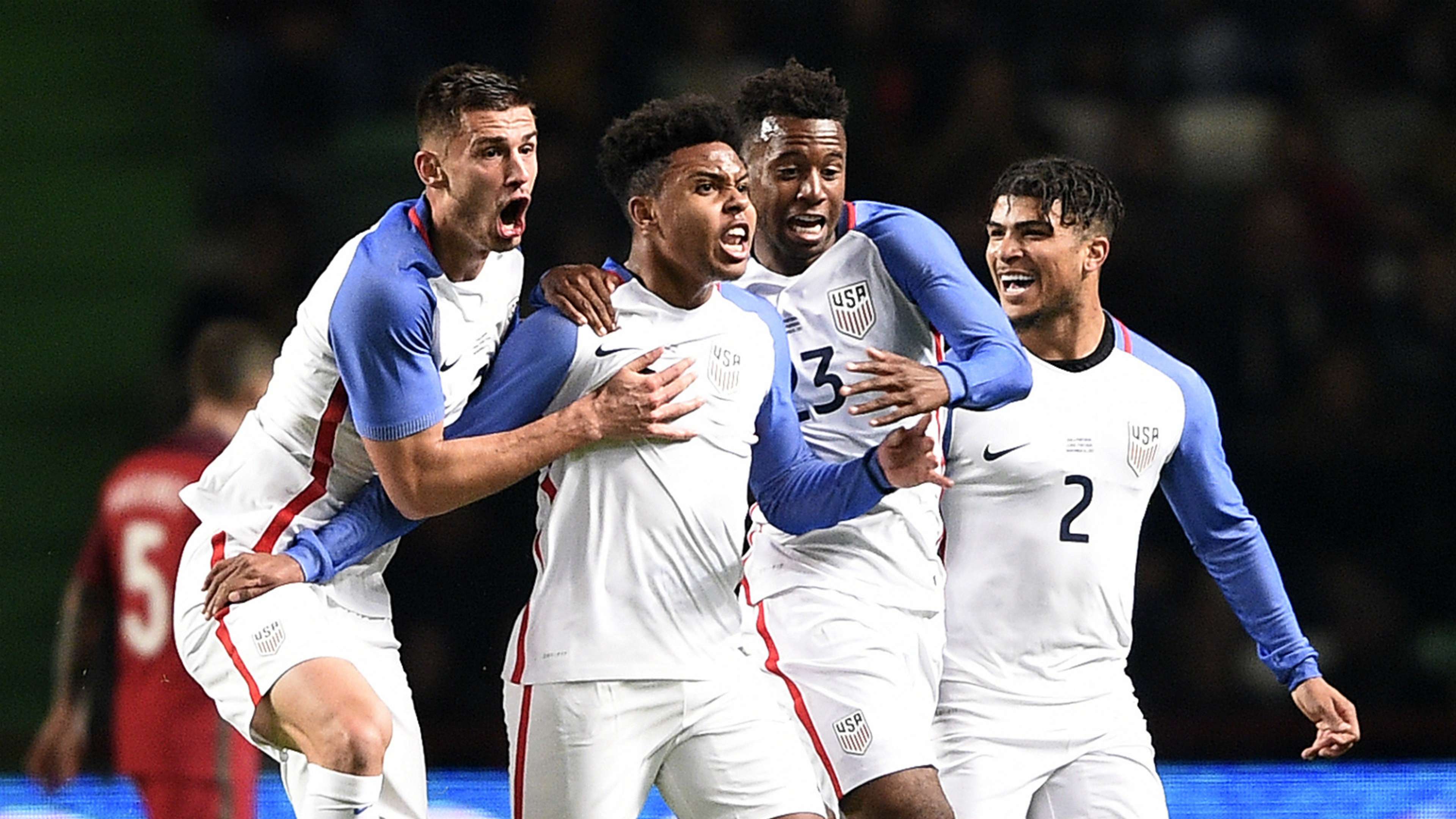
    One month after that failure, the USMNT reconvened in Leira, Portugal, eager to turn the page. That camp featured the debuts of two players who would go on to be faces of this team: Tyler Adams and Weston McKennie. Alongside long-time youth teammate Christian Pulisic, Adams and McKennie were informally handed the baton during that trip. McKennie, who marked his debut with a goal, was 19. Adams was just 18.

    "Getting called into that camp after we didn't qualify for the World Cup, I think it was a wake-up call for both of us," Adams told GOAL in 2024. "They relied on both of us to come in and try and change the narrative of what U.S. Soccer is. I think we both look at that as a big moment.

    "We were roommates in that camp, and we just enjoyed that time so much because we both felt like 'Yeah, we deserve to be here', but we just kind of laughed at each other like, 'I can't believe they're leaning on us right now to change everything'. Now, we look back and we were those guys. It's changed a lot."

    Throughout the ensuing years, the other pieces of the puzzle fell into place. Pulisic was already established, of course, as part of that prior cycle. while Tim Weah and Antonee Robinson arrived in 2018. Sergino Dest showed up one year later, and 2020 brought the arrivals of Brenden Aaronson, Chris Richards, Gio Reyna, Mark McKenzie and Yunus Musah. Matt Turner and Ricardo Pepi made instant impacts after debuting in 2021, while Joe Scally, Haji Wright and Malik Tillman joined the fray in 2022.

    Throughout those years, the U.S. built up an entirely new player pool, one led by a group of 20-somethings with a point to prove, and their first chance to truly prove their worth came in Qatar. They arrived at the World Cup that November as one of the youngest teams in the tournament, ready for their first real test against the very best.

  • Advertisement
  • Tyler Adams USMNT NetherlandsGetty Images

    Beaten but not broken

    In the end, it's fair to say the U.S. met expectations at the 2022 World Cup. They survived the group, arguably outperforming what many thought they could do.

    They could, and probably should have, beaten Wales in their opening game, only to concede a late penalty and draw 1-1. The midfield then went toe-to-toe with England's superstars in a back-and-forth 0-0 draw before the do-or-die game against Iran. Pulisic was the hero, putting his body on the line to bundle the ball home and book a place in the knockout stage.

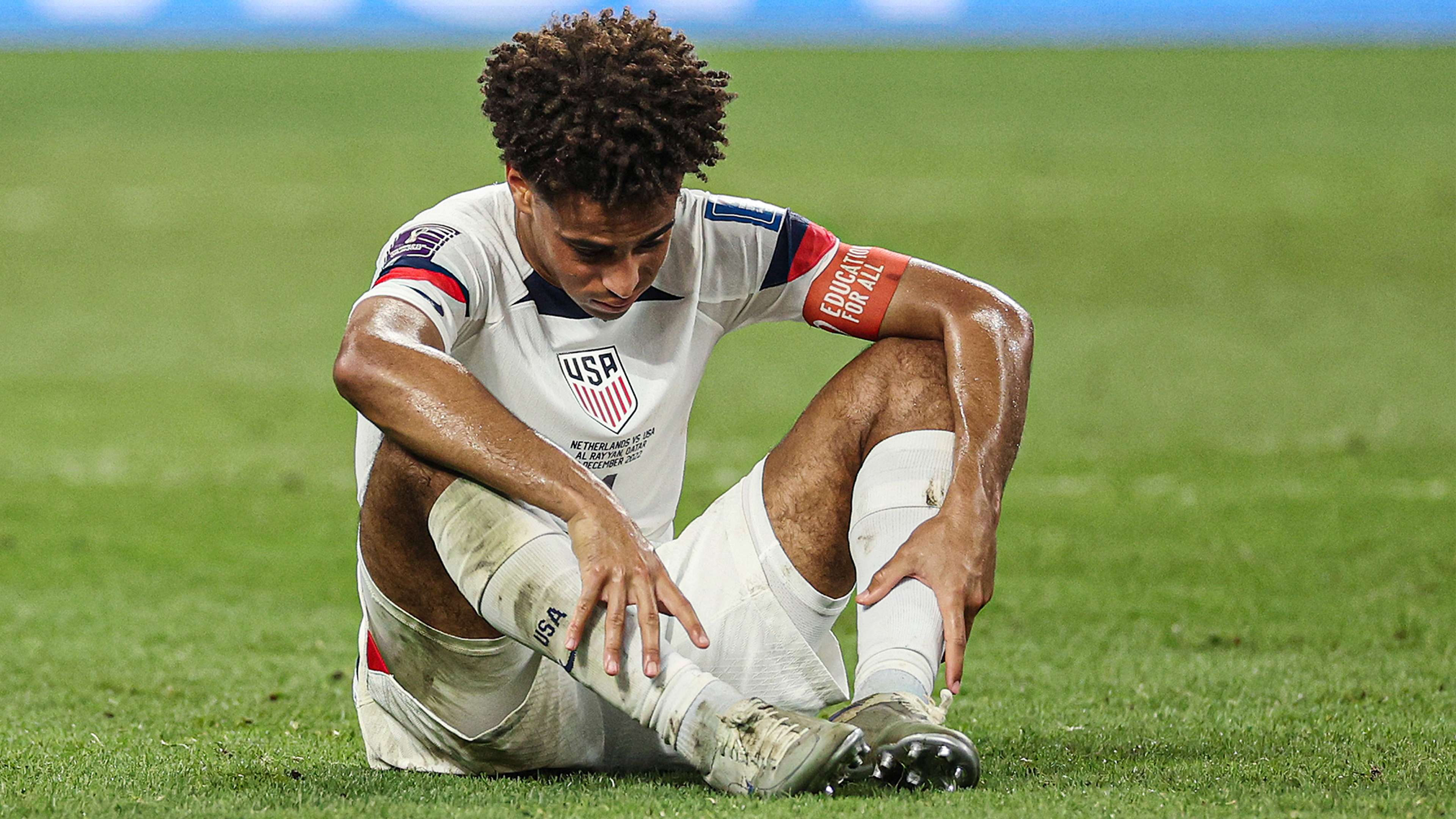
    In the round of 16 game against the Netherlands, the USMNT learned that there are levels. Mistakes that went unpunished during the groups were viciously leapt upon by the Dutch. Eventually defeated 3-1, it proved to be a lesson for a young USMNT that showed itself to be good, but still not great.

    "I think just, individually and collectively, we were all very, very young and maybe a little bit inexperienced at the time," Reyna said of that loss. "Then in the end, it's sort of just happened that we came up against a Holland team that was a little bit more experienced, a little bit better, a little bit more savvy with the game, and in the end, it was almost too much for us."

    Reyna, of course, was a central storyline of that World Cup. The break down of his relationship with manager Gregg Berhalter lives in infamy, but it's a stage of his career that Reyna is eager to turn the page on. He's learned and grown, he says, and so have his teammates.

    Over the years, the USMNT's player pool has shifted, but the core group has, largely, stayed the same. At times, that was a blessing; in others, it was a curse. Ultimately, the curse won out midway through this World Cup cycle, which is why Mauricio Pochettino was brought in to bring the hammer down and build something new.

  • United States v Portugal - International FriendlyGetty Images Sport

    Rollercoaster of a cycle

    The initial period after the 2022 World Cup was a rocky one. Berhalter's contract ended and, amid his public dispute with the Reyna family, U.S. Soccer took the chance to reassess. After doing so for much of 2023, Berhalter, ultimately, returned, ready to lead the team into a second cycle and a home World Cup.

    It didn't, however, work out that way.

    After the U.S. was eliminated in the group stage of the 2024 Copa America, becoming the first hosts to ever crash out that early in the competition, the Berhalter era ended. A few months later, to understandable fanfare, the Pochettino era began.

    Things started well, headlined by wins across multiple camps. Then, in March 2025, it all came crashing down in the CONCACAF Nations League finals. Losses to Panama in the semifinals and Canada in the third-place playoff marked the first time that the U.S. had failed to win that competition. It also provoked a cultural reset.

    Part of that reset, Pochettino has said, was to remind players that spots were not guaranteed. Golden generation or no golden generation, every national team player suddenly had to fight for their place. Pochettino demanded that attitudes change, that commitment and effort were rewarded. Ultimately, he demanded that any preconceived ideas of the 2026 squad being a tinkered version of the group from 2022 be dismissed.

    "If you arrive to the camp and you want to spend some nice time, play golf, go for a dinner, visit my family, visit my friend, that is the culture that we want to create?" Pochettino said last summer. "No, no, no, no, no. What we want to do is to go to the national team, arrive and be focused and spend all my focus and energy in the national team. If we want to be good in one year's time, we need to think that today is the most important day."

    Despite the manager's fresh outlook, the build-up to the 2025 Gold Cup did not go to plan. Pulisic asked to be left out of the tournament, but did want to play in the two pre-tournament friendlies. Pochettino wouldn't bend and left him out entirely, beginning a huge public back-and-forth with the face of the program.

    Musah, too, asked to stay at home. He, however, has never returned and was ultimately left off the World Cup squad. McKennie, after spending the summer playing at the Club World Cup, subsequently missed the September camp. Scally and Reyna didn't return until the fall either.

    In the meantime, new faces were ushered in and seized their chances. Folarin Balogun had joined up earlier in the cycle and was established long before 2025, but fresh faces like Alex Freeman, Sebastian Berhalter and Matt Freese built on their Gold Cup runs to become regular contributors and, subsequently, key members of the World Cup squad.

    It's all led to a more competitive USMNT group, one that knows it can no longer rest on reputation and laurels. For years, Gregg Berhalter's quest was to empower players, to make them feel like key parts of the group that dictates the direction of American soccer. That, however, had led to complacency, which is why Pochettino needed to tear everything back down and build it back up.

    That said, there are still lingering, positive effects of the Berhalter era, namely the relationships built between the players who have been through it all.

  • ENJOYED THIS STORY?

    Add GOAL.com as a preferred source on Google to see more of our reporting

  • Gio Reyna, USMNTGetty

    Benefits of brotherhood

    While the USMNT's squad was gathered in Atlanta ahead of the World Cup, everyone huddled up in excitement for one of their teammates. Aaronson was getting married and, after getting the go-ahead from Pochettino, was able to leave camp for less than 48 hours to attend his own wedding. It was the latest in a long line of life events for a group of players that has lived through several.

    Aaronson, like many of the established group, is now a married man. Adams, Richards, Turner and McKenzie are among the team's fathers. Players have moved clubs, usually between different countries, and seen their lives change. For many of them, the USMNT has been one constant.

    So, when that constant became a little less certain due to Pochettino's mandate, they all fought to get back. It meant too much not to.

    "I love seeing all of my guys here," Weah told GOAL in March. "Wes [McKennie] and I had a close relationship, and we still do, but I used to go over to his house all the time. Us being brothers and being on the same team was a beautiful experience. We really love each other, and that relationship will continue for years to come, even after we're playing.

    "Finding all my brothers back at camp, it's always a blessing. We have these really tight-knit relationships. I've known some of these guys since we were children. Me and Tyler [Adams] used to be rivals [as teenagers], and then he recruited me to come to Red Bulls. Tyler was the same then as he was now. Tyler was a brute. We've literally grown up together."

    Many members of this group played together on youth teams long before making their USMNT debuts. McKennie, Adams, Pulisic, Wright and Alejandro Zendejas, for example, were all teammates as teenagers before making it to this World Cup. Making it to a World Cup is a surreal experience for most players, but to do alongside childhood friends is truly special.

    "I tell a lot of people, like, there's a lot of people that you meet, and you come across, and you'll never talk to them again in your life when you're done playing," Adams told GOAL in the spring. "For me, all these national team guys, like these are my people. These are the guys that I would invite to my wedding. These are the guys' weddings that I'm going to. That tells you how close we are and how we've grown over the years together.

    Added Reyna: "Everybody really enjoys being with everybody on this team. That's what I love about coming back to this team. On the field, you see that we really play for each other every time."

    This summer, though, they're not playing for each other; they're playing for a country, and they know what that means.

  • United States v Belgium - International FriendlyGetty Images Sport

    Responsibility

    There's no mistaking this team's place in the wider legacy of this World Cup. Soccer is still a growing sport in America, and this summer offers an unparalleled opportunity to accelerate that growth. If American soccer is ever going to take that seismic step forward, it probably has to happen in 2026. That means that the players in this USMNT squad are carrying both a sport and a country on their backs, in addition to their own hopes and dreams.

    Richards got a taste of that during a recent trip home when he spoke to a parent in Alabama.

    "He was like, 'You have no idea what you're doing for soccer in Birmingham. There are so many kids that would never have picked up a soccer ball until they saw it was possible,'" Richards told GOAL with a smile. "I think that, for me, means more than any trophy I've ever won. That means more than any game I've ever won. I know that I've shown kids from similar backgrounds that it's all possible."

    That's a key reason why this team does what it does. It's why they stayed out signing autographs by the hundreds after Monday's open training session in Irvine. It's why the team hasn't shied away from interviews, content creation or sponsorship opportunities for months. This is a moment to capture public attention, both at home and abroad - and they don't come along often.

    "I think for all of us, as U.S. soccer players, we always feel that responsibility every time we step on the field: to grow the game, to reach our community, and just to continue to fight," Turner said. "I think there's no question that U.S. soccer players have a stigma around the world or to fans. 'We don't know what we're talking about, we don't know this, we don't know that'. The reality is there's a lot of love for this sport in this country.

    "We understand the responsibility of representing our national team on the global stage, and that comes every single time we step on the field. Now, obviously, in this World Cup moment, we understand that it can be defining. It could be changing. It can change the game that we love in this country so much. So, of course, we feel that responsibility. But, like I said, we always have that, no matter what."

  • FBL-WC-2026-US-SQUADAFP

    Expectations

    So that leads us to the big question, of course: Are they ready for this? Is this group, this 'golden generation' ready to shoulder the responsibility that's been building for the better part of eight years? And what would success even look like?

    The moment the USMNT stepped off the field in Qatar, there was reason for incredible optimism. Now, three-and-a-half years later, it's fair to say that progress hasn't been linear - and that's putting it lightly.

    Is this team the best team the U.S. has assembled? Potentially, but it could also turn out that it may not be much better than the one that was assembled four years ago.

    'Golden generations' and legacies aren't defined by what happens between World Cups; they're defined by what happens in them. The failures of the 2026 cycle will be footnotes if the U.S. enjoys a deep run into the tournament. The story of this group wasn't written in the Nations League or Gold Cup; they'll be written over the next two weeks, against Paraguay, Australia and Turkiye, and then, perhaps, in the days and weeks beyond.

    This World Cup is the culmination of a nearly nine-year journey, one that began when the U.S. burned everything down after missing out on the 2018 tournament. Players have been groomed for this moment, and a generation has emerged as the one that can change American soccer forever.

    Can they? Or, more importantly, will they? We'll find out soon enough.