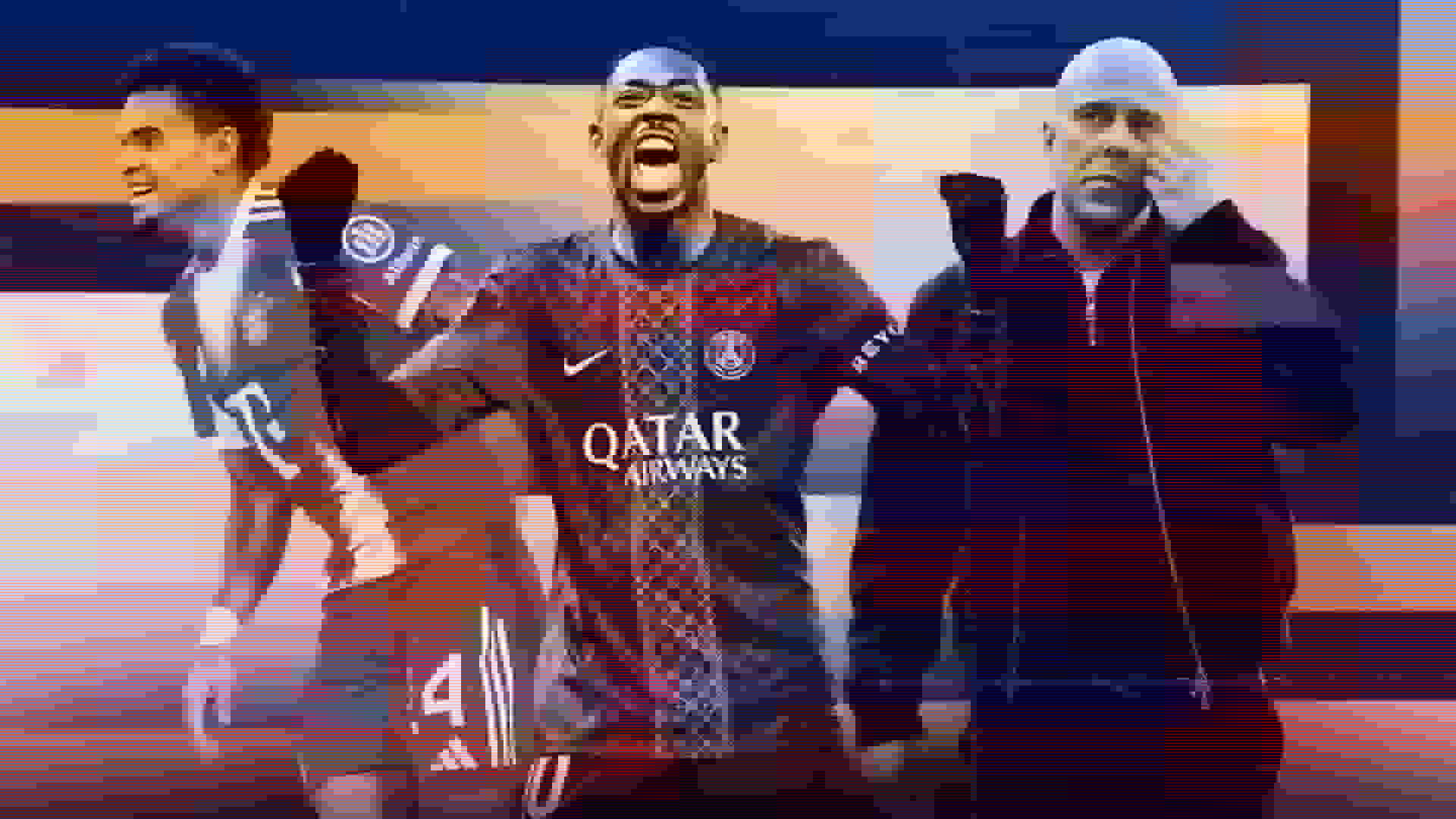
Liverpool's future defensive plans have hit a significant roadblock as January signing Jeremy Jacquet has been effectively ruled out for the remainder of the campaign. The 20-year-old Frenchman, who will complete a £60 million ($80m) move to Anfield this summer, is set to undergo surgery on a serious shoulder injury sustained while playing for Ligue 1 side Rennes.
Marseille are closing in on the appointment of Habib Beye after the departure of manager Roberto De Zerbi. The Italian left the club by mutual consent and now, the French club are attempting to source a replacement. A move for Beye, who is currently managing Rennes, has begun.
Jeremy Jacquet is Liverpool-bound, having agreed a £60 million ($82m) transfer to the Premier League heavyweights, but his 2025-26 season could be over at Rennes. The highly-rated- 20-year-old is due to see out the current campaign in his native France before making his way to Merseyside. However, an unfortunate injury has been sustained, with it being suggested that surgery will be required.
New Liverpool defender Jeremy Jacquet appeared to sustain a serious shoulder injury during Rennes' clash with Lens, just days after confirming his move to Anfield. The Reds have agreed a deal worth £60 million ($82m) to sign the centre-back this summer but he now faces a significant lay-off.
Arne Slot has expressed his immense satisfaction after Liverpool successfully fended off intense competition from Chelsea to secure a £60 million deal for Rennes starlet Jeremy Jacquet. The 20-year-old centre-back, a France Under-21 international, is set to join the Reds this summer following a season-long stay at his boyhood club. Slot believes the defender is a "very big talent" ready for the top level.
Manchester United, often simply referred to as "United," are one of the most iconic and successful football clubs in the world, based in Old Trafford, Greater Manchester, England. The club was founded as Newton Heath LYR Football Club in 1878 by the Lancashire and Yorkshire Railway depot at Newton Heath. The team changed its name to Manchester United in 1902 and moved to its current home, Old Trafford, in 1910.
Famous players
Manchester United have been home to some of the greatest footballers in history. Sir Bobby Charlton, a World Cup winner with England in 1966, is arguably the most iconic figure in the club's history. Other legendary players include George Best, known for his flair and skill, and Eric Cantona, who brought a winning mentality to the club during the 1990s. More recent stars like Cristiano Ronaldo, Wayne Rooney, and Paul Scholes have also contributed significantly to the club's success.
Honours
Manchester United are one of the most decorated clubs in English football, having won a record 20 Premier League titles (formerly the First Division). They have also lifted the FA Cup 12 times, the League Cup five times, and the UEFA Champions League three times. The club's dominance in English football was particularly evident during the 1990s and early 2000s under manager Sir Alex Ferguson.
Managers
Sir Alex Ferguson is undoubtedly the most successful manager in Manchester United's history. He spent 26 years at the club, leading them to an unprecedented era of success. Before Ferguson, managers like Matt Busby and Wilf McGuinness played crucial roles in shaping the club's identity. More recent managers, including David Moyes, Louis van Gaal, and José Mourinho, have faced the challenge of maintaining the club's high standards.
Stadium
Old Trafford, often referred to as the "Theatre of Dreams," is one of the most famous stadiums in the world. With a capacity of roughly 75,000, it is among the largest football stadiums in the United Kingdom. The stadium has hosted numerous major matches, including UEFA Champions League finals and FIFA World Cup matches.
Location
Manchester United are based in the city of Manchester, which is located in the northwest of England. The club's home ground, Old Trafford, is situated in the Trafford borough. Manchester is a major industrial city with a rich footballing heritage.
Owners
In February 2024, British billionaire Sir Jim Ratcliffe's company, INEOS, acquired a significant 25% stake in Manchester United. This acquisition granted Ratcliffe sporting control over the club, placing him in a position to influence key decisions related to its operations.
Ratcliffe has already made a substantial financial commitment to Manchester United. His large investments demonstrate his dedication to the club's success and his willingness to provide the necessary resources for its growth.
Frequently asked questions
Quando è nato il Torino?
Il Torino è nato nel 1906 dopo la fusione tra la Torinese e un gruppo di dissidenti della Juventus, guidati dall'elvetico Alfred Dick. La prima partita ufficiale è datata 16 dicembre, 3-1 contro la Pro Vercelli.
Chi è il presidente del Torino?
Urbano Cairo è presidente e proprietario del Torino dal 2005. Imprenditore, è amministratore delegato di RCS MediaGroup, uno dei principali gruppi editoriali d'Italia.
Come si chiama lo stadio del Torino?
I granata giocano le partite interne allo Stadio Olimpico Grande Torino. L'impianto è intitolato alla squadra che dominò il campionato fino alla tragedia di Superga.
Qual'è la capienza del Grande Torino?
Il Torino può ospitare 28.177 spettatori nell'impianto cittadino, categoria 4 UEFA. In passato l'Olimpico Grande Torino poteva ospitare fino 65.000 fans
Quanti Scudetti ha vinto il Torino?
Il Torino ha vinto 7 Scudetti nella sua storia, la maggior parte negli anni '40 con la squadra denominata 'Grande Torino. Il primo titolo è del 1928, mentre l'ultimo del 1976.
Il Torino ha mai vinto una coppa europea?
Il Torino ha conquistato nel 1991 la defunta Coppa Mitropa, torneo non riconosciuto ufficialmente dall'UEFA. Il miglior risultato in un torneo UEFA è la finale di Europa League/Coppa UEFA persa contro l'Ajax nel 1992.
Quante coppe ha vinto il Torino?
Oltre ai sette Scudetti, il Torino ha conquistato cinque Coppa Italia nel corso della sua storia, per un totale di dodici trofei ufficiali. I granata hanno anche vinto la Serie B in tre occasioni.
Perché il Torino gioca in granata?
Inizialmente arancio-nero, il Torino cambiò colore perchè simile a quello degli Asburgo, nemico storico dell'allora casa regnante italiana dei Savoia. La versione più riportata è quella che vede il granata preso dalla Savoia, brigata che duecento anni prima liberò la città.
Perché Torino si chiama così?
Torino deriva da Augusta Iulia Taurinorum, antico nome dell'accampamento romano diventato in seguito l'attuale nome della città e probabile riferimento a un'antica popolazione celtica locale, i Taurini. Il toro dello stemma deriva da quello cittadino, simbolo di forza invincibile e altruismo.
Chi ha segnato più goal nella storia del Torino?
Paolo Pulici è il giocatore che ha segnato più goal nella storia del Torino. L'ex attaccante granata ha messo insieme 172 reti dal 1967 al 1982, in 437 partite nelle varie competizioni.
Chi ha giocato più partite con il Torino?
Giorgio Ferrini è il calciatore più presente nella storia del Torino con 566 partite giocate in granata. Arrivato nel 1959, ha lasciato la squadra solamente nel 1975 vincendo due Coppa Italia.
Quale allenatore ha più panchine con il Torino?
Luigi Radice è l'allenatore che ha guidato il Torino in più stagioni, ben dieci. Arrivato in granata nel 1975, è rimasto in città fino al 1980 e di nuovo dal 1984 al 1988. Nel 1976 ha guidato la squadra all'ultimo, fin qui, Scudetto.
Il Torino ha mai giocato in Champions?
Il Torino ha giocato in Coppa dei Campioni, il vecchio nome della Champions League, solamente nel 1976/1977, dopo l'ultimo Scudetto vinto. Il team piemontese venne eliminato dal Borussia Monchengladbach negli ottavi di finale.
Quante volte il Torino non ha giocato in Serie A?
Nonostante abbia quasi sempre giocato in Serie A, il Torino ha militato anche in Serie B. L'ultima volta in seconda serie risale al 2011/2012, per la dodicesima volta nella sua storia.
Come è scomparso il Grande Torino?
Dopo una partita contro il Benfica al Lisbona, il 4 maggio 1949 l'aereo che trasportava il Grande Torino si schiantò contro i muraglioni di sostegno del giardino nel retro della Basilica di Superga. L'assenza di visibilità e il malfunzionamento dell'altimetro causarono la scomparsa di 31 uomini tra giocatori, dirigenti, staff tecnico, giornalisti ed equipaggio.