
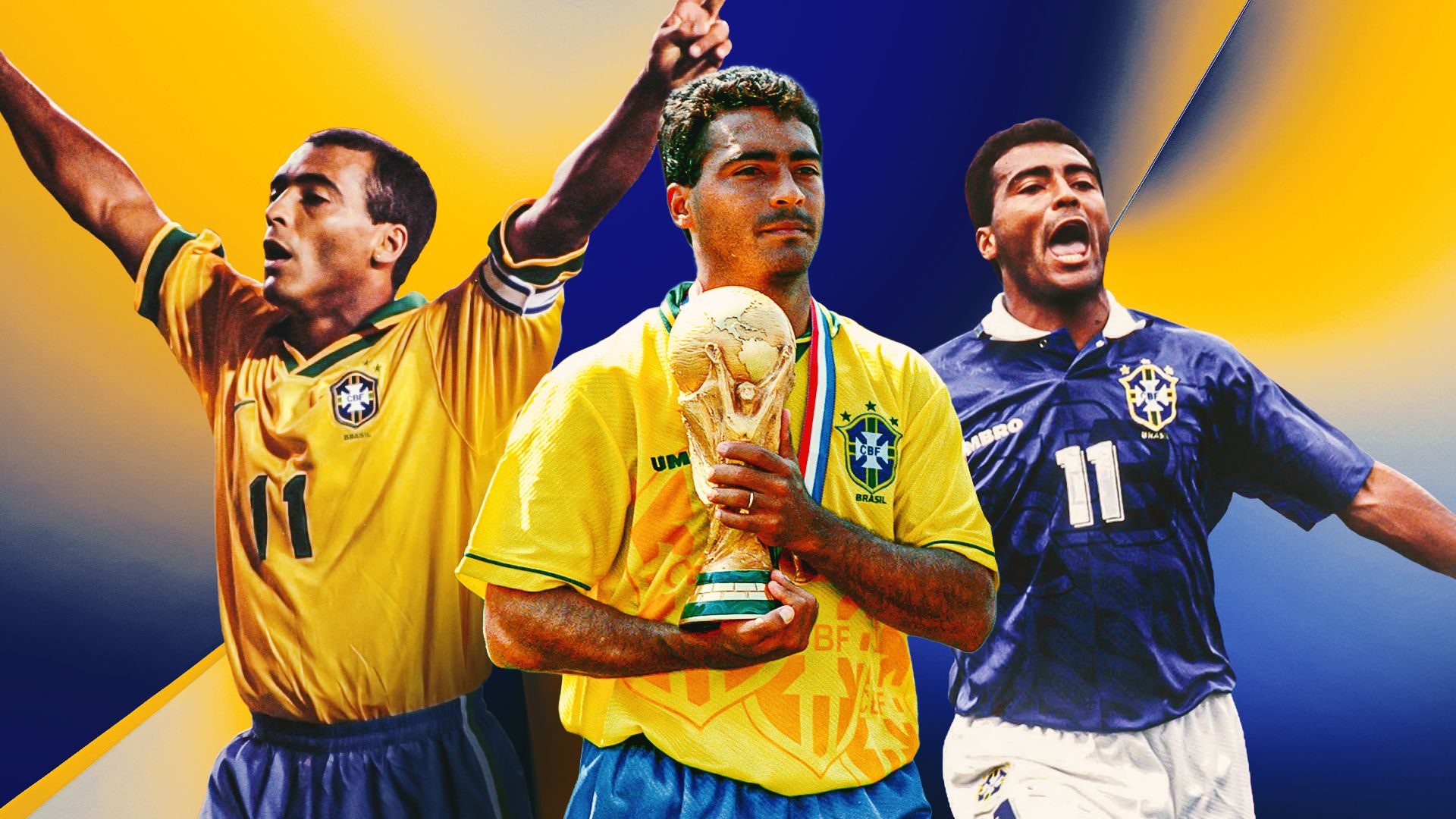
.jpg?quality=60&auto=webp&format=pjpg&width=1280) GOAL
GOALFrom egotistical teenager to World Cup phenomenon: How Romario became a global superstar
"When I was born, God looked at me and said: 'He’s the man.'"
Most people learn to live with the limitations imposed on them, whether by nature or circumstance. When the odds appear stacked against them in pursuit of their dreams, they recede into the background and settle for the desperate silence. Romario did not.
For a boy born into the extreme poverty of Rio de Janeiro’s Jacarezinho favela, whose parents struggled to afford medicine for his asthma, it seems Romario never entertained the fact that he even had limitations, let alone accepted them. Perhaps that conviction began when football became the remedy for his breathing problems.
He wrote in The Players Tribune: "I had asthma when I was four, I was a bad sleeper. So, at night, if I struggled to nod off, I would take my dad by the hand and grab a ball with the other. We would talk for a bit until we got to the [railway] tracks, and there we would play for about 10 minutes. I was already obsessed with the ball back then. Just kicking it around for a bit was enough to make me happy. When we got back home, I would sleep like a rock."
That late-night treatment helped lay the foundation for greatness. Even as he rapidly outgrew the youth teams at Vasco da Gama and made his professional debut in early 1985, the odds were still against Romario. Standing at just 5'5" and attempting to make his living as a striker, he was constantly underestimated.
Staking a claim
 Getty Images
Even from a young age, Romario possessed remarkable confidence
Romario, however, possessed a self-belief that bordered on the absurd. As Vasco manager Antonio Lopes was wrapping up training one day in 1985, the young reserve player approached him and demanded the unthinkable. Roberto Dinamite, the free-scoring, 6'1" captain who had spent over 15 years with the club, had to be dropped.
"I already play better than him," the diminutive 19-year-old said, according to Lopes.
The coach wasn't going to exile the legendary forward for an unproven youngster and laughed off the request, reminding Romario that, having scored 16 in 15 games in the 1985 campaign, Dinamite "still knew how to score goals".
By his own admission, Lopes didn’t want to use Romario at all. He had asked the club’s chairman to sign more players but was told to rely on the youth academy. A compromise was reached with Romario. The apprentice would start on the wing in support of the veteran.
In August, not long after his confrontation with Lopes, Romario finally got his chance at centre-forward in a Rio State Championship game at Nova Venecia. Many in the 2,708 crowd were devastated when they realised main attraction Dinamite was out injured, but they were soon in awe as bright young upstart Romario ran the show and scored two goals.
Just as he had warned his manager, he delivered, and before long, he was tearing it up in Brazil. He developed an explosive partnership with Dinamite and finished as top scorer in the Campeonato Carioca in 1986 as Vasco lost the final. He then led them to back-to-back state championships in style, nutmegging the Flamengo goalkeeper in the first leg of the 1988 final before getting himself sent off in the return game for fighting.
The late Dinamite, who holds the records for most goals and appearances for Vasco and eventually became president, said of him: “Do you know what it was like to play with Romario when he was 20 years old? All you had to do was pass him the ball. Out of every three that came to him, he'd put two in the net."
In another interview, he said: “He is the best centre-forward I've ever seen play.”
Romario-fever swept Brazil. He declared to a magazine that he would score 1,000 goals in his career – a figure that he claims to have reached – and there didn’t seem to be much reason to doubt him.
Leaving for Europe
 Getty Images
A remarkable Olympic campaign preceded Romario's switch to PSV
The rest of the world hadn’t quite caught wind of the enormous aura that surrounded the phenomenon nicknamed "Baixinho marrento" (Cocky Little Guy). That changed in 1988.
Brazil sent a spectacular crop of players to the Olympics in Seoul. Future World Cup-winning legends like Claudio Taffarel, Bebeto, Mazinho and Jorginho were all in the squad, but it was the canary-sized attacker who stole the attention.
Romario was the tournament’s top scorer with seven goals. He started with a double against Nigeria and dismantled Australia with a hat-trick in the next game. Trailing West Germany 1-0 in the semi-final, it was he who scored the 79th-minute equaliser before burying his spot-kick in the penalty shootout.
Brazil went on to face the Soviet Union in the final, where Romario opened the scoring after just 29 minutes. Although the Soviets eventually fought back to win in extra-time, forcing Brazil to settle for the silver medal, the 22-year-old emerged from the tournament worth his weight in gold.
The secret was out. Barcelona and Real Madrid wanted him, but Romario picked European Cup winners PSV instead.
"The most important thing was that we were the first to make contact with him," coach Guus Hiddink said. "But yes, a few days later Real and Barcelona came along, and they had much greater financial resources. You see a lot of players switch then. 'I'm coming to PSV,' said Romario. He kept his word, which I really appreciated."
PSV came across Romario in bizarre circumstances. In the summer of 1988, they desperately wanted to buy Marc Degryse from Club Brugge. The Belgians refused to sell, claiming they first wanted to secure a deal for another striker currently starring at the Olympics.
PSV got curious and Kees Ploegsma, the club’s transfer chief, woke his football addict son in the middle of the night to ask who this mystery target could be. PSV treasurer Harry van Raaij told the story: "On the way back [from Belgium], we concluded that it must be the striker from Brazil. When we arrived in Eindhoven, we drove straight to the house of Ploegsma.
"It was already 11.30 at night. 'Our little Kees knows that, but he's already asleep,' said Ploegsma, and he then woke up his son. 'Oh, that's Romario,' said little Kees."
Nowadays, a team’s scouting network has no trouble finding footage and a wealth of statistics on such players, but Ploegsma had to use another unusual method to find out more. He reached out to the Brazilian headquarters of technology giant Philips – PSV’s founding company – to see if any football fan working there could clue him in.
"There was an avid football fan there, and we asked him about Romario," Ploegsma continued in an interview with PSV Supportersvereniging. "He said that Romario could become an absolute top player."
Romario was just as ignorant, knowing nothing about the club or Eindhoven, but agreed to the move. He was in for a shock.
'Brutal clash of cultures'
.jpg?quality=60&auto=webp&format=pjpg&width=1280)
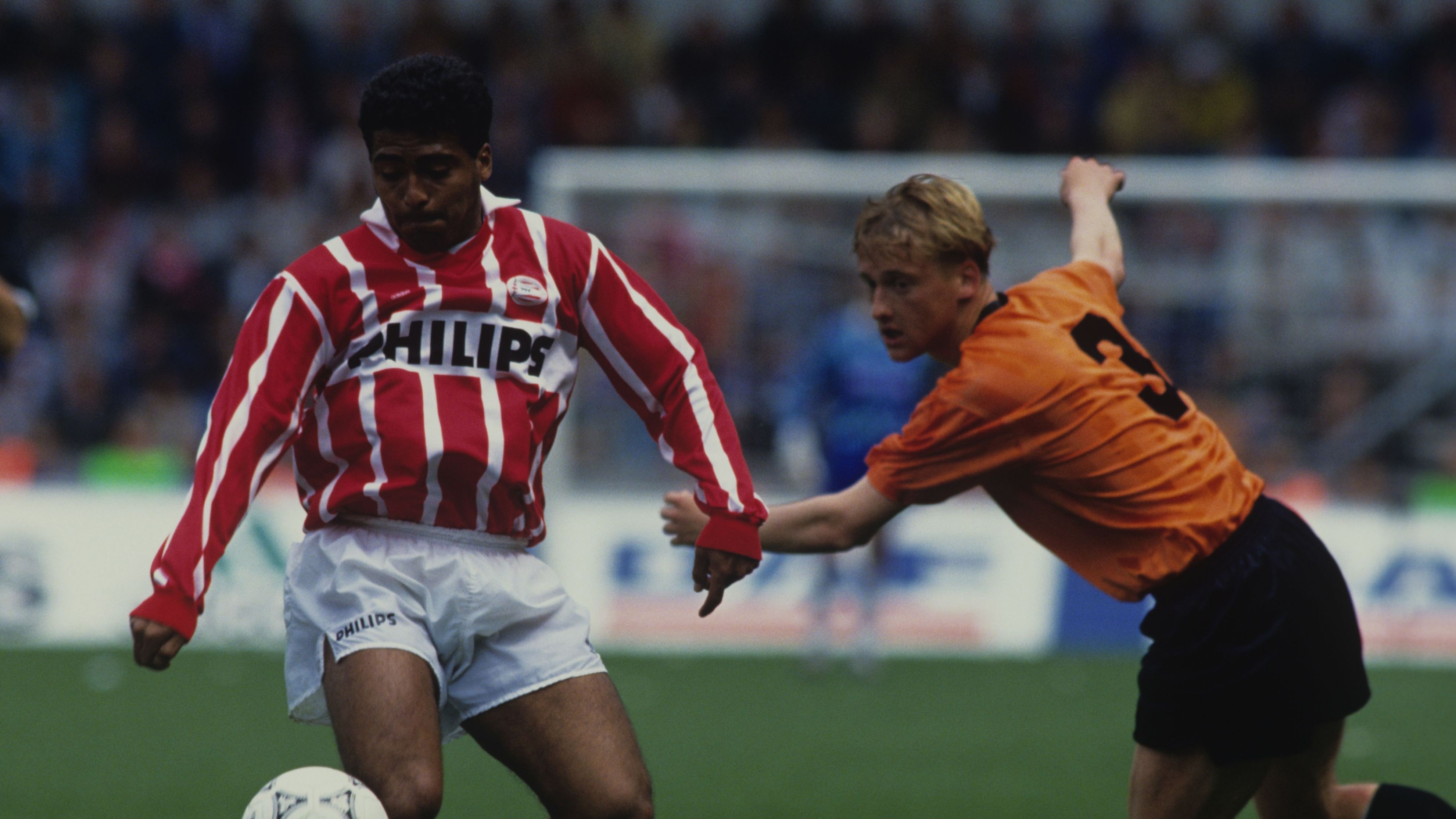
Romario was a sensation in Eindhoven, but his lifestyle caused some problems
“The Netherlands was f*cking hard,” Romario said. The winters were too dark and cold, so he regularly skipped training sessions. He often took trips back to Brazil to play beach football instead of suffering through long-distance running in the cold Dutch winter. Once, he refused to leave his house for three days: “The guys got worried about me. They knocked on my door and I didn’t answer.”
There was another issue. Not the type to lead a life of quiet desperation, Romario was a big party boy. He threw famous celebrations at his house and loved going clubbing, often staying out until the early morning.
"Some mornings he would be phenomenal in training," Sir Bobby Robson wrote in his autobiography. "Other days, you'd take one look at him and know he'd left his energy and his legs at home, or in a nightclub."
Robson continued: "Alcohol was not the problem – he was a Coca-Cola guy – but he’d stay out until four in the morning and sleep all day before a 7.30pm kick-off. We would take calls from people saying 'Romario’s been out all night. He left here at four'. He would dance, chat, meet a local lady, carouse with her and then sleep all day to be 'fresh' for the game."
"It was a brutal clash of cultures," goalkeeper Hans van Breukelen told Frans van den Nieuwenhof in his book Romario in Eindhoven. "He had to adapt to us, and not the other way around. Now you can say: that was a completely flawed line of reasoning."
Romario’s motivation was his determination to keep climbing further away from poverty. "Whenever I was too cold to feel my toes, I would think back to when I was carrying roof slabs for my dad in order to become a footballer. Was I going to give up on my dream because it was cold?
"I ended up buying my family a house… with a maid and a driver. That was one hell of a victory for me."
Romario had to wait until late October for his first appearance in the famous red and white jersey, but he slotted in seamlessly. He scored the only goal of the game in his third Eredivisie appearance and then bagged a hat-trick a week later. In March, he netted in both legs of the European Cup quarter-final against Real Madrid, though PSV lost in extra-time.
In 33 games that season, Romario struck 25 times as the Eindhoven club won the double – the Brazilian got one in the KNVB Beker final.
Mind games work wonders

It took some psychological trickery from Guus Hiddink to steer Romario & PSV through the Champions League
At times, Romario seemed just as lazy on the field as his off-field reputation suggested, but he would constantly pop up in the right place at the right time and apply the finishing touch. He made it all look effortless.
Hiddink remembers, "Before crucial matches, when you’re a little bit nervous, he’d come to me and say: ‘Coach, tranquilo (relax). Romario will score, and we will win’. And he would. Not every time, but in eight out of 10 games like that he’d score the winner."
In his second season, Hiddink grew frustrated with Romario's constant late arrivals to team meetings and training. The coach was petrified his side were on their way out of the European Cup after a 0-0 with Steaua Bucharest in the last-16 first leg. He needed Romario at his best, so he turned to unusual methods to motivate him.
"I held a meeting before the game against RKC Waalwijk, and three days later we were playing against Steaua Bucharest,” he told the MidMid podcast. "I thought: 'I need to provoke that little guy somehow.' So, even though I normally never do this, I set my watch wrong by one minute. I knew he would arrive exactly on the minute [the meeting was to start]. So, I started at 11 o'clock and Romario wasn't there yet. One or two minutes later the door opened and I said: 'Get lost. I don't want to see you anymore.'"
When Romario argued that he was on time, Hiddink pointed to his watch and said wouldn’t be in the squad against RKC. He explained his reasoning: "The top players are going to react, and the near-top players are picking the wrong fight, you know. They're going to want pity, and they'll give you a trembling lip. The top players come back saying: 'I'll show you, pal.'"
The game got off to a horrible start. Steaua took the lead 17 minutes in, but PSV equalised less than five minutes later through Juul Ellerman's stunning free-kick. Soren Lerby's cross found Romario all alone in the middle of the box and he headed PSV into the lead just before half-time. The pair combined again early in the second half, this time Lerby sending it high through the middle where Romario’s presence unsettled the goalkeeper and defender, allowing him to knock into the empty net.
After another goal from Ellerman, Romario humiliated the visitors. He took on a pass near the centre circle, knocked it past one defender and then sent another centre-back plus the goalkeeper to the ground before lashing in from a tight angle to complete his hat-trick.
"Just watch the match, he was completely unleashed," Hiddink said.
Still, the coach regretted his treatment of the star forward. "After the match, I was beside myself. I said: 'Romario, you saved the day for us tonight, but I haven't been in the best shape for a while. I adjusted my watch before the team meeting.' He said: 'I suspected as much, but that really sharpened me up.' That was it, let bygones be bygones."
While the Dutch side were knocked out by Bayern Munich in the quarter-finals – Romario missed both games through injury – the Brazilian was the competition’s joint-top scorer with six goals. In his absence, PSV lost the title race to Ajax by one point.
Taming the cobra

Whether it was Dutch defences on the field or one of England's greatest managers off it, nobody could keep Romario quiet
The following season, under Robson, Romario was uncontainable. First-touch lobs from the edge of the box; headers at the back post; simple tap-ins; and skilful runs through defences before unleashing a cannon into the net – Romario would always find a way to embarrass opponents and score. He hammered four past Feyenoord and scored two against Ajax, ending the campaign with 30 goals from as many games while winning the Eredivisie top scorer award for the third time.
"Thirty yards from goal, he was mustard," Robson wrote. "He could take anyone on. He was a great finisher, a good hold-up player and was dangerous in the air, despite his modest size."
Still, the legendary manager was angered by Romario’s lifestyle. Under Hiddink, other players had complained about the superstar’s lack of defensive work, which Romario responded to by humiliating them as a tackling monster in training. The resentment now, though, had grown further.
Romario was the highest-paid player in the team and, according to Robson, his co-stars resented the fact that he did not have to train as hard as they did, or even have to be on time for the team bus.
"In some matches he would be scintillating," he continued. "In others he would be lethargic, distracted. The players soon recognised Romario's off days. In one defeat, I overheard Eric Gerets jabbering away to him aggressively… Eric was saying: 'Listen you effing this or that, I know you get more than me. I understand that and I don't quibble with it because you're a better player than I am. I might save a match, but you can win one. What I quibble about is that on Saturday we all share a bonus, and I'm trying my balls off to get that bonus, and you ain't. Together, we fight.’"
As the Englishman put it: "The Romarios of the world don't realise how much they can undermine the fabric of a team."
After Romario sneaked off in the middle of a training session claiming to have a bad back, Robson held a meeting with him using assistant Frank Arnesen, who could speak some Spanish, as a translator. When they told the player to "stop walking off the training ground" and give up his habit of Friday night parties, the coaches were met with silence.
"All he did was stare, like a cobra, into Frank Arnesen's eyes, quite aggressively. Frank was getting edgy. He was being defied. He was beginning to feel humiliated. 'Comprehendo?' we would ask, as our mini summit wore on, but still Romario wouldn't speak." Quiet. Never desperate.
Romario spent a big chunk of the 1991-92 season out injured, but was still clinical when he played. The season after that, he was deadly again, finishing as top scorer in the newly revamped Champions League even though PSV failed to get beyond the second-round group stage.
That summer, it was time to go. Hiddink wanted to reunite with him at Valencia, but he was beaten to the punch by compatriot Johan Cruyff, who was eager to add the bombastic Brazilian to his famous Barcelona team.
New team, same Romario

Romario seemed like the dream signing for Barcelona, but he was a source of trouble for Cruyff, too
It was a brief but blistering affair in Barcelona. After a goal-filled pre-season, the 27-year-old started with a debut La Liga hat-trick against Real Sociedad. It was one hell of an arrival and the spry striker had no problem living up to the expectations he had set; it was the first of five trebles he scored in the league that season.
Two came against Atletico Madrid; Barca lost the first 5-3, then won by the same scoreline in Camp Nou. Osasuna were the victims of another, as Romario audaciously chipped one of his efforts over the goalkeeper. The most famous, of course, came against Real Madrid.
And what a performance it was! A 5-0 demolition. Romario at the heart of it.
It was Pep Guardiola who got the ball rolling. When the midfielder’s unassuming pass went to Romario's right foot on the edge of the Madrid box, it was impossible to tell what he’d do next. Back to goal just outside the box, his options were limited. He had two Real Madrid players waiting on him to go backwards. Going towards goal looked impossible, too. One Madrid defender directly to his left, another to his right, they were daring him to go for it.
Romario did. In one smooth movement he had beaten a centre-back and the goalkeeper and tucked it into the bottom corner.
Winning La Liga’s top scorer award with 30 in 33 games, Romario was scoring goals for fun on the field. And he wasn’t giving up the good times off it. When Carnival came around, he approached Cruyff for permission to go home to Rio de Janeiro.
"I replied: 'If you score two goals tomorrow, I’ll give you two extra days rest compared to the other players'," Cruyff’s telling went. "The next day, Romario scored his second goal 20 minutes into the game and immediately gestured to me asking to leave. He told me: ‘Coach, my plane leaves in an hour’. I had no choice but to let Romario leave for fulfilling his promise."
Barca had bought the Champions League destroyer from PSV to build on that reputation, but he netted only two goals on their way to the 4-0 defeat to AC Milan in the 1994 final. As things turned sour between him and Cruyff, Romario decided to return home, joining Flamengo, but only after conquering the world.
Conquering the world

Brazil grew desperate and the previously banished Romario stepped up, playing a key role in their journey to the 1994 World Cup final
Public criticism of coach Carlos Alberto Parreira should have cost Romario a place at the 1994 World Cup. He had been banished from the team, but with the Selecao facing a final, do-or-die qualifier against Uruguay, Parreira swallowed his pride and called him back.
Brazil won 2-0. Romario scored two goals.
"You can ask anyone who was there and they will tell you that it might have been the greatest match a footballer could have played," the striker said later. “On a scale of one to 10, I got an 11."
The World Cup was his. It was classic Romario. A difficult toe-poke against Russia in the first game; a nice touch and knock past the Cameroon goalkeeper; running between two Sweden defenders and rolling it over the line; on the end of a corner against the Dutch; and haunting Sweden again with a header in the semi-final. They couldn’t have made to the final it without him.
Romario saw a header easily saved in the first half against Italy. In the second, he was found at the back post with a chance that he looked destined to finish, only for him to stumble as the ball went out for a goal kick.
It went to penalties. Brazil missed their first, Italy didn't. Romario went second and scored. After Roberto Baggio sent his effort over the bar, Brazil were champions and Romario won the Golden Ball. Finally, the tiny Brazilian had grown into his ego.
Romario has been accused of many things, but he has never been quiet, and he'll never be desperate.