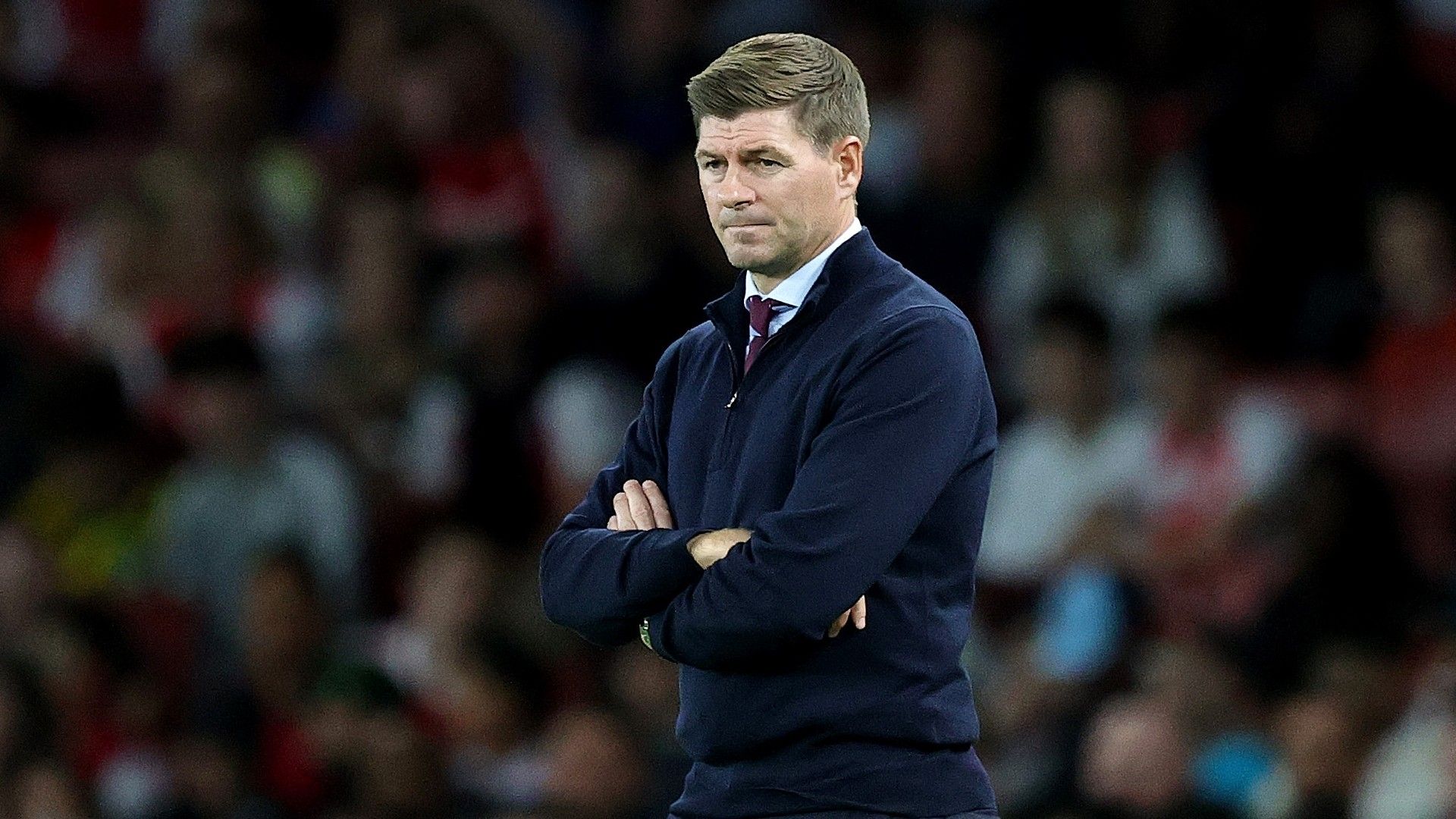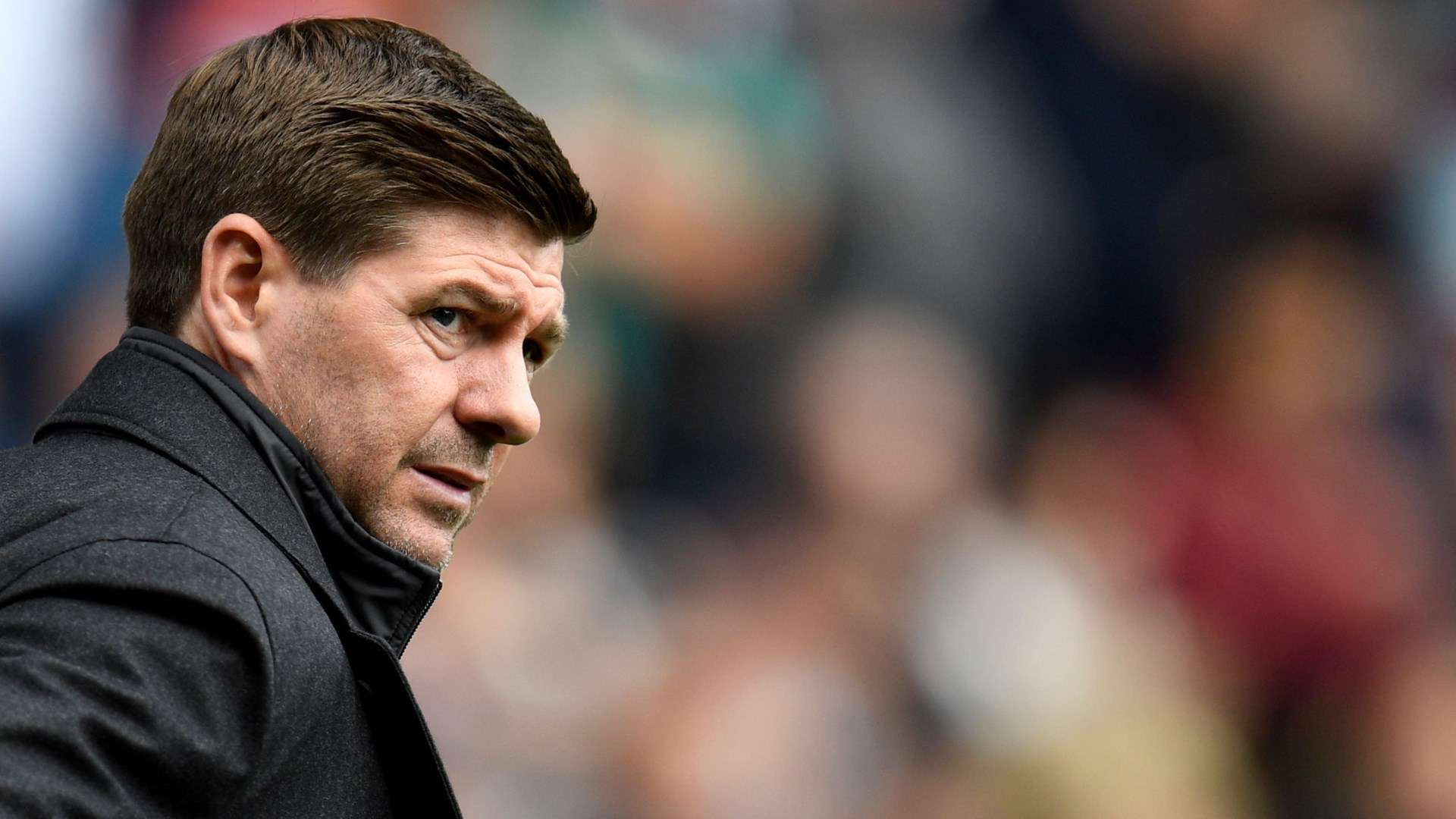
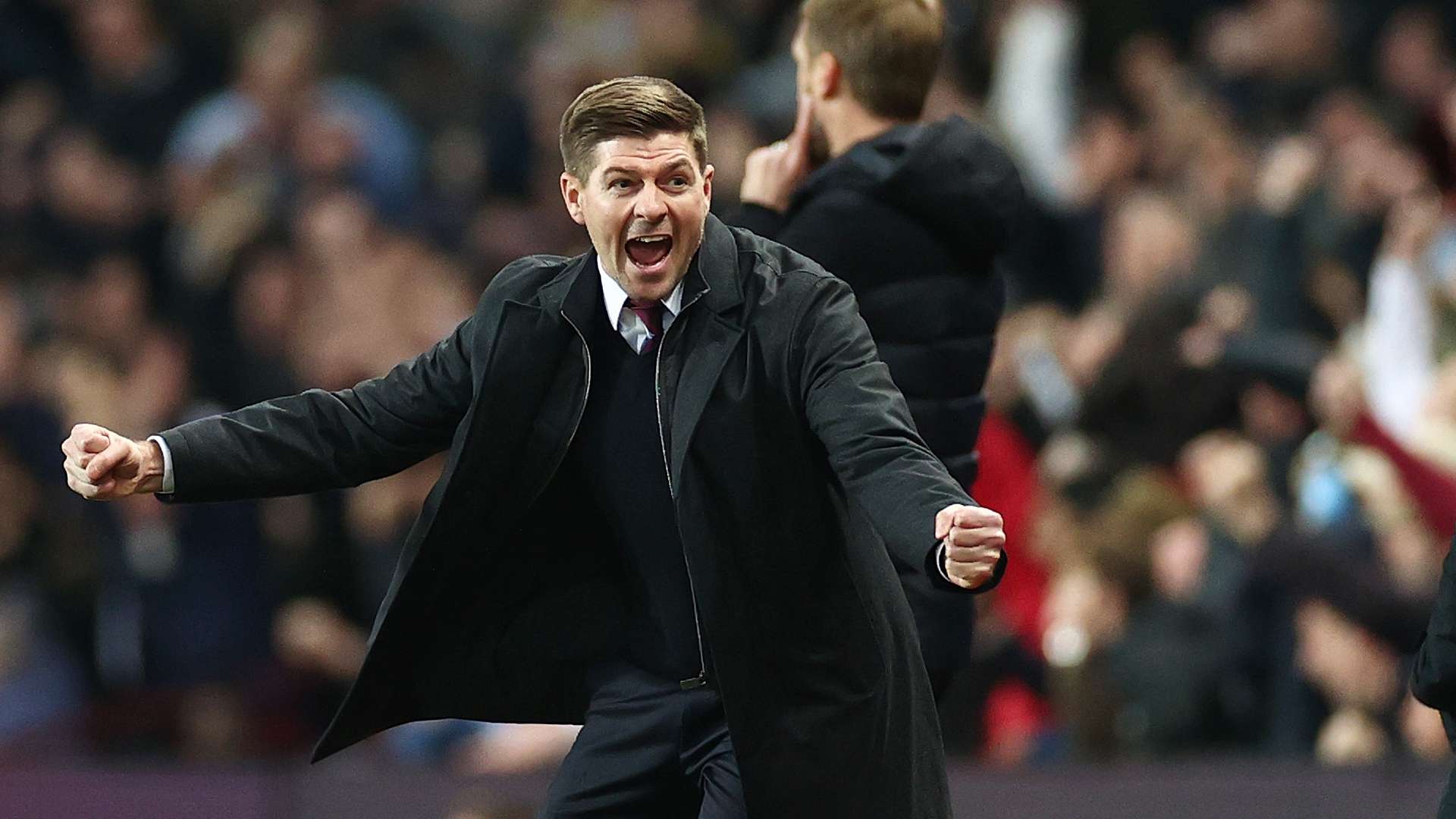
Steven Gerrard 2022-23Getty Images

From Jurgen Klopp's presumed Liverpool successor to the managerial wilderness: What next for Steven Gerrard?

For Steven Gerrard, a perfect world was once less than 15 minutes away. Fast forward 12 months, it looks further away than ever.

A year ago this weekend, his Aston Villa side were 2-0 up at Manchester City on the final day of the season and about to hand Liverpool, the club with which Gerrard will forever be associated, the Premier League title. It felt almost too good to be true, the Anfield hero doing pretty much the only thing he never quite could as a player, delivering a league title for his beloved Reds. It was Jurgen Klopp’s natural successor, doing the business for Jurgen Klopp.

But as the intros were being written and the montages prepared, Villa collapsed, conceding three goals in the space of five minutes and losing 3-2. Gerrard and his players were mocked (and in at least one instance, attacked) by pitch-invading City fans, then forced to watch, grim-faced, as Pep Guardiola's men lifted yet another Premier League trophy.

You could argue that nothing has been the same since. Not for Liverpool, whose misery was compounded by defeat in the Champions League final the following weekend, and who are now scrambling just to get into the top four after a dreadful campaign.

And certainly not for Gerrard, whose Villa reign would be over within five months of that City game, and who now finds himself out work and wondering when, and indeed where, he will get the opportunity to relaunch his managerial career.
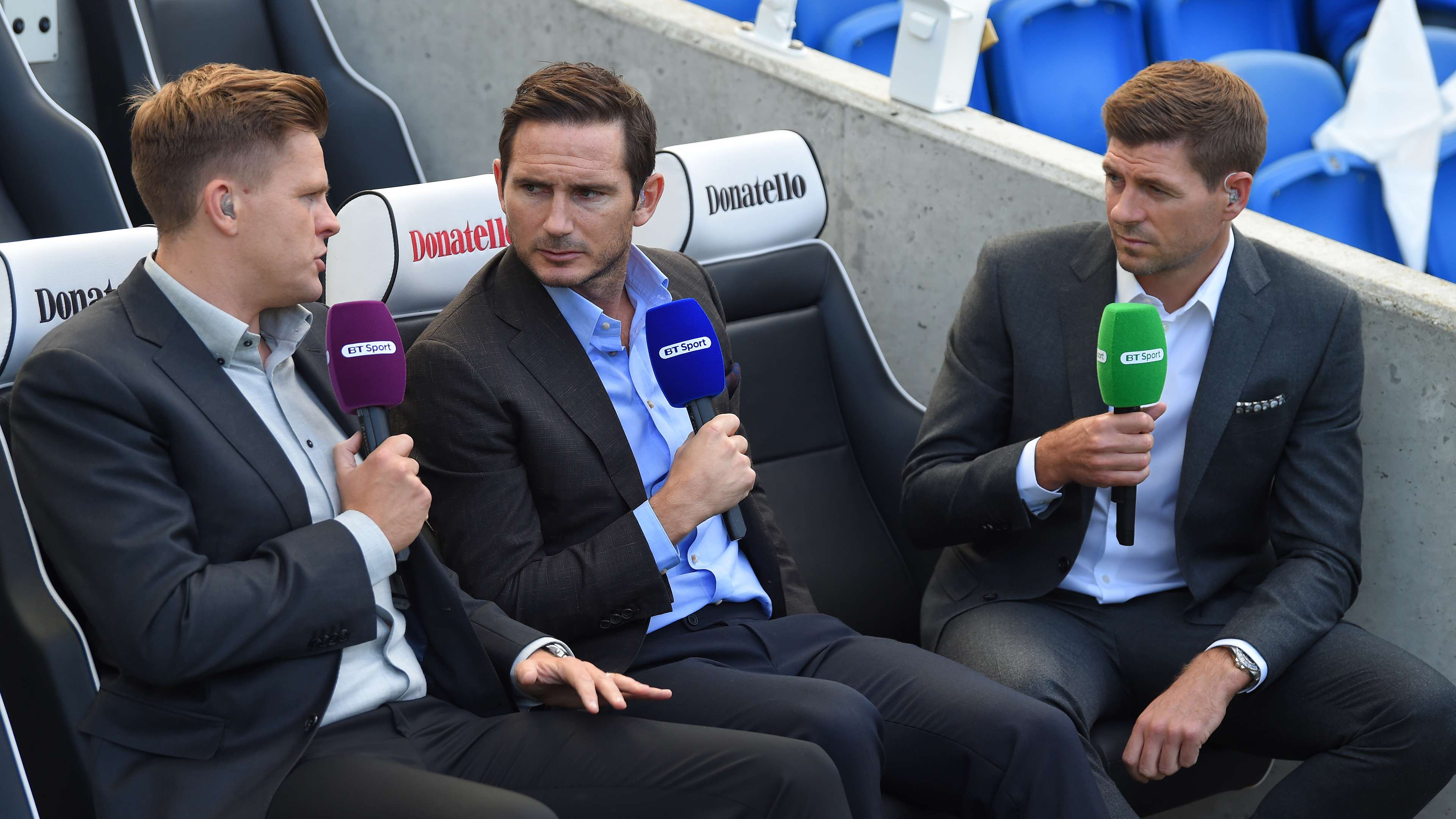
  • Jake Humphrey - Lampard - GerrardGetty

    A shock to the system

    Gerrard has been in the television studio this week, covering the Champions League semi-finals for BT Sport. He enjoys the work, and he’s a passionate, eloquent and insightful pundit too, but where he really wants to be is back on the training pitch, back in the manager’s office. 

    “I’ve got the bug,” he told old foe Gary Neville in an interview last year, and that hasn’t changed despite his experience at Villa, where he lasted just 11 months and won only 13 games in all competitions.

    A shock to the system it most certainly was. Until then, Gerrard’s coaching career had gone pretty smoothly. He spent a year learning the ropes and making excellent connections with Liverpool’s Under-18 side - Curtis Jones and Neco Williams were among his success stories there - before taking on and embracing the considerable challenge of reviving Rangers up in the Scottish Premiership.

    He did so successfully, too, ending the club’s 10-year wait for a league championship in 2020-21, doing so without losing a single match and in the process denying hated rivals Celtic the chance to record 10 titles in a row. Given where the Gers were when he took over, it was some achievement.

    His decision to leave Ibrox for Villa, a few weeks into the following campaign, was not one he took lightly. It inevitably earned him some criticism from Rangers fans, but they couldn’t argue with what Gerrard did for their club during his time in Glasgow. They wouldn't mind having him again, that's for sure.

  • Advertisement
  • Steven Gerrard Aston Villa 2021Getty

    Early promise at Villa

    Gerrard’s reasons for taking the Villa job were obvious. They might have been struggling at the time, but the size, history and potential of the club was clear, and the lure of managing in the Premier League simply too big for any young manager to ignore, especially one eager to be closer to his family on Merseyside.

    At Villa,he had a chief executive, Christian Purslow, whom he knew from Liverpool, there was money to spend in the transfer market, a huge fanbase desperate for success and a decent blend of young and experienced players, which he felt he could mould into something pretty decent.

    The early signs were good, too. Gerrard, who brought the bulk of his tight-knit Rangers coaching staff with him to Birmingham, guided Villa to three wins from his first four matches in charge. His first three defeats were narrow ones against Manchester City, Chelsea and Liverpool, who triumphed only courtesy of a debatable Mo Salah penalty.

    Klopp was impressed by what he saw that day. Gerrard had immediately made Villa more solid, harder to beat. They were well-drilled, aggressive and ran hard, and gave Liverpool one of their toughest games of the season.

    Villa went on from there, and by the time they beat Leeds 3-0 last March, they were ninth in the table and looking at a possible late charge towards Europe. All was looking rosy.

  • Steven Gerrard Aston Villa 2022-23Getty Images

    New dawn fades

    That dawn, however, was to prove a false one, as Villa won only two of their last 11 games of last season, finishing the campaign 14th. 

    They started this season poorly as well, beaten 2-0 on the opening weekend by newly-promoted Bournemouth and winning only one of their first six league games. They were rarely battered, and held Manchester City to a draw at Vila Park, but they desperately lacked a cutting edge in attack - a fact evidenced by the fact that, prior to his sacking in October, Gerrard’s side scored two or more goals only once in 11 Premier League matches.

    The end came after a 3-0 defeat at Fulham, in which Douglas Luiz was sent off and Gerrard was jeered by his own supporters after opting to replace a striker, Danny Ings, with a midfielder, Leander Dendoncker. Villa were 17th in the table by that point, above the relegation zone only on goals scored, and there was little surprise when Gerrard's dismissal was confirmed in what, on reflection, was a rather terse club statement.

    Gerrard himself issued a statement thanking Villa's board, players and fans. "It is regrettable that it didn’t work out in the end," he said. “But I owe you a debt of gratitude for the way you welcomed me into your club, and continued to push the team on during difficult times. Aston Villa is a club with a special history, I really wanted to bring back those memorable achievements, unfortunately it wasn’t to be."

  • Philippe Coutinho Steven Gerrard Aston VillaGetty Images

    Bad luck, bad decisions and Coutinho

    It is easy, with hindsight, to point out the things that Gerrard did wrong at Villa. His public criticism of Tyrone Mings, whom he stripped of the club captaincy last summer, for example, is one that he may look back on with regret, as is his inability to get a team with the likes of Ings, Ollie Watkins, Philippe Coutinho, Leon Bailey, Jacob Ramsey and Emi Buendia scoring goals regularly.

    But there was plenty of misfortune, too. To lose Diego Carlos, a £26 million ($32m) summer signing and a perfect Mings’ replacement, to a ruptured Achilles tendon after just two games of the season was hugely damaging, and Gerrard was also forced to do without another summer purchase, Boubacar Kamara, as well as his first-choice left-back, Lucas Digne, for the final weeks of his tenure.

    His failure to coax consistent performances out of Coutinho, however, will be a source of huge frustration, and cost Gerrard dear in the long run. The Brazilian’s signing, initially on loan from Barcelona and then permanently, was seen at the time as a huge coup for Villa, and a perfect example of Gerrard’s pulling power as a manager.

    Now, it just looks like an expensive mistake.

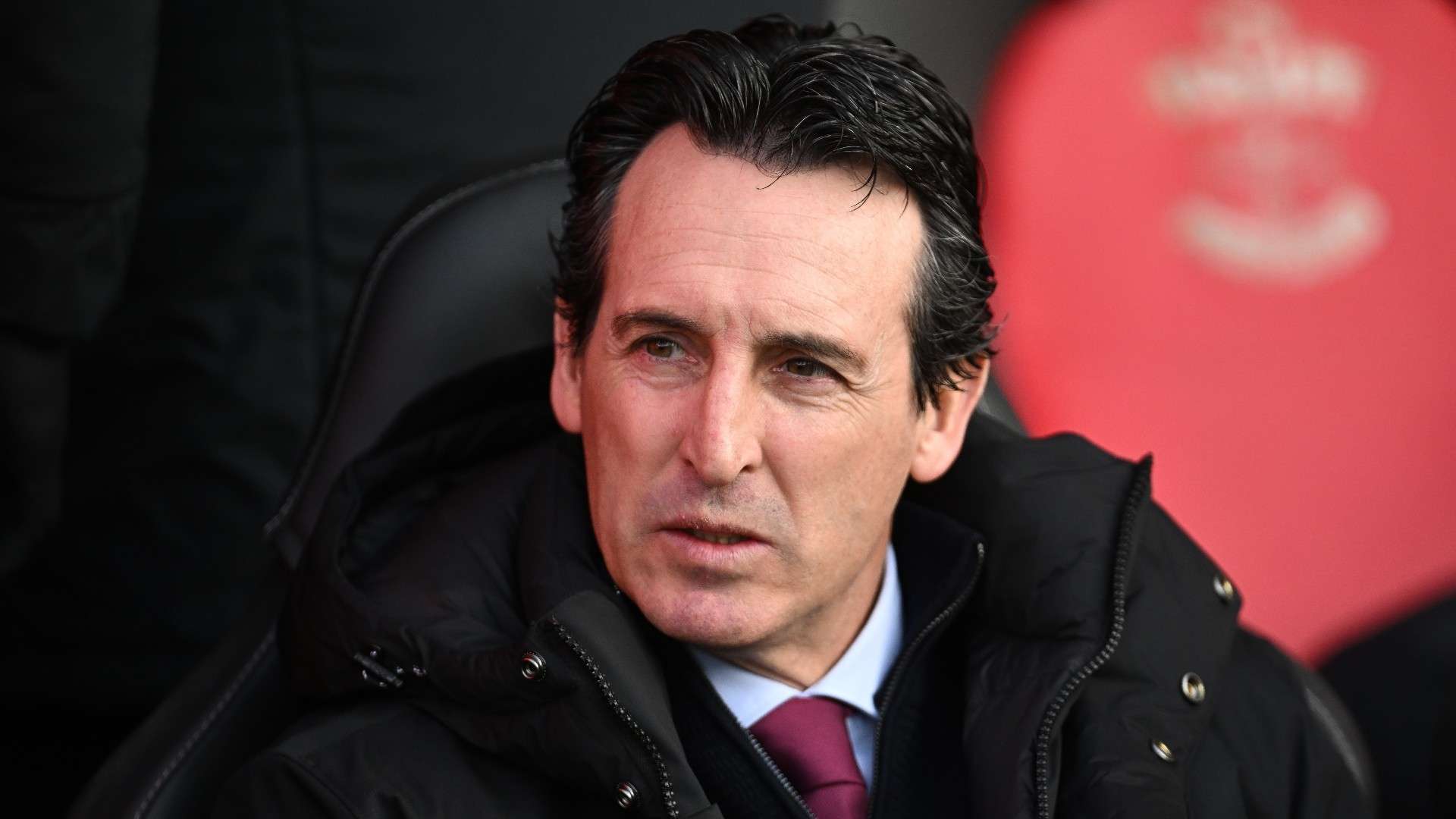
  • Unai Emery Aston Villa 2022/23Getty Images

    The Emery effect

    It should be pointed out that Gerrard’s departure was hardly greeted with delight inside the Villa dressing room. He was popular with players - Mings aside, perhaps - and his backroom staff were both liked and respected, too.

    Plenty have suggested that the departure of Michael Beale, who left to take over at QPR last summer and has since been appointed manager of Rangers, was a key factor in Gerrard’s demise, but while there is no doubting Beale’s credentials as a coach, the same could most certainly be said for Neil Critchley, the man Gerrard appointed as his replacement. With Gary McAllister also on the staff, there was certainly no shortage of knowledge or experience at Villa under Gerrard.

    What is also apparent, though, is the impact his successor, Unai Emery, has had at Villa Park. Heading into Saturday's trip to Anfield, Emery has Villa eighth in the table, outside the European spots only on goal difference. He already has more wins than Gerrard managed, in 15 fewer games, and he has achieved that feat with largely the same squad of players, reinvigorating the likes of Watkins, Mings, Buendia, Ramsey and John McGinn, in particular, and creating a vibrant, upbeat atmosphere at Villa Park.

    We should not necessarily be surprised at that. The Spaniard, after all, is a manager of huge pedigree, a serial winner at Sevilla and a Champions League semi-finalist with Villarreal last season. His Villa side may not be able to sustain the form they have shown in recent weeks, but the job Emery has done in the Midlands so far certainly can't be questioned.

  • Jurgen Klopp Steven Gerrard Liverpool 2022Getty

    What next for Gerrard?

    The big question for Gerrard, then, is what comes next? It is coming up to seven months since he was sacked at Villa, and in that time no fewer than eight Premier League clubs have changed their managers, some of them more than once.

    Only Leeds, of those eight, were reported to have considered Gerrard as a potential candidate - although in fairness we should not have expected Everton or Chelsea to do so - and that naturally raises question marks. Success in Scotland is big, but failure in the Premier League is bigger, where club owners are concerned. Gerrard’s biggest links since October have been with the Belgium and Poland national team jobs, and with Turkish side Trabzonspor. Perhaps wisely, he did not jump at any of them.

    It would be foolish to suggest that Villa was his one big chance in the Premier League. The case of Frank Lampard shows that even those who fail repeatedly can be given further opportunities, and considering the likes of Roy Hodgson, Sam Allardyce and Dean Smith are currently managing in the top-flight, it would be a surprise if Gerrard didn’t receive a few phone calls from clubs this summer. 

    His work at Rangers should ensure that, and there was more than enough promise at Villa to suggest he is worth another go. He has shown that he can organise a team defensively, that he can attract players and that, if given time, he can create a dangerous, possession-focused team. His ability to switch between styles at Rangers, front foot in the league, organised and counter-attacking in Europe, was mighty impressive.

    He will have learned plenty from the bad times, you can be sure of that. He knows he didn't get everything right at Villa, on and off the field, and he now knows how it feels to become a victim of football's relentlessly short-term mindset.

    Whether he will eventually land his dream job, of course, remains to be seen. He has long been seen as the natural successor to Klopp at Liverpool, not least by Klopp himself, but he needs to get things right in his next job, surely, if he is to continue that conversation.