This page contains affiliate links. When you purchase through the links provided, we may earn a commission.
Inter Miami play-off defeat GFXGOAL

Biggest MLS upset ever? Lionel Messi and Inter Miami's early play-off exit was entirely predictable

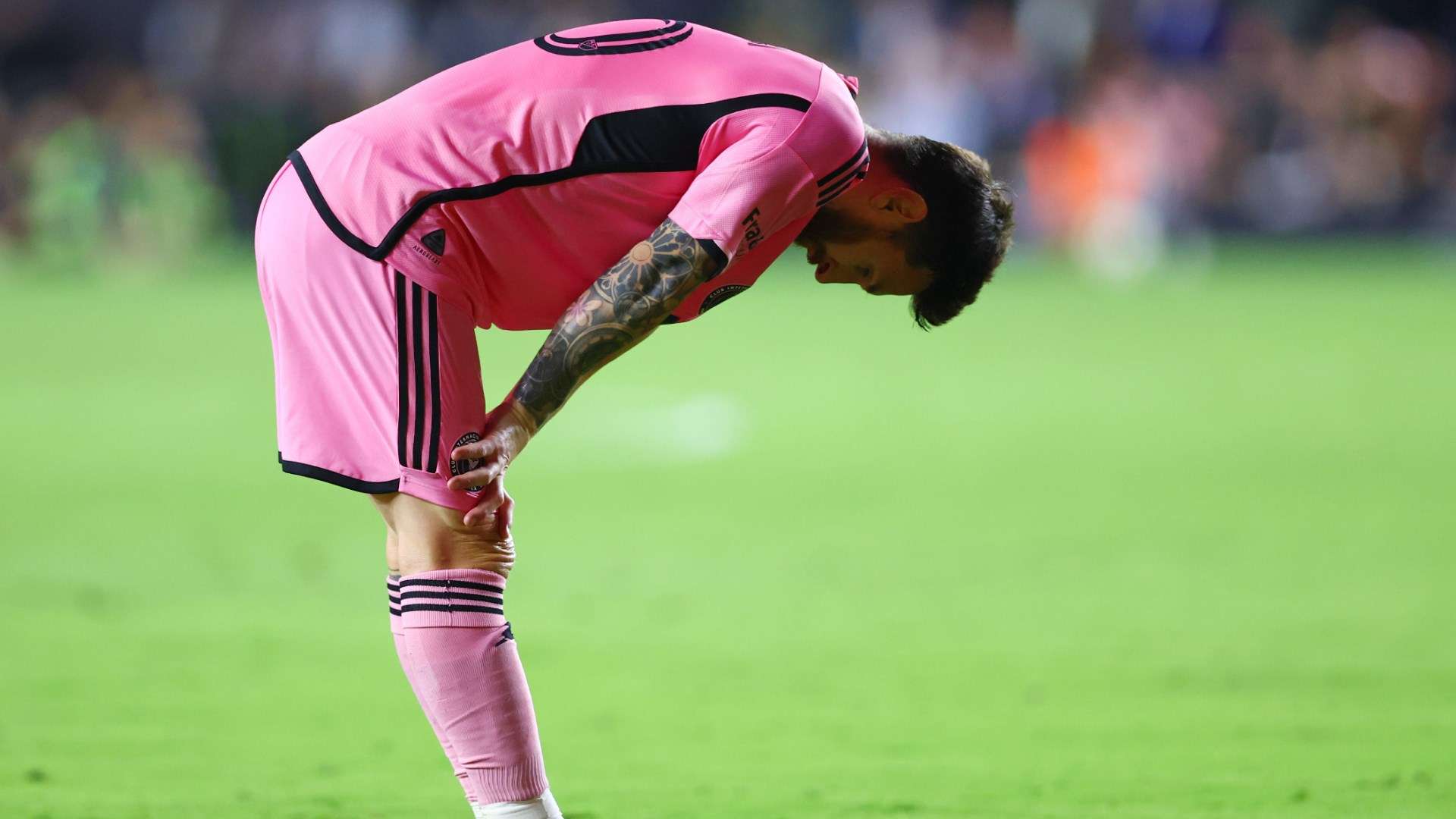
By the end of Saturday's defeat to Atlanta United, it was Luis Suarez that summed up the feeling around Inter Miami. There he was, all 37-years-old of great Uruguayan striker, gasping with every stride, stretching every last sinew for every pass while spurning the kind of chances he would normally bury. At full-time, Suarez was hunched over. He looked old, exhausted, and out of his depth.

MLS, a league that had become his playground for much of the season, was suddenly too much - too quick, too athletic.

And he wasn't the only one in pink to be left reeling as Miami crashed out in the first round of the play-offs in what has already been dubbed the biggest upset in MLS history. But how did it happen? Well, Atlanta is the definition of a 'team', one that has been assembled for success. Miami, on the other hand, largely rely on four aging superstars, supplemented by a handful of highly-rated young players. They are not a cohesive team.

Yes, Miami rolled through the regular season, winning the Supporters' Shield while setting a new MLS single-season points record (74) in the process. But when it came to the crunch, in the games in which the hard yards have to be put in, and the tanks have to be emptied, Miami looked old, disconnected and poorly constructed.

Having Lionel Messi's mates roll up to South Beach makes for some delightful moments - and there is no doubt the Miami project has had a positive impact in every measurable manner for MLS. But in the real version of this league - the frantic, chaotic, messy thing that has always been - an imperfect roster has finally been exposed.

  • FBL-USA-MLS-MIAMI-NEW ENGLANDAFP

    'Barcelona Galacticos' assemble

    When Miami announced Messi's signing in July 2023, he was soon joined by Sergio Busquets and Jordi Alba. Suarez's arrival, rumoured for some time but only confirmed in January, completed the Barcelona old boys. The vibes ahead of the campaign were good, as the quartet were seen smiling together in training, laughing with Tata Martino - their former Barca manager - having offered a hint of what they could do by winning the Leagues Cup without Suarez a few months earlier.

    And for long stretches of the season, they looked almost unbeatable. Busquets sat at the base of midfield, dictating the tempo, moving the pieces around. Alba pushed up the left, while Suarez stayed high. Messi, in the middle, mastered the spaces in between. When all four were on the pitch, and, crucially, the regular season games' tempo slowed to a crawl, Miami were unstoppable.

    The Barca legends were playing at half-speed, but thinking quicker than everyone else. The other pieces around them - Diego Gomez, Yannick Bright, Julian Gressel and co. - just had to fit in.

    It's important to note, though, that this was an unusually constructed roster. Rarely are MLS teams so laden with stars. The big names offered quality, sold shirts, and packed stadiums like MLS had never seen before, but they were a real change from MLS Cup-winning sides of old.

  • Advertisement
  • Leonardo Campana Inter Miami 2024USA Today Images

    No depth concerns

    Regardless, Miami managed to keep ticking along when Messi and Suarez left for Copa America. Martino still had the spine of a good team. Leo Campana, a bench player for Miami who would start for most other MLS sides, proved his quality during June and July. Gressel, Gomez, Bright, Robert Taylor and others are all solid MLS players in their own right and showed as much without their superstar South Americans.

    And with Alba and Busquets still available, Miami continued to pick up points. It is too simple to suggest that Miami don't need Messi to win - and scandalous to say that they are better off without him. But in the dog days of the season, in which every team was impacted by international tournaments, Miami had a real buzz and energy.

    It proved to be something of a paradox, though. That success - eight wins in nine games without Messi - showed that Miami can still be a winning side without their eight-time Ballon d'Or winner. The bones of a typically successful MLS team were in place, and while their playing style changed, with Busquets playing centre-back for a while, they continued to win and win.

    In a sense, it all showed that there was multiple ways in which Miami could win. But there was always going to be a pivot to the style of old once the veterans returned.

  • Inter Miami CF v Atlanta United FCGetty Images Sport

    Warning signs

    Atlanta, ironically, were the first team to really expose Miami's weaknesses in the regular season. On September 18, Messi was about to return from the high ankle sprain that he sustained in Argentina's win in the Copa America final. Everyone else was back, and Miami tried to play in their typical, high-possession way.

    Atlanta ran rings around them in a 2-2 draw that really should have been a win for the home team. They imbalanced Miami, moving the ball side to side quickly, before hitting it long over the vistors' defence. Miami constantly found themselves running backwards towards their own goal, an imbalanced unit gasping for air.

    This was chaotic, frenetic football. Fantastic entertainment for the neutral observer, but immensely concerning for Martino. Of course, Messi entered the fray, Miami got their goals, and a late curler from Aleksey Miranchuk salvaged a draw for Atlanta. The raw statistics suggested an against-the-run-of-play comeback for Atlanta, but watching the game, the signs of how to beat Miami were starting to appear.

  • Inter Miami v Atlanta United - 2024 MLS Cup PlayoffsGetty Images Sport

    Martino's mistakes

    Martino, though, never changed. He tinkered with his system here and there, sometimes switching between a back three and back four, but the weaknesses remained the same. Miami were too light in midfield, too slow at the back, and too easily manipulated off the ball. It is, admittedly, the curse that every manager in possession of great attacking talent faces. Martino's main job, in effect, is to get the most out of Messi, and put together a solid enough structure around him to ensure that Miami don't get outgunned.

    For long stretches, he did the former. But as the season went on, injuries racked up, and tired legs started to show, the latter became a real issue. Miami's Game Two setup in the Atlanta play-off match-up perfectly illustrated it. Martino started with shrewd back three, while Bright operated as a do-it-all midfielder.

    Miami took a 1-0 lead into the break - a stroke of luck from a rare Brad Guzan goalkeeping error giving them a slight advantage at half-time. It was hardly a scintillating attacking showing, but there was a relative solidity to things.

    Martino's first mistake, however, was not having an adequate replacement for Bright, who went off injured at half-time. The Italian might have struggled on the ball, but the hardworking midfielder had consistently been one of Miami's better defensive players throughout season and was among MLS's leaders in interceptions per 90 minutes. Even when sloppy, his presence and energy alone offered something. Martino should have opted to drop Gressel into midfield, but instead chose Benjamin Cremaschi - a far lighter and more attack-minded player. Miami were simply played through for the equaliser after an hour.

    And in the 84th minute, with the score locked at 1-1, Martino made the call that effectively lost his team the series. He took off centre-back Noah Allen - Miami's best player on the night - and switched to a back four. The idea was presumably to go for a win and ensure his side a two-week break. Instead, Miami were all over the place, and the 94th-minute Atlanta winner was thoroughly deserved.

  • Inter Miami v Atlanta United - 2024 MLS Cup PlayoffsGetty Images Sport

    Credit to Atlanta

    Significant credit has to go to Atlanta, of course. There is no doubt that this was a monumental upset. Miami were 34 points better than the Black and Red over the course of the regular season, and Atlanta was the ninth seed that snuck into the play-offs via a wildcard game. They were widely expected to becom a footnote as Messi enjoyed his first MLS Cup run. Throw in that they had fired their sporting director and manager, and sold $40 million worth of their best players over the summer, and this all seemed like a matchup destined for failure.

    Not so fast. Throughout the entire series, Miami had most of the ball, but Atlanta were ferociously direct. Miami lacked legs in midfield, couldn't press from the front and were slow at the back. The solution for Atlanta? Pass the ball very straight, very fast, and run. There's nuance here - Atlanta weren't playing kick-and-run, but were instead setting themselves up in a fiercely direct way.

    "The idea was to drag one of the outside centre-backs and play into the space behind," interim coach Rob Valentino explained after Game Three.

    All they needed to do was take their chances. In Game One, they failed to do so, as only the brilliance of the 40-year-old Guzan in goal kept the scoreline close. In Game Two, though, they were more efficient. They had less of the ball, fewer shots, but limited Miami to a handful of clear chances. Meanwhile, the other end, they were opportunistic.

    Game Three was the perfect cocktail of both the games that had gone before it. Guzan enjoyed his moments - and there were many of them - while Atlanta's forwards capitalised on theirs. The celebration that followed were well deserved.

  • Lionel Messi, Inter MiamiGetty

    What next?

    Of course, there remains an assumption that Messi can fix all of Miami's issues. He is, after all, the greatest to ever do it. The Argentine returned 26 goal contributions in just 19 MLS games over the season, becoming an MVP frontrunner. His name was already etched onto MLS Cup before a ball was kicked in the play-offs, but the truth is, Messi was poor in this series.

    Atlanta defended him very well. Miami have little width to speak of, so their opponents simply crowded the middle of the pitch. Messi barely had room to breathe, and not much movement around or behind him to make things happen. A younger Messi, with more legs and a more agile body, might have simply dribbled around the four or five defenders that often surrounded him. But at his age, these things are more difficult.

    The game, when slowed down, without much energy, becomes a lot more difficult. It is fair to hope for - if not expect - a moment of magic. Messi's $20M total compensation from Miami was about $5 million more than the entire Atlanta payroll. Martino tried to put it all in perspective after the game, saying "If you look at the context in which this began, it seems to me that the progress of the club is important... What happened this year, the bad and the good in general have been better than everything that happened last year and I would say even from the entire life of the club."

    But in the decisive game, Messi was crowded out. From an attendance and ratings perspective, MLS won't be happy, with the highest-profile player the league has ever boasted making an early play-off exit. But what seemed such an upset was, in truth, entirely predictable. There was a clear formula to beating this Miami team, one that had been developing despite the regular season wins. Atlanta, like any shrewd team, simply followed the cues.