
What started as an idea has, in the space of five years, become a movement. You might have heard of Common Goal already, but one thing is for sure: you’ll be hearing a lot more about it in the future.
“It’s been quite the journey,” smiles Thomas Preiss, co-founder of the pledge-based charitable organisation, which this week celebrates its fifth birthday.
“It’s been a steady growth. We haven’t had a situation where the whole football world joined right away, but we have worked ourselves into becoming part of the cultural fabric.”
Common Goal’s aim is to use football to drive change across eight ‘Global Goals’, which include, but are not limited to, issues such as anti-racism, climate action, gender equality, and LGBTQ+ rights.
It seeks to unite players, coaches, clubs, organisations, agencies, media outlets, brands and ordinary supporters by asking them to pledge a minimum of one percent of their salaries and revenues, which is then used to create a ‘global community’ of high-impact organisations.
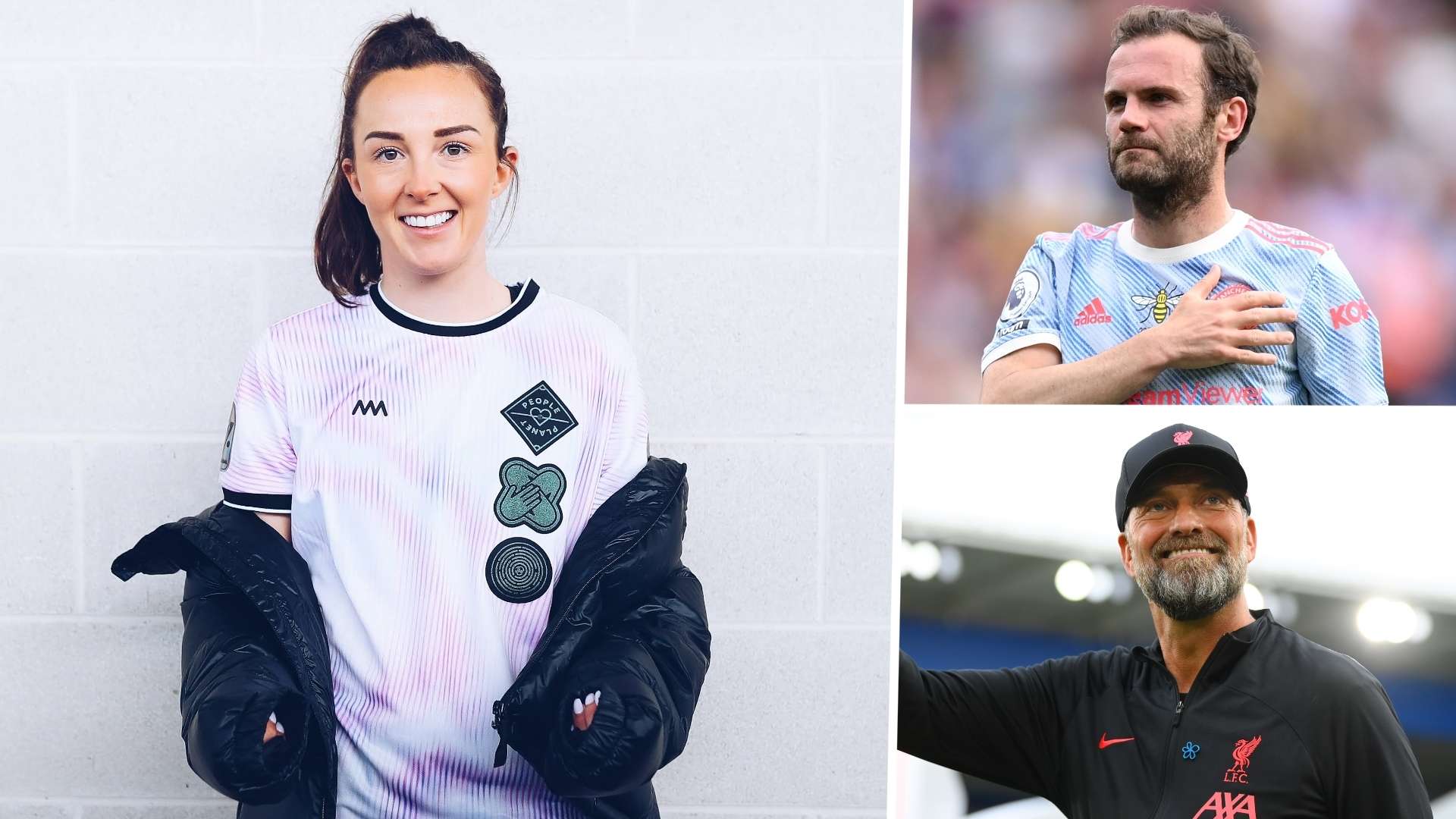
Juan Mata, the former Chelsea, Manchester United and Spain midfielder, was the movement’s figurehead for its 2017 launch, but since then Common Goal has recruited more than 250 players, men and women, including the likes of Serge Gnabry,Pernille Harder,Giorgio Chiellini,Vivianne Miedema,Paulo Dybala,Alex Morgan,Timo Werner and Megan Rapinoe.
Coaches such as Jurgen Klopp and Julian Nagelsmann have also taken the pledge, while Common Goal recently signed a deal with Werder Bremen, in which the Bundesliga club will invest one percent of all ticketing and sponsorship revenue, as well as offering an opt-in clause for all players, coaching staff and non-playing staff members to pledge one percent.
FC Nordsjaelland, of Denmark, and the US second division side Oakland Roots are already on board with similar deals, and further expansion is expected. The aim, Preiss, says, is to soon have clubs in each of the major leagues on board.
“We are moving from individuals to increasing our engagement and collaboration with institutions,” says Preiss, who anticipates “big steps” to be taken in the coming months and years.
“After five years it becomes evident that our journey does not stop with the players and managers. They will always be leaders in this, but we are moving into the next phase with clubs and organisations.
“For Common Goal to really have a radical impact on the industry, it needs to be a collaborative effort. That is what is needed to tackle the social challenges of our time. It can only happen together.”
And so to commemorate five years of Common Goal, GOAL has spoken to a number of its members, who told us what it’s like to be part of football’s biggest and most important team…
Adama Traore | Wolves and Spain forward
“When it comes to the fight against racism, it is important not only to talk, but also to take action. And in a group, more things can be achieved than they can working alone. That’s why I joined Common Goal.
“To me, the most important thing is to educate and have empathy. If you have not felt racism in your own flesh, it is difficult to understand the repercussions it has on people. Each racist action has its consequences and you don't know what can happen to that person. It is very important to explain that and that they understand it. From there, they decide what to do with that information.
"Through Common Goal, I have done many interviews to raise awareness. We are talking about organising conferences with boys and girls about racism and trying to be part of these activities to make people see what is happening.
"I think that, little by little, progress is being made. When you talk, for example, with my father's generation, you realise that things are improving. It is a marathon, but little by little it will improve and for that you have to continue taking actions and educating people. There are places where there are still prejudices due to skin colour, and it is important that people complain.
"The aim is that everyone is accepted for who they are. That is our fight. Everyone is free to support what they want, but it is important that they are with us in this fight.
"It is important both to receive and give, and the one who receives has to help. As footballers we are in a position to help and there are people we can lend a hand to, because if we were in their situation we would like to receive help too.
“It is important to me that with the blessing I have had of being able to dedicate myself to professional football, I can give something back to people who have suffered the same as me. Common Goal enables me to do that as part of a wider organisation.”
Willi Orban | RB Leipzig and Hungary defender
“I’ve been a member of Common Goal since March, but before that I have been involved with charitable organisations and donations for a long time.
“The thing was, it wasn’t always easy for me to see where the money goes, or what kind of organisation you are dealing with. Common Goal, though, are absolute experts in their field. They have an outstanding network, very good organisation and they are very flexible, also in co-operation. I think that the process is simply one of the most professional in the field of soccer in general. It can't be beaten in terms of personality.
“Unfortunately, the war in Ukraine started in March, when I joined Common Goal. That's why we decided that my first donation, my first one percent, will go directly into this area.
“This was an emergency organisation in the sense of humanitarian aid, which we directly set up. But it was also a good moment to support directly and to make a direct contributions, at least financially, in order to provide humanitarian aid on the ground, such as basic supplies, medical care and so on, to the people there and in the neighbouring countries.
“Before that, we thought about how we would handle my donations. Since my roots are in Hungary, I also picked out a [Hungarian] organisation that I had at least exchanged with via Facetime and had actually made a few appointments during the international break, but this process was interrupted by the war.
“For me, everyone can make a contribution in their own way to make the world a little better, and I believe that sport and soccer are a good tool and also a huge stage because of the attention. Soccer connects, no matter where you are on the planet. Everyone has a connection to soccer somewhere. It attracts the masses and that's why I believe that you also have a chance to help people who are not doing so well, to support organisations like Common Goal and the work we are doing.”
Caroline Weir | Real Madrid and Scotland forward
“It was in 2020, during lockdown, that I got involved. It came about through some team-mates of mine at Manchester City, Pauline Bremer and Janine Beckie, who told me about the work they did.
“I like what the organisation stands for, and how it allows you to direct your focus into specific areas. Mine is gender equality and female empowerment. It’s about giving girls the opportunity to play football, play sport, and giving them the confidence to continue and show that there are opportunities out there.
“That’s important in the UK, but especially so in other areas of the world where maybe people are more deprived and have fewer opportunities. To empower women there and make them feel valued and that they have loads to offer, that’s really important for me.
“I feel there has been progress in terms of gender equality in football. Even in the last five years the conversation has moved on. There is a very common theme among players of my generation, that they were the only girl on the football team growing up. That’s not necessarily the case now, because the world has moved on.
 Common Goal
“I was lucky, I came from a very supportive family, and I said I wanted to be a footballer from a very young age. They supported me, but not everyone has that kind of network around them, and that’s what Common Goal does, it gives that network and that support, so that girls can have those opportunities and feel safe.
“There are still issues. The game has come a long way, but it started from way, way down, so it could only go up! But the conversation is changing, definitely. Slowly, yes, and it will take time to change perceptions. That can take a couple of generations.
“The boys and girls growing up now, it’s normal to see England or Scotland on the TV, or WSL games or the Women's Champions League.
“It’ll take time, but it’s going in the right direction. The key now is more investment and continued investment, spreading the word and keeping the momentum going for years to come.”
Sofie Junge Pedersen | Juventus and Denmark midfielder
“It was my cousin who told me about the movement, and I realised that it was a good idea to join. I really like the one percent pledge idea. For me, it’s like some kind of tax, and a good tax system is one of the most important things in creating a good society.
“I’ve been involved in charity work for many years. From childhood, I’ve been interested in the world, and I was lucky that my parents brought me away from Denmark at an early age. I saw how people lived in other parts of the world, and it always touched me to see how lucky we are in Denmark, and most parts of Europe actually.
“I have really felt how unfair the world is, and so I’ve always been interested to see how I can contribute to help do things better.
“My big focus with Common Goal is with Climate Action. It’s the biggest crisis we have ever had, and that’s why I’m very involved in making a difference.
“Climate change affects everything, it affects poverty around the world, and the fact that it’s created by us in the rich world, yet it affects those in the most vulnerable communities the most, is so unfair and really touches something in me. It makes me very angry and sad.
“Awareness is growing, but I also think some clubs are a bit afraid of going into this debate for fear of being accused of hypocrisy. You can point your finger at clubs and players and organisations, because they fly to games and because they pay big money etc.
“But this is the only way to get into the discussion, and to try to reduce the football industry’s carbon emissions. It’s to our benefit, because climate change is also a threat to football.
“The football industry has to contribute to try to fix the crisis, first by reducing its footprint, but also by using all the money to make a change. And we have 3.5 billion fans all over the world, so we have the platform to engage people.
“Footballers have so many followers and fans, so when they speak out on an issue, it can help change things. And the power of Common Goal is that it doesn’t put the focus on the individual, it creates a collaboration which is where real transformation can happen. Feeling part of something bigger, a movement, is really big. The more people you have, the more you can change.
“My hope is that the football industry will become net zero very soon.”
Collin Martin | San Diego Loyal midfielder
“I met with Common Goal before I came out as gay [in 2018]. I was looking for places to engage in all these topics; advocacy at youth level, educating coaches, creating more inclusive environments. I was talking, but I didn’t know where to give my money and my energy.
“Common Goal’s ‘Play Proud’ initiative made a lot of sense to me, and is something I’ve been involved in now for a year or two.
“What is special about Play Proud is how it connects all areas of the game, from the ground up. I get asked a lot ‘why are there so few gay players in the professional game?’, and it all comes back to players not feeling comfortable at youth level.
 Common Goal
“That’s based on a lot of things; the language used in dressing rooms, coaches perhaps not being as supportive as they need to be, lots of things. That’s where there needs to be more education, and for me that is why we don’t see more gay male athletes in professional sport. They just don’t feel like it’s a safe place for them to continue doing what they enjoy doing.
“It’s about education. Since I came out, it’s been a lot easier for my team-mates to change their habits. They have my visibility, so it opens their mind a bit more.
“But the sad thing, is that other dressing rooms don’t have that, because they haven’t had a gay team-mate, or if they have, they don’t know about it.
“I’ve seen both sides of it, both before and after I came out. I’ve felt uncomfortable in locker rooms with certain things that have been said, and then I’ve seen and felt the change. People might be walking on eggshells at times, but at least they are thinking about it and modifying their language or their behaviour. Those are positive steps. They are being educated whether they want it or not.
“It’s been slow, but examples like Josh Cavallo and Jake Daniels, both of whom have come out in the last year, are big deals. We need more people having the courage to come out, to give that visibility and ensure that one day, we won’t have to have these ‘coming out’ stories.
“Progress hasn’t been as big since I came out as maybe I expected, but we have to keep building in the right direction, so that 5-10 years down the road, it really won’t be a big deal to have a gay athlete on the team.
“I think the work that Common Goal and Play Proud do is special. It’s about educating coaches and clubs in how to be more inclusive, and not just for players either. It’s for everyone who works at a club. If you have a trans videographer, how do you make them feel comfortable every day? The kitman might be gay, will he be well-supported within the club? It’s about the whole game, at all levels.
“Then it’s about spreading the message. In the U.S. and the UK, I feel like we are on the right path, but how do we speak out into places that maybe aren’t as far along the line, in terms of the conversations around these issues? Those are the big challenges and focus areas.”