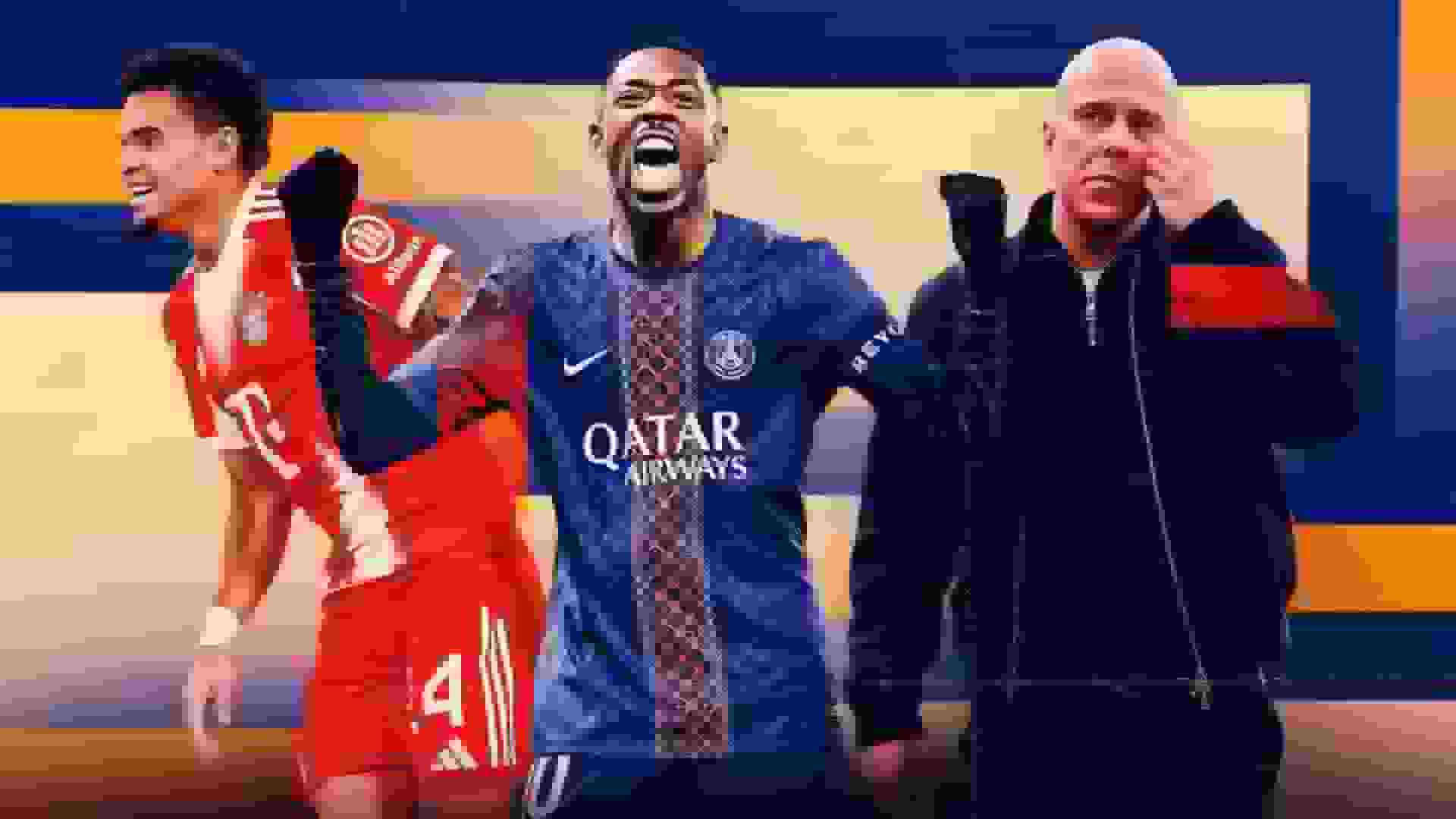

The tactical battle at the Riyadh Air Metropolitano was a classic confrontation between Diego Simeone’s structured, reactive 4-4-2 and Hansi Flick’s aggressive, possession-oriented 4-1-2-3. Simeone’s objective was clear: maintain a compact vertical and horizontal distance between the lines, lure Barcelona into wide areas, and launch rapid transitions through Julian Alvarez. This approach bore fruit almost immediately, as Giuliano Simeone found the net in the 10th minute, rewarding Atletico's early intensity and their ability to punish Barcelona on the break.
Conversely, Hansi Flick sought to dominate the central corridor and manipulate Atletico’s back four through constant rotations in the final third. Barcelona dominated 63% of the possession, but the challenge was penetrating a low block that often shifted into a 5-4-1 during sustained pressure. The match ultimately hinged on Barcelona’s patience and their ability to sustain pressure, eventually forcing Atletico into defensive errors that allowed the visitors to overturn the deficit before and after the interval.
Atletico Madrid's tactical setup
 Getty Images
Diego Simeone opted for his signature 4-4-2 formation, prioritising a mid-to-low block designed to deny Barcelona’s creative midfielders space in the "Zone 14" area. The pressing strategy was selective; Atletico allowed Barcelona’s centre-backs, Pau Cubarsi and Gerard Martin, time on the ball but engaged aggressively as soon as the ball entered the middle third. Key pressing triggers included a heavy touch by Marc Bernal or back-to-goal passes to Pedri, where Koke and Pablo Barrios would snap into tackles to initiate counter-attacks.
In build-up, Atletico looked to bypass Barcelona’s high press by utilizing the diagonal long ball from Jan Oblak or David Hancko towards the flanks. Alex Grimaldo and Marc Pubill provided the width, but the primary threat remained the link-up play between Julian Alvarez and Giuliano Simeone. Alvarez functioned as a mobile 10, dropping into pockets of space to drag Cubarsi out of position, creating lanes for Simeone to exploit.
Defensively, the shape was disciplined for the first 40 minutes, with the wide midfielders tucking in to create a narrow bank of four. However, as the game progressed, the physical toll of defending without the ball led to a decrease in lateral shifting speed. This fatigue was evident in the build-up to the equaliser, where the defensive line failed to squeeze the space between the centre-backs and the covering midfielders, allowing Lopez the yard of space required to strike.
Related Topics


Barcelona's tactical setup
Hansi Flick deployed a 4-1-2-3 system that morphed into a 3-2-5 in possession. Marc Bernal acted as the single pivot, frequently dropping between the centre-backs to facilitate a three-man build-up, allowing the full-backs to push high and wide. This stretched Atletico's narrow 4-4-2, creating gaps in the half-spaces for Pedri and Fermin Lopez to operate. The positioning of Lamine Yamal on the right wing was crucial; his gravity pulled two defenders toward him, leaving the underlapping runs of Lopez unchecked.
Barcelona’s defensive transition was defined by a high-intensity counter-press. The moment possession was lost, the nearest three players swarmed the ball carrier to prevent Atletico from finding Alvarez. While this left them vulnerable to long balls over the top - as seen in the opening goal - it allowed Barcelona to hem Atletico into their own half for long periods. The breakthrough came from Flick’s insistence on verticality; rather than side-to-side circulation, Barcelona looked for quick third-man combinations.
Fermin Lopez’s role was the most impactful; he operated almost as a shadow striker, timing his arrivals into the box to perfection. His first goal just before half-time shifted the psychological momentum, while his second in the 66th minute was the result of a calculated overload on the right flank that left the Atletico far-side defence exposed.
The tactical chess match
 Getty Images
The defining battle was the struggle for control of the half-spaces. Simeone’s 4-4-2 is historically difficult to break down centrally, but Flick identified that Atletico’s wide players were struggling to track the inside runs of Barcelona’s ‘interiores’. The mismatch occurred between Atletico’s central midfielders and Lopez. Koke and Barrios were often occupied by Pedri’s deep positioning, which lured them forward and created a vacuum behind them. Lopez exploited this brilliantly, ghosting between the lines where Hancko and the rest of the backline were hesitant to step out and engage him.
Flick won the tactical battle by refusing to abandon his high defensive line despite the early setback. By keeping the pitch small, Barcelona recovered the ball higher up the pitch (evidenced by their 19 total shots compared to Atletico's 9). Simeone’s reliance on the counter-attack meant that once Barcelona solved the initial pressing triggers, Atletico had no ‘Plan B’ to regain control of the tempo. The sheer volume of entries into the final third eventually overwhelmed the hosts’ defensive resolve.
In-game adjustments
 Getty Images
Flick was proactive with his changes, introducing Frenkie de Jong at half-time for Borja Farinas. This was a sophisticated tweak; it moved Bernal into a more defensive shielding role while De Jong provided superior ball progression and press resistance. This change helped Barcelona bypass Atletico’s secondary press more effectively in the second half. Later, the introduction of Andreas Christensen for Joao Cancelo in the 60th minute added defensive solidity, allowing Barcelona to transition into a more stable back four when defending their lead.
Simeone attempted to respond in the 72nd minute with a double substitution, bringing on Morten Hjulmand and Johnny Cardoso for Koke and Alex Baena. This was a move to inject energy into a tiring midfield and shift to a more robust defensive profile. He also introduced Alexander Soerloth for Kang-in Lee to provide a physical focal point for long balls. However, these changes failed to alter the game's flow because Barcelona’s retention of the ball was too proficient. The tactical shift to a more direct 4-4-2 with two target men actually played into Barcelona’s hands, as it reduced Atletico’s ability to keep the ball in midfield, leading to a frantic final twenty minutes where the visitors comfortably managed the game despite late yellow cards for Llorente and Pubill.
Conclusion
Ultimately, Barcelona’s superior positional play and Flick’s half-time midfield adjustment decided the outcome. While Simeone’s initial plan successfully exploited Barcelona’s high line, Atletico could not sustain the physical intensity required to shadow Fermin Lopez’s intelligent movement. Lopez’s brace was no accident; it was the mathematical result of Barcelona’s constant overloads and their success in dragging Atletico’s compact blocks out of alignment. Flick’s bravery in maintaining a high press despite the early deficit forced Atletico into a defensive shell they could not escape, proving that proactive aggression often trumps reactive structure in modern elite football.
