Gianni Infantino GFXGOAL

‘It is not FIFA’s to sell’ - Gianni Infantino’s $20 billion World Cup power play puts soccer’s soul up for sale - and makes resistance too expensive

Earlier this week, Gianni Infantino got a little bit angry.

In a 15-slide Instagram post, the FIFA President took on all of the criticism of the 2026 World Cup. It was, effectively, a laundry list of his accomplishments, accompanied, pointedly, by counterarguments to every single pre-tournament grievance. It read like a victory lap from a FIFA President who knew that he had just about stuck the landing on a North American World Cup.

But it was also something of a break from character. Infantino has always been cool, calm, and collected. He preaches, not argues. He explains, not defends. He stands on stages, bald-headed, skinny suit, bright white trainers, and slips into his TED Talk LinkedIn jargon: "Here's what sportswashing taught me about B2B sales" (or something like that).

That post, though, seemed to reveal something more: an indignant, cocky president eager for his share of the spotlight. Now, Infantino has gone one step further. His plan to create a separate company for FIFA’s major competitions and then “sell off” stakes to private investors has sparked outrage among fans, clubs and football federations alike. For critics, Infantino is now coming after the soul of soccer.

Yet, Infantino's plan should come as absolutely zero surprise, for both the man and the organization.

Yes, this is an attack. Yes, this is inauthentic. Yes, this is alarming. But Infantino's plan is also indicative of a wider trend in sports that has been bubbling away for years now. The soul of this thing is more or less gone. Infantino and FIFA are just trying to deliver the final death blow.

  • gianni infantinogetty

    FIFA makes its move

    First, the landscape.

    In line with most of FIFA's business these days, this all roots back to the cash. Football's governing body made money from the World Cup - lots of it. FIFA is expected to generate around $15 billion in revenue across its 2023-26 cycle, nearly double the total from the previous four years. Everything in the run-up to the tournament seemed geared towards maximizing profit: ticket sales, ads for hydration breaks, high-profile hospitality deals, the staging of the immensely controversial Club World Cup as a harrowing proof of concept. There's immense potential for profit out of this sport. FIFA is not stupid - it has always known this. But now they're making their moves.

    And that trend has continued here with Infantino's plan. It was first reported Tuesday morning that Infantino, without informing any of football's major federations, had come up with a scheme to profit heavily from the hefty revenues that FIFA's flagship competitions generate. He plans on creating a new company, dubbed FIFA Forward Enterprise (FFE), that consolidates FIFA's commercial and event operations, including broadcast rights, sponsorship, ticketing, licensing and event delivery. FIFA reportedly reckon that FFE will have a value of around $20 billion. They will keep the majority stake, while FIFA says it will retain sole control over football governance, competitions, the match calendar and all regulatory and sporting decisions.

    The worrying part is what happens next. FIFA plans to raise up to $4.2 billion by selling minority, non-controlling stakes totaling up to 20 percent of FFE. If the plan is approved, each of FIFA's 211 member associations could access up to $20 million in immediate funding, plus another $20 million in FIFA Forward development funding during the 2027-30 cycle. That forms part of a package worth more than $10 billion through 2038. Private investors, no doubt, will have a vested interest in the commercial performance of FIFA's major competitions - and when they are played. FIFA, though, insists that it will retain control of all footballing decisions. Oh, and football federations reportedly have until Sept. 19 to sign off; otherwise, they will receive a smaller funding package, reportedly worth around $10 million during the next cycle. FIFA needs the support of at least 106 associations, plus approval from the FIFA Council, to reshape the landscape of global soccer.

    Got all that? Good.

  • Advertisement
  • Sepp BlatterIMAGO

    'It is not FIFA’s to sell'

    The outrage was immediate. UEFA put out a strongly worded statement condemning the proposal before FIFA could even officially announce it.

    “This crosses a line that football’s governing institutions should never cross. UEFA takes it extremely seriously. So should every national football association. So should every stakeholder: leagues, clubs, players, supporters, governments and everyone who cares about the future of the game. The soul and governance of football are not assets to trade - especially with zero transparency as to who gains financially. None of us are the owners of football. It is not FIFA’s to sell," it said.

    After that, it emerged that FIFA is basically trying to push this thing through as quickly as possible. They offered a one-off payment of up to $20 million from Jan. 1, 2027, alongside up to $20 million in FIFA Forward development funding during the 2027-30 cycle. UEFA responded with another angry statement.

    "UEFA knows there is significant and growing opposition to FIFA's scheme. FIFA cannot continue to use our sport to enrich themselves and their friends. We can grow the game correctly."

    It is worth admitting, at this point, that it's funny that UEFA are now the good guys after repeatedly expanding and commercializing the Champions League. But the Super League was not their doing: UEFA opposed it from the outset.

    The English FA, German FA and numerous supporters' groups have all either condemned the move or expressed serious concern. Former FIFA President Sepp Blatter, hardly the shining example of a man with a moral compass, said on social media that "No one has the right to sell our game." Blatter may be a deeply compromised messenger, but at least he loves football.

    Yet, perhaps unsurprisingly, the reaction from elsewhere has been a bit mixed. Czech FA president David Trunda publicly backed the idea, although the association is not expected to formally discuss its position until August. CONCACAF, of which, notably, U.S. Soccer is a member, expressed concern about a lack of transparency, and called on FIFA to practice "good governance." It did not, however, condemn the plan outright. The Asian Football Confederation struck a similar tone.

  • InfantinoGetty Images

    The coming storm

    Still, this has been bubbling away for a while now.

    The European Super League is a pretty good example, if on a smaller scale. In 2021, 12 clubs from England, Spain and Italy announced plans to form a 20-team breakaway competition that would include 15 permanent members and see the most prominent clubs play each other on a more regular basis. Their interests were largely commercial, with massive broadcast rights, no doubt, on the table if they were able to provide high-level fixtures week in, week out. JPMorgan - which is handling the money for FFE - served as the financier for the project, committing €3.25 billion to get it off the ground. The league was spiked after mass protests from fans, leagues and football federations alike. That was a warning shot that, in hindsight, should have been taken more seriously.

    Infantino has tried his hand here before. In 2018, he championed a $25 billion offer backed by Japan’s SoftBank to finance new competitions, including an expanded men’s Club World Cup. UEFA resisted, but the groundwork had been laid. Infantino eventually got his tournament, with the U.S. serving as sole host, although the broadcast deal did not materialize as originally intended. FIFA held talks over a reported $1 billion deal with Apple TV+, only for negotiations to collapse, while Fox Sports and NBC reportedly declined to bid. DAZN eventually paid around the same sum. Then came another notable $1 billion deal: SURJ Sports Investment, a subsidiary of Saudi Arabia’s sovereign wealth fund, acquired roughly 10 percent of DAZN. Saudi Arabia, of course, will host the 2034 World Cup.

    Then there is Infantino’s remarkably close relationship with President Donald Trump. He attended Trump’s inauguration before presenting him with FIFA’s new Peace Prize at the 2026 World Cup draw for his supposed efforts to promote peace. Trump, in turn, has reportedly suggested Infantino as a candidate for - yes, this is true -Secretary-General of the United Nations. Against that backdrop, it is notable that Thrive Eternal, led by Joshua Kushner, the brother of Trump’s son-in-law Jared Kushner, is leading the proposed investor group for FFE.


  • ENJOYED THIS STORY?

    Add GOAL.com as a preferred source on Google to see more of our reporting

    Add as preferred source on Google
  • Adam SilverGetty Images

    Part of a larger trend

    This is all a bit, to put it mildly, icky. But the fact is, it is simply part of a larger trend in sports.

    The NBA announced in 2025 that it was exploring a European league, which it now plans to launch in the fall of 2027. More than 20 groups submitted bids to join the league at the end of June. Some, in major markets, eclipsed $1 billion - higher than the valuation of half of the English Premier League. Reports suggest that NBA Europe will be a direct competitor to the EuroLeague, an already high-level basketball setup which regularly sends some of its best players to the United States. The NBA reportedly plans to distribute around $10 billion across the European basketball ecosystem during the league's first decade. FIBA has backed the project.

    The NFL's International Series has expanded beyond London, with nine games scheduled across seven cities in seven countries in 2026. On the commercial side, the NFL's Global Markets Program permits teams to negotiate marketing rights in individual countries to "build brand awareness." All 32 teams participate, with rights held across 22 international markets.

    Even the college football landscape is changing in the U.S.. Private capital has now entered NCAA sports. The University of Utah partnered with Otro Capital last December, creating a for-profit company to manage the commercial operations connected to its athletic program. Utah retains control, while Otro holds a minority stake. The Big 12 has agreed to a deal with RedBird Capital and Weatherford Capital that offers schools an optional credit line of up to $30 million each. RedBird, pointedly, also invests in Paramount, which might be handy when the conference has to renegotiate broadcast rights in 2031.

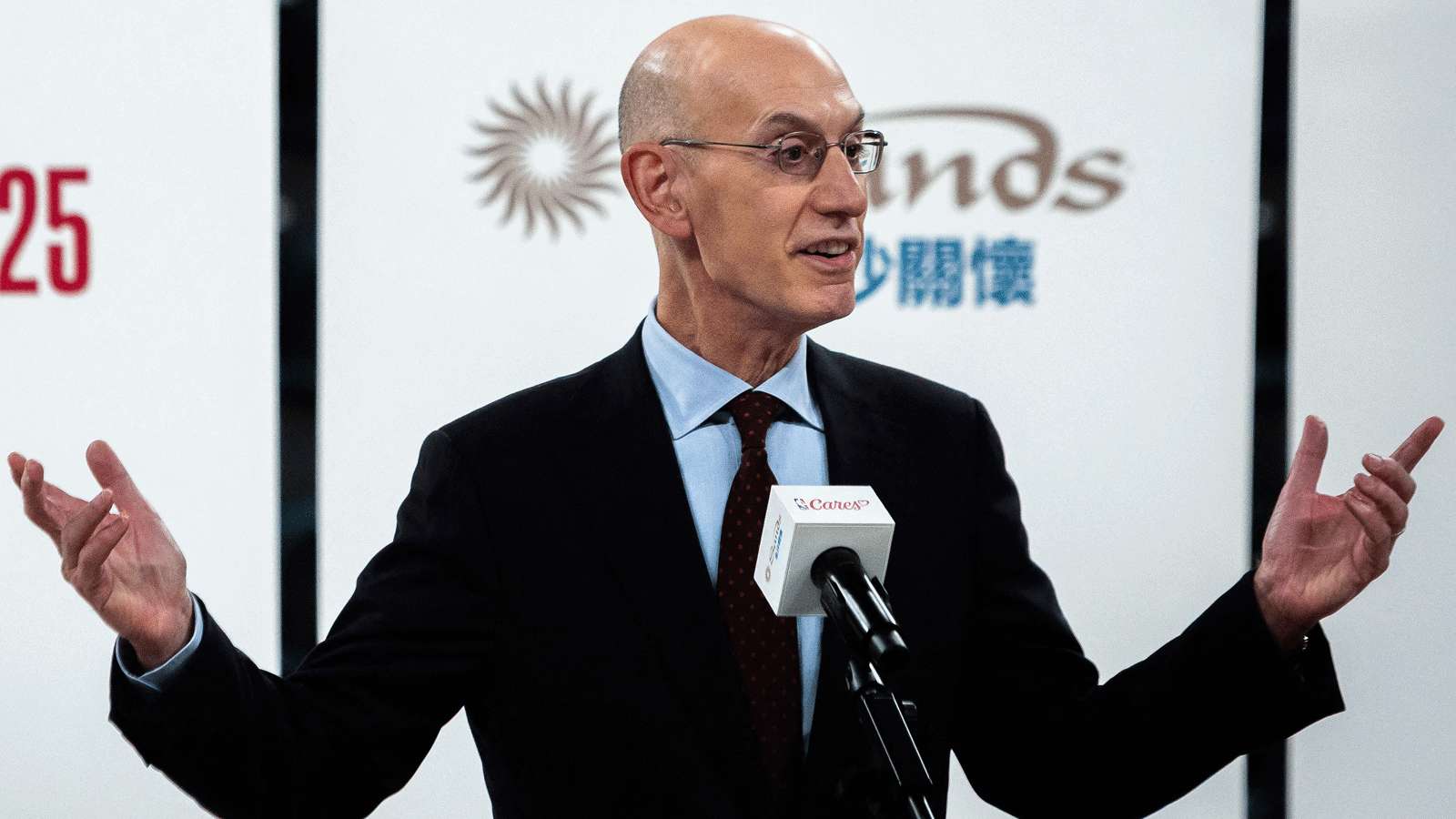
    Powerful men in suits have been pulling the strings in the background for years. Infantino is merely another one.

  • Gianni InfantinoGetty Images

    Why resistance will be futile

    Yet perhaps the disheartening bit here is that soccer was always supposed to be the sport that pushed past corporate greed.

    The fight against the Super League stood as a good proof of concept that collective organization could help fight off outside investment. The expansion of the UEFA Champions League, success of the Club World Cup, and general praise of a 48-team men's World Cup were certainly blows to the traditionalists, but something about the purity of the sport has always survived. Even the mooting of domestic fixtures played on international soil gave a certain kind of hope.

    However, when these things happen at the highest of levels, it becomes difficult to see how there can be a pushback against the rising tide. UEFA are the largest detractors here, and certainly have some power. They have successfully threatened to boycott competitions before. There also remains the fact that Europe truly is the center of global soccer.

    They are reportedly considering another boycott, with an emergency meeting also on the cards. But do the math, and the opposition may not add up. Each of FIFA’s 211 member associations has one vote in Congress. How many of the 163 nations that did not participate in the 2026 World Cup would reject the prospect of up to $40m in funding? Even first-time qualifiers such as Curaçao, Cape Verde and Uzbekistan may see that money as crucial to ensuring 2026 was more than a one-off. The proposed funding would undoubtedly bolster those efforts.

    Calling on UEFA to “show some backbone,” then, only goes so far. The richest federations may say no. They may even threaten a boycott. But too many others stand to gain too much to follow suit. That is the most sinister part: the plan may feel morally wrong, yet rejecting it could prove financially impossible. Infantino does not need to win the argument. He only needs to make saying no too expensive.