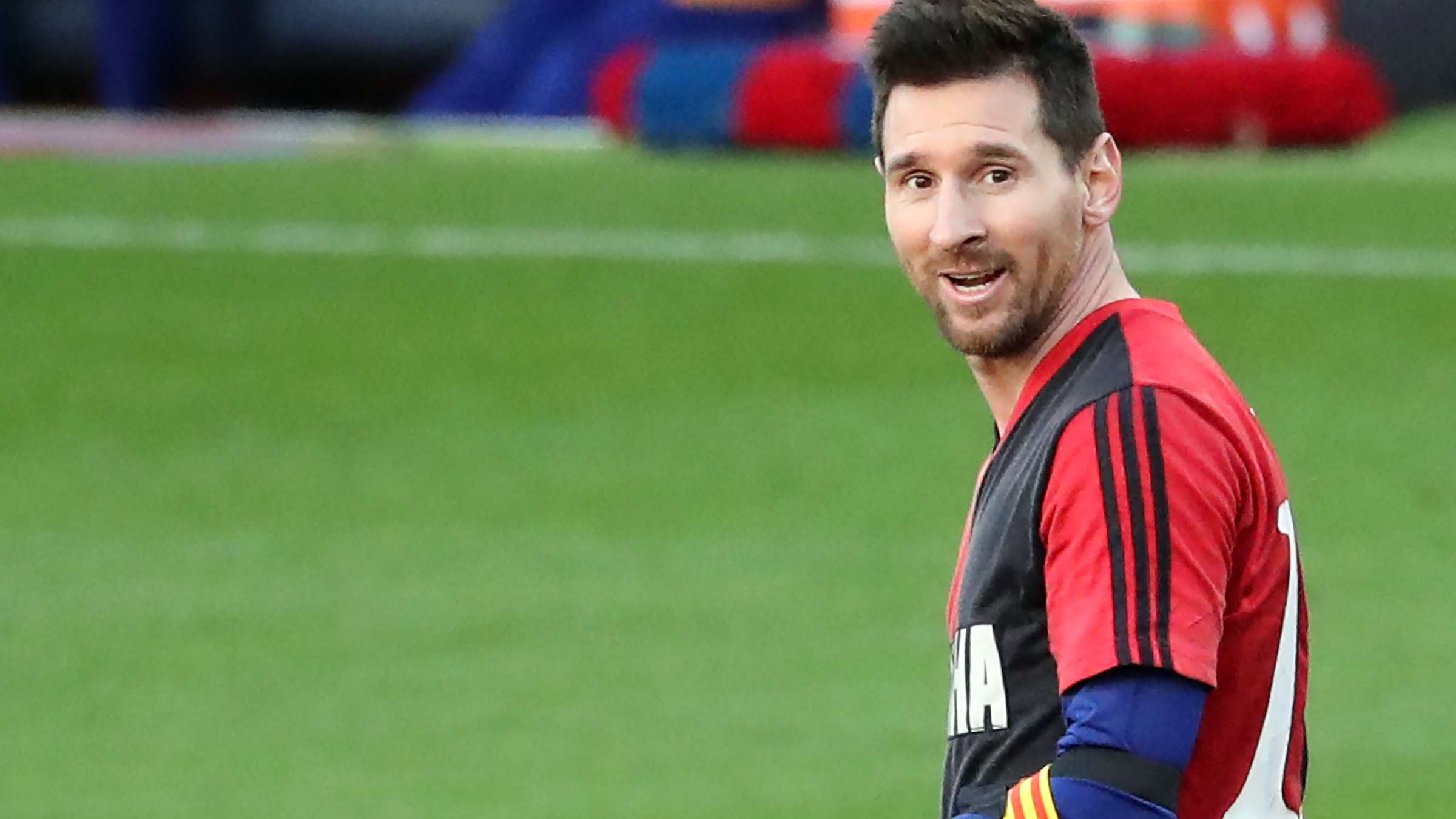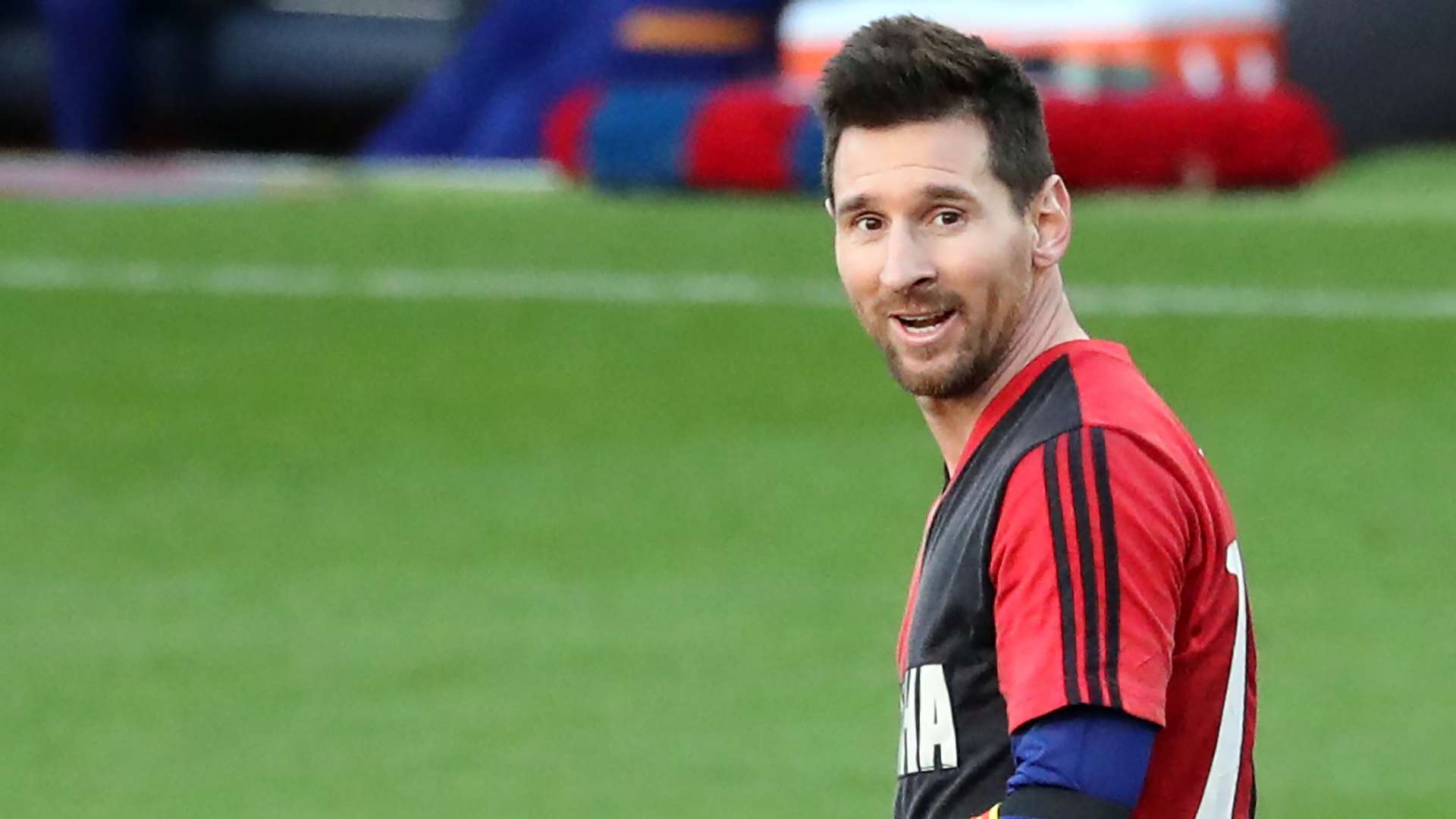
Newell's Old Boys vice-president Juan Manuel Medina has announced that the club are "working on" a 2027 homecoming transfer for Lionel Messi. The Inter Miami superstar took his first steps into football at youth level with the Argentine club, who are eager to bring him back as the face of a new "project for the city of Rosario".
The new men in charge at Newell’s Old Boys have reiterated how it remains the club’s “dream” to bring home-town hero Lionel Messi back to his native Argentina. Favio Orsi and Sergio Gomez have taken the reins in Rosario and are preparing for their first season at the helm. Messi will not form part of those plans, as he remains tied to MLS Cup winners Inter Miami, but an emotional return to his roots could be made at some stage.
Lionel Messi has seen a return to his roots in Argentina speculated on in the recent past, with the eight-time Ballon d’Or winner boasting emotional ties to Newell’s Old Boys. A presidential candidate there - ahead of elections being held - has explained what would need to happen in order for the Inter Miami superstar to leave MLS and head back home to Rosario.
Angel Di Maria lit up the Clasico Rosarino with a breathtaking free-kick as Rosario Central secured a 1-0 win over Newell's Old Boys in the Argentine top flight. The 37-year-old curled home a sensational strike in front of an electric Estadio Gigante de Arroyito crowd, earning his first-ever derby victory and extending Central's dominant streak over their city rivals.
Lionel Messi's boyhood club Newell's Old Boys questioned Real Madrid legend Keylor Navas' professionalism as the Costa Rican goalkeeper left the Argentine club after just six months to join Liga MX side Pumas. Newell's will receive compensation worth $2 million (£1.4m) from the Mexican team. Navas moved to Argentina in January after spending nearly 15 years in Europe.
A group of workers from the Woolwich Arsenal Armanent Factory, who called themselves Dial Square, formed a football team in 1886. They would later rename themselves to Royal Arsenal in the same year. In 1893, the club was renamed to Woolwich Arsenal, before finally being named just Arsenal in 1919, six years after they moved to Highbury.
Who are the owners of Arsenal?
American billionaire Enos Stanley Kroenke is the owner of Arsenal, purchasing the club via Arsenal Holdings Limited, a subsidiary of Kroenke Sports & Entertainment (KSE).
What is Arsenal's stadium called?
The Emirates Stadium is the name of Arsenal's stadium. It has been the team's home ground since 2006, replacing Highbury, which served as Arsenal's home venue from 1913.
What is Emirates Stadium's capacity?
The Emirates Stadium has a capacity of 60,704 and is among the UK's biggest football venues.
How many trophies have Arsenal won?
Arsenal have won 48 trophies till date, including 13 league titles and a record 14 FA Cups.
How many Premier League (top flight) titles have Arsenal won?
Arsenal have 13 English top flight titles to their name, making them the third-most successful team behind Man Utd and Liverpool. They, however, won their last title over two decades ago.
Who has made the most appearances for Arsenal?
London-born Irish defender David O'Leary sits at the top of the list for most Arsenal appearances in history. O'Leary spent 18 years at the club and made 722 appearances in all competitions, ahead of Tony Adams, George Armstrong, and Lee Dixon.
Who is Arsenal's all-time top goalscorer?
Thierry Henry is Arsenal's leading goalscorer of all-time with 228 goals in 377 games. No other Arsenal player has scored over 200 goals for the club, with Ian Wright sitting in second place (185 goals in 288 games).
Which famous players have played for Arsenal?
Thierry Henry, Cesc Fabregas, Dennis Bergkamp, Mesut Ozil, Robert Pires, and Robin van Persie are among the popular footballing names to have played for Arsenal.
Which famous managers have been in charge of Arsenal?
Arsene Wenger, Unai Emery, George Graham, and Herbert Chapman are among the biggest names to have been in charge of Arsenal throughout their notable history.
What is Arsenal's nickname?
Arsenal have a pretty unique nickname, called The Gunners. This nickname is a reference to the club's origins in the late 19th century, when a group of workers from the Royal Arsenal armanent factory in Woolwich formed the club. That's also the reason why the Arsenal badge includes a cannon.