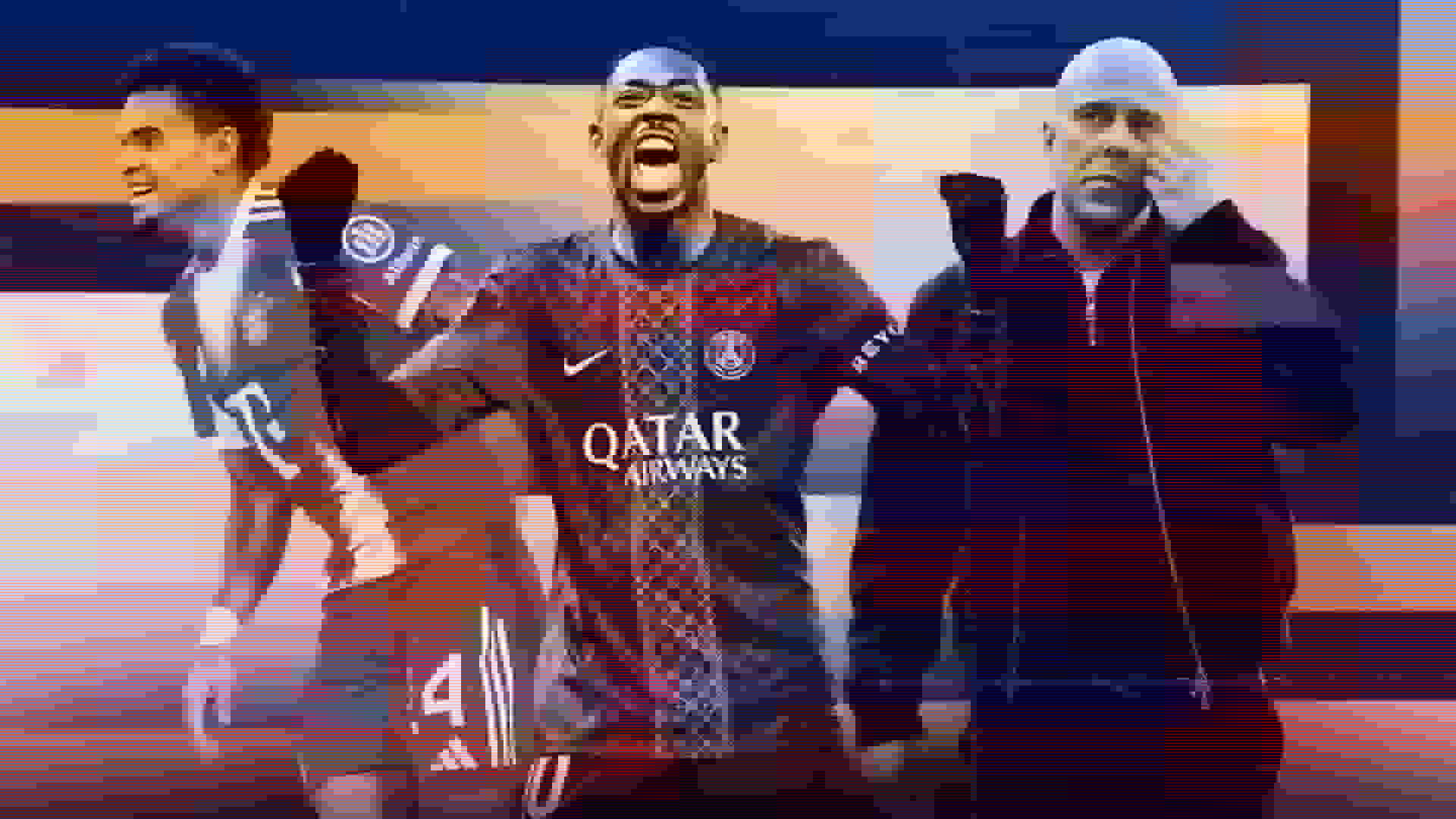
Infantino

Translated by

The "Fifa Gate" spectre returns: war over digital footprints paves the way to oust Infantino

Gianni Infantino finds himself in an unenviable position. The FIFA president is under fire from UEFA and a number of domestic federations, all determined to halt his project to sell off part of the World Cup tournament.

"Foot Mercato" published a lengthy report today weighing up Infantino's position and the possibility of his exit in the coming months over the "FIFA Forward project" scandal.

UEFA had already forced Infantino to abandon his plan to set up a commercial structure that would draw private-sector investors into future FIFA competitions. Now they have opened a new front, demanding the immediate preservation of every document tied to the case.

The threat is a serious one. Europe's governing body is no longer talking about strategic disagreements or governance differences. It is hinting at the courts, arbitration and regulatory complaints.

 In its official notification to FIFA, UEFA asks for the preservation of emails, electronic documents, internal communications, financial offers, papers relating to investors, and all digitally stored information that could shed light on where the "FIFA Forward" project came from and how it was put together.

  • The resemblance to the "FIFA Gate" scandal


    Behind this request lies a pivotal question that could end Infantino's tenure: who really knew what, when, and how deeply were they involved? The real issue is no longer just why FIFA wants to open part of its commercial assets to private capital. It is how this idea was developed, validated, and presented to the 211 member associations.

    The matter now takes on the shape of an institutional investigation, one where every digital file could become evidence. Comparisons with the "FIFA Gate" scandal of 2015 are unavoidable, even if the two crises followed different mechanisms. Back then, American investigations into corruption networks and hidden payments brought down Sepp Blatter and inflicted severe damage on FIFA's image.

     This time the danger lies elsewhere: in governance, the concentration of power, and the way multi-billion-dollar reforms were allegedly prepared. Infantino's opponents pose a simple question. Did FIFA's administrative bodies take a full part in the process, or did some discussions happen behind closed doors?

     Should legal proceedings begin, several factors could prove decisive: the prospect of private sector investors arriving, the discussions with financial parties, and the economic forecasts surrounding the International Federation of Association Football.

     In this kind of conflict, the battle is not fought in courtrooms or boardrooms alone. It is waged on servers, in email records, metadata, and internal documents that allow a precise timeline of decisions to be rebuilt.

  • Advertisement
  • Cyberattacks: FIFA's nightmare


    This obsession with digital evidence comes at a time when sport has become a prime target for cyberattacks and influence operations. Modern football revolves around commercial, financial, personal and political data. That attracts cybercriminals and anyone looking to destabilise institutions.

    Major international competitions carry the most risk, given the money, global fame and diplomatic weight they bring together. Ahead of the 2026 World Cup, several cybersecurity authorities warned of fake FIFA websites, phishing campaigns, data theft and manipulation operations tied to the event.

     Football is not immune to any of this. In 2025, a cyberattack hit the French Football Federation and exposed its members' data. Recent studies suggest most sports organisations have been targeted at some point.

     There is no evidence of a hack or a massive leak in the Infantino case at this stage. But the mere possibility of internal documents surfacing could shift the balance of power completely. Leaked private correspondence, financial forecasts or communications with partners could turn a political crisis into a major institutional one.

    What FIFA fears more than anything is a "data scandal". Not a crisis fuelled by a traditional legal case, but one driven by the gradual emergence of internal documents that could expose the secrets of its controversial project.

    Look at the major cases of recent years and the most sensitive information often comes from traces left behind in digital systems. Preliminary contracts, correspondence with banks, strategic memos, revenue simulations, investor presentations, internal discussions: all of it could answer UEFA's questions.

    Here, the official notice sent to Infantino takes on a particular symbolic weight. UEFA explicitly warns that any destruction, deletion, alteration or disappearance of relevant documents could be considered theft of evidence.

  • And what about the law in all this?


    At an organisation as influential as FIFA, internal statements sometimes represent the last check on decisions taken at the highest levels. This struggle over evidence goes beyond the "FIFA Forward Enterprise" programme. It touches the very core of how world football is governed, and how a private organisation wielding global economic influence is held to account.

    Should the European football association or other parties decide to press ahead, they could lean on several European legal frameworks.

     Articles 101 and 102 of the Treaty on the Functioning of the European Union offer two potential weapons here.

     The first prohibits agreements and practices likely to distort competition. The second penalises the abuse of a dominant position. FIFA occupies a unique position, combining the roles of organiser of international competitions, regulatory body for world football, and manager of commercial assets worth billions of euros.

    European law can now examine this concentration of power, following the historic ruling of the Court of Justice of the European Union in the Super League case in December 2023.

    That court had previously stressed the need for sports bodies engaged in economic activity to abide by rules of transparency, objective criteria and oversight mechanisms when taking decisions that affect the market.

     Article 165 of the Treaty on the Functioning of the European Union may become a key argument for the opponents of FIFA's project. It enshrines the special status of sport within the European Union and defends a model based on its social, educational and cultural functions.

     Behind this struggle lies a clash between two visions of football. FIFA's critics can rely on the principles of good governance established by the Council of Europe through the 2014 Macolin Convention on the integrity of sport, which stresses the need for transparent mechanisms to protect competitions.

     Then there is the European regulation on foreign subsidies, adopted in 2023, which could come under scrutiny if investors benefiting from state support acquire stakes in commercial structures linked to world football. In 2015, investigators were searching for money. In 2026, opponents are searching for digital traces.

  • ENJOYED THIS STORY?

    Add GOAL.com as a preferred source on Google to see more of our reporting

    Add as preferred source on Google