
Are you 24 or older?

Help us verify your age by providing an honest response. This site contains gambling advertising for 24+.

Age-restricted content

You’re not old enough to view betting content. You’ll be redirected to the homepage.

alt
Michael Carrick Man Utd GFXGetty/GOAL

Translated by

Manchester United disaster: Carrick faces the questions everyone else has fled from

The defeat to Manchester City was not just another setback at the start of a season that was supposed to carry so much hope for Manchester United. It dragged back to the surface a set of old questions the club thought it had started to shed. When United lose to an opponent reduced to ten men before half-time, for the third time in less than ten months, you cannot pin the blame on a refereeing decision or a controversial goal.

Most of the noise after the one-nil loss at Old Trafford centred on the official apology from refereeing body PGMOL, who admitted an "error of judgement" over Erling Haaland's goal. Yet what is unfolding in the corridors at Carrington runs far deeper than that single incident.

Michael Carrick's problem is no longer a single moment or a refereeing call. It is the image of a team that has collected just four points from its first four matches, with only one win to show for it, and that came against newly promoted Ipswich Town.

Carrick had earlier refused to call four points from the first three games, including last weekend's meeting with Everton, a bad start. The coach now knows the reality is different. Four points from four matches falls well short of the expectations heaped on Manchester United.

"We do not need a break or a fresh start, we just have to move forward and return to the winning path," Carrick said after the City defeat. Time, though, does not appear to be on his side. Manchester United host Brighton in the League Cup on 16 September, then travel to Fulham just four days later.

You can discuss topics and news in greater depth in the "Kooora" forums

Carrick needs a clear reaction and a convincing performance at the very least. Otherwise the three-week international break turns into open season for questions and criticism about why the team fell apart at Old Trafford, according to "BBC Sport".

Three times in less than ten months, Manchester United have failed to handle an opponent playing with ten men from before the break. That is one of the most worrying signs. A numerical advantage should hand the stronger side more scope to dictate the rhythm, ramp up the pressure, exploit the spaces and turn the game into a relentless attack.

Against Manchester City, none of that happened. Phil Foden's red card proved the turning point, as City coach Enzo Maresca admitted afterwards. He also pointed to a striking tactical paradox: playing with ten men forced his side to drop back and shut down the spaces, robbing United of the weapon they lean on most, the counter-attack.

Maresca said: "They are a team that loves counter-attacks and exploiting the spaces behind the defensive line.. and when we played with ten men, we dropped back and waited for them, which prevented us from being exposed to counter-attacks or giving them spaces behind us. That is why the match became more difficult for us and for them alike."

And so one of the big questions lands squarely on Carrick's desk. Does Manchester United have the tools to unpick a team that closes the spaces and drops deep, or does this side still rely far too heavily on the gaps its opponents leave behind?
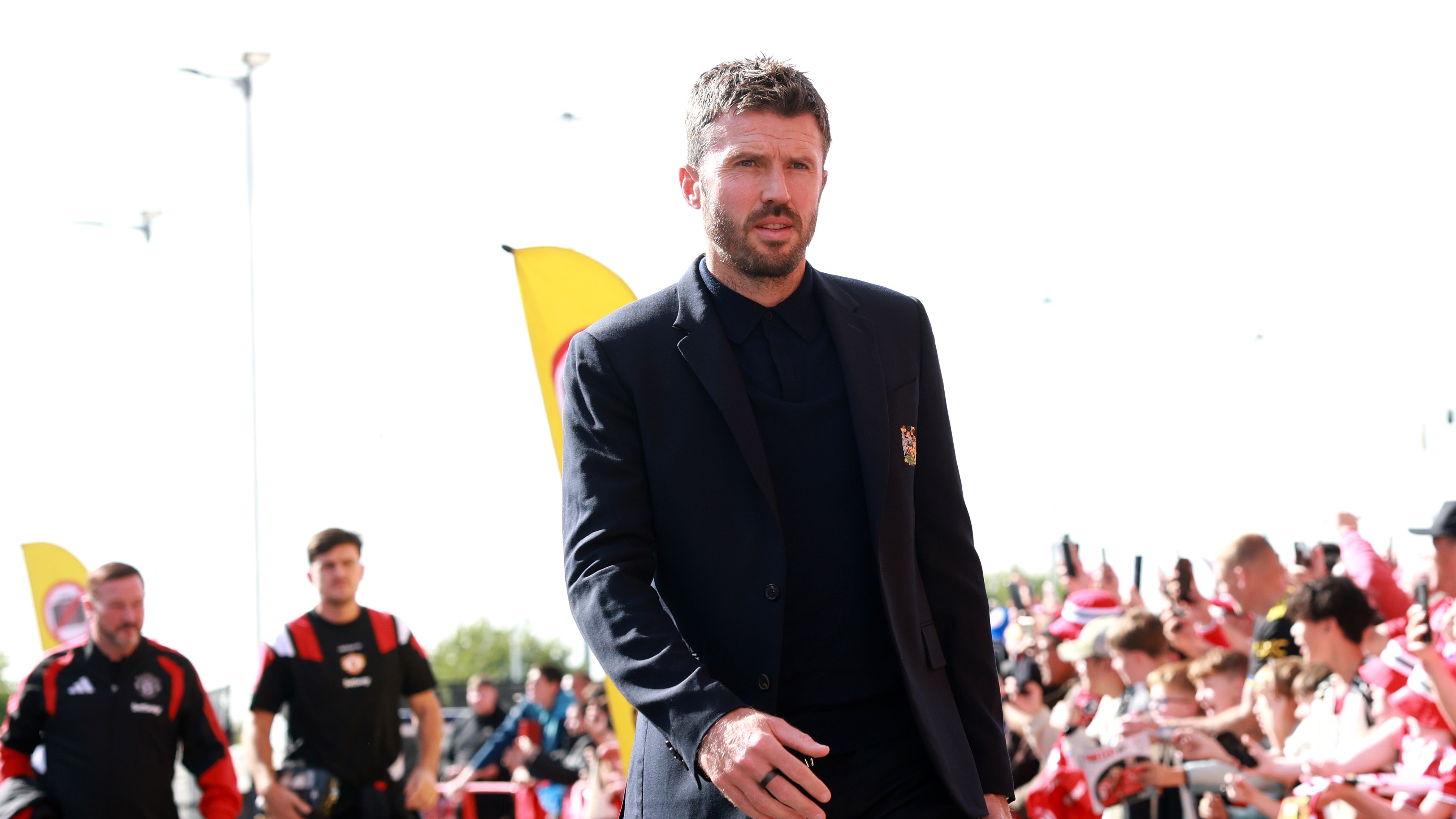
  • 마이클 캐릭 (Michael Carrick)Getty Images

    Has United succeeded in building the team Carrick wants?

    Since José Mourinho arrived at Manchester United more than a decade ago, the team has thrived when spaces open up in front of them, particularly in transitions and counter-attacks.

    Ole Gunnar Solskjær tried to change all that. He never fully succeeded in shifting the team towards a different identity.

    The same pattern recurred, to varying degrees, with Erik ten Hag and Rúben Amorim. Both arrived at Old Trafford off the back of domestic successes built largely on teams that dominate matches and impose their style on opponents.

    Carrick, as a player, was the type who preferred to keep the ball and avoid losing it. Naturally, he wants to pass that philosophy on to his team. But having the ball is one thing. Keeping it against an organised, deep-lying opponent is another entirely.

    Possession alone guarantees nothing. It demands players with vision, skill and the ability to move in tight spaces, plus a system capable of breaking down a defence that stays compact and shuts off the channels for attackers. That is precisely the test Manchester United appear to have failed so far.


  • Advertisement
  • Manchester United v Sabah FC - UEFA Champions League 2026/27 League Phase MD1Getty Images Sport

    £155 million: where is the impact of the new signings?

    Manchester United built their summer around one clear priority: fixing a midfield that had failed them for seasons. They spent around 155 million pounds sterling to get it right. So far, the return on that outlay has been thin.

    Youri Tielemans is yet to rediscover his fitness and his best form. Carlos Baleba hasn't kicked a ball for the club. Andre Santos, meanwhile, lost his place after the opening match against Hull and watched the Manchester City game from the bench without featuring. All that money, and precious little to show for it on the pitch.

    Nor are the doubts confined to midfield. Luke Shaw's run of consecutive Premier League starts stopped at 41, yet no new left-back arrived, despite most observers expecting United to strengthen the position.

    Up front, the picture was just as telling. Carrick turned to Joshua Zirkzee, a player available for transfer all summer, ahead of Marcus Rashford with just seven minutes left. It laid bare how limited his options really are.

    Two substitutions. That was all United made across the entire match. Put every detail together and one question is fair to ask: was this squad really built to play the way Carrick wants?


  • Manchester United v Manchester City - Premier League 2026/27Getty Images Sport

    Bruno Fernandes: the player Manchester United cannot do without?

    Bruno Fernandes represents another issue that cannot be ignored. The Portuguese captain delivered one of his finest seasons ever last term, scoring nine goals and providing a Premier League record 22 assists. Both the PFA and the Football Writers' Association crowned him Player of the Season.

    This season tells a different story. Fernandes has scored three goals and provided one assist so far. Those figures look decent enough, but the drop in his creative output isn't the only worry.

    His overall impact on matches has faded too. Against Manchester City, some observers spotted clear signs of fatigue in the player, which raises another question about how Carrick is managing his captain's workload.

    Fernandes had featured in the Champions League clash with Azerbaijan's Sabah. Modest opposition by the tournament's standards, granted, and you could understand Carrick wanting to avoid any risks, especially with United returning to Europe's most prominent competition after a two-year absence.

    The problem lies elsewhere. United led 3-0 at half-time, and Carrick knew only three days separated that match from the trip to face Manchester City. Even so, he kept his captain on the pitch for the full ninety minutes, having already used all five of his available substitutions.

    Fernandes is now in the final year of his contract, with United holding the option to extend it until the summer of 2028. Leaning on him so heavily raises real concern. If the team can't stay balanced without its best player, then any dip in Fernandes's level or a bout of fatigue could leave United facing a far bigger problem.


  • ENJOYED THIS STORY?

    Add GOAL.com as a preferred source on Google to see more of our reporting

    Add as preferred source on Google
  • 마이클 캐릭 (Michael Carrick)Getty Images

    Carrick faces his toughest test: does he deserve the trust?

    Manchester United handed Carrick the job permanently last May on a two-year deal, and the decision rested on what he had produced during his spell in temporary charge following Ruben Amorim's sacking. He steered the team to 12 wins in 17 matches. That record gave supporters hope he was the man to restore stability to Old Trafford.

    The appointment also invited comparisons with Ole Gunnar Solskjaer. The Norwegian earned the permanent role after strong results during his own temporary spell in 2019, only for questions to creep in about whether he could take the team to the top.

    For all the criticism that trailed him, Solskjaer remains the only Manchester United manager since Sir Alex Ferguson to finish in the top three in two consecutive seasons. That is the danger now facing Carrick.

    Good results in a caretaker stint are one thing. Sustaining that level across a full season is another entirely: the injuries, the transfer market, the weight of fans and media, the decisive calls in the big matches. Until Carrick answers those questions on the pitch, the debate over whether he belongs among the elite will rumble on.


  • Manchester United v Manchester City - Premier League 2026/27Getty Images Sport

    Why did Carrick not push to settle the match?

    The most pressing question after the clash with Manchester City concerned what happened once the visitors went down to ten men. Did Carrick really try to exploit the situation and launch a decisive attack to finish the match? The manager felt his side had been the better of the two in spells.

    He said: "I think we had the initiative to some extent, particularly in the second half. Before they scored their goal, I felt we were the better side. And I thought we could improve our performance compared with the second part of the first half, and I expected us to come out after the break and build attacking momentum."

    Carrick pointed to a ball that rebounded off the post, insisting the flow of the match was going as he had wanted before the goal. But he ultimately admitted the team had not been decisive enough. "We could have finished the match better, and we could have been more creative," he said.

    That one sentence perhaps sums up the whole problem. Manchester United had periods of control but never turned them into a genuine advantage. They gained a numerical superiority yet failed to exploit it. They had the ball but created little danger. They spent heavily in the transfer market, too, and the new signings have yet to leave their mark.


  • Manchester United v Manchester City - Premier League 2026/27Getty Images Sport

    Questions abound, and time is running out

    No one is talking panic inside Manchester United just yet, and Carrick has ample time to correct course. The trouble is that the questions facing his team are nothing new.

    How does United deal with an opponent who closes down the spaces? Are the summer signings really enough? Does Carrick have the alternatives to change matches from the bench? Does the team lean on Bruno Fernandes more than it should? And can the manager turn his possession-based philosophy into effective attacking football?

    Then comes the biggest question of all. Is Carrick really the man to return Manchester United to where the club and its fans want to be? That answer will not arrive in press conferences, nor in justifications, nor in refereeing apologies. It will come on the pitch.

    Brighton await in the League Cup, then Fulham in the league, before the long international break. Carrick now faces an opportunity that admits no delay.

    Losing to Manchester City might be just one defeat in a long schedule. But the manner of it dragged questions everyone thought were dead and buried back to the surface.

    Simply asking his team to "move on" is no longer enough. Carrick must provide clear answers to questions that have become all too familiar at Old Trafford.