England Overachievers GFXGOAL

Just the start for the Lionesses: England overachieved in Women's World Cup despite final disappointment

When the referee blew for full-time at the end of Sunday’s Women’s World Cup final, the scenes were predictable but heart-wrenching and heart-warming all the same. You’ve seen it before - while one team drops to their knees and considers what could have been, the other celebrates wildly at having achieved a lifelong dream. On this occasion, the former was England and the latter was Spain, two teams that, in truth, not many would have foreseen going all the way to the end in this tournament.

Spain’s off-pitch chaos is well-known by now. After last year’s defeat in the quarter-finals of the European Championship, the players called for change, and when they didn’t get it in a satisfactory fashion, 15 of them withdrew from selection. While a small handful returned for this World Cup, 11 stuck by their decision and, sadly, that sacrifice meant they were not part of Sunday’s historic triumph. That La Roja still became champions of the world is a nod to just how much depth is in their player pool.

England also came into this tournament missing several top-quality footballers, albeit in very different circumstances. Beth Mead, Leah Williamson and Fran Kirby were all ruled out of the World Cup through injury, three key pieces of Sarina Wiegman’s success as head coach of the Lionesses. With starting No.9 Ellen White retiring after last year’s Euros win and Jill Scott, one of the most valuable characters in the group, also choosing to hang up her boots, Wiegman had a fair bit of change to deal with in the year between the two tournaments.

In the same half of the draw as two-time champions Germany, a rejuvenated France, co-hosts Australia and Olympic champions Canada, there weren’t many who had them going beyond the last eight, really.

So while Sunday’s defeat will have hurt a whole lot, and they were so close to the ultimate glory, when the dust settles, England should be proud of their journey to a first ever Women’s World Cup final. After all, it’s more than most anticipated this team achieving.

  • Alessia Russo England 2023Getty

    Finding a new No.9

    During the Euros last year, Wiegman found a formula in the No.9 role that worked a treat. White would work hard from the start and tire out the opposition defenders, and then Alessia Russo would come off the bench and bring new energy and a new threat.

    It wasn’t White’s greatest tournament in terms of goalscoring, but her role was important and allowed Russo to rack up four of her own efforts along the way.

    When White retired after the Euros, then, Wiegman had a problem to solve. She did it by absorbing Russo into the starting XI and it worked early on, with her scoring in both of England’s first games after the tournament. The goals, though, soon dried up and there were questions about whether she was the right player to lead the line for the Lionesses.

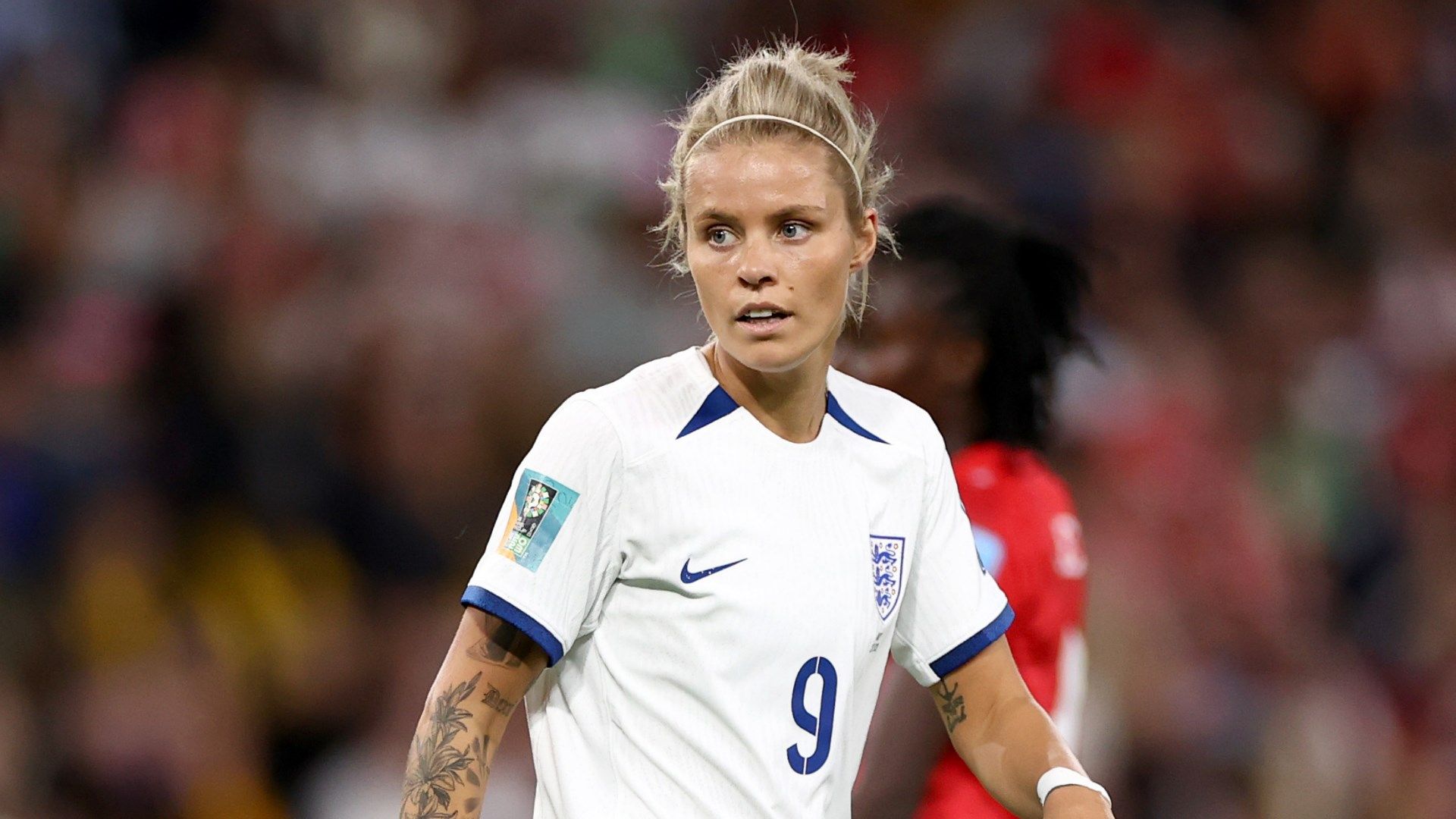
    Rachel Daly’s outstanding form as a striker for Aston Villa was putting her under pressure in particular, the 31-year-old netting 22 times in 22 league games last season, as was the purple patch Bethany England was having following her January switch to Tottenham.

    Yet, despite handing opportunities out to Daly on several occasions and seeing her take them, Wiegman largely kept her faith in Russo – a talented footballer, no doubt, but one that was not scoring enough goals for England to be a World Cup contender.

  • Advertisement
  • Rachel Daly England Women 2023Getty

    Still no left-back

    Another significant problem this team had – and still has – concerned the left-back position. It was Daly, as a striker-turned-defender, that operated in the role throughout the Euros, and while she did a fine job adapting, she was understandably limited defensively and not maximised in an attacking sense, either.

    With her performing exceptionally as a striker at club level, Wiegman needed to move her up and the pitch and that she did, re-opening the left-back problem.

    In February, it looked like the solution could be to play Alex Greenwood there, the left-footed centre-back who had been a full-back in previous years. But when Williamson suffered an ACL injury in April, Greenwood was needed in a central area.

    Wiegman had a number of versatile defensive options at her disposal in Jess Carter, Esme Morgan and Niamh Charles, the former two able to play across the whole back line while the latter can be a full-back on either side. She trialled Carter there in April, then, but the friendly defeat to Australia – Wiegman’s first as England boss – saw the Chelsea star exposed massively.

    It was a massive area of weakness coming into this World Cup.

  • Ella Toone England Women 2023Getty

    Loss of central creativity

    And then there was Kirby’s absence. Though a player that England have probably never got the best out of, her ability to produce a moment of magic has been a huge miss for the Lionesses during the last 12 months, while she has been plagued with injuries.

    During the Euros, Ella Toone was often her replacement off the bench, and so when the Chelsea star was absent, Wiegman brought her into the starting XI instead. Like Russo, it appeared to work with ease at first. But then Toone’s form dropped, something that’s perhaps not a surprise given the lack of rest she’s had for club and country in the past year, and her relative inexperience at the top level.

    With few other natural options available and no possible alternatives really trialled, it wasn’t incredibly apparent where those playmaking passes and moments of magic were going to come from at this World Cup. Add that to a lack of goalscoring form from Russo and England came into the tournament having scored once in open play since February.

  • Sarina Wiegman England 2023Getty Images

    Best coach in the world

    But Wiegman proved that she is the best coach in the international game when she solved all of this, to an extent, with a change of formation. The 3-5-2 set-up had never previously been seen in her tenure, but that’s how the team lined up in their final group-stage game, a 6-1 win over China, and from there on out.

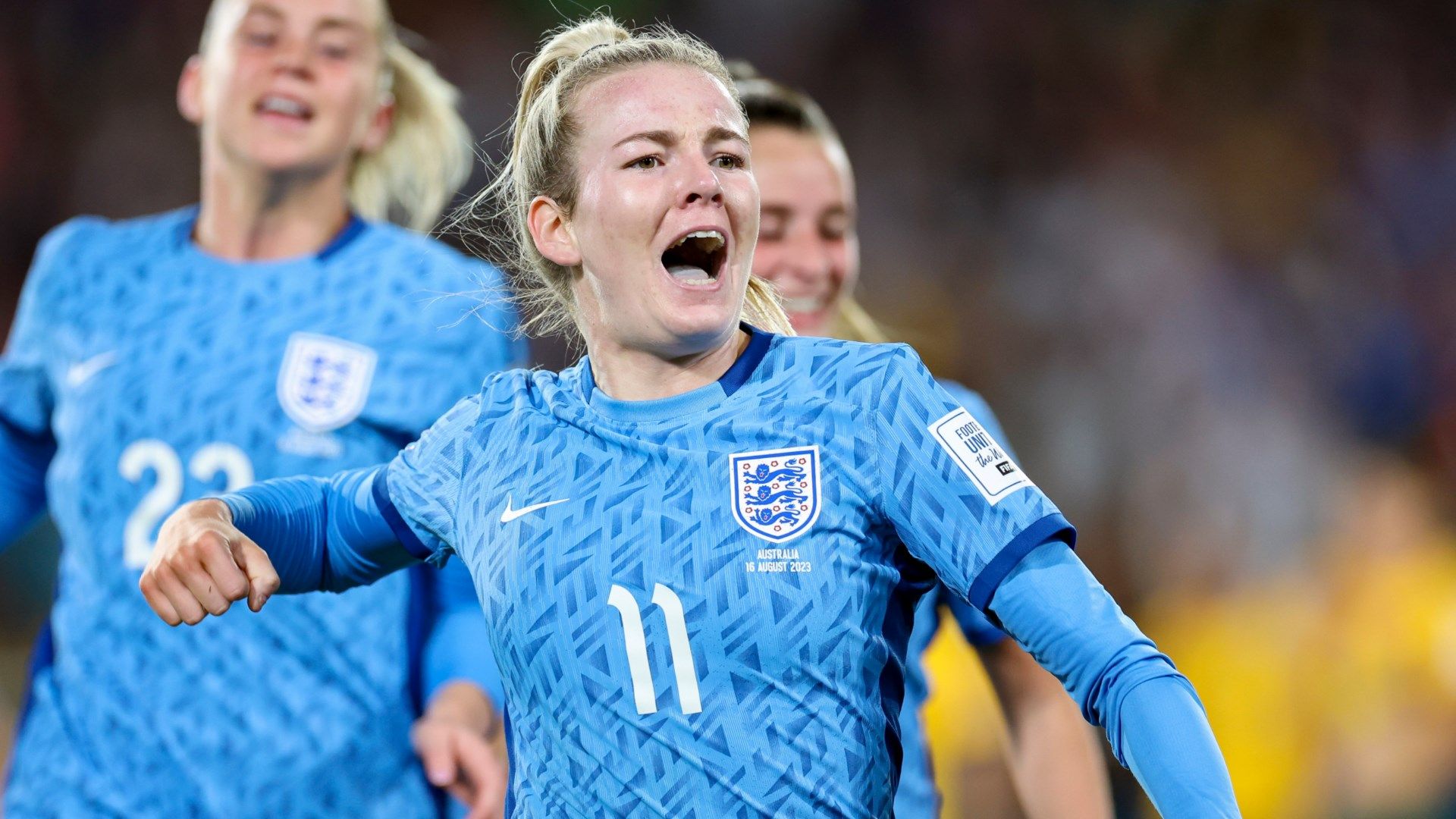
    It fixed so many of England’s problems. The issue in the No.9 role was relieved by a front two, which made the Lionesses more potent; the lack of a left-back was covered by a rock solid back three and the hard work of Daly at wing-back; and the decision to move Lauren James into the No.10 proved magical, with her the star of the group stages.

    Huge credit has to go to the players for how successful the system was, too. Several of them were moved to roles they were either completely new to or not particularly familiar with, but they adapted excellently, using all their experience and talent to do so.

    It wasn’t just in that moment of the change, either. When Keira Walsh was stretchered off against Denmark, Katie Zelem came in for her first England start and was superb. When James was sent off in the last 16 against Nigeria, Toone returned and put her patchy form behind her to score a stunning goal in the semi-finals against Australia.

    These players stepped up time and time again when it was needed on this run to the final, just as their coach did.

  • Lucy Bronze England Women 2023Getty

    Five games of practice

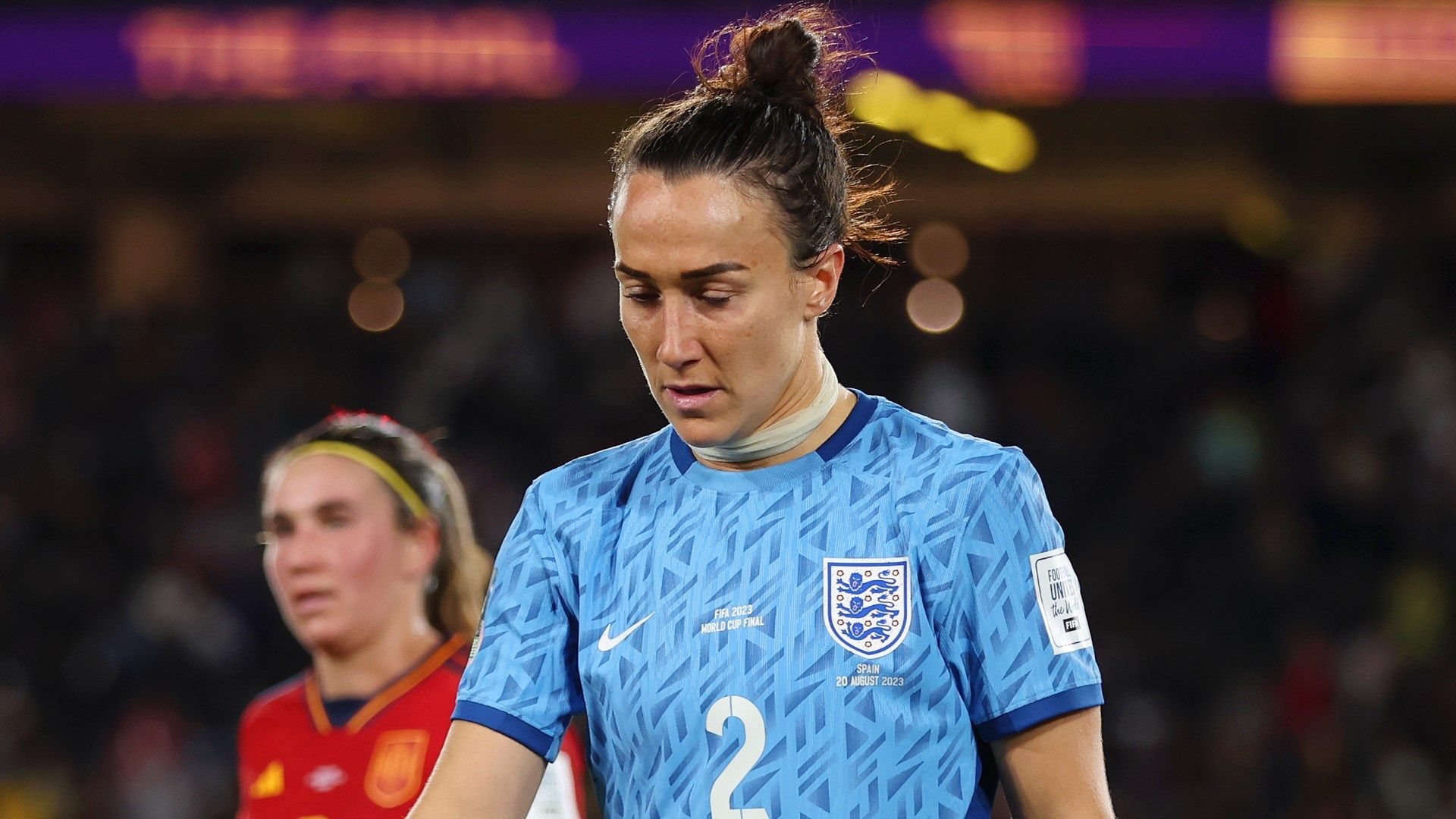
    In the final, flaws in the system were absolutely exposed. Spain got in behind England’s wing-backs time and time again, and that was how they won the game, with the only goal coming from La Roja doing exactly that.

    But was that so surprising? It was the Lionesses’ fifth match in this shape, their fifth match with these new relationships on the pitch and several players’ fifth match in a certain position. Spain, on the other hand, played their distinctive style that each and every one of their players have been playing since they entered the national team system as teenagers and used it to exploit England.

    At half-time, Wiegman went back to Plan A. England reverted to the 4-3-3 that they won the Euros in and went for it with several attacking changes. They just couldn’t find the breakthrough, though, and one can’t help but wonder if Kirby could’ve provided the key pass to unlock the Spain defence, or if Mead would’ve got on the end of some of the excellent crosses that Chloe Kelly in particular fired across the box.

  • England Women's World Cup 2023Getty

    Plenty to build on

    But the end result was only 1-0. Lauren Hemp hit the bar in the first half, while James forced Cata Coll into an excellent save in the second. England only lost this by fine margins, despite all of the absences, despite the change of shape and despite the challenges they had to overcome en route to the final.

    Moving forward, they can work on this formation, they can become more familiar with it, they can make tweaks and try different personnel in different positions. They can also welcome injured players back over the course of this next cycle, which includes the Olympics in 2024 and the Euros in 2025, if indeed the Lionesses qualify for both, with the new Nations League competition – another prize on offer – to determine as much.

    Has a team ever won the World Cup having completely changed formation midway through the tournament? Probably not – and England weren’t far off doing so.

    “We can be very proud of ourselves though it doesn’t feel that way at this moment,” Wiegman said afterwards. “That takes a little bit of time. The disappointment is the way you feel.

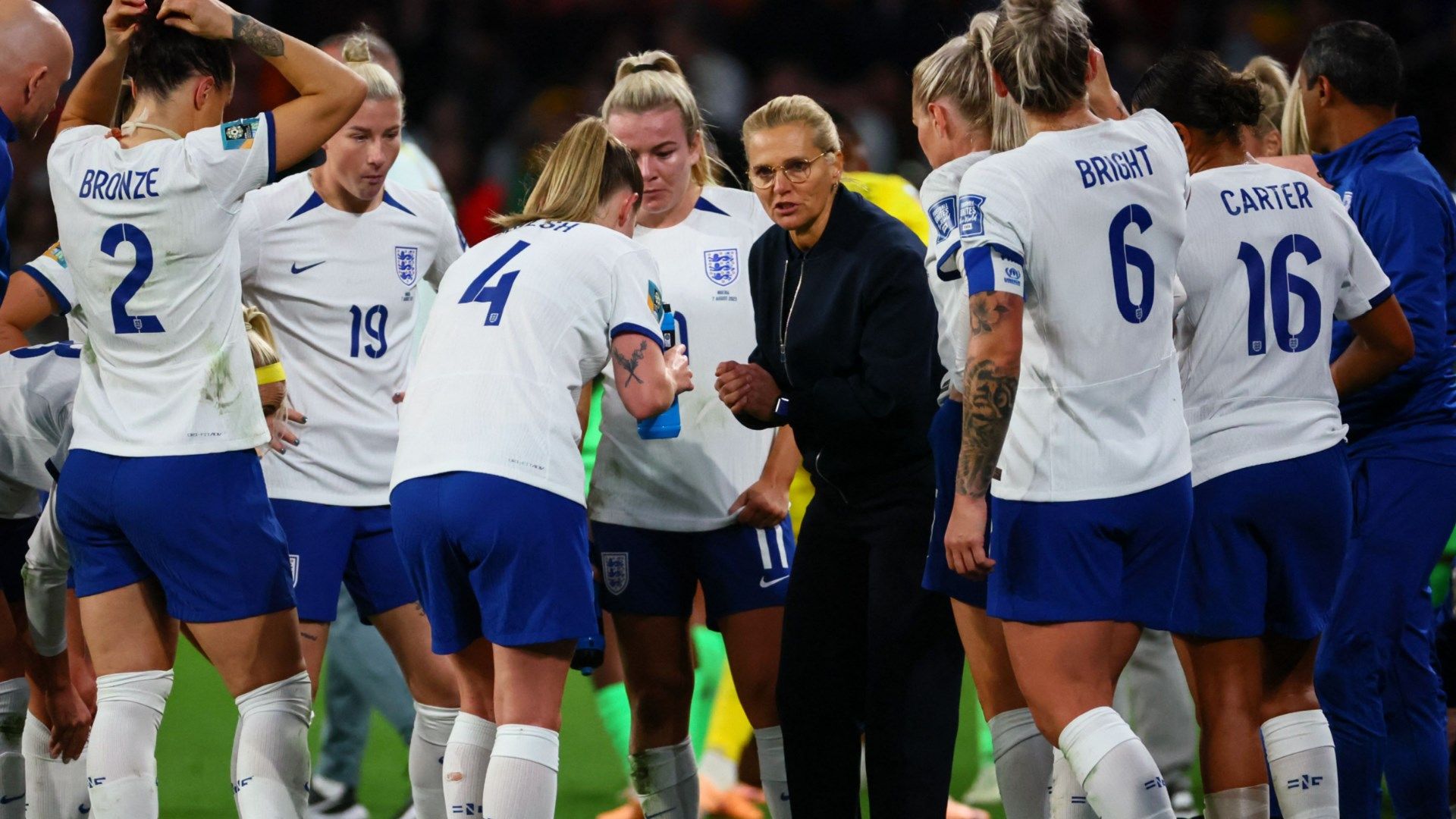
    “But everything we have done, how we have grown into the tournament, the challenges we had before the tournament, during the tournament and how we have adapted to situations… We have given everything that we could in this tournament and also in this game. I said [in the huddle that] we can still be proud.”

  • Lauren Hemp England Women 2023Getty

    Bright future ahead

    And there’s reason to be optimistic about what this group can achieve, too. Thirteen members of this squad are aged 25 and under, including five of the starting XI in the final and the two half-time subs, in Kelly and James.

    “I think we have a really strong squad,” Lucy Bronze, the most experienced member of the team, said afterwards. “I think we showed that with the fact that we have made a final and nearly won, nearly took it to extra-time with many players from Euros having retired or got injured. The starting XI tonight, in attack especially, was very young and they have got many, many tournaments ahead of them.

    “I think I am proud of what the girls have achieved, what we have achieved, but I think everybody that knows me knows that I only like gold medals.”

    With what England have shown over the past month, there’s plenty to say there could be more of those to come in the near future.