The club claims that the project could create as many as 92,000 new jobs, lead to the construction of 17,000 homes and encourage an extra 1.8 million people to visit the area each year. In financial terms, the club states that the whole project is worth £7.3 billion ($9.8bn) annually to the UK economy.
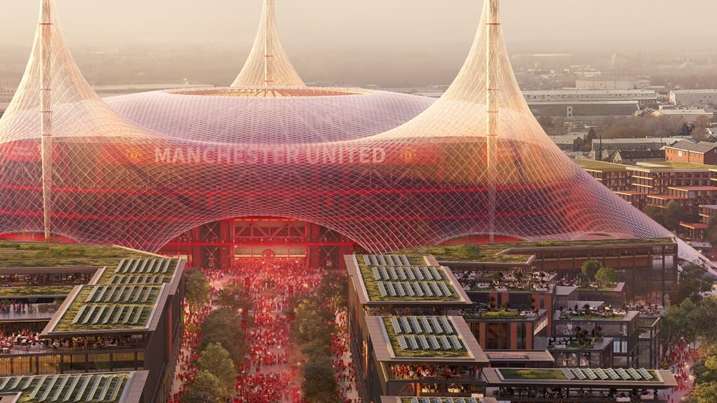
The rising cost of the land, however, has led to United rethinking aspects of the project. The Athletic reported last month United have drawn up plans without the vast canopy which was intended to cover the stadium, which would require them to purchase less of the land owned by Freightliner. The canopy alone was estimated to cost around £350m ($470m) - almost as much as Freightliner are demanding for the land.
While the canopy was mocked by rival fans as resembling a circus tent, it is difficult to escape the fact that the stadium would be less unique and less impressive without it. To Foster and Ratcliffe it was a crucial feature, making the stadium unique and visible from as far away as Liverpool and the Peak District.
Ratcliffe had revealed he had asked Foster "to build the world’s most iconic football stadium". He added: "It had to be a stadium which was recognisable around the world. We said to Norman that we would like a stadium where when anybody in the world sees that stadium, they’ll know it’s Manchester United.
"It’s more than a new stadium. Everyone knows the Eiffel Tower, everyone wants to visit. Everyone in the world will want to come visit this stadium. I think the design of the stadium is a 10 out of 10. I think it’s a really special design."