Real Madrid boring attackGOAL

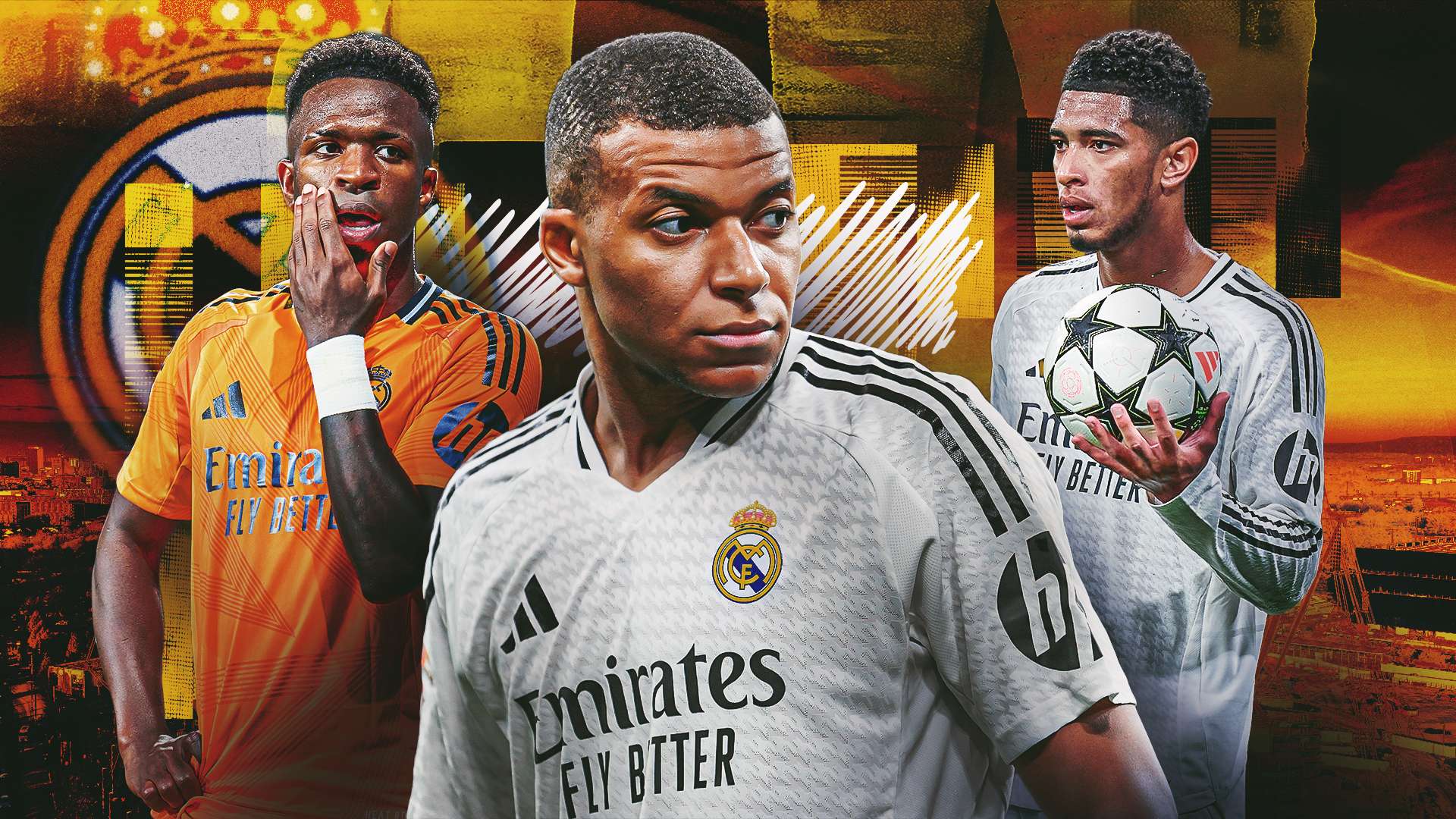
Who killed the vibe? Kylian Mbappe, Vinicius Jr, Jude Bellingham and Real Madrid's lack of chemistry is leading to Bernabeau boredom

Lionel Messi didn't really have to roll the ball sideways. It was February 2016, and Barcelona were leading Celta Vigo, 3-1. Messi, at the time, was on 299 career La Liga goals, and with a penalty to take, seemed set to hit the 300 mark. The routine looked normal, Messi staring the keeper down, hesitating slightly, before preparing to strike the ball. Instead, though, he rolled it to his right where Luis Suarez ran through and bashed it home, making it 4-1 while completing his own hat-trick.

The football world reacted surprisingly viscerally for something so innocent. A good number of fans - mostly gathered in the Madrid metropolitan area - dubbed it disrespectful. Most of the internet admitted it was just a good laugh. Eight years on, who cares? Barca went on to win 6-1 and Messi got his 300th goal as Celta were put to the sword.

Such was the case of the Messi-Suarez-Neymar-led Barca; they were immense fun. The goals came in spades, and they were all beautifully constructed - three players, moving off each other, equally happy to score as to assist. They all knew that, somehow, they would find the net, as long as this fluid system continued to tick.

The same can be said for other great attacking trios of the modern era. Roberto Firmino, Mohamed Salah and Sadio Mane at Liverpool; Cristiano Ronaldo, Gareth Bale and Karim Benzema at Real Madrid. Even Wayne Rooney, Carlos Tevez and Ronaldo at Manchester United.

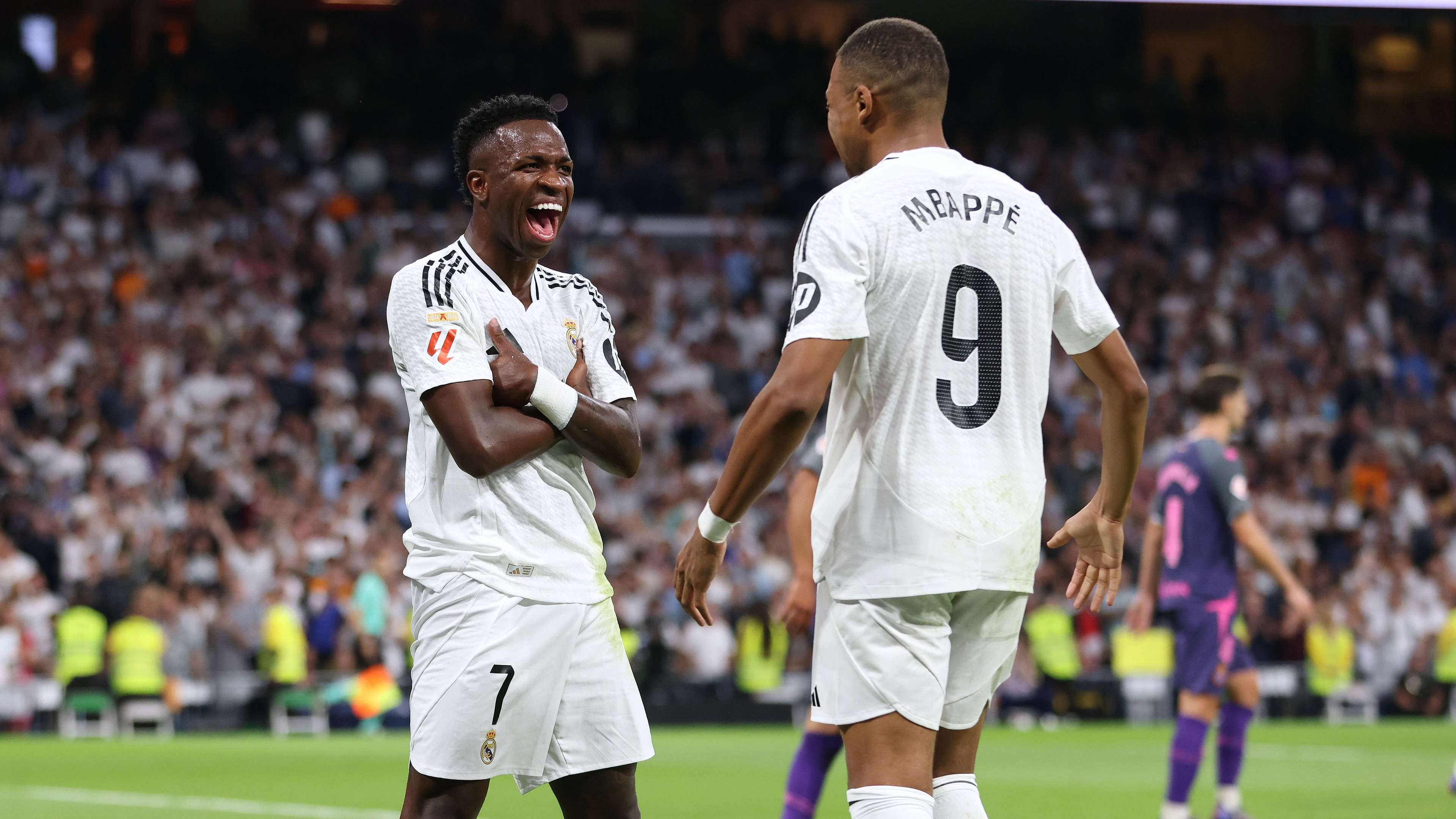
The current iteration of Real Madrid, however, don't have that same zip. In Kylian Mbappe, Jude Bellingham, and Vinicius Jr, Los Blancos have three of the most gifted attacking players in the world at their disposal. But that trio is yet to gel, and instead are a group of individuals lacking the kind of chemistry and sacrifice that will be needed to turn this very good team into a great one.
  • Real Madrid CF v RCD Espanyol de Barcelona  - La Liga EA SportsGetty Images Sport

    Immensely-talented individuals

    There were always going to be some growing pains here. Even those who know little about football - and Madrid manager Carlo Ancelotti happens to know quite a lot - could tell that putting three supremely attacking players on the pitch at the same time would not guarantee success. It is, perhaps, more aligned with American sports than anything, with basketball's obsession with 'big threes' and star power over overall balance.

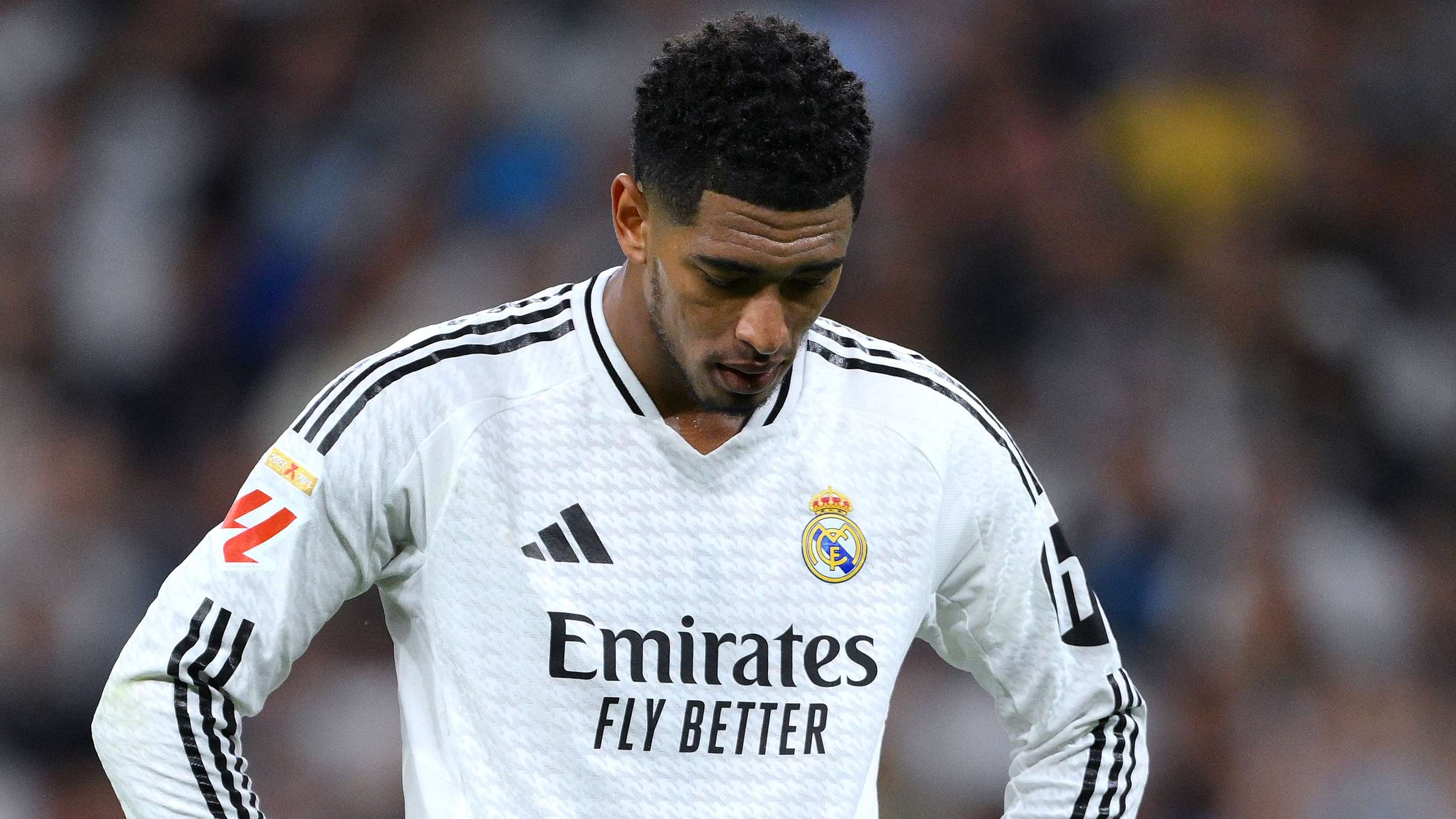
    And such has proved to be the case. In Vinicius, Mbappe and Bellingham, Madrid have three supremely-talented virtuosos. They all function in different ways; Bellingham ducks, darts and weaves through tight spaces, a six-foot, attacking midfielder evading defenders with the kind of ease of someone far shorter.

    Vinicius prefers his one-v-ones with green space to run into. Get the Brazilian at a full sprint, with the ball at his feet, and there isn't a more devastating player in the sport.

    Mbappe, meanwhile, is a player who doesn't need as many touches, but when he does, he prefers cuts and turns, quick changes of pace, and comically large stepovers. Give him half a yard, chances are the net bulges.

  • Advertisement
  • Real Madrid CF v RCD Espanyol de Barcelona  - La Liga EA SportsGetty Images Sport

    The problem

    The issue is, the trio hasn't quite learned how to piece it all together, and there is a basic tactical problem here. All three prefer to play on the left side of the pitch - albeit to different degrees. Vinicius is an inverted winger, while Mbappe an inside forward who thrives in the left channel. Bellingham's game is perhaps slightly more versatile, but he, too, is at his best on the ball as a left-sided No.8. Fundamentally, cramming three players into that small amount of space is bound to make things more difficult.

    And then comes the less tangible stuff; neither of the three is ever really willing to pass the ball. Bellingham's issues with that root back to Euro 2024, where the midfielder too often tried to do it all himself for England. His instinct is to dribble, and at times, it leads to miraculous things, last-minute winners, and memorable goals. At others, it can be a point of frustration.

    Vinicius, too, has the same problem. He is not necessarily averse to passing - the Brazilian has tallied double-digit assists for three straight seasons - but he likes to make a move first, beat a man, and then take advantage of a stretched defence.

    Mbappe, however, is the culprit-in-chief. His head is perennially down, his eyes always focused on the net - the stance of a footballer who only ever really wants to score goals. Piece it all together, and those three - individualistic in markedly different ways - are at times hurting Madrid more than they help them.

  • messi suarez neymar(C)Getty Images

    Learning from Barcelona

    And this is where Madrid may be forced to look elsewhere for answers. They were engaged in a number of tight battles for Liga titles with Barcelona over the last 15 years, facing the likes of Messi, Suarez, Neymar and others as the two best teams in the world fought for league supremacy every campaign.

    And it was appropriately tight. Both clubs went back-to-back, but neither won three in a row. Even as players changed, and tactics were tweaked, the level never really dropped. One of the best versions of Barca, though, was the iteration from 2014-2016, overseen by Luis Enrique. That team lacked the midfield fluidity that defined Pep Guardiola's sides of the late 2000s, but they were a fierce counter-attacking unit, led by the Messi-Suarez-Neymar trio.

    That triumvirate was as dynamic and creative as they come, and they willingly split the goals evenly. In MSN's first season as the Blaugrana'a attacking trident, they combined for 122 goals; Messi bagged 58, Neymar 39 and Suarez 25. The year after they were perhaps even better, as while Messi scored a meagre 41, Neymar found the net 31 times, while Suarez scored a European Golden Shoe-winning 59.

    Every attacking move was fluid, the ball moving from the feet of one great dribbler to the next. Yes, all three had the kind of talent to take on a whole side alone, but there was an understanding that pacing things - with the right midfield security - would allow the Blaugrana to batter teams right out of the gate.

  • West Bromwich Albion v Liverpool - Premier LeagueGetty Images Sport

    Lessons from Liverpool

    The same goes for another landmark European side: Jurgen Klopp's Liverpool from 2017-2020. That team was different from those in Spain - fiercely counter-pressing and heavily reliant on its full-backs for production. Still, it was also the story of supremely-talented individuals putting interest aside for the good of the team.

    Firmino is the embodiment of it all, an attacking midfielder-turned false nine, whose goal tallies decreased over the years while his assist and chance-creation numbers skyrocketed.

    Salah and Mane, incisive on either wing, shared a similar necessary unselfishness at times. The former finished his first season on Merseyside with 41 goals in all competitions, but he also added 14 assists. Mane was the same, hitting double-digit assists in two of those three campaigns. Yes, they were prolific goal-scorers, but they also knew when to move the ball, and how to pull a defence apart.

  • Real Madrid CF v Levante UD - La LigaGetty Images Sport

    Look to the past

    And if they don't want to look elsewhere for answers, Madrid can perhaps reflect on their most prolific trident in recent memory: the Bale-Ronaldo-Benzema triad that brought immense European success from 2014-2018.

    That team was undoubtedly built around Ronaldo, but there was a real zip to its attack. In 2015-16, when Madrid won the Champions League and lost the league title by just one point, the trio was at its buzzing best, combining for 98 goals and 34 assists in all competitions. Ronaldo scored 50 while Benzema bagged 28. And though Bale may have only ended the season with 19, he threw in 12 assists - and did it all in just 31 appearances.

  • Real Madrid CF v RCD Espanyol de Barcelona  - La Liga EA SportsGetty Images Sport

    Where to go from here

    Perhaps, more broadly, the solution will come with time. Mbappe, Vinicius and Bellingham, not to mention Rodrygo, are all still learning how to play with each other. Still, there is a difference between figuring out how to piece together a move, and actually wanting to.

    A look at Madrid's' 4-1 win over Espanyol on Saturday provides the most revealing example. Ancelotti's side were void of ideas in the first half as wave-after-wave of Bellingham dribbles and Mbappe scampers were nullified. A rare Thibaut Courtois mistake then led to them trailing 1-0 after 56 minutes.

    Vinicius, supposed to be given a night off, entered the fray seconds later, and his first action was to beat a man and pass to a surging Bellingham, who in turn set up a Dani Carvajal for the equaliser. The ensuing 30 minutes were a blur of quick movements and neat passes. There were still some rough patches, but the second and third goals were immaculately constructed by timely passes and clever flicks. Indeed, as soon as Madrid started to tick - and move the ball - they ran away with the result.

    After the game, Ancelotti admitted he was encouraged by what he saw, noting that "We played faster, moving the ball with more speed, with better movement... Our mobility is a very important weapon. The third goal was spectacular, a fantastic counter-attack. Little by little we're getting back to our best version."

    The Italian, it seems, knows the key here. Sometimes this sport is frighteningly simple. Get good players to actually pass the ball to one another and magic can happen.