Curacao World Cup qualify 2026Getty

'It’s magical’ - The fish farmer, the Dutch tactician and the 23-year project that carried Curacao to their first World Cup

Some have described Curacao's qualifying for the World Cup as a miracle, the kind of thing that does require belief in a higher power of some sort. And yes, there was something larger than life about that night in Kingston two weeks ago, when the Blue Wave secured a tie with Jamaica to advance to the 2026 tournament. 

FA president Gilbert Martina understands why the word keeps coming up. Curacao’s players pray before every training session and every match - not to a single faith or tradition, but as a show of unity. For them, belief is the starting point.

“We start with a prayer: praying to say thankful that we are living. Praying to say thank you for the journey ahead of us. Spirituality, religion, whatever you want to call it, that’s a key part of the team,” Martina told GOAL.

BIt worked. Not just that alone, of course. There are other dynamics that go into a winning team: tactics, performance on gamedays, perhaps a little bit of luck over the course of 90 minutes. For Curacao, prayer was an act of unification, a way for a squad of 26, representing a nation of just 155,000, to express their togetherness as they approached each day.

And their qualification, more broadly, required a bit of everything. Prayer? Sure. However, it was just as much about a sense of purpose, a genuine belief, and the right amount of targeted investment to propel a tiny nation into the 2026 tournament.

“I call it a divine journey. It’s magical. When everything aligns, the universe aligns with your objective, then magic happens.”

  • Gilbert Martina Getty

    'I love big dreams'

    Curacao sealed qualifying on Nov. 18, 2025. But for Martina, the process started in 2002. That’s when he was brought in, mostly in an advisory role. 

    He was a strange appointment at the time, mostly because he had no real history in soccer. Martina was a businessman and the CEO of a large insurance company. His degree was in chemical engineering, and he got a post-master’s degree in HR. But he was Curacao through and through - in a way that so many others aren’t. Martina was born and raised on the island and studied at the University of Groningen in the Netherlands before moving back home. That was a vital experience that so many other footballers would later have for the country. 

    He was also well placed to rake in some cash. Curacao didn’t really have a football association in 2002. There was a footballing culture, to an extent, but the island didn’t breed tons of top talent. And those that they did produce? Well, they moved somewhere else as youngsters and represented their adopted countries at the national level.

    Curacao, as a result, were an afterthought on the global stage. But for Martina, this was a chance to dream. So, Martina went about securing sponsorships and helped fund the federation. He wanted to qualify for a World Cup - no matter how far away that may have seemed at the time. 

    “From that moment, I believed, because I love big dreams. I love big plans. My grandfather used to say, ‘In every graveyard, you have excellent plans. ’ So this was not a plan to get into a graveyard. We had to make it happen,” he said. 

    Still, this was very much a part-time job. Curacao was not an independent nation and was still under the control of the Netherlands. And for every penny he managed to raise, there were plenty of barriers: poor pitches, a small player pool, even a lack of opponents. 

    Meanwhile, Martina went about his day to day work in a health insurance company. For a while, he was also invested in a fish farm. He dabbled in hospital advisory. He wrote, lectured, and invested. Next year, he is releasing a book. 

    Yet, he plugged away hard in the background. He raised some money here, invested a dollar there. Slowly, something was building. 

    “We don't have huge resources, like the Netherlands, like Germany, like Brazil. But size, resources do not matter when you go for a higher goal,” Martina said.

  • Advertisement
  • Curacao Gold Cup celebrationsGetty

    Proving themselves to the continent

    The big break was a political one. In 2010, Curacao achieved independence from the Netherlands. Although they are still beholden to the Netherlands in a number of political senses - defense, foreign affairs - Curacao, for all intents and purposes, are their own nation. 

    There were more important implications than football, of course, but it did open up some doors - not least official FIFA acknowledgement of the national team. They became recognized by football’s governing body in 2011, ranked at No. 151. CONCACAF membership, under their new name after independence, soon followed, and by August of that year, this nation of 150,000 was playing official games. 

    Not that they went too well at first. Infrastructure was poor, and even if Martina and an expanding FA chipped in, competing on the pitch was a real struggle. They won six games in four years from 2011-2014. In 2013, they played just two games. A Gold Cup qualifying win over Cuba on away goals, until relatively recently, was the finest footballing achievement in the country’s history. 

    Yet important work continued. The Curacao FA managed to convince some European, South American, and African talents to exercise their eligibility to play for the country. By 2020, this was a squad that featured players from the Eredivisie, Belgian Pro League, and Turkish Premier League. 

    “Our players for our sport have all been educated in the Netherlands and Europe,” Martina said. 

    Further successes followed. Curacao beat Jamaica in the 2017 Caribbean Cup - a clash between the four best sides in the region. That earned them qualification for the 2017 Gold Cup. The tournament brought limited success, as they lost all three group games. But in 2019, they showed that they could play, beating Honduras and Jamaica in the group stage, before losing to the USMNT in the quarter finals

    By then, something was clear: Curacao were legit.

  • Curacao fans Getty

    'It was a huge party'

    Qualifying for the World Cup, globally, is easier than it has ever been. It’s a question of math, really. Forty-eight teams make it to the tournament. There are more spots up for grabs. Some have criticized the initiative. Qualifying in CONMEBOL, for example, is much easier - with up to three extra spots up for grabs depending on seeding. But elsewhere? It’s just as tricky. 

    And in fact, Curacao should be nowhere near this thing. In truth, a few things went their way. The fact that three CONCACAF nations had qualified as hosts - Mexico, Canada and the U.S. - made for a lighter group phase. And their group itself was remarkably kind, with a struggling Jamaica their only real competition. 

    However, they still needed to pick up results. To make it all happen, Curacao appointed Dick Advocaat, an experienced Dutch manager who had coached extensively in the Eredivisie, Scottish Premier League, and Bundesliga. 

    And when Martina was appointed head of the FA for good in April 2025, he made it a priority to schedule as many fixtures as possible in the run-up to qualification this fall. 

    “Funding is very important, because this is very costly, and the Federation does not have that amount of money to sponsor and to cover all the costs. So bringing in sponsors was key. We played 10 games this year, and the majority of those costs were covered by two of our sponsors, one of them an airline,” Martina said. 

    The luck of the draw also meant that Curacao played back-to-back home fixtures in October. They knew that a duo of results against Jamaica and Trinidad & Tobago would stand them in good stead. 

    Oct. 10 was special. It’s Curacao's independence day, and this year, it marked 15 years since it became an autonomous nation. A win when they hosted the Reggae Boyz would have put them top of their qualification group. One of those cosmic coincidences - the very spirituality the team focuses on - might just come true. The buzz around the island was palpable, Martina said. He knew the fans would show up. But he had no idea how significant the support would be. 

    Ergilio Hato Stadium was packed. Some of the fans couldn't even fit in. And when Livano Comenencia, a former Juventus academy product, smashed one in from 30 yards in the first half, the crowd, which far outnumbered the 10,000 capacity of the stadium, was sent into raptures. They added a second and held on for a 2-0 win. 

    “It was a huge, huge party, a huge gift,” Martina said.

  • Curacao World Cup qualify 2026Getty

    Making the 'magic' happen

    7 is a lucky number, and in Curacao it holds even more significance, Martina explained. And when Curacao opened the November window by battering Bermuda, 7-0, Martina knew everything was sealed. He could feel it - as absurd as that seems.

    He was right. Trinidad did them an immense favor by holding Jamaica to a draw at home, and they went into the final game of the qualifying slate needing at least a tie to advance. They could have sat in, especially after Advocaat left the training camp due to personal circumstances. With no full-time manager in place, it would make sense for them to play for a point. 

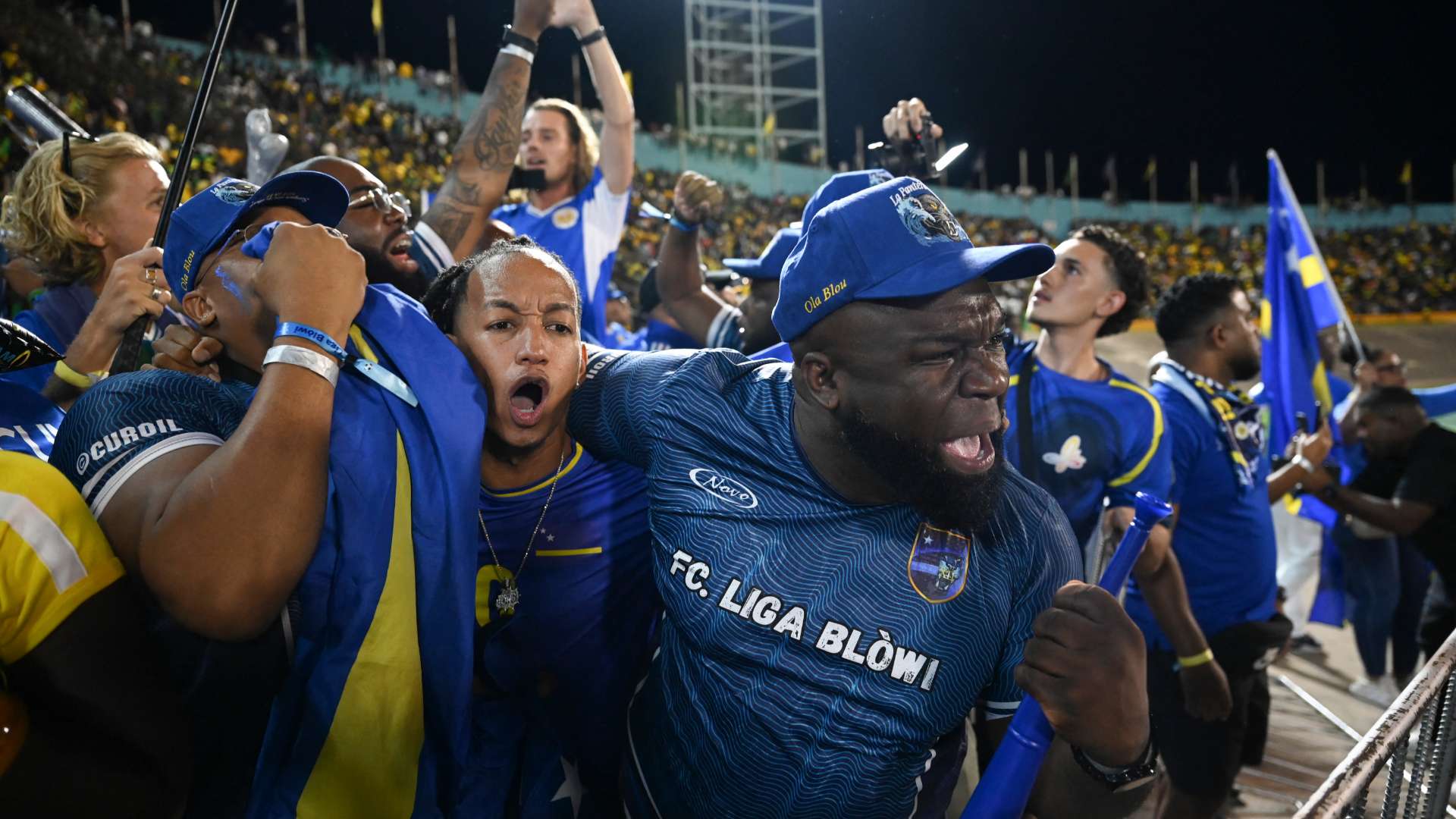
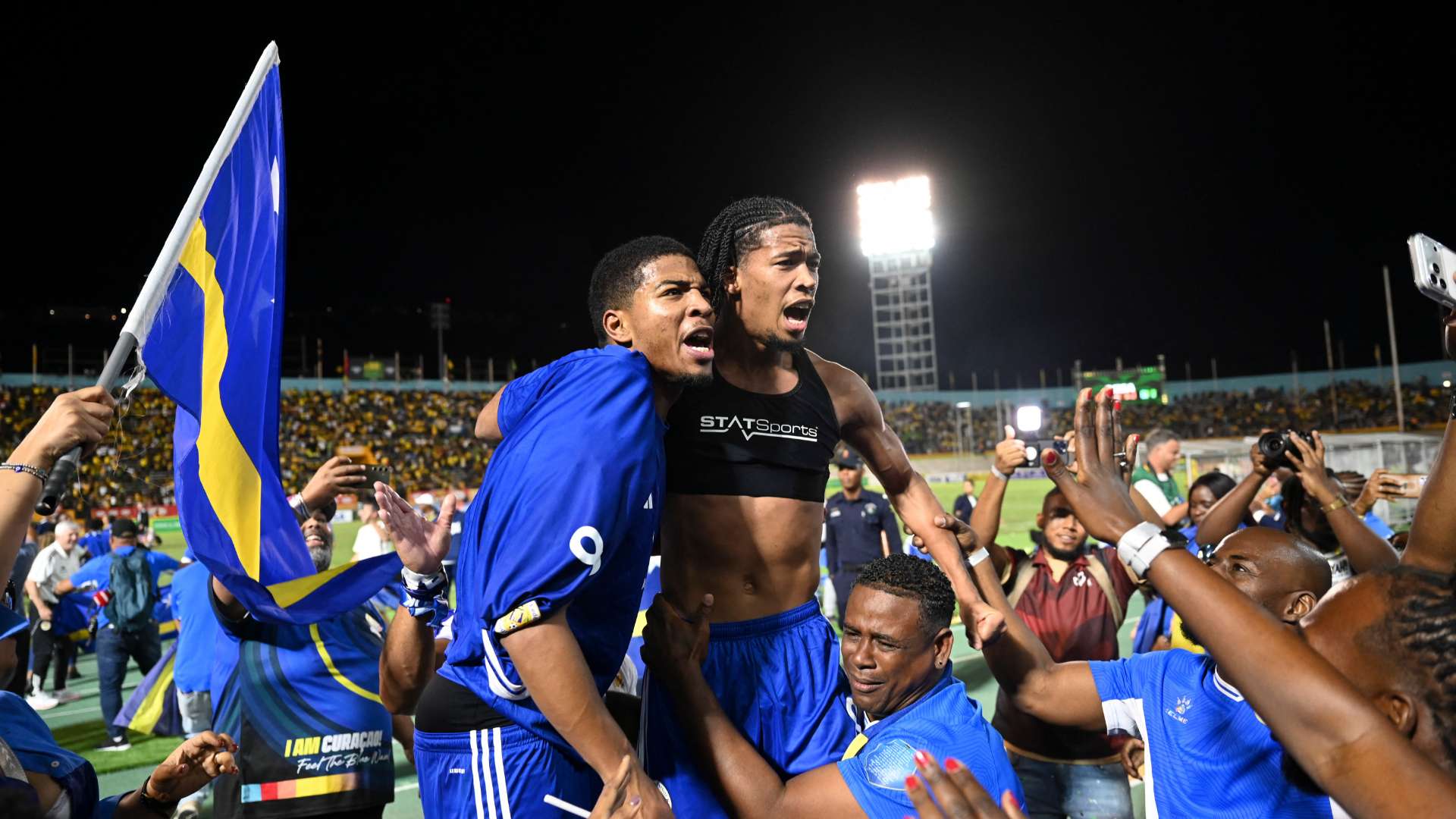
    Instead, they went for it, and earned a scoreless draw - even if they could have left Jamaica with three points. That was enough to seal the deal. A corner of Curacao fans jumped over the barriers and ran onto the track surrounding the pitch in Kingston. The players hugged and cried. The internet blew up. Curacao went unbeaten in qualifying, and became the smallest country - by both and landmass and population - to book their spot at the World Cup.

    Two weeks later, and Martina still gets emotional talking about that moment. It was simply magical, he insists. 

    “When you go for a higher goal, as long as you have the right mindset, the right attitude, and you really connect with that invisible force that is around, then the magic happens,” he said. 

    As for the tournament itself? Well, they don’t plan on being there to make up the numbers. This may already be an impossible achievement, but the journey doesn’t end here, Martina insists. He wants his side to be tested. After all, he believes in miracles. 

    In fact, he prays every day for them. 

    “We are not going to be a tourist. I can tell you that. I hope we have a good group with strong teams. I’m telling you, every big opponent - Germany, Brazil, you name it - watch for Curacao,” he said.