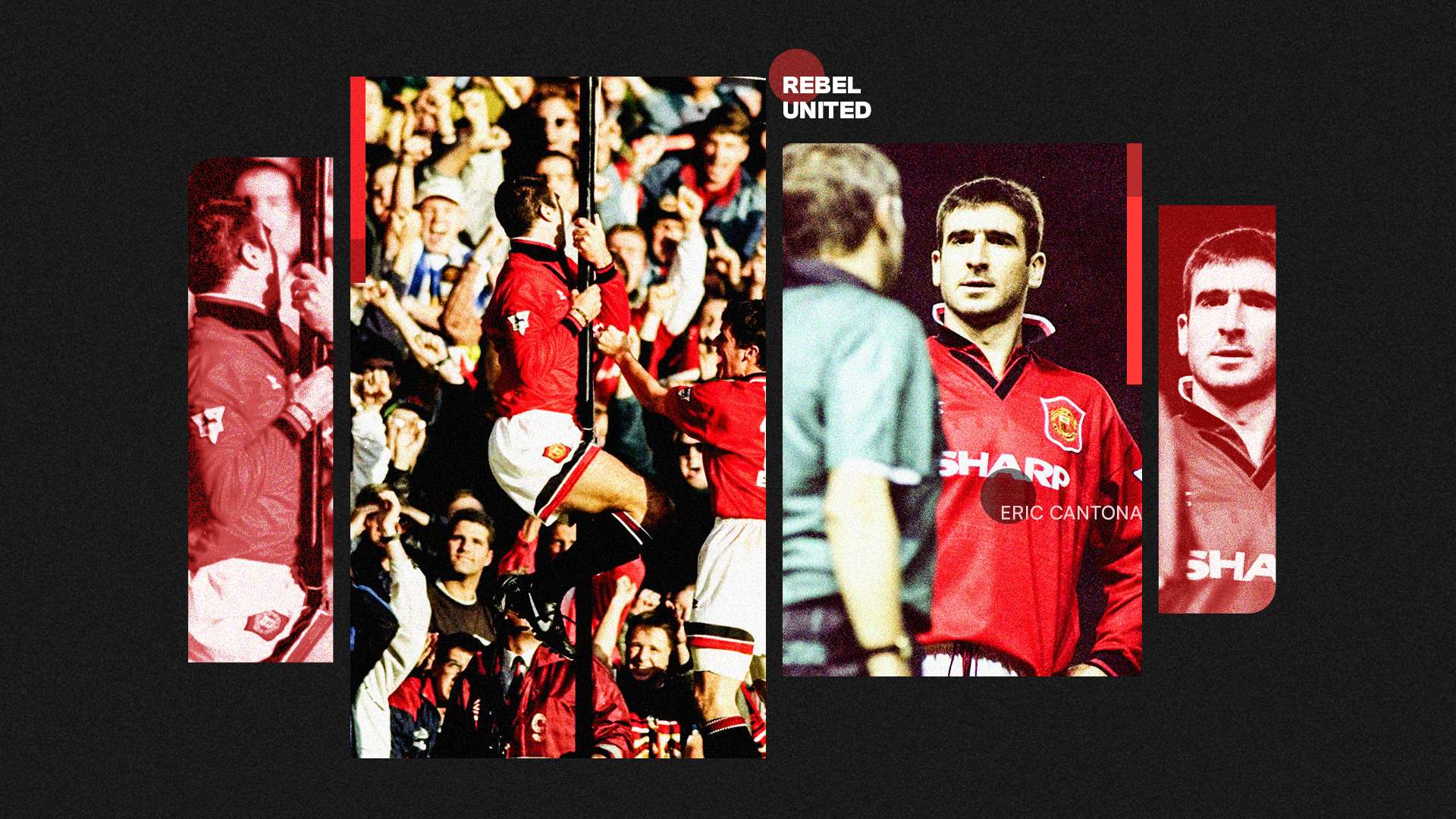
To this day, Cantona makes it clear through his actions that he is not a product; he is a person with rough edges.
"I don't play against a specific opponent. I play against the idea of giving up," he once said during his playing days, and that statement sums up Cantona's attitude. He was never easy to pin down. Not for his coaches, who were thrilled by his technical brilliance, his goal-scoring instinct and his leadership skills, but who were exasperated by his outbursts. Nor for the media or for the fans, who both adored and feared him.
Cantona, whose trademark as a professional was to wear his shirt with the collar turned up, was not a star in the conventional sense. And that despite being the first real superstar of the then-newly-founded Premier League. After winning the last English championship of the pre-Premier League era with Leeds United, he led Manchester United to their first title in 26 years in 1993 and to a total of four titles in five years.
Cantona inspired future United legends David Beckham, Paul Scholes, Ryan Giggs, Nicky Butt and the Neville brothers in their younger years, but he was not a classic role model. Cantona rejected the rules of the professional circus not out of a mere desire to provoke, but because he did not want to be as uniform as the rest of his colleagues. He was a rebel by conviction.