Man Utd Club World Cup 2000 GFXGetty/GOAL

Man Utd's controversial Club World Cup: FA Cup furore, David Beckham's sending off and how the Red Devils bombed in Brazil 25 years ago

It was early January at the start of the new millennium and normally Manchester United would have been training in sub-zero temperatures while preparing for an FA Cup third-round tie. Instead, they were in Brazil at the height of summer for the inaugural FIFA Club World Cup, then known as the Club World Championship.

Teddy Sheringham was diving headfirst into the sea; Gary Neville was playing beach volleyball with locals on the Copacabana; Mark Bosnich was acting out a mock medal celebration to wind up Dwight Yorke and Jaap Stam after beating them in a swimming race.

Phil Neville had insisted to fans at the team hotel that "we're not on holiday", but it certainly seemed like it to the Brazilian press, who asked Sir Alex Ferguson whether his team were taking the tournament seriously enough. "You've got the wrong impression if you think that," he retorted. Later on during his side's stay, Ferguson looked up from outside the team hotel to see his midfielder Nicky Butt flying above him on a hang glider.

The British media corps were even more appalled at the holiday vibes as United had taken the unthinkable decision to not participate in the FA Cup at all so as to be in South America. And so while United will not be partaking in this year's reimagined Club World Cup in the United States, their doomed venture in FIFA's very first edition of the tournament back in 2000 remains seared into the memory of the club, albeit for the wrong reasons...

  • Country in uproar

    It is one of the most bizarre newspaper front pages in memory. The Daily Mirror had canvassed the opinion of 14 people of interest with diverse positions of power, such as Prime Minister Tony Blair, cricketing great Ian Botham, famous film critic Barry Norman, a soldier from the Falklands War and the widow of a murdered headmaster. The subject matter? United's threat to drop out of the FA Cup in order to play in the Club World Cup.

    'Is there anyone left in Britain who does not think Man Utd should be in the Cup?' asked the headline above the slogan 'Save the FA Cup'. That front page is often revisited and ridiculed on social media, but it is a reminder of the shockwaves United had generated by choosing to not play at all in the FA Cup, which they had won a record 10 times and lifted the previous year on their way to completing the treble. And by winning the Champions League, the jewel in the crown, they earned themselves an invite to participate in FIFA’s brand new club tournament.

    Although it might not have looked like it as the players cavorted on the Copacabana in their swimsuits, United were in an unenviable position. They felt that they had to honour the invitation and play in the Club World Cup in order to appease the English FA, who were bidding to host the 2006 World Cup. Ferguson and chairman Martin Edwards felt a huge weight of responsibility for the team to play at the tournament, despite it coinciding with the third round of the FA Cup.

  • Advertisement
  • Man Utd CWCGetty

    'No-win situation'

    It is a wonder that the FA did not simply postpone their cup tie until later in the month. Ferguson, however, was concerned about player burnout and the effect it would have on his side in the title race.

    "We can't go for them all," he said. "We can't play in the FA Cup and in Brazil. That would be impossible. We're in a no-win situation here. The criticism we would have received if we hadn't gone would have been unthinkable - and that's a Scotsman speaking!"

    United's players felt deeply uncomfortable with the whole affair, as David Beckham later revealed: "We were looking forward to going to Brazil, looking forward to playing clubs from all over the world. But nobody was happy about missing out on the FA Cup. It didn’t feel right not to defend the trophy. Perhaps we could have been given a bye through to the fourth round while we were away and joined when we came back, I don’t know. That was for the FA and the club to sort out."

    As it turned out, United had nothing to fear as they ended up romping to the Premier League title, finishing 18 points clear of Arsenal. But not taking part in the FA Cup was a sleight from which the oldest knockout competition in the game's history has arguably never really recovered from.

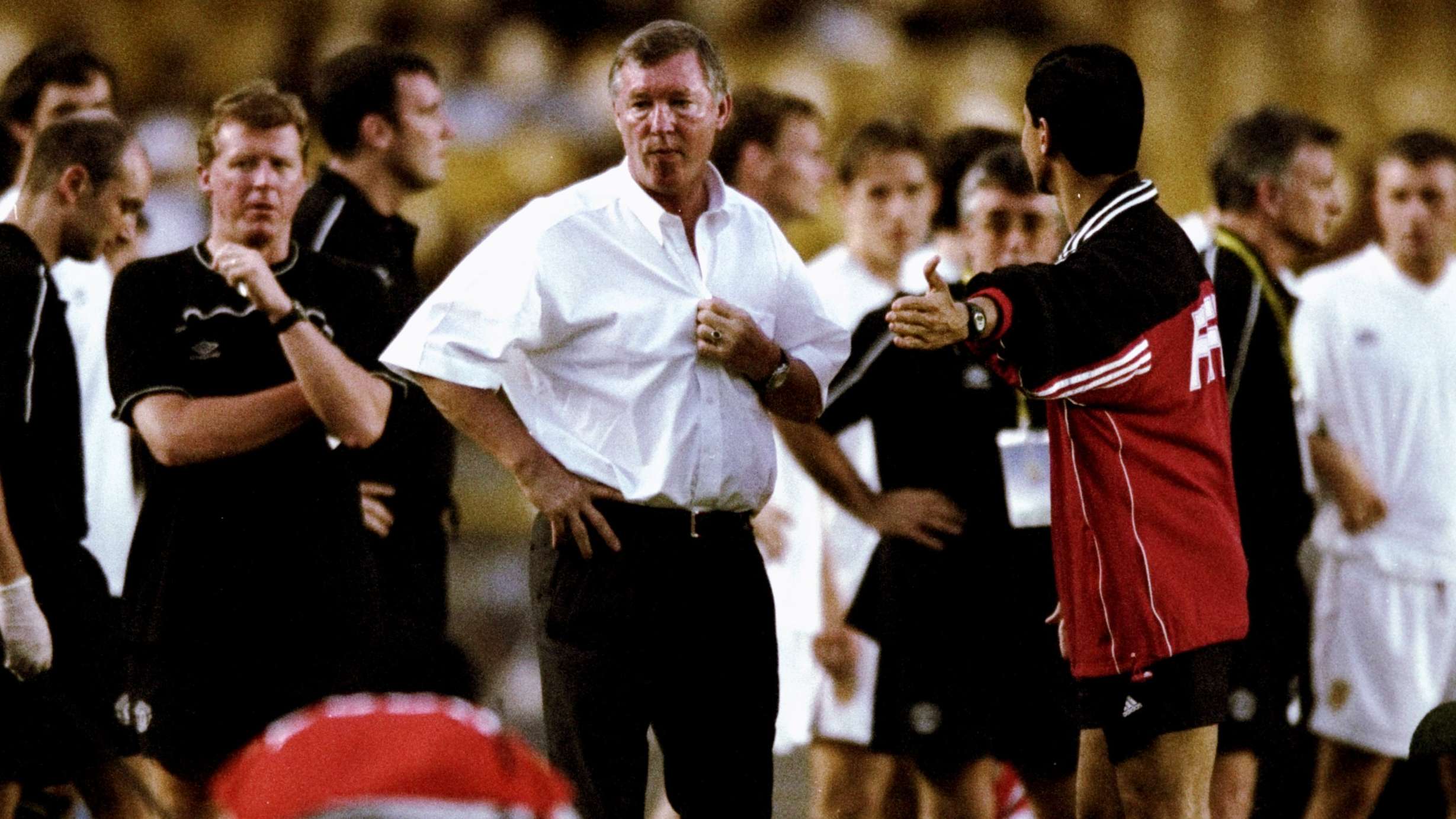
  • Sir Alex Ferguson Manchester United 2000Getty Images

    Ferguson's regret

    Whenever people ask why the FA Cup has lost its mystique, with teams now often rotating their squads to prepare for the next league game, United's no show in 2000 will always be brought up. And understandably so; if the biggest team in the country at the time couldn't be bothered to even enter it, then why should anyone else care?

    "It turned out to be a disaster for us," Ferguson later admitted. "We did it to help England's World Cup bid and that was the political situation. I regretted it because we got nothing but stick and terrible criticism for not being in the FA Cup when really, it wasn't our fault at all. The Football Association and the government felt that playing in this tournament would help England's bid to host the 2006 World Cup. There was a lot of undue criticism - but it was a great two-week break."

    As it turned out, the fact that United did play in Brazil hardly helped the World Cup bid, as England finished third out of the four hopeful nations, only earning five of a potential 24 votes in the first round of voting and just two in the second round, behind South Africa and eventual winners Germany.

    Ferguson, meanwhile, was wearing his rose-tinted spectacles when looking back so fondly on the tournament, given it turned out to be a truly humbling experience for his side.

  • David Beckham Manchester United 2000Getty Images

    Beckham's temper strikes again

    The local press painted United as arrogant from the off and felt that they were not giving the new tournament the respect it deserved. Still, the team were given a strong reception when they arrived at the airport in Rio de Janeiro. There was predictable fanfare for Beckham, with one woman telling a local newspaper: "If that Spice Girl isn’t careful, someone here in Rio is going to steal her husband!" There was also an unusual group who made the effort to greet United: Fans of Flamengo, the big rivals of Vasco da Gama who would be facing the Red Devils in Group B.

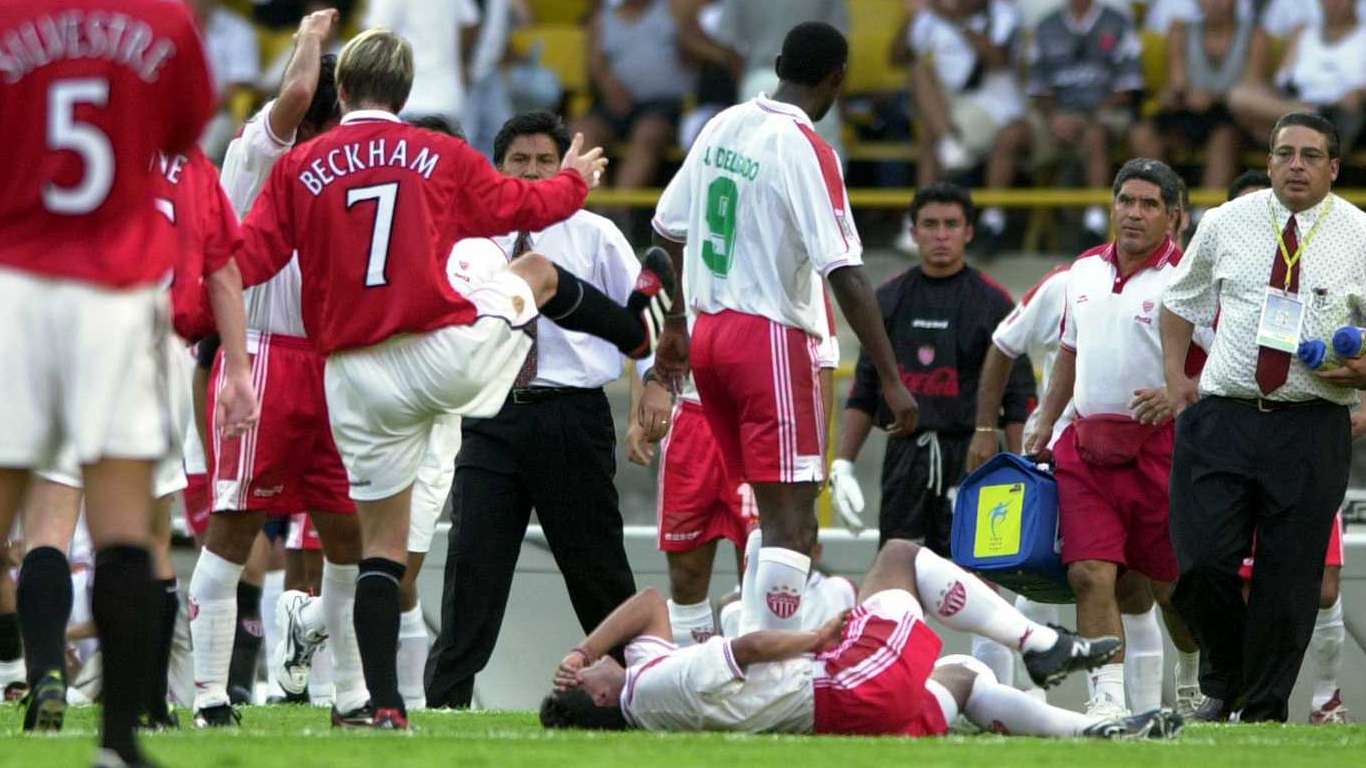
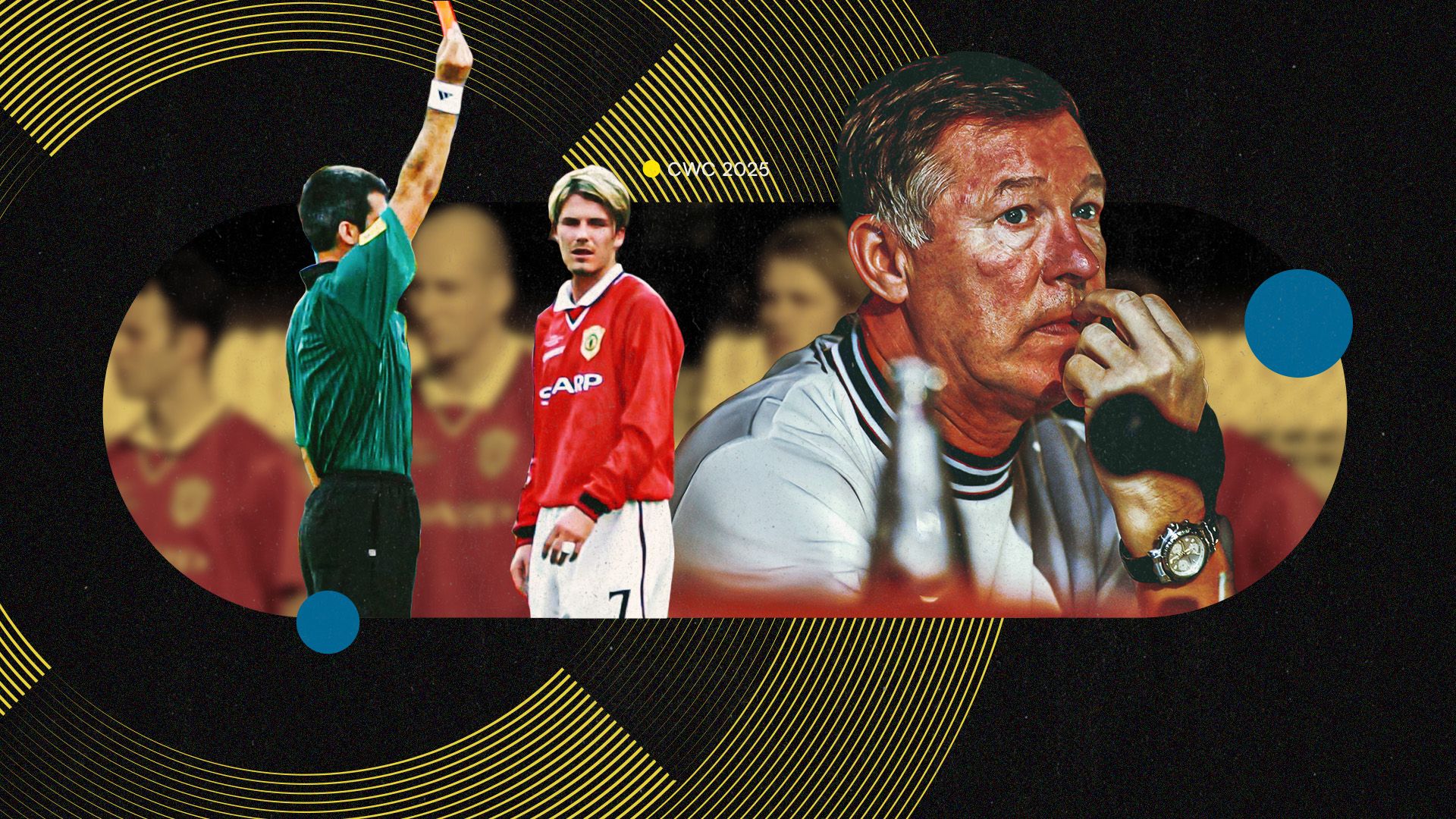
    United's first game, however, came against North American champions Necaxa of Mexico at a sparsely-attended Maracana. It turned out to be a thrilling game, a 1-1 draw that included two saved penalties, a late equaliser from Dwight Yorke and a red card for Beckham, who had kicked out at Jose Milian shortly before half-time. "The dismissal revived the doubts raised over Beckham's temper when he was sent off when playing for England in the 1998 World Cup - and once again left his team-mates a man short," read the BBC's match report.

    To make matters worse, the referee was Argentine. The foul was much clearer than the one on Diego Simeone 18 months earlier, but, as ever, Ferguson defended his star man: "It was a 50/50 ball and they both had their feet in the air. The Mexican players tried to get him sent off and the referee has reacted to that. It was particularly poor, I don't think we'll see him in many big games again." Yorke, who had made amends for spurning his penalty by levelling the game, added: "Everyone here is against us."

  • Man Utd Vasco da Gama 2000Getty Images

    'Fiasco da Gama'

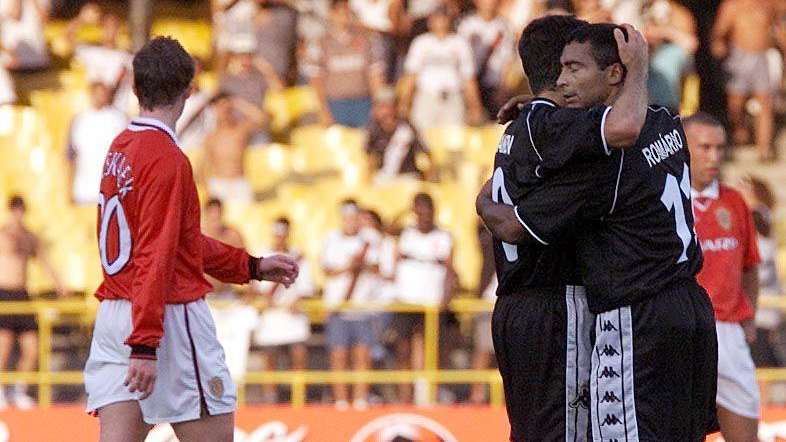
    That was certainly true for United's second game against Rio giants Vasco da Gama, whose fans filled the Maracana and whipped up a feverish atmosphere. Their strike force was made up of 1994 World Cup winner Romario and his Brazil team-mate Edmundo, while abanner warned United what lay in store: 'English you created soccer; we teach you how to play it.'

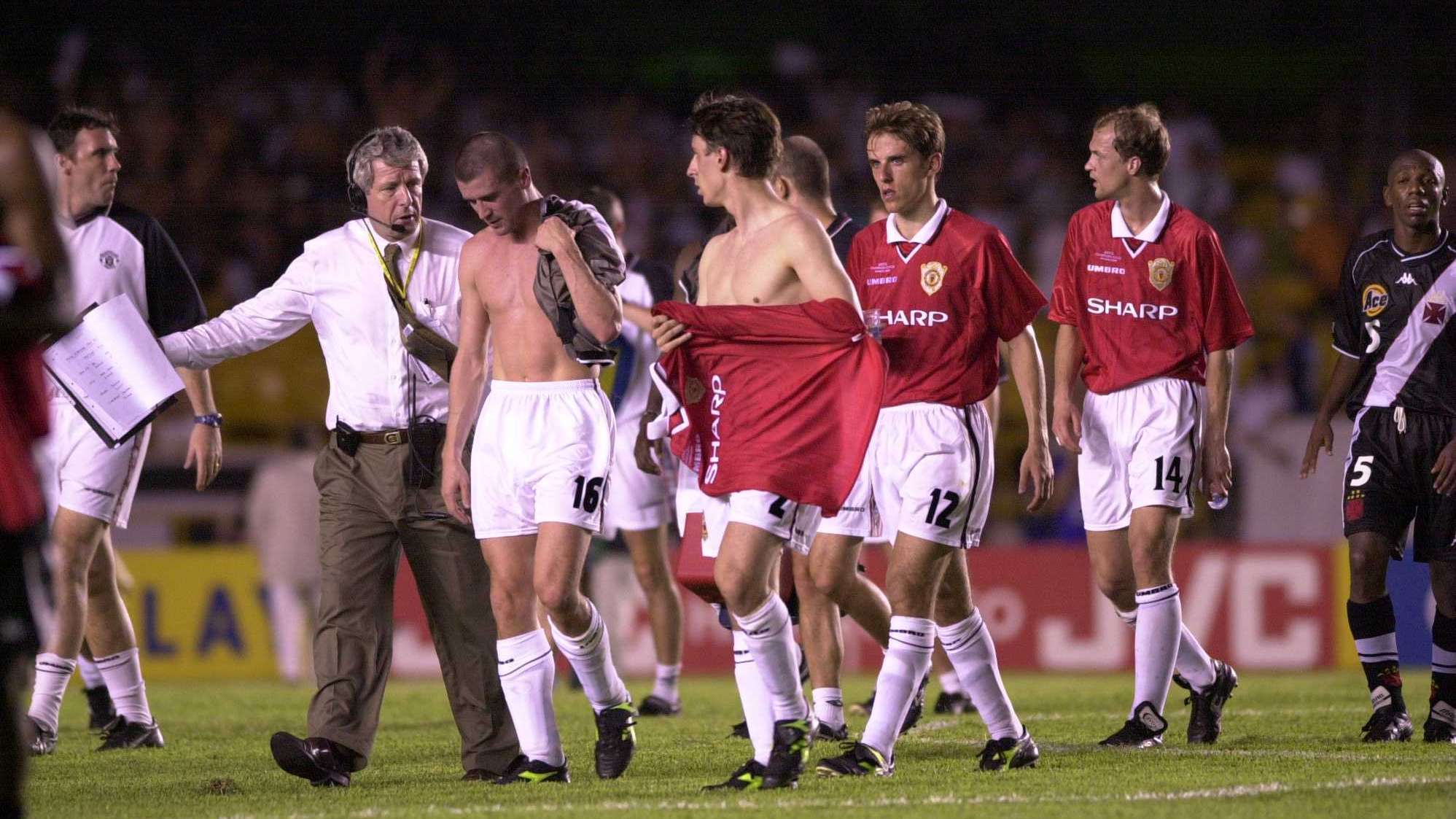
    The warning was spot on as United were schooled by the Brazilians. Romario pounced on two terrible errors by Gary Neville to put Vasco 2-0 up before Edmundo added a third. Butt made it 3-1, but it made no difference as United were knocked out of the tournament. They could not even console themselves with making the third-place play-off, as Necaxa took second spot in their group on goal difference.

    Ferguson was keen to blame the heat given how unaccustomed his team were to Brazilian temperatures compared to their opponents, but while he had defended Beckham in the previous game, he was happy to throw Neville under the bus after the Vasco debacle. "If we had come through the first half-hour with the sun I felt we would have been okay," he said. "Unfortunately the man who is usually the most reliable player in the club has made two mistakes which have lost it for us."

    Neville later wrote in his autobiography: "It was probably the worst performance of my whole United career. I was all over the place, and just to improve my mood I came off the pitch to find a text message from Paul Scholes, who was back in England recovering from injury. He’d been watching on the telly. His message: 'Fiasco da Gama.'"

  • Vasco da Gama v ManXGetty Images Sport

    Long way back

    United still had one more game to play, against South Melbourne. The Australian outfit were only semi-professionals, and United restored some pride by winning 2-0 thanks to two Quinton Fortune goals. Their opponents' manager, Ange Postecoglou, went on to much greater things himself, and proved to be the bane of the Red Devils' most recent season as his Tottenham side beat United on four occasions, most notably in the Europa League final.

    That result means that United will not be in the Champions League next season, and seeing as they need to go deep in the competition on a consistent basis to stand a chance of qualifying for the Club World Cup, they are unlikely to be invited back for the next edition in 2029.

    The words of one fan, watching that game against South Melbourne, feel poignant now: "It's the future, it's the next big thing, United have got to be involved in it." Now, though, they have fallen so far from the top table of global football that their only trips abroad are to play post-season and pre-season friendlies.