Manchester City fallen dynasties GFXGOAL

Pep Guardiola's Man City, Lionel Messi's Barcelona and football's most dramatic falls from grace

It felt like we were watching the end of an era at the Santiago Bernabeu on Wednesday night as a once-mighty Manchester City were completely outplayed by Real Madrid in the shockingly one-sided second leg of their Champions League play-off - and Pep Guardiola concurred.

"Nothing is eternal," the Catalan coach acknowledged after his team's 6-3 aggregate defeat. "We have been extraordinarily extraordinary in the past, but not anymore." Indeed, City are no longer one of the dominant forces in football - and what's shocking about their decline is how sudden it has been. They've gone from a fourth consecutive Premier League title to fighting for fourth place in less than a year.

However, if history has taught us anything it's that all great reigns must come to an end. Sometimes, it's a long, painfully protracted process; on other occasions, it seems to happen almost overnight. But there's always a moment, a match, a move or a managerial change that signals the loss of something that can never be replaced. Below, GOAL runs through some of the most dramatic falls from grace in football...
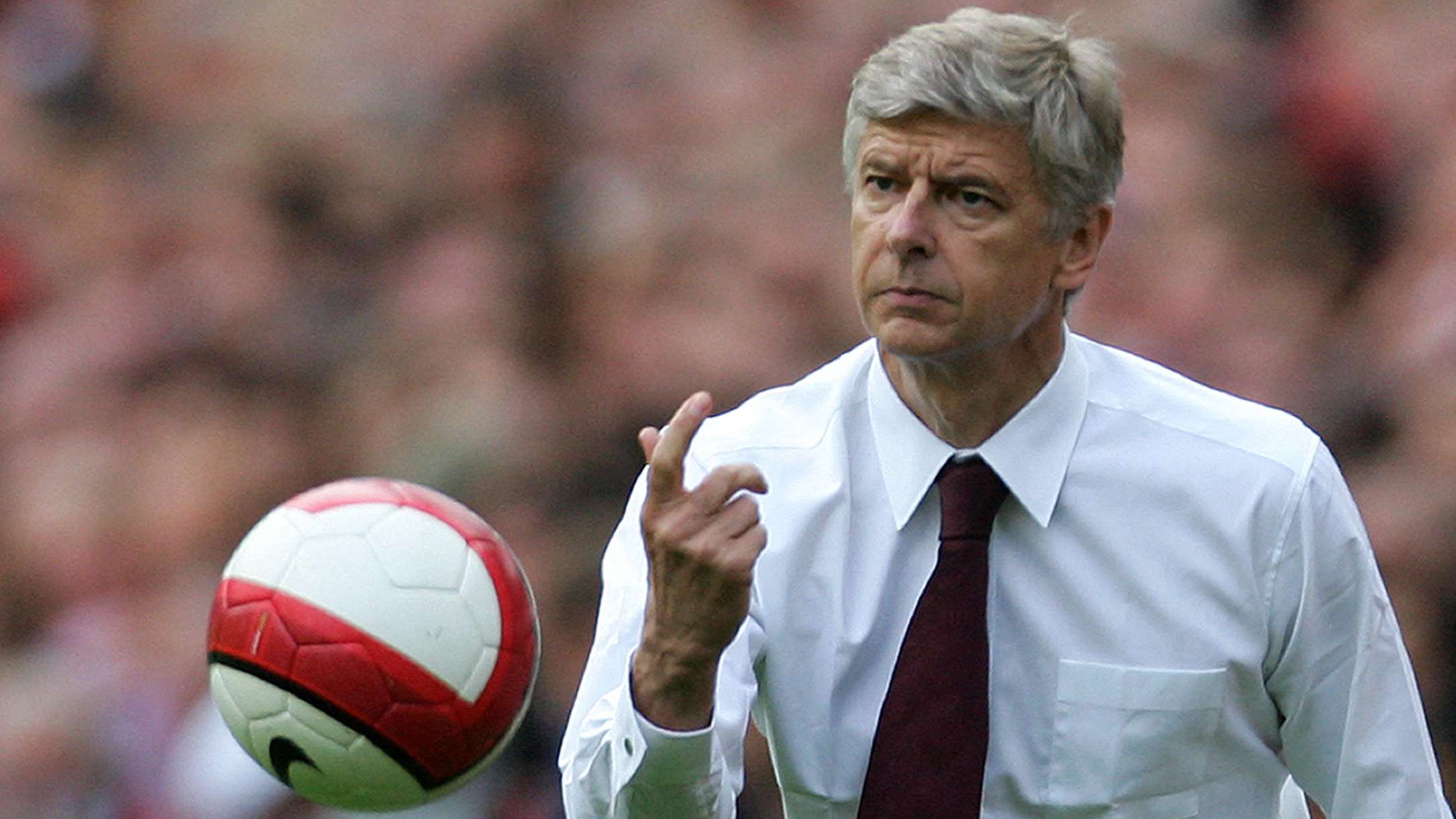
  • FBL-ENG-ARSENAL-ASTON-VILLA-WENGERAFP

    Arsene Wenger's Arsenal

    It was seriously sad to see an Arsenal follower holding a sign that read "Enough is enough!" during his side's Premier League clash with Chelsea at Stamford Bridge just a month into the 2017-18 season.

    The public display of dissatisfaction with Arsene Wenger was lamentable enough, given the Frenchman was the tactical mastermind behind 'The Invincibles' - the thrilling history-making team that won the title in 2004 without losing a single game. But what was particularly depressing was the realisation that the supporter could bring that placard to the ground safe in the knowledge that Arsenal would fail to win - and that his fellow fans would share the sentiment.

    Wenger had signed a two-year contract extension after lifting his seventh FA Cup just four months previously but that surprise Wembley win over Chelsea did little to quell the sense of frustration that had been building at the Emirates, where there was no longer any real faith in Wenger's ability to lead the club to another Premier League title.

    They were probably right, in fairness. Wenger and Arsenal had arguably never really been the same following David Dein's acrimonious exit in 2007 and the Gunners finished sixth at the end of 2017-18 campaign punctuated by constant cries from the crowd of 'Wenger out!'.

    However, the man who undeniably changed English football for the better after his arrival in 1996 later admitted that he was bitterly upset by the fact that he was forced out with a year still left to run on his contract.

    "The hostility of a section of the fans and the board was unjustified," he said in an interview with The Guardian in 2020. "I felt as if I’d built the training centre and the stadium myself brick by brick... It was very hard, very brutal. Arsenal was a matter of life and death to me, and without it there were some very lonely, very painful moments."

  • Advertisement
  • Liverpool Player Manager Kenny Dalglish Ronnie Moran and Roy Evans Celebrate 1990 Division One ChampionshipHulton Archive

    'Boot-room' Liverpool

    Liverpool were the dominant force in English football for nearly two decades. Between 1973 and 1990, the Reds won 11 First Division titles, four European Cups and two UEFA Cups. Because of the 'Boot Room' culture implemented by legendary manager Bill Shankly, Liverpool's glorious period of sustained success looked like continuing indefinitely.

    However, on the night of February 22, 1991, Kenny Dalglish realised during the closing stages of a pulsating FA Cup clash with Everton he could no longer continue as manager. Liverpool had just taken the lead for the fourth time at Goodison when the Scot found himself paralysed by anxiety.

    "I was standing on the touchline and I knew that I had to make a change to shore things up at the back," he subsequently explained. "I could see what had to be done and what would happen if I didn't do it, but I didn't act on what I knew I had to do. That was the moment I knew."

    Dalglish's resignation two days later stunned the world of English football. After all, Liverpool were top of the league at the time and still had a home replay against Everton to come. There were all sorts of rumours as to why Dalglish was quitting but the truth was that he was emotionally exhausted. As so many of his former players later revealed, the Hillsborough disaster on April 15, 1989 had a profound effect on Dalglish, who had attended the funeral of every one of the victims (including four in one day).

    "He just couldn't go on doing the job," his daughter Kelly later revealed. "All the emotion and stress of Hillsborough, all the weight of responsibility he felt, had taken its toll. Hillsborough was devastating for dad."

    Liverpool turned to another former icon to take over from Dalglish but Graeme Souness was not from the same cloth as his fellow Scot and the 'Boot Room' was literally dismantled during his terrible tenure, which was also marred by a horribly ill-advised interview Souness did with The Sun, the newspaper responsible for publishing a series of lies about the Hillsborough disaster.

    It would take Liverpool years to recover from Souness' spell in charge, and exactly three decades for Liverpool to win another league title.

  • Johan Cruyff of BarcelonaGetty Images Sport

    Johan Cruyff's 'Dream Team'

    Johan Cruyff was a cocky character - and with good cause. He remains the most influential figure in football history, having played a pivotal role in revolutionising the game, first as a player and then as a coach. His footballing philosophy spawned a succession of top tacticians.

    So, it was by no means surprising to see him talk up his brilliant Barcelona side ahead of the 1994 Champions League final against AC Milan.

    After all, Cruyff's famed 'Dream Team' had won the title just two years previously and were also on a run of four consecutive Liga titles.

    "We're the favourites," the Blaugrana boss said ahead of the showdown with Milan in Athens. "We're more complete, competitive and experienced than [in the 1992 final against Sampdoria] at Wembley. Milan are nothing out of this world. They base their game on defence; we base ours on attack."

    Cruyff even told his players before the final, "You're better than them, you're going to win." They didn't, though. Barca weren't just beaten in the final, they were battered, losing 4-0 to a Dejan Savicevic-inspired Milan, and Cruyff's shell-shocked side never recovered.

    After lifting 11 trophies in the preceding five years, Barca failed to win another before Cruyff was unceremoniously sacked in 1996, with the club icon told "You no longer belong here" during a heated argument with vice-president Joan Gaspart that allegedly turned into a physical confrontation.

    Nobody would have thought it at the time but that humbling defeat in Greece signalled the beginning of the end of Cruyff's reign in Catalunya and it was only when one of the Dutchman's disciples, Pep Guardiola, took over in 2008 that Barca’s old identity was restored.

  • Lionel Messi of Barcelona Press ConferenceGetty Images Sport

    Lionel Messi's Barcelona

    Barcelona 2-8 Bayern Munich - it's one of the most infamous results in football history, a humiliation of such epic proportions that it's often cited as the reason why Lionel Messi decided he wanted to leave Barcelona.

    In truth, though, the Argentine knew that Josep Maria Bartomeu's Blaugrana were broken long before they were embarrassed in front of the watching world in a Champions League quarter-final in Lisbon.

    As Messi admitted in his exclusive interview with GOAL in September, 2020, "The truth is that there has been no project or anything for a long time."

    Just five years before, Barca had won their sixth Champions League trophy in Berlin with arguably the finest attacking triumvirate of all time: Messi, Luis Suarez and Neymar. At the time, they looked unstoppable, but Bartomeu didn't just fail to build on the treble triumph, he destroyed the foundations upon which it had been constructed with one disastrous signing after another.

    Consequently, Messi, the key protagonist in Barca becoming the biggest club in the world, was fed up long before the Bayern debacle and although he reluctantly agreed to see out the final year of his contract, he left on a free transfer the following year as much for the cash-strapped Catalans as himself.

    Bartomeu may have been forced to resign as president in disgrace in October 2020 but his departure didn't resolve the club's colossal financial problems. He had effectively left Barca on the verge of bankruptcy, which made Messi's belated exit inevitable.

    Barca have since re-established themselves as a force in La Liga and the Champions League but the financial effects of Bartomeu's recklessness are still being felt today, while it also remains a crying shame that the club completely wasted Messi's final few years at the side he’d represented since he was teenager.

    The GOAT's historic spell at Camp Nou should have ended in tears of joy - rather than sadness.

  • Manchester City v Feyenoord - UEFA Champions League 2024/25 League Phase MD5Getty Images Sport

    Manchester City's treble-winners

    There appeared to be no end in sight to Manchester City's dominance of English football when they claimed their fourth consecutive top-flight title in May 2024. It's also worth remembering that their defence of their European crown had only come to an end after a penalty-shootout loss to eventual winners Real Madrid in the Champions League quarter-finals.

    However, the loss of star midfielder Rodri to an ACL injury at the start of the following season hit City harder than anybody could have imagined. There were obviously other contributing factors: The Spain international wasn't the only certain starter sidelined by injury during a rotten run of results from November on, during which it also became clear that too many of City's stars had been allowed to grow old together.

    However, City looked rudderless without Rodri and suffered a barely believable five consecutive defeats shortly after he had been sidelined. If anything, though, it was a draw that confirmed that City were broken, mentally.

    Guardiola's side looked set to return to winning ways when they opened up a 3-0 lead over Feyenoord in a Champions League league phase clash at the Etihad on November 26, but they went to pieces after their Dutch opponents pulled one goal back with 15 minutes remaining and the game ended up finishing 3-3, much to the horror of the home crowd.

    Even more shockingly, Guardiola turned up for his post-match media duties sporting scratches all over his head, visible evidence of the incredible psychological strain he was enduring as he tried - and failed - to arrest his side's slide.

    The former midfielder could, of course, build another great team at the Etihad - and that process has already begun, with the club's Abu Dhabi-based owners splashing more than £200 million ($250m) on players during the 2025 January transfer window - but it's clear that the glorious era inspired by the brilliance of Bernardo Silva, Ilkay Gundogan and Kevin De Bruyne is finished.

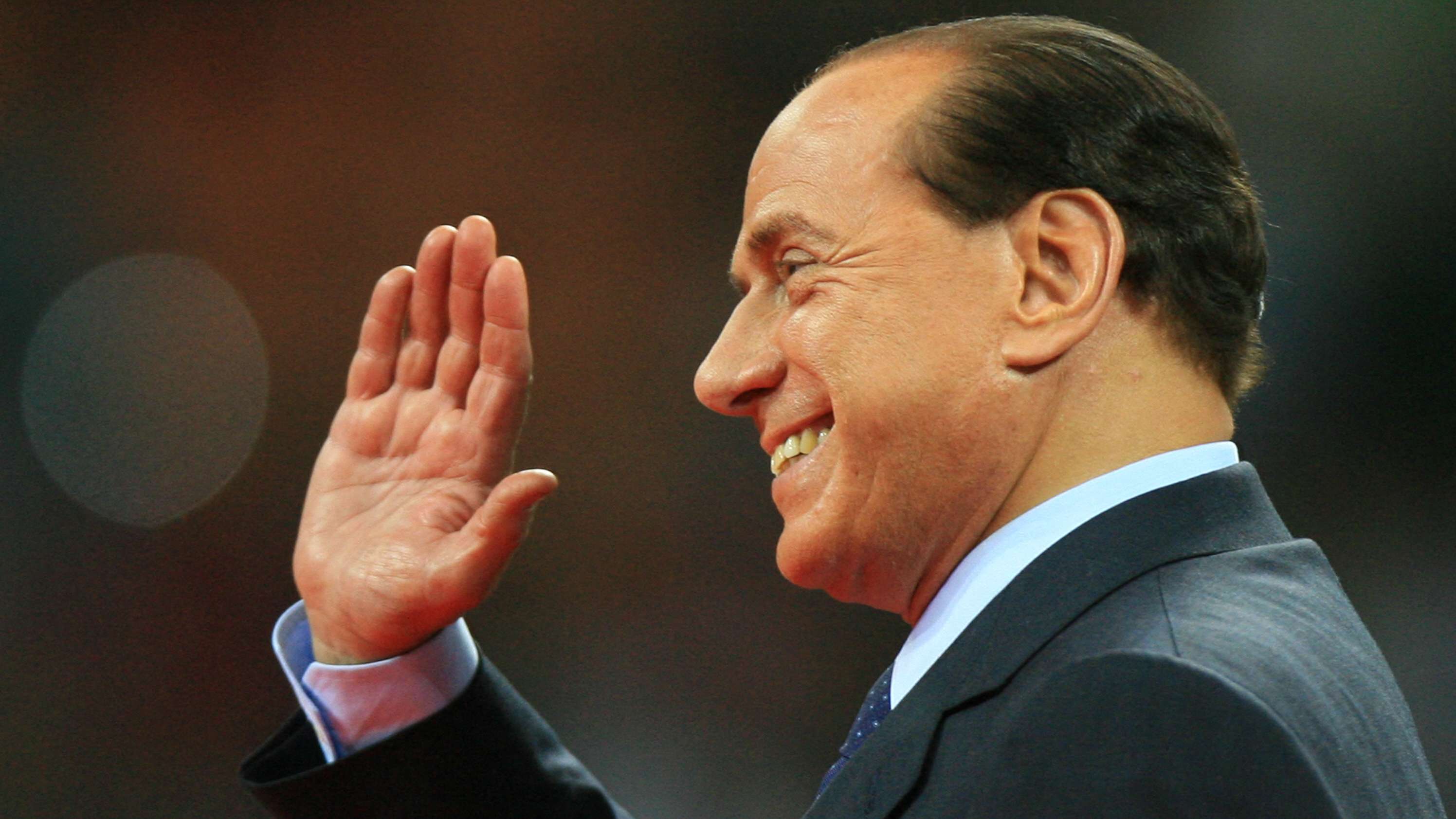
  • FBL-ITA-MILAN-JUVENTUS-BERLUSCONI TROPHYAFP

    Silvio Berlusconi's AC Milan

    When AC Milan won their seventh (and most recent) European Cup in 2007, then-president Silvio Berlusconi pointed out that when he took control of the club 21 years previously, it had been on the verge of bankruptcy.

    "We set ourselves a goal: to take the team to the top in Italy, in Europe and in the world," he told reporters. "Well, we did it!"

    The media tycoon's wealth had been integral to the transformation, as it enabled Milan to build one of the finest teams the club game has ever seen: Arrigo Sacchi's European Cup winners of 1989 and 1990.

    However, Berlusconi came to realise amid the subsequent rise of oligarch owners and state-sponsored clubs that he was no longer in a position to sign any player he wanted. Worse still, he couldn't even hold onto his most prized possessions.

    In the summer of 2012, just a year after a Serie A title win, Milan lost both Zlatan Ibrahimovic and Thiago Silva to Qatari-funded Paris Saint-Germain.

    Berlusconi remained at the helm at San Siro until 2016 but after that double blow it was clear that the game was up for one of the most controversial figures the game had ever seen.

    Indeed, it was telling that when he finally did reluctantly agree to sell his beloved Milan, he said he did so "with pain and emotion" as well as "the knowledge that to compete at the highest level in modern football requires investments and resources that a single family is no longer able to sustain."

  • West Bromwich Albion v Manchester United - Premier LeagueGetty Images Sport

    Sir Alex Ferguson's Manchester United

    May 19, 2013: the day everything changed for Manchester United. For the preceding 20 years, the club had been serial winners under Sir Alex Ferguson. But from the moment the truly great Scot oversaw his final game as manager, United descended into mediocrity.

    Trophies have been won in the interim (including the Europa League under Jose Mourinho) but United have failed to add to their tally of 13 Premier League titles (all won under Ferguson) and have been repeatedly humiliated in the Champions League.

    In hindsight, David Gill's departure during the same summer Ferguson left was almost as significant a loss for United, as Gill's replacement as chief executive, Ed Woodward, was an absolute disaster, squandering millions in the transfer market and getting every major managerial appointment wrong before eventually resigning in 2022.

    Others would also point to the role of a racehorse in the fall the United empire, as a dispute between Ferguson and former stakeholders John Magnier and JP McManus over the ownership of a champion stallion called 'Rock of Gibraltar' eventually led to the club being taken over by the hated Glazer family in 2005.

    However, Ferguson was unquestionably the mastermind behind United's unprecedented success during the Premier League era, the combustible but charismatic figurehead that controlled (or at least had a major say in) nearly every element on the sporting side of the club, which, it should not be forgotten, continued to enjoy success for years after the arrival of the Glazers.

    It was Ferguson's retirement, then, that proved the turning point because he has never been properly replaced. It was always going to be a tough task, of course, given his status as the greatest manager the game has ever seen, but the damage done by his departure has been compounded in the 12 years that have followed by the ongoing incompetence of those running the club.

  • David Beckham Gets Examined Getty Images Sport

    The Galacticos

    Florentino Perez appeared to have little hope of triumphing in the 2000 Madrid presidential election. No challenger had ever previously unseated an incumbent, and Lorenzo Sanz was in a seemingly strong position, having just overseen a second Champions League triumph in three seasons.

    However, Perez prevailed for two reasons. Firstly, he promised to clear the sizable debt that had built up on Sanz's watch. Secondly, and far more famously, he vowed to sign Luis Figo from bitter rivals Barcelona. Remarkably, he achieved both goals.

    It's hard to overstate the significance of the Figo deal, which also heralded the start of the first Galactico era at Madrid, with Perez pursuing a policy of signing at least one superstar every summer thereafter. And it worked... for a while.

    Madrid won La Liga in Figo's first season. They lifted the Champions League trophy the following year thanks to an iconic winning goal from Zinedine Zidane, who took Figo's transfer record when he arrived from Juventus. After firing Brazil to World Cup glory in 2002, Ronaldo then top-scored as Madrid won another Spanish title.

    However, the 2003 signing of footballer-turned-celebrity David Beckham was motivated more by commercial than sporting considerations and when Perez stupidly sold Claude Makelele to Chelsea during the same summer window, it was clear that the president had got the balance of his squad-building strategy all wrong.

    While firing Vicente Del Bosque was also a foolish move, allowing Makelele to leave became the symbol of Perez's folly. Without anyone protecting the back four, Madrid began to disintegrate - and Carlos Queiroz, Del Bosque's ill-advised replacement, proved utterly incapable of salvaging the situation.

    Consequently, Perez stood down as president in 2006 with Madrid having failed to win a major honour for the preceding three years - their worst trophy drought since 1953.

  • Spain v Netherlands: Group B - 2014 FIFA World Cup BrazilGetty Images Sport

    The tiki-taka of Barcelona & Spain

    Pep Guardiola has always hated the term 'tiki-taka'. For the Catalan, it signified "passing for the sake of it". "It's so much rubbish and has no purpose," he told Marti Perarnau, author of 'Pep Confidential'. "You have to pass the ball with a clear intention, with the aim of making it into the opposition's goal. Don't believe what people say. Barca didn't do tiki-taka! It's completely made up! Don't believe a word of it!"

    Unfortunately for Guardiola, the possession-obsessed football that he introduced at Camp Nou in 2008 will probably be forever known by the term 'tiki-taka' and, no matter what one calls it, it was incredibly effective, both for Barca and for Spain.

    The Blaugrana won two Champions Leagues in the space of three seasons under Guardiola (2009 and 2011), while La Roja won three consecutive major international tournaments (the 2008 and 2012 European Championships, and the 2010 World Cup in between).

    However, the game changes, football evolves and teams eventually figure out ways to counteract era-defining styles of play.

    There were plenty of signs during Guardiola's final season at Camp Nou that teams had learned how to blunt Barcelona, but Spain had no intention of ditching 'tiki-taka' at the 2014 World Cup.

    "We've had this philosophy now for a number of years and I think it would be a mistake to change it," key midfielder Xavi said ahead of their opening group game against Netherlands. "We know that we're going to win or to die with this style of play."

    In the end, they died - along with tiki-taka - as Spain slumped to a 5-1 loss from which they never recovered, with the reigning champions eliminated before the knockout stage.