Bust-ups Ferguson vs Beckham GFXGOAL

Football Fall-Outs: David Beckham v Sir Alex Ferguson

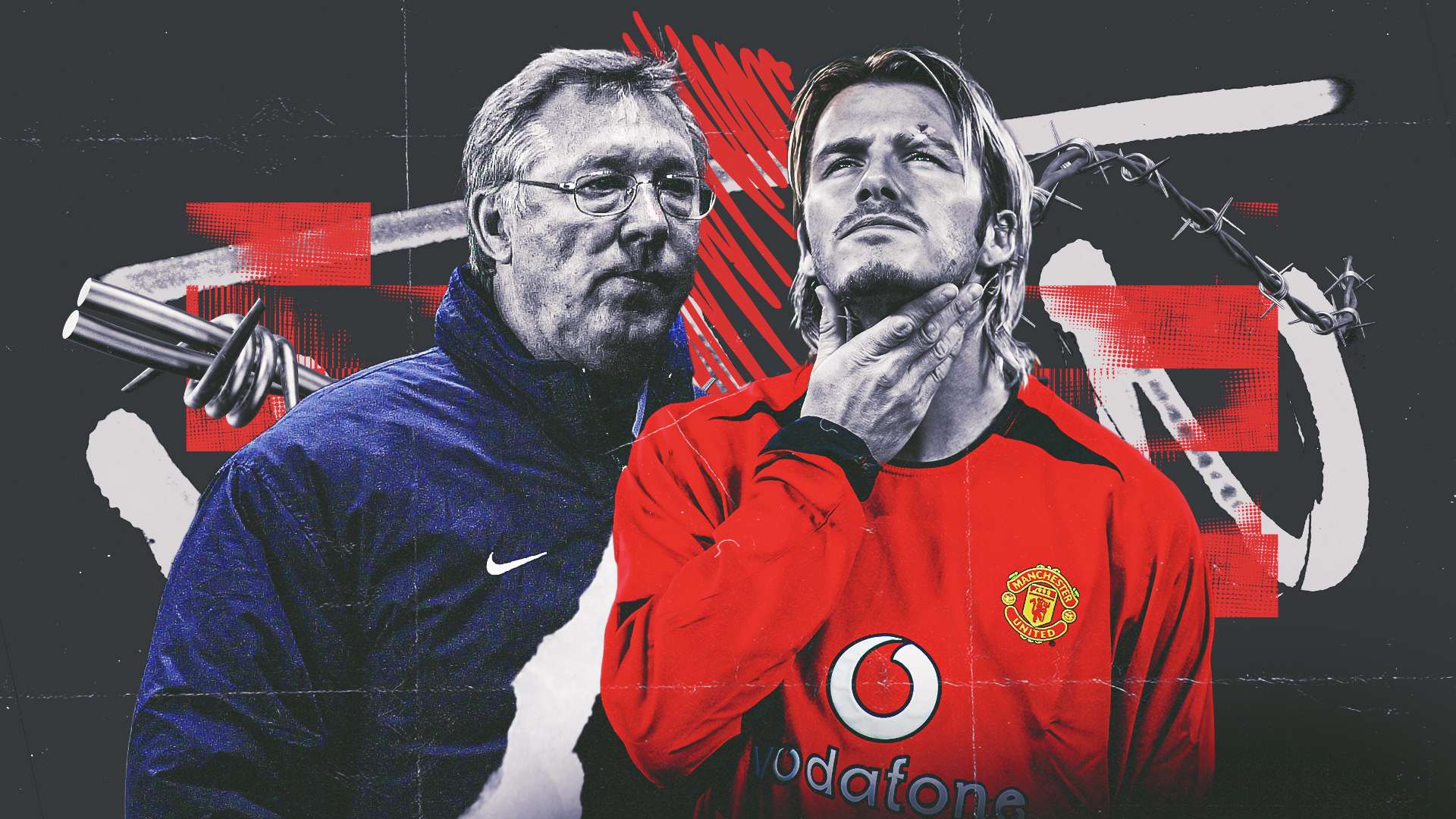
David Beckham and Sir Alex Ferguson. Two absolute Manchester United legends, who have gone down in immortality at Old Trafford.

The young Beckham was undoubtedly the poster boy of the Class of ’92, the handsome blonde who went from kicking a ball against a wall in Leytonstone to winning the treble and captaining his country. The wily Ferguson, meanwhile, came down from Scotland to knock Liverpool "off of their f*cking perch", and managed to do just that, winning no fewer than 38 trophies at Old Trafford. Everything United could play for, Fergie won, and he has been afforded a status that is closer to saint than football manager in the city of Manchester.

Yet it is widely known that Ferguson and his poster boy, the winger with precocious talent who scored from the halfway line against Wimbledon, had an incredibly volatile relationship. But how exactly did Beckham and Ferguson come to feud? And why didn’t the winger live out his dream of retiring at Old Trafford? GOAL breaks down one of football's most infamous bust-ups...

  • David Beckham Manchester United 1996-97Getty Images

    Ridiculously assured

    Beckham was immediately at home at United. While at school in London – having had a trial for Tottenham – Beckham would tell teachers all he ever wanted to do was play football, and after signing for United, he was part of the famous team that won the FA Youth Cup in 1992 alongside Ryan Giggs, Paul Scholes, the Neville brothers, Gary and Phil, and Nicky Butt.

    A loan to Preston North End saw him score directly from a corner, and he would go on to make his United debut in 1994. Thereafter, he barely ever left the team.

    At the end of the 1994-95 season, United lost Paul Ince, Mark Hughes, and Andrei Kanchelskis. Ferguson did not sign a replacement for any of the three; instead bringing up Beckham, Giggs, Scholes, Butt and the Nevilles. United won the league, Beckham scored in his first game against Aston Villa, and there were plenty of calls for him to be included in England’s Euro 96 squad, although they fell on deaf ears.

    Regardless, at the start of the following campaign, Beckham scored that halfway-line goal against Wimbledon after being bequeathed the famous No.7 shirt. His star was firmly on the rise.

  • Advertisement
  • Victoria David Beckham 2001Getty Images

    'Death knell'

    As soon as he was wearing United’s No.7 – a shirt previously worn by the likes of Eric Cantona and George Best – Beckham seemed to launch into the stratosphere.

    In 1997, having seen her on television performing with the Spice Girls, Beckham met Victoria Adams, AKA 'Posh Spice' at a United game, and swiftly fell in love. Ferguson later wrote in his book that the pair’s meeting “was the death knell for him [Beckham]”. He added that Beckham “was never a problem until he got married”, as he took his eye off the ball, metaphorically.

    Ferguson then doubled down at a press conference promoting the book, adding: "The big problem for me... He fell in love with Victoria and that changed everything."

    Suddenly, in Ferguson’s mind, Beckham appeared to have become bigger than Manchester United. He had, after all, loved the work ethic of the future Three Lions captain. In his book, he claimed that Beckham's slavish appreciation of practice put other “less gifted” players to shame, hence his world-class set-piece ability.

    Statistically, though, the midfielder's output actually increased; nine goals and 14 league assists in 1997-98 was comfortably his most productive season at United.

  • David Beckham Manchester United 1998-99Getty Images

    Treble glory

    By the time the 1998-99 season began, Beckham transcended not just Manchester United, but football. He had been dabbling in modelling, and he was firmly establishing ‘Brand Beckham’. All that was needed was a spark and, boy, did he get it during that campaign.

    United went on one of the most remarkably resilient runs in English football history, repeatedly winning games with the last kick, and picked up three trophies as a result.

    Having won the Premier League and the FA Cup – Beckham scored six league goals and registered 12 assists, including a strike on the final day against Spurs, as well as a goal in that famous cup semi-final against Arsenal – he became a legend in Barcelona.

    Stood over two injury-time corners, he delivered a pair of deliveries that would be converted by Teddy Sheringham and Ole Gunnar Solskjaer. Two crosses, two swishes of a right boot, two goals in two minutes, and sporting immortality forever. The treble. The zenith of Ferguson. The zenith of Beckham. The zenith of United.

  • David Beckham Manchester United 2002-03Getty Images

    The boot incident

    The major fissure in the relationship between Ferguson and Beckham came away from the public eye, as did so many of their spats. There had previously been disagreements over his relationship with Victoria, his haircuts, his fashion and his desire to become a brand, but now there was tangible evidence of an argument.

    In 2003, after United were knocked out of the FA Cup by Arsenal, Ferguson went one better than turning on his infamous 'hairdryer' and accidentally kicked a boot at the winger, who could be seen sporting a scar on his eyebrow the next time the Red Devils took to the field against Juventus four days later.

    Beckham has since explained that he swore at his manager before the incident, saying in his self-titled Netflix documentary: "We walked in the changing room and the boss is fuming. I can see it by his face. And when you see the boss’ face like this, you don’t want to be anywhere near him. It is a face that no one can do, trust me. [He was f'ing and blinding] and I went back at the boss and said 'no' and then I swore. I said the f-word. And then I saw him change, and I was like, 'sh*t, I really shouldn’t have said that'. I think I said the f-word too many times."  

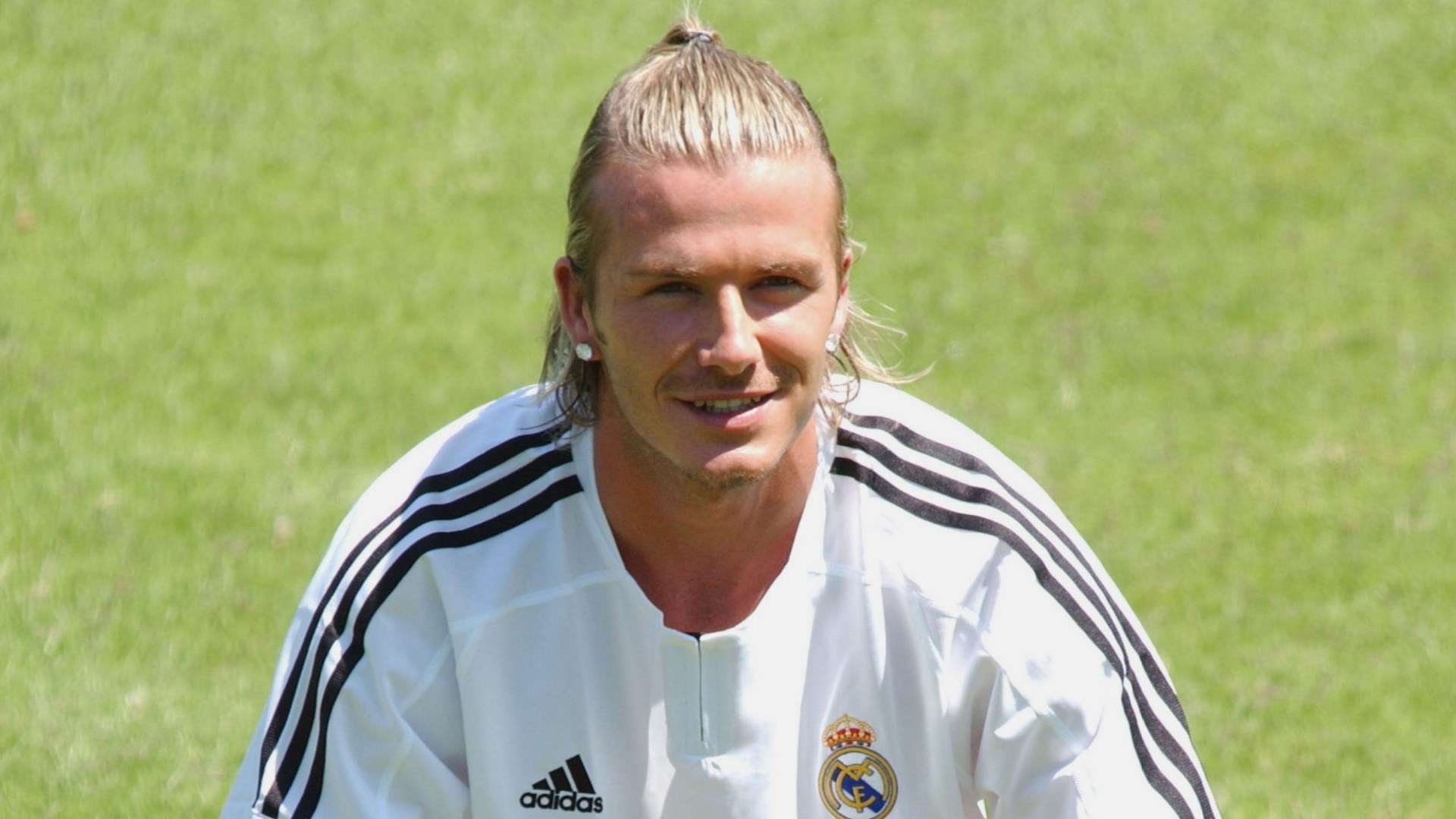
  • David Beckham Real Madrid 2003Getty Images

    Acrimonious exit

    The obvious plaster that Beckham wore over his eye following the incident further infuriated Ferguson, who claimed that it was “stage-managed”, and while the former midfielder insists that he still wanted to stay at the club – “it was my home” – he eventually made a move to Real Madrid at the end of the campaign.

    Madrid agreed to pay United £25 million in 2003, and while Ferguson says that he left the door open for Beckham to stay, he also admits that “the decision was made, it was better he went.”

    Beckham went on to win La Liga in 2007, before taking in spells at LA Galaxy, AC Milan, and Paris Saint-Germain before his retirement. Ferguson, meanwhile, would rebuild, signing Cristiano Ronaldo as Beckham’s replacement, which worked out reasonably well for the club.

  • Alex Ferguson David BeckhamGetty Images

    And now?

    Ferguson and Beckham are routinely asked about their relationship, and it appears that there has been a thawing of the ice, but perhaps only on one side.

    Ferguson previously claimed that Victoria was the reason that her husband did not become one of the “greatest Manchester United legends”, and also omitted him from a list of “world-class” players in his book, Beckham replied in typically classy fashion.

    He was asked if he felt insulted, and replied: “Not at all. I played for the greatest manager of all time, for the amount of time I did. I was lucky to have played with the players that I did, the team, and to be successful with the club that I loved and still love. I tend to agree with the manager, there are certain players that you can call world-class. Thankfully, I played with many of them.”

    Beckham is clearly willing to let bygones be bygones, but Ferguson has remained tight-lipped on his relationship with one of the best players he ever managed.