Pep Guardiola Man City Fabio Capello GFX 16:9GOAL

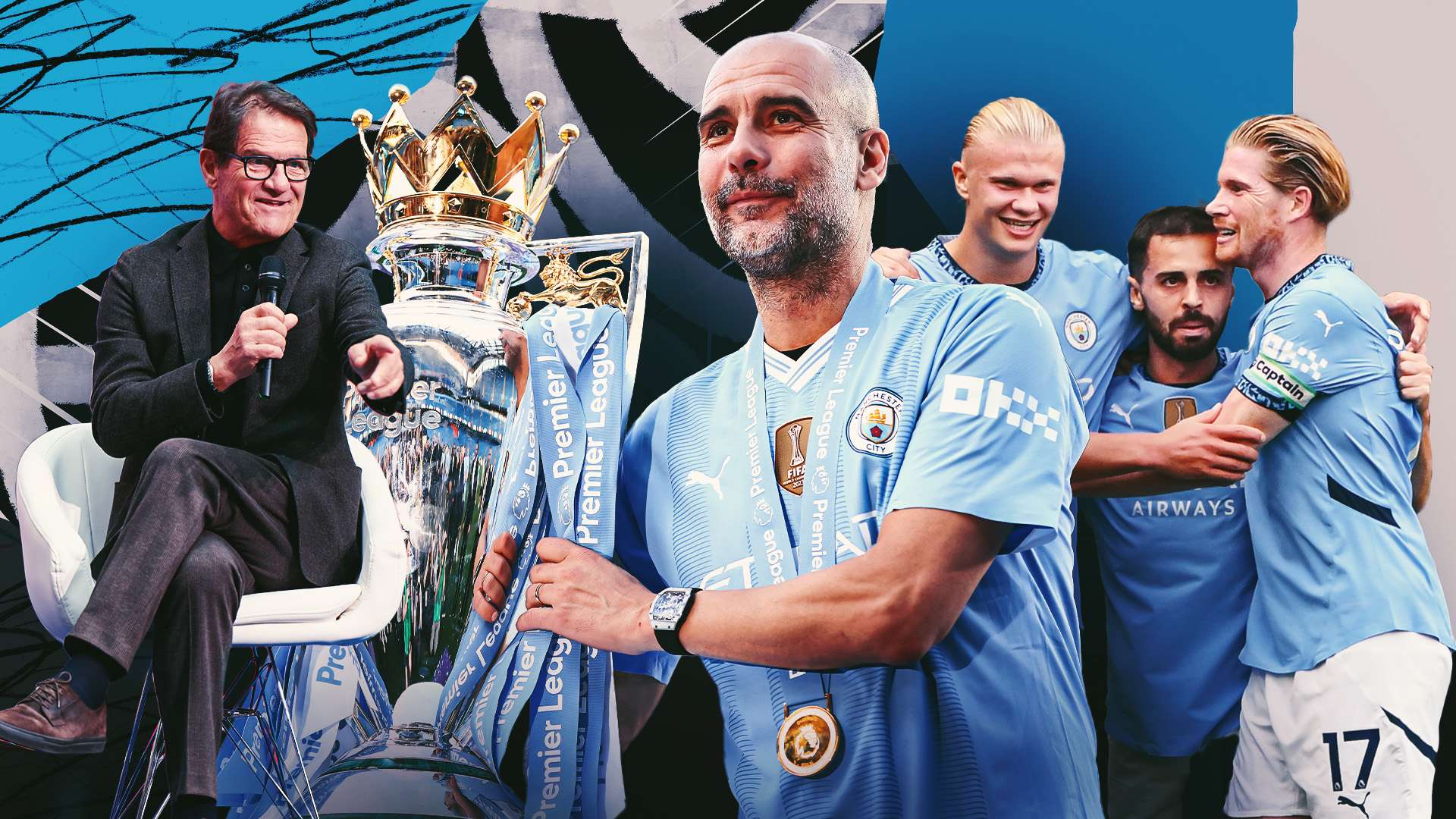
Fabio Capello believes 'arrogant' Pep Guardiola 'ruined' football with his brilliant Barcelona and relentless Man City teams - but is there any truth to the claims he 'killed the game' with tiki-taka?

Former Roma coach Fabio Capello doesn't have especially fond memories of Pep Guardiola from their brief spell together at Trigoria. "He came to tell me how I should do my job," Capello claimed in an interview with El Mundo, "and I told him: 'Go for a run and then you can talk.' That was the end of the debate."

It wasn't really, though. Capello and Guardiola continue to clash over the Catalan's footballing philosophy to this very day.

"You know what I don't like about Guardiola?" Capello continued. "His arrogance. The Champions League he won with [Manchester] City [in 2023] is the only one where he didn’t try anything funny in the decisive matches.

"But all the other years, in Manchester and Munich, on key days, he always wanted to be the protagonist. He would change things and invent them so he could say: 'It's not the players who win, it's me.' And that arrogance cost him several Champions Leagues. I respect him but, for me, it's clear.

"Furthermore, even if it is no longer his fault, he has done a lot of harm to football."

Evidently, there is a personal element at play here, but Capello certainly hasn't been alone in challenging the widely held belief that Guardiola has been nothing but good for the game...

  • Barcelona´s coach Josep Guardiola (L) ceAFP

    Pep's brilliant Barcelona

    While the merits of Guardiola's achievements with state-sponsored Manchester City have long been disputed for financial reasons, his Barcelona side is almost universally regarded as one of the greatest teams of all time - if not the greatest - and, as key midfielder Xavi pointed out, that was "not only because we won everything, but because of the way we did it."

    Guardiola, as he has always admitted, was blessed with the good fortune to take over a squad containing Carles Puyol, Xavi, Andres Iniesta and, of course, Lionel Messi, that had won the Champions League just two years previously.

    However, his role in Barca's era of unprecedented success simply cannot be downplayed. He implemented a style of play that brought the absolute best out of some of the most talented players in history.

    Barca didn't just keep the ball brilliantly, they worked ferociously to retrieve it - and it was that mix of possession and pressing that made them practically perfect.

    Indeed, the 5-0 rout of Real Madrid at Camp Nou in 2010 was a sporting masterpiece, one of the most delightful demonstrations of total football ever seen, but it's also arguably where the 'problem' with Pep began, as almost every other coach in the world rushed to replicate 'tiki-taka'.

  • Advertisement
  • Manchester City FC v Brighton & Hove Albion FC - Premier LeagueGetty Images Sport

    'Guardiola killed the game'

    Patrice Evra twice bore first-hand witness to Barca's brilliance. The French full-back started for Manchester United in both of their chastening Champions League final losses to the Blaugrana, in 2009 and 2011.

    He's also had to endure the frustration of seeing his former club usurped by Guardiola's City as the dominant force in English football over the past decade, so he's aware that his views on the former Spain international are open to accusations of bias.

    However, Evra is adamant that while "I think Guardiola is one of the best managers" ever, he nonetheless "killed the game" with his repetitive, automated attacking strategy.

    "When I say that," the Champions League winner explained on Rio Ferdinand Presents, "it's because now we've got robots. Everybody wants to play like Guardiola. The goalkeeper has to be No.10!

    "Everyone wants to play amazingly but this tiki-taka, only Guardiola can do it. Why does everyone copy him? We have no creativity. We have no geniuses anymore.

    "You will never see a player like Ronaldinho again because when he's young, do you know what the coach is going to tell him? 'If you don't pass the ball, I'm going to put you on the bench.' But all football comes from the streets."

  • FBL-EUR-C1-MAN CITY-REAL MADRIDAFP

    No fan of flair players?

    Evra's reference to Ronaldinho appears pointed, even though it should be acknowledged that the myth that Guardiola forced the Brazilian out of Barcelona immediately after taking over in the summer of 2008 has since been debunked by both parties.

    It's definitely hard to imagine that such a gloriously unpredictable player would have thrived within the rigid structure established by Guardiola at Camp Nou.

    Zlatan Ibrahimovic, another anomalous character in modern football, certainly felt out of place and restricted within Barca's school-like set-up - to which La Masia graduates such as Messi were already accustomed - and Guardiola continues to be dogged by claims that he does not want to work with free spirits.

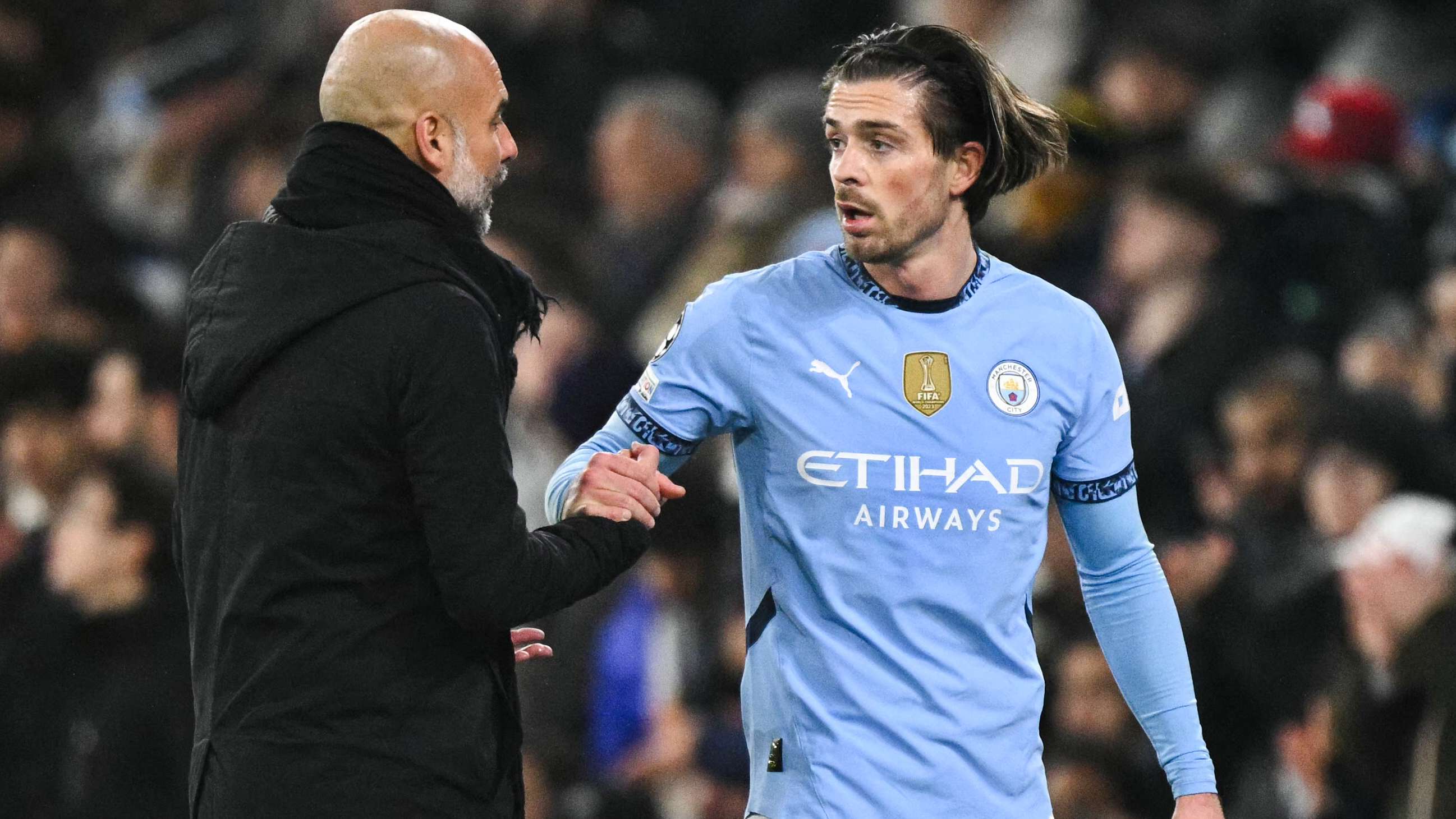
    Jack Grealish is obviously regularly cited as a case in point. The laconic winger may have played a small role in City's treble triumph but he's unquestionably underwhelmed at the Etihad and no longer looks anything like the thrilling talent he was at former club Aston Villa.

    Grealish's obvious unprofessionalism has clearly contributed to his regression but Guardiola has copped his fair share of the blame for allegedly coaching every ounce of flair out of a gifted individual for the good of the group.

  • Bayern Munich v FC ValenciaGetty Images Sport

    'We see less magic, less fantasy'

    Still, it feels desperately unfair to pin the death of the old-school trequartista solely upon Guardiola's shoulders.

    Awesome attacking midfielders such as Kevin De Bruyne and Bernardo Silva have flourished under the City boss and while they may be tasked with working harder than the No.10s of the past, that is also a product of the way in which the game has gone over the past 15 years.

    As another fantastic footballer and Guardiola favourite, Thiago Alcantara, told The Guardian, "It's taken up a different pace, rhythm: more accelerated, more physical. The figure of the No.10 has almost disappeared. Footballers do more but faster, so we see less magic, less fantasy.

    "You lose that player who's different, who 'breathes'; the playmaker who was slower doesn't get the opportunity to turn even if he has sublime technique."

    Physicality and athleticism have become increasingly coveted commodities in young players and Guardiola can hardly be held accountable for that particular shift in recruitment strategy, given his Barca side was not exactly a team of giants.

    On the contrary, Messi & Co. proved that it was possible to not only beat bigger and stronger sides, but run rings around them by carrying out meticulously rehearsed movements - which was a most welcome development for many football fans after the "sh*t on a stick" served up by the likes of Jose Mourinho and Rafa Benitez before Guardiola exploded onto the scene.

  • FBL-UAE-SPORTS-CONFERENCEAFP

    'Everyone spent 10 years trying to copy him'

    Capello argues, though, that Barca's era-defining exploits created far too many coaching clones of Guardiola, particularly in countries such as Italy that had an existing footballing culture very much at odds to that of Spain.

    "Everyone spent 10 years trying to copy him," the former AC Milan coach told El Mundo. "It ruined Italian football, which lost its nature. I said: 'Stop, you don't have Guardiola's players!'

    "There was also the absurd idea that playing well was all that you had to do - [which was] a disaster and also a [source of] boredom that made many people flee from football.

    "You only have to watch the highlights, so why are you going to watch 90 minutes of horizontal passes without fighting, without running?.."

    Jorge Valdano, in complete contrast to Capello, is a fan of Guardiola and his work, but even he has acknowledged that we're in a worrying period of homogenisation that is undeniably linked to tiki-taka.

    "Academies improve average players but hinder the unique ones," the World Cup winner said. "Everyone trains the same way now. There’s an overuse of one- or two-touch football, which eliminates feints, dribbling, and those moments of unpredictability that made football so exciting.”

    Of course, when it comes to the aesthetic quality of a particular brand of football, beauty is very much in the eye of the beholder.

    There are many football fans across the world that agree with Annibale Frossi's famous claim that 0-0 is the perfect result and derived more pleasure out of a Jose Mourinho defensive masterclass at Camp Nou than Pep's players putting Manchester United on a "carousel" and making them "dizzy" with their passing.

  • Italy v Argentina - Finalissima 2022Getty Images Sport

    'Defenders don't know how to mark'

    However, certain tactical shifts undoubtedly shape the game, and its players, which is why legendary centre-back Giorgio Chiellini believes what he calls "Guardiolismo" has "ruined many Italian defenders".

    "They now know how to set the tone of play and they can spread the ball," the Juventus icon acknowledged, "but they don't know how to mark.

    "When I was young, we used to do drills to get a feel for the man you were making. Nowadays, from crosses, Italian defenders - and I can only really talk for Italian defenders - don't mark their man.

    "It's a great pity because we're losing our DNA a bit and some of those characteristics which had made us excel in the world. But we are never going to be able to play Spain's tiki-taka because it's not part of our philosophy." Guardiola didn't ask or force them to embrace his, though.

    His only objective when he started out was to win matches at Camp Nou - not influence people in other countries. And let's not forget either that Guardiola himself is a disciple of the teachings of Holland's Johan Cruyff, while he also learned an awful lot from Argentine Marcelo Bielsa among others.

    Granted, there are legitimate concerns about the way the game is going, particularly in terms of the reduced importance of improvisation, and Guardiola has without a shadow of a doubt played a leading role in the recent evolution of the game.

    But therein lies the point: football is always changing and every action produces a reaction (such as Jurgen Klopp's "full-throttle football"), sooner or later. We've even seen ample evidence over the past year to suggest that even the great Guardiola might have to adapt to cope with increasingly daring and direct opponents.

    So, the fact that so many up-and-coming coaches from Italy, and all around the world, chose to study his methods is not his "fault", as Capello put it. If anything, it's his most impressive achievement. Imitation really is the sincerest form of flattery and, for better or for worse, few coaches have ever been copied quite as much as the Catalan.