Are you 24 or older?

Help us verify your age by providing an honest response. This site contains gambling advertising for 24+.

Age-restricted content

You’re not old enough to view betting content. You’ll be redirected to the homepage.

alt
MLS fumble 1-1GOAL

Missing the mark(et): MLS failed to turn World Cup momentum into tangible transfer success

Signing players after a major tournament is difficult, but MLS clubs did little to turn the World Cup’s momentum into a meaningful rise in roster quality.

Tom Hindle
  • Casemiro made one thing clear in his introductory press conference with Inter Miami: he had plenty of other options.

    Clubs from all over wanted him: Italy, Spain, Saudi Arabia, elsewhere in Europe. He could probably be playing Champions League football someplace. But MLS, and, more specifically, Lionel Messi, drew him to South Florida. Casemiro wanted to be here. This league was an ideal fit for a player in the twilight of his career.

    Whether he is the right fit for this Miami side can and should be debated. Casemiro is old and slow. Miami need youth and pace. But the signing makes plenty of sense from a league point of view. MLS itself, which has long touted its ability to attract big names, can point to Casemiro as proof of concept: three La Liga titles, five Champions Leagues, a Copa América - all packaged nicely into one meaty Brazilian defensive midfielder. A Galactico, Casemiro is not. But he is a household name, and quite comfortably one of the most gifted midfielders to play for Real Madrid.

    But in the year 2026, following a World Cup, Casemiro should be a drop in the ocean. He should be one of dozens, not a selection from a frighteningly small lineup. It was assumed, for some time, that the World Cup would come with a slew of big-name signings from MLS clubs. This tournament would birth a new age of soccer fans, and the league would respond, in turn, with aggression and commitment in the transfer market. And while individual clubs have spent with verve, the notion that MLS would be a star-laden landscape, bolstered by the dopamine rush of a World Cup on home soil, has proved to be well wide of the mark.

  • 'We will show the world how far we have come'

    Garber state of the league
    Getty

    The MLS commissioner promised that the World Cup would be a seminal moment for the league.

    The World Cup had been what the business types might call a "north star" for the league for some time. And 2026 was supposed to be the year of MLS, when the league would have the chance to show that soccer in America could be, well, cool. To be clear, this is not a column about American soccer as the insecure little brother still trying to prove to the rest of the sporting landscape that it can hang out with the big kids. MLS is already globally relevant. There is a reason that, for instance, Hull City were willing to pay over $20 million for an 18-year-old with just 1,500 MLS minutes in his legs.

    No, the issue here is one of growth - not necessarily establishment. At his State of the League address in December 2025, less than 48 hours before MLS Cup, commissioner Don Garber highlighted the fact that Lionel Messi and Thomas Muller were set to face off for the league's biggest prize. He said the words "World Cup" 20 times in his opening statement alone. His feelings on the tournament were best summarized, though, by a strong declarative buried in the middle:

    "In 2026, we will show the world how far we've come, and how much bigger and better and more popular our sport will be in the future," he said.

    Yet nine months later, the commissioner shifted the emphasis toward a longer timeline. In an interview less than a fortnight after the final, he said that a more accurate test might be the years to come. Forget now, it's the future that matters.

    "The real measure is going to be what does MLS look like five and 10 years from now?" Garber said. "Will our league be more popular? Will we have more cultural engagement? Will our teams be more valuable? Will we have more media covering us and paying attention to us? And are we as a league viewed competitively, on the field, better or higher than we are today? Those measures are going to take some time to deliver."

  • Praying for the clubs to spend big

    Lionel Messi Inter Miami 2026 MLS goal celebration
    Getty

    MLS commissioner Don Garber has put the onus on clubs to pursue global stars, but restrictive roster rules and uneven ambition continue to hold the league back.

    And Garber isn't necessarily wrong there.

    Indeed, the onus really is on the clubs to act in accordance with the movement of the market. And following the closure of MLS's second transfer window on Wednesday evening, it's hard to say individual clubs - and, by extension, the league - have made any substantive progress in terms of bolstering their image.

    This is part of the problem with MLS. The system operates as a closed model and is basically only as assertive as its clubs are willing to be. The worldwide brand of MLS depends as much on Montreal showing ambition in the global market as it does on Cincinnati. The clubs have always had to act as one under one umbrella - with the league itself serving as orchestrator-in-chief.

    This symbiotic relationship has kept MLS financially sound and stable enough for two decades. But it has also served as something of a blockade when it comes to ambition. Spending rules are restrictive. Teams have to be careful, measured, and meticulous with how they construct rosters. Some, of course, push the limits. Inter Miami get aggressive in the market, and have used the loophole of signing a designated player-quality talent on loan before offering a bumper contract a year later. Other clubs are more conservative. It was, for example, a minor miracle of sorts when Montreal showed the kind of ambition to sign Alexis Sanchez earlier this window.

  • Failing to capitalize on the moment

    griezmann

    Antoine Griezmann is two years removed from his last appearance for the French national team.

    That leads us to the real problem here.

    MLS has promised. But the teams, as individual entities, haven't quite delivered.

    Make no mistake, MLS's facilities are some of the best in the world. Columbus Crew striker Wessam Abou Ali described it to me in the best way possible at Media Day back in January, leaning back in his chair, grinning, and proclaiming:

    "They are absolutely top, mate."

    There was an assumption that players who came for the World Cup with their countries would be wowed by the culture here, courted by the facilities, and brought, en masse, to America. Fans, and perhaps the league as a whole, imagined a wave of global superstars who had kicked a ball all summer in the States finding their way to MLS. This writer partook in debates as to who might be the first to break the ice (Mo Salah seemed a reasonable pick, and was even in talks with Sporting KC - but he signed for Turkish side Trabzonspor). But he wasn't the only name highlighted. Christian Pulisic, Weston McKennie, Neymar, Bernardo Silva, and Kevin De Bruyne were all mentioned as the rumor mill churned in the pre-World Cup madness.

    None of them ended up here. In fact, at the closure of the transfer window, only eight players who had played in the 2026 World Cup arrived in MLS, according to data provided by the league. One of those, Casemiro, was linked with an MLS move before the tournament even started. Some of the names were agreeable. Breel Embolo started for Switzerland and will be tipped to score goals for Atlanta United. Tunisian winger Elias Saad is a tidy piece of business for Nashville. Angus Gunn started in goal for Scotland and filled a clear position of need for San Jose Earthquakes.

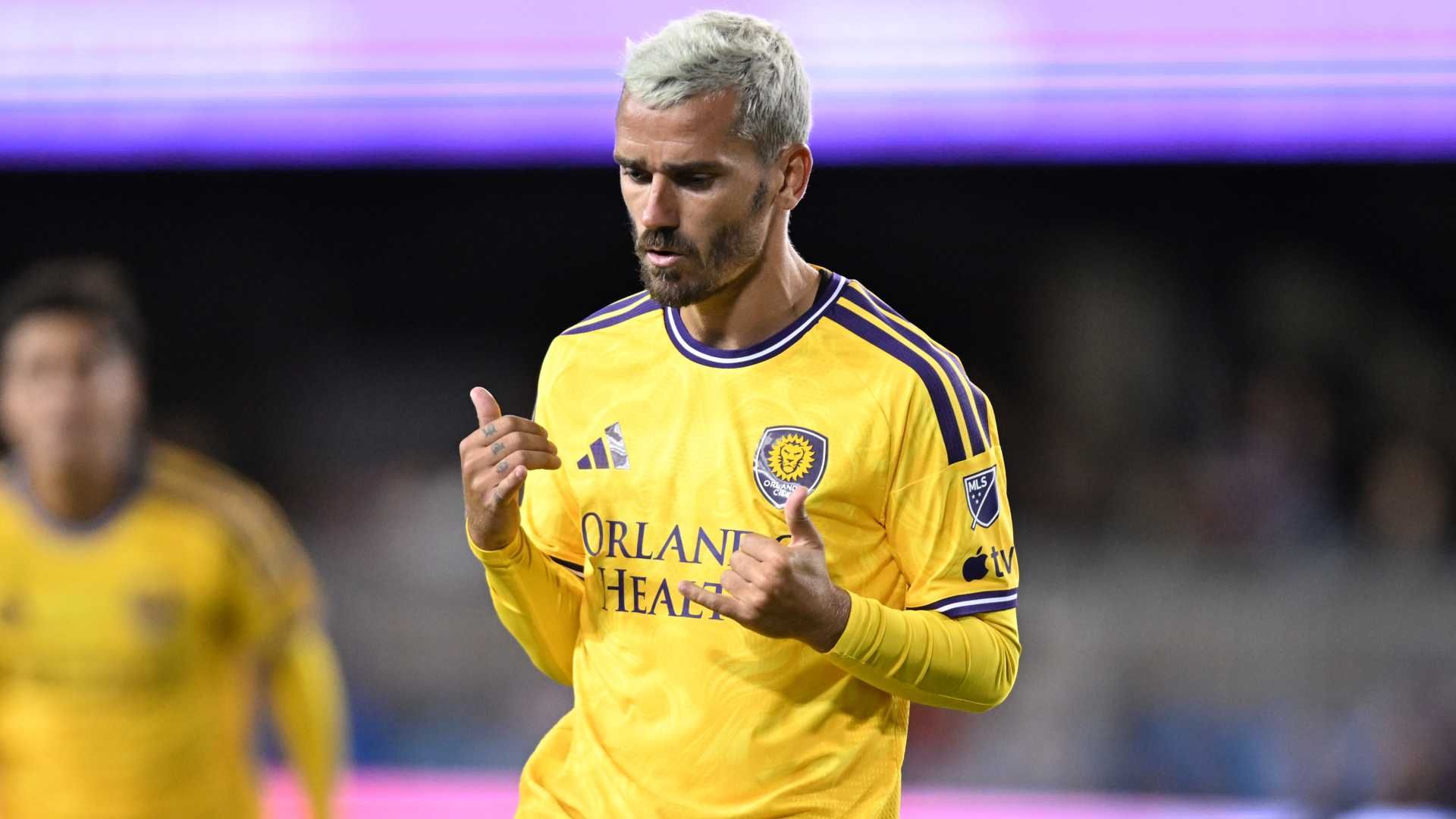
    And the established names that did arrive - namely Antoine Griezmann and Robert Lewandowski? Well, one retired from international duty in 2024, and the other failed to qualify for the tournament. Both are fine players who have given their sides a lift. But neither feels particularly special, or out of the ordinary for MLS - which has previously drawn in similar acquisitions like Thierry Henry and David Villa.

  • The case for Elijah Just

    New Zealand v Belgium: Group G - FIFA World Cup 2026
    Getty Images Sport

    Elijah Just scored three goals for New Zealand at the World Cup before securing a post-tournament move from Motherwell to Swansea City.


    Yet perhaps those expectations are a tad unrealistic. MLS clubs that have gone star-heavy in recent years and paid less attention to the rest of their roster have struggled on the pitch. Indeed, there is little sense in signing, say, Pulisic if the rest of the squad is not at the level required to compete. It may actively harm a side if even its star player is unable to rescue a mediocre team.

    That's fair. But there should be an ideal middle ground here.

    Elijah Just, New Zealand's breakout winger, should have been an MLS target. The 26-year-old scored three times at the World Cup after recording seven goals and eight assists for Motherwell, then joined Swansea City for a club-record fee for the Scottish side. He wasn't a global superstar, nor would he have required the kind of financial commitment reserved for one. He was simply a productive, prime-age player whose stock was rising - exactly the kind of acquisition MLS clubs should be equipped to make.

    The same applies elsewhere. Haissem Hassan turned his impressive tournament with Egypt into a move to Celtic. Veteran Cabo Verde goalkeeper Vozinha parlayed his performances and newfound virality into a deal with Colo-Colo. Neither would have transformed MLS alone. Both, though, represented opportunities to add quality, intrigue and a tangible connection to the tournament.

    More than 260 World Cup participants changed clubs over the summer. That just eight joined MLS is equal parts remarkable and concerning.

    Of course, none of those players qualify as star arrivals. But that's kind of the point. MLS's shortcoming as a product isn't its inability to attract big names, but its near-nonexistent flexibility to add above-average talent at every position. Those roster restrictions are often cited as a reason for MLS clubs' struggles in the CONCACAF Champions Cup.

  • Taking its time

    James Rodriguez Colombia 2026
    Getty Images

    MLS hoped the World Cup would transform perceptions of the league, but six weeks after the final, its impact remains difficult to identify.

    So, what has the World Cup's impact been, then? Well, it's tough to say.

    With the transfer window closed, the numbers on World Cup participants look pretty grim. Attendance data is not yet complete enough to make any sweeping declarations for any MLS clubs. The league tried to frame the tournament as a gateway drug to its product of sorts. But, six weeks after the final, it's hard to find the through line from Spain-Argentina at New York/New Jersey Stadium to any meaningful increase in interest in MLS.

    Maybe, then, our expectations were always wrong. First of all, it's really hard to figure out the right signings when MLS overlaps with the World Cup. Player acquisition requires plenty of groundwork, scouting, and so many more processes than "sign big name". Historically, taking big swings on players after a handful of good games at major tournaments has not always been a shrewd move. Try buying a tournament superstar and chucking them into a team midseason. It might not be a recipe for success.

    More broadly, it is possible, if not likely, that MLS and the World Cup exist in two separate soccer universes. That has always been the charm and curse of American soccer. It is distinct, unusual, and unfamiliar. When it "pretends" to be European, it is dubbed "inauthentic." When it leans into Americanness, it is "cringe."

    The point here is that MLS is a lot of fun. Debate quality all you want; this league is inherently chaotic - in the best way possible. It is, as a product, vastly outperforming the stringent financial laws imposed upon it. MLS's battle against the wider soccer sphere is not one of quality, necessarily, but perception. If the World Cup was supposed to change the way the league is viewed, then all stakeholders have missed the mark. All the league can do is improve over time. And World Cup or not, it might just need a while to get there.