+18 | Play Responsibly | T&C's Apply | Commercial Content | Publishing Principles
2026 World Cup in U.S.Getty/GOAL

'Drinking out of a fire hose' - 2026 World Cup host cities race to overcome logistical challenges in push to make North American tournament a 'beacon of soccer growth'

In Kansas City, they have a countdown. On everyone’s screen, it ticks down, day by day. When GOAL spoke with Pam Kramer, CEO of Kansas City’s World Cup committee, the first thing she mentioned is that the World Cup was then 384 days away. It is on everyone’s mind.

Elsewhere, there are checklists, notebooks, calendar invites, Zoom calls, meetings, community events, and everything in between. This is the life of a World Cup host committee in North America, with the 2026 event on the horizon. The biggest iteration of the tournament in the history of the game - 48 teams playing in 16 cities across three countries - is fast approaching. There is no escaping it.

Talk to the people involved, though, and it’s generally a sense of the calm before the storm. Boxes are being checked, tasks worked through, logistics implemented, and initial planning well underway. Infrastructure projects have begun, while broader questions are being asked and then addressed. But for all of the planning best practices, the challenges are real. And the sheer number of unknowns, in most cases out of their control, make preparing for an event of this scale immensely difficult - and also, at times, a little bit insane.

“It’s kind of gone from feeling like we’re drinking out of a fire hose to now being in a place where we’re really able to think critically about the planning,” Alex Lasry, CEO of the New York/New Jersey host committee, told GOAL. “As we get through the summer and into the fall, we’re going to start to go into full execution.”

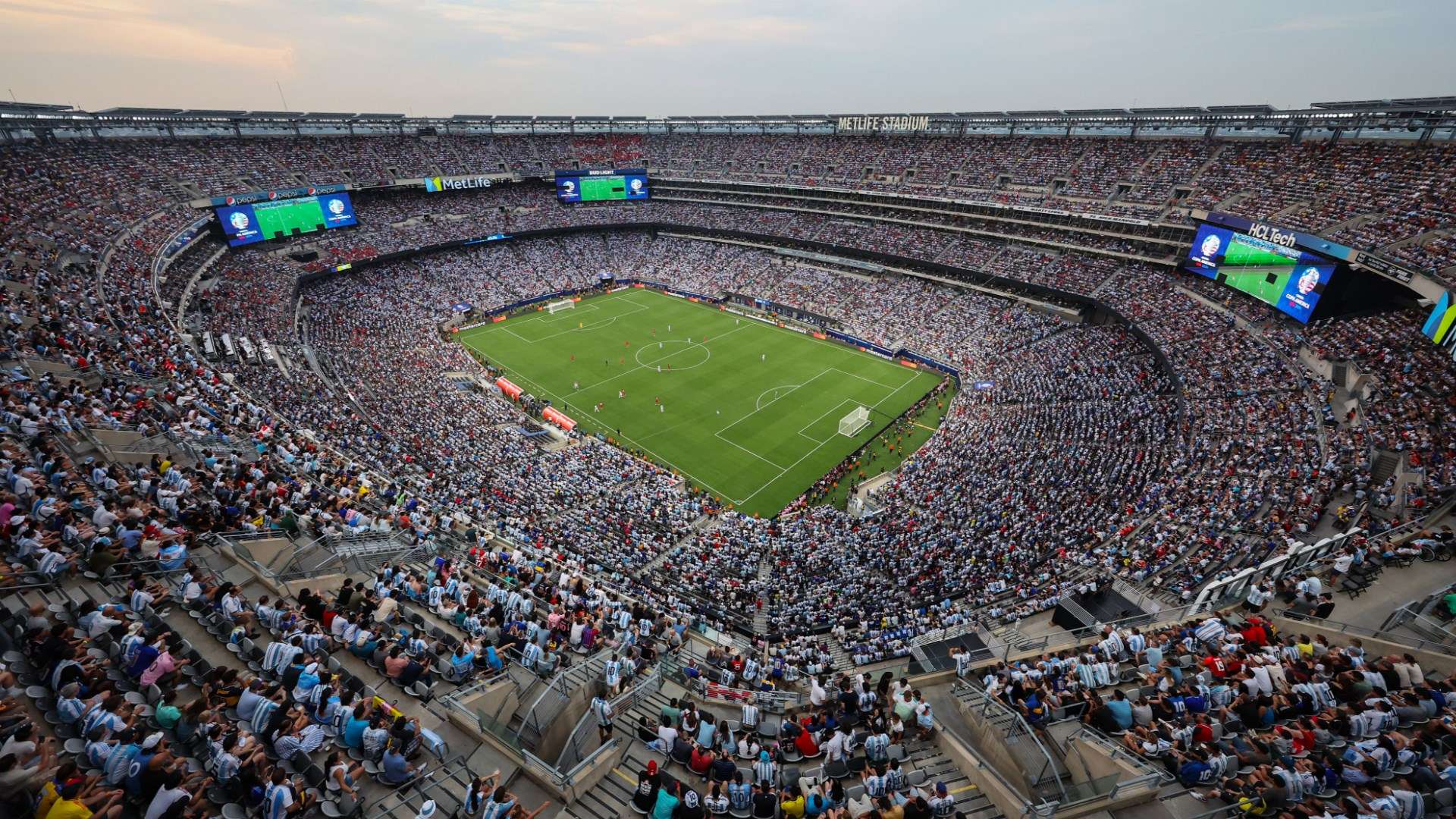
  • A aerial view of MetLife Stadium during a gameGetty Images

    ‘You’re dealing with 40 days’

    It’s not a revolutionary thought to suggest that organizing a World Cup is a big ask. Sounds obvious, but there are so many permutations to account for, so many strategies to implement, so many tasks to coordinate, so many scenarios to forecast - simply put, so many things that need to be done.

    “You're dealing with 40 days, and there's a lot of things that are just outside of your control - weather, acts of God - those are the things that just keep you up at night,” Lasry said. “If we get three days of rain, how do we pivot? What are we going to do to make sure that the experience isn't, you know, lessened as a result?”

    From the opening match on June 11, 2026 in Estadio Azteca in Mexico City to what is expected to be a rousing final on July 19 at New York / New Jersey Stadium (aka MetLife), the players, teams and actual games will command attention. Three cities in Mexico will host matches, along with two in Canada.

    But getting there is the challenging part. And this is all particularly difficult in the United States and its 11 host cities. That is in large part because of the levels of bureaucracy and jurisdictions involved in hosting such an event across a country this size. There is already infrastructure in place, buildings that can’t be knocked down or photoshopped out of frame.

    This requires wholesale changes in metropolitan areas, and coordination with thousands of stakeholders within nearby area codes - from local, state and federal agencies - not to mention collaboration with all of the other teams in other cities facing similar challenges.

    “We’ve been able to establish relationships and touch base with counterparts when we have a question or want to talk through an idea. There's been, I think, good collaboration,” Sharon Bollencach, executive director of Toronto’s host committee, told GOAL.

    Most host committees have been preparing not for months, but years. Planning for bids started as early as 2017, and FIFA announced its 16 host cities: Atlanta, Boston, Dallas, Houston, Kansas City, Los Angeles, Miami, New York/New Jersey, Philadelphia, San Francisco and Seattle in the U.S.; Guadalajara, Mexico City and Monterrey in Mexico; and Toronto and Vancouver in Canada.

    Since that day, most have been steadily working to piece everything together, and ensure that when the first game kicks off, the continent will be able to support the weight of players, fans and global attention.

  • Advertisement
  • Arrowhead Stadium 2024Getty

    ‘We are working in abstract’

    In 2014, Rio de Janeiro patched up its whole city. The Favelas, usually reaching high up onto either side of the city, were covered up and controversially policed in advance. Entire areas were rebanded and repackaged - and far more easily navigable than they otherwise might have been.

    That’s not so simple in the United States. Some cities, such as New York, have well-established public transportation systems. Yes, MetLife Stadium is actually in New Jersey, but there’s enough of a pipeline connecting the larger metropolitan sprawl.

    “We are one of the lucky cities,” Lasry said. “When you look at New York, New Jersey, we're one of the few, if not the only, that actually has public transportation to the stadium… by and large, it's a pretty simple means of getting to MetLife. I think when we're looking at this, the train is going to play a vital role.”

    Other markets may need to get creative. Kansas City is the smallest host city, but it has also been among the most active. They were the first to publicly agree on a deal to offer a bus service for fans to and from games, and have built a specially designed tram that runs through the heart of the main strip of the city to ferry fans.

    A recently opened terminal at their nearby airport will also prove helpful for the deluge of fans, Kramer hopes. Atlanta, meanwhile, is in a different spot. While the city has the largest airport in America, public transport isn’t as ubiquitous. Trains on the light rail system run every eight minutes (some in New York run every three, by comparison). But organizers insist that the plan for a more accessible transportation system has been well received.

    “We already have iterations of transportation plans that we've done for major events,” Georgia O'Donoghue, CEO of Atlanta’s host committee, said. “But in theory, it's the same idea. And so we are working in abstract, but it's not totally abstract to us.”

  • Mercedes Benz Stadium(C)Getty images

    ‘We’re obligated to provide a clean site’

    Mercedes-Benz Stadium is arguably the most versatile sports venue in the United States. Everything about the arena, just a mile from Atlanta’s city center, is set up to host massive events. Within the last year, it has been home to everything from Copa America fixtures to College Football playoff games and Post Malone concerts. Those involved in the day-to-day operations will tell you there’s nothing quite like it.

    But even that - quite literally the best the U.S. has to offer - will need work. Their biggest change started at the end of 2024, when Atlanta’s committee started the arduous process of adding natural grass to the turf, and allowing it to grow-in over the course of 18 months. They have since followed that by upgrading the lighting system.

    Kansas City, too, had to go to work. They spent big removing a few rows of seats and replacing them with bleachers to widen the field - something that the Chiefs, and their fans, will have to deal with over the course of the next NFL season. The same applies to Toronto, which has embarked on extensive renovations on BMO Stadium.

    “Anyone who's ever done even a small renovation in their home knows how projects can go - and certainly in this economic climate, and that's been a challenge and needed the longest runway,” Bollencach said.

    There’s also the issue of branding. It is a ubiquitous trait of American sports, with virtually everything sponsorable. Here’s the Barclays Premier League. And your Lexus stoppage time is six minutes. We now to go a timeout, brought to you by State Farm. Welcome to our soccer half time show, sponsored by big box appliance store.

    It is, of course, a money-making proposition. Stadium naming rights are sold because doing so brings in cash. MetLife paid $400 million over 25 years for naming rights to the New Jersey stadium. Mercedes-Benz coughed up $12 million per year for Atlanta. Branding is everywhere. Adam Fullerton, VP of stadium operations in Atlanta, said some 2,000 sponsors need to be removed from the stadium prior to the start of the World Cup.

    FIFA, prohibits corporate stadium names referencing companies that are not official FIFA sponsors, so existing stadium names will be covered during the World Cup and will not be mentioned in game broadcasts - unless those companies sign separate sponsorship deals. So Mercedes-Benz Stadium, for the duration of the World Cup, will officially be dubbed “Atlanta Stadium.”

    "We’re obligated to provide a clean site, that's a commercial kind of blackout of your building of all competing brands or partners that really can't be visible during the duration of this tournament. That happens to include Mercedes-Benz,” Fullerton said.

    But there are gameday aspects that will stay intact. Atlanta insisted, for example, that its affordable food strategy will remain. Hot dogs are just $2, beers are $5. The stadium has long boasted that you can feed a family of four for $20. That promise isn’t going anywhere.

    “It was mandatory, from our point of view,” O'Donoghue said.

  • World Cup draw 2022Getty Images

    'A beacon of soccer growth'

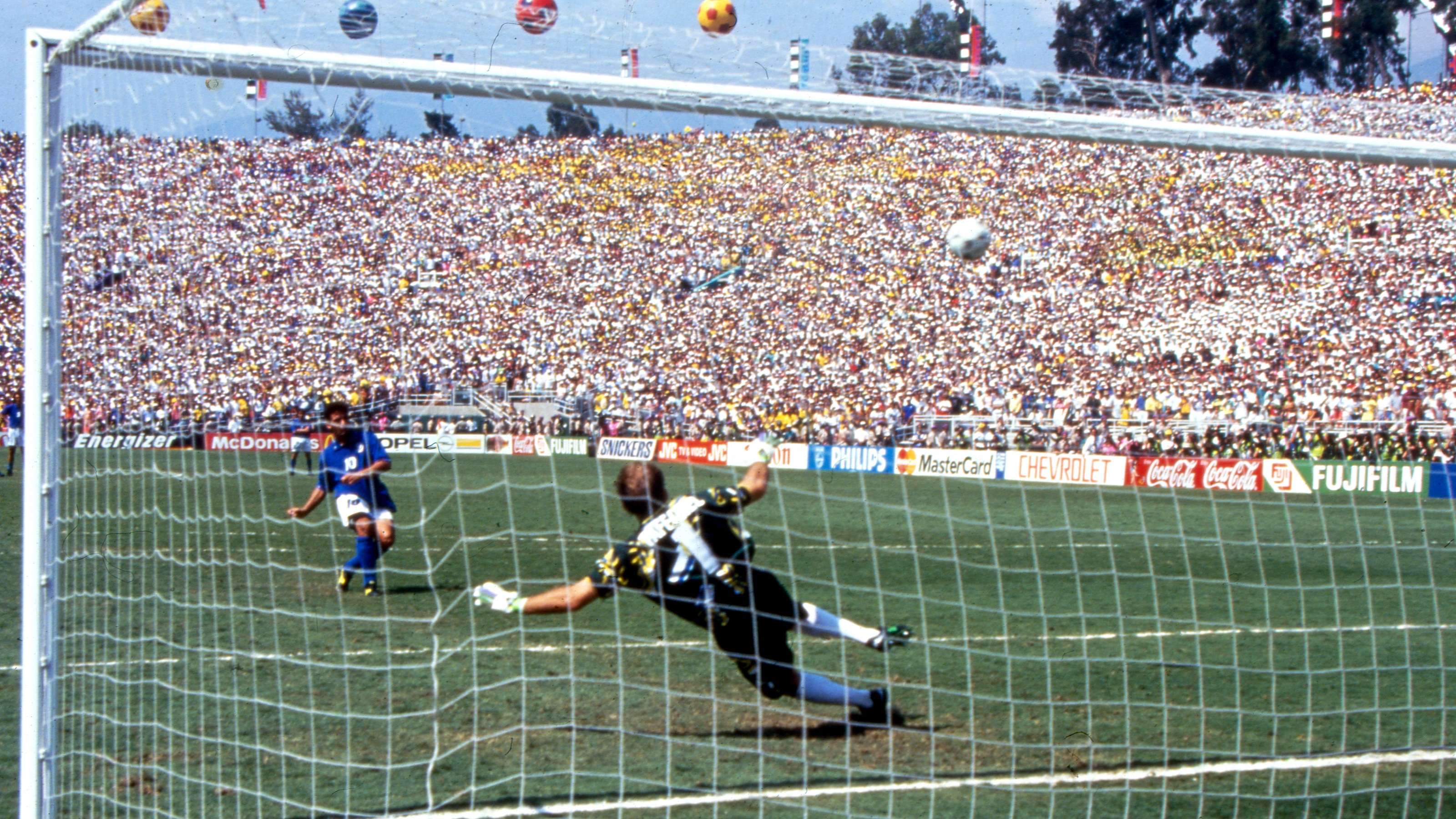
    America’s soccer culture is far more developed than in 1994, the last time the men’s World Cup was played in the region. Back then, the tournament included 24 teams, playing in nine cities. It was the gateway to soccer for hundreds of thousands of fans, but the concept of the game as a global phenomenon hadn’t yet penetrated the mass populous.

    It still hasn’t, at least not completely. But it is well on its way. That is a good thing for soccer in the country. But it also presents a significant problem for host committees. Different countries interact with the sport in different ways. Traditions are unique to pretty much every nation, and the country needs to facilitate them. The Dutch affinity of marching to a stadium is difficult to replicate in Kansas City, for example, when it would require an eight-mile saunter down I-70.

    “If the Dutch are here, we're going to have to create a march to the match, and we don't want them doing that on the interstate,” Kramer admitted. “So how do we do that once they reach the parking lot of the stadium? Those are the things that go beyond just the nuts and bolts of transportation.”

    But making such accommodation can be particularly tricky - mostly because the World Cup Draw doesn’t occur until this December. No one knows which teams will be playing in their respective cities. That means they have to prepare for virtually any scenario, and hope that local enclaves can help facilitate the various potential outcomes.

    “The hope is that this region can start to grow into becoming a beacon of soccer growth and excitement and culture, especially in the United States - but then also the world,” Lasry said.

    Some committees have studied other events and tournaments. Kansas City sent their chief of police to Euro 2024, for example, and have turned to other major events for inspiration. New York analyzed the organizational aspects of Taylor Swift’s Eras Tour to figure out how to deal with massive crowds.

    The 2024 Copa America held in the U.S. - including the controversy at the final, with numerous arrests after fans rushed the gates before the game in Miami - has been a ubiquitous reference point. While there were numerous positive takeaways - good soccer and passionate fans chief among them - it was marred by questionable decisions and mismanagement. Organizers of the 2026 World Cup have taken note.

  • Italiy-Brazil 1994 World Cup USAGetty Images

    ‘People still talk about the '94 World Cup all the time’

    Perhaps the biggest challenge every committee has faced is one of legacy. World Cups are remembered not only for the quality of play, but also how effectively a country was able to host it. The 2014 iteration in Brazil featured some memorable games, but is still criticized for the baffling Arena de Amazonia - held in the isolated Manaus - which has since fallen into ruin after costing $270 million.

    “People still talk about the ‘94 World Cup all the time,” Lasry said. “And for us now, being part of that history going forward is a really unique and exciting thing.”

    The question of remembrance, then, is a constant. It is reflected in numerous ways. Part of it is the idea of branding and posters. Local artists have all contributed to posters - which have received rave reviews and generated plenty of clicks for their unique homages to each city.

    “Every time I look at our poster, I see something new. If you live here, you see something in it that resonates with you. Once you visit here, you’ll feel something that resonates with you,” O'Donoghue said.

    Economic benefits are also not to be downplayed. But even that requires delicate planning from committees, who have worked extensively in local communities to ensure that there is the manpower and financial resources needed to ensure that everything moves smoothly.

    Get it right, and the economy can thrive, Lasry said.

    “A vast majority of the fans aren't going to step foot in the stadium… so we’ve got to be sure that the local businesses, hotels, bars, restaurants, you know, event planners, you name it, are all able to really benefit from, you know, this once in a generation opportunity,” Lasry said.

  • President Trump Participates In FIFA Task Force Meeting In East RoomGetty Images News

    ‘It could color their experience of visiting the U.S.’

    There are also some uncomfortable realities to face here. FIFA estimates as many as 6.5 million people could attend the tournament next summer. The administration announced a task force at the start of May, chaired by U.S. President Donald Trump and headed on a day-to-day basis by Andrew Giuliani, who previously served in Trump’s first administration as a special assistant.

    FIFA president Gianni Infantino has repeatedly appeared with Trump, praised the World Cup task force and showcased the Club World Cup trophy from the Oval Office. With reported concerns over fan attendance, visa issues and security around next year's event, the Trump administration will affect the way that this tournament is executed and perceived.

    "We had a meeting last week of the White House Task Force on FIFA World Cups... And the world is welcome in America. Of course, the players, of course, everyone involved, all of us, but definitely also all the fans," Infantino said earlier this month at the FIFA Congress. "This doesn't come from me; this comes from the American government. Everyone is welcome, obviously, those who want to come and celebrate football ... Those who want to come to create trouble, like in every country in the world, they are not welcome. They are not welcome anywhere in the world."

    The U.S. has political tensions with Mexico and Canada. And FIFA is facing pressure about the World Cup after a top human rights organization said it has “grave concerns” about Trump's border policies affecting the tournament.

    The White House, on the other hand, has pledged that World Cup travel will be a smooth process for visiting supporters.

    “Every part of the U.S. government will be working to ensure that these events are safe and successful, and those traveling to America to watch the competition have a seamless experience during every part of their visit,” Trump said during a recent World Cup task force event. “It’s going to be very special.”

    Host committees downplayed the connection to the White House, saying that local and state governments are their regular points of contact. Multiple also claimed that relationships with other committees have been as equally valuable as legislation. They have also held regular check-ins with FIFA. Feedback has been positive, they insist.

    “If someone has a bad experience in one host city, it could color their experience of visiting the U.S., and that's not something we want,” Lasry said. “We are making sure that we're all on the same page, that everyone is able to take best practices from different host cities,”

  • MetLife Stadium general view (Argentina vs Canada Copa America 2024)Getty

    ‘Every challenge creates opportunity

    Progress appears steady. There are myriad issues being confronted in real time, and host committees insist that they are well on track to make this all happen smoothly, effectively and safely. Sure, there are uncertainties that cannot be accounted for 13 months out - public transport delays, fan behavior, the knowledge of who, exactly, they will be playing home to for a number of weeks.

    “It’s going to create some challenges, every challenge creates opportunity,” Lasry said.

    Challenges, triumphs and unknowns notwithstanding, one thing is certain: the clock is ticking.