muhammad

Muhammad Sharaf Eldeen

Shift Managing Editor

Professional Summary

A multi-disciplinary Egyptian journalist dedicated to providing readers with comprehensive and accurate insights. I possess over 13 years of experience in print and broadcast media, having contributed to some of the largest newspapers, digital platforms, and TV channels in Egypt and the Arab world. Notably, since April 2017, I have served as a Shift Manager and Desk Editor at Kooora, the leading Arabic sports website, collaborating with a premier team of highly professional journalists.

I am passionate about crafting logical and accessible sports articles and analyses—avoiding unnecessary complexity—while maintaining the highest standards of accuracy and objectivity. I firmly believe that personal bias has no place in journalism; information is a trust, and integrity is the supreme ethic of the media profession.

Personal Background & Football Philosophy

My journey with football began at the age of five, inspired by my family's passion during the 1994 World Cup. Since then, the sport has become an integral part of my life, both as a player and a spectator.

One of my most formative footballing memories is the historic 1999 UEFA Champions League final at Camp Nou. That night, Manchester United’s dramatic late comeback against Bayern Munich marked the beginning of my lifelong allegiance to the German giants, who still hold a prominent place in my heart.

Areas of Expertise

Leveraging extensive experience across various media sectors, I specialize in:

Football History: Extensive knowledge of European and German football history.

Tactical Analysis: Predicting match scenarios and tactical breakdowns.

Scouting: Identifying young talents and analyzing their technical potential.

Career Milestones & Highlights

Among many memorable sporting moments, the most significant remains Bayern Munich’s 2001 UEFA Champions League victory over Valencia—my first continental celebration with the club.

All-Time Favorite XI:

Goalkeeper: Manuel Neuer.

Defense: Alessandro Nesta, Sergio Ramos, Philipp Lahm, Paolo Maldini.

Midfield: Xavi Hernandez, Andres Iniesta, Zinedine Zidane.

Forward: Lionel Messi, Cristiano Ronaldo, Ronaldo Nazário.

Articles by Muhammad Sharaf Eldeen
  1. Egyptian goalkeeper Essam El-Hadari has claimed that he anticipated Morocco’s Yassine Bono’s “miraculous” save by 23 years. The veteran shot-stopper, renowned for his experience an

    Al-Hadari heaped praise on the performance of the Black Atlas star, singling out his command on the ball, his incisive runs and his ability to unlock defences with a single pass. The veteran goalkeeper underlined the forward’s maturity, noting that he has grown into a complete player capable of influencing games in multiple ways. Al-Hadari stressed that the 23-year-old’s work-rate and off-the-ball movement create headaches for opposition back lines, and he highlighted the player’s willingness to track back and press as a key factor in the team’s recent defensive solidity. He also pointed out that the star’s confidence is contagious, lifting the entire squad and inspiring younger teammates to aim higher. According to Al-Hadari, the forward’s blend of technical ability and physicality makes him a rare talent, and he expressed confidence that bigger stages await the player in the near future.

  2. Bayern Munich have been handed a double warning ahead of the second leg: Real Madrid’s defence will be even stronger this time around. That concise phrase carries a clear message f

    Real Madrid, known affectionately as “Los Blancos” or “Al-Merengue” across the Arab world, are braced to contain Bayern Munich’s formidable attacking tide. The Spanish champions head into this Champions League clash aware that the German giants have scored freely this season, yet they remain confident in their ability to keep the Bavarians at bay. History shows that Bayern possess one of Europe’s most potent front lines, capable of punishing even the slightest defensive lapse. Nevertheless, Madrid’s back line—led by the experienced Sergio Ramos and the composed Raphaël Varane—has been drilled to deal with exactly such threats. The key, as coach Zinédine Zidane has emphasised, will be to disrupt Bayern’s rhythm before it can build momentum. In the build-up to kick-off, analysts have focused on the duel between Bayern’s pacy wingers and Madrid’s disciplined full-backs. Should the hosts succeed in blunting the visitors’ wide play, they will have taken a significant step towards securing a

  3. The Dutch star has made it clear that the Moroccan Football Association has not yet approached him about representing the North African nation, yet he has left the door wide open f

    Oufkir was in inspired form for the Windmills, delivering a performance that underlined his growing influence in the side. The midfielder, known for his composure and range of passing, controlled the tempo from the base of the midfield and provided the spark that ignited several dangerous attacks. His reading of the game disrupted opposition builds, while his quick distribution launched counter-attacks that kept the back line on high alert. Although the final scoreline did not reflect the dominance he helped create, his ability to dictate play and maintain possession earned him praise from coaches and supporters alike. As the Windmills look to build on this display, Oufkir’s continued development could prove crucial to their season-long ambitions.

  4. A new front has opened in the ongoing debate over inclusion in international sport. Former U.S. President Donald Trump has publicly called for transgender individuals to be barred

    The US President is seeking to strengthen his influence in the world of football. This strategic push, though light on specifics so far, is being watched closely by stakeholders across the sport. From domestic leagues to international governing bodies, officials are weighing how the White House might leverage diplomatic, economic, and cultural levers to expand American interests on and off the pitch. In recent years, football—or soccer, as it is known in the United States—has emerged as a powerful soft-power tool for nations seeking to project influence, attract investment, and build global partnerships. The world’s most popular sport commands billions of fans, making it an attractive arena for political leaders aiming to amplify their messages and forge new alliances. While the details of the President’s plan remain unclear, several potential avenues are under consideration. These include hosting high-profile tournaments, investing in youth development programs, and using the sport as

  5. Egypt and Iran reveal alternative World Cup participation plan With the final whistle on their group stage fortunes blowing, both Egypt and Iran have unveiled a contingency bluepri

    Doubts surround the Iranian national team ahead of the World Cup. As the final whistle approaches for football’s showpiece event, observers in Tehran and beyond sense a palpable unease about the team’s readiness. Concerns range from the squad’s defensive fragility to the lingering effects of domestic political pressures that have shadowed its preparations. Analysts point out that the side has struggled to find consistency in high-profile friendlies, and the coaching staff’s public silence only amplifies the uncertainty. Fans, who have seen their team qualify for a record sixth consecutive tournament, now wonder whether the squad can silence the sceptics when the first match kicks off.

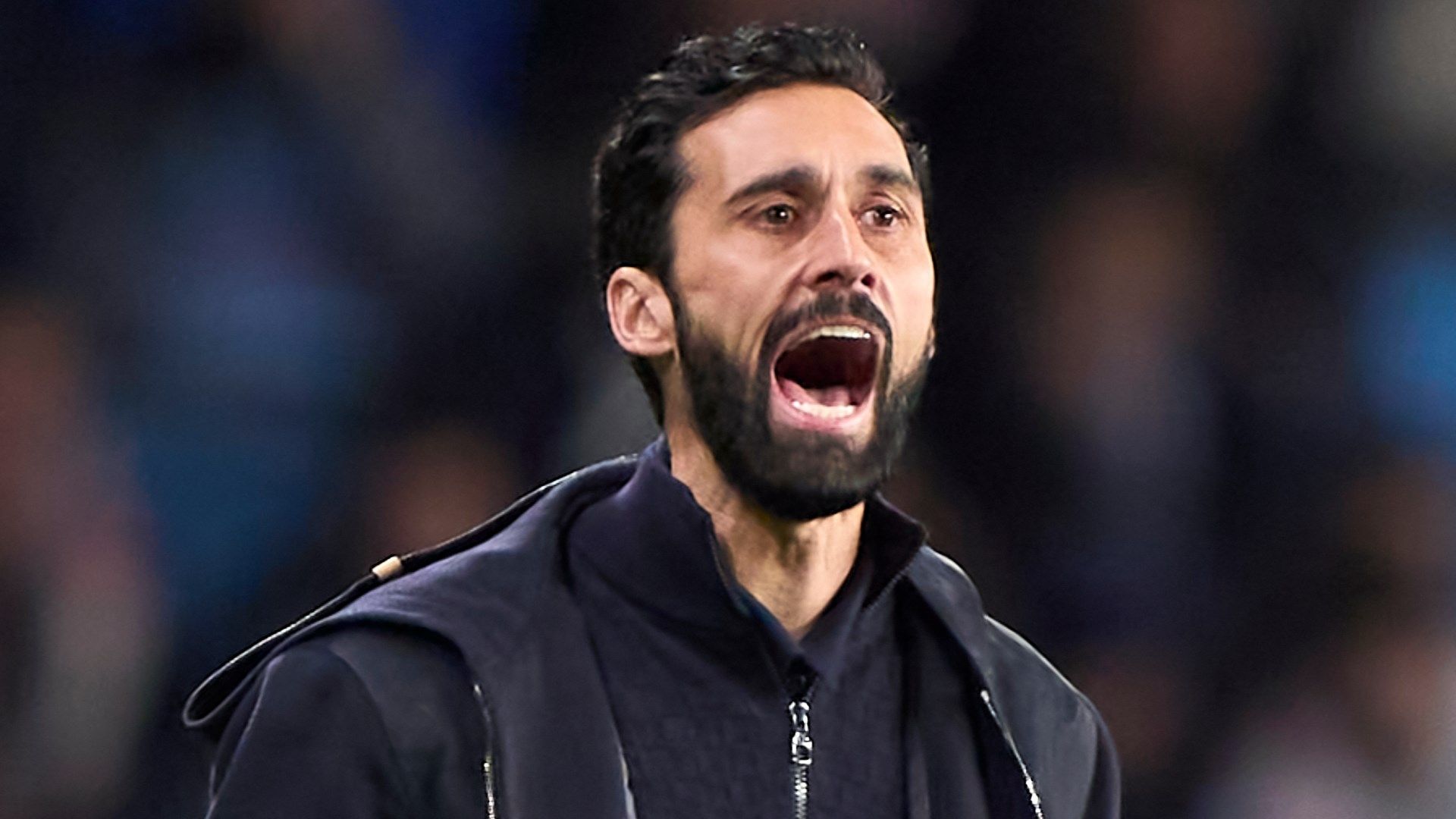
  6. Following a heated row, former Real Madrid defender Álvaro Arbeloa has forced a current club star to apologise to his teammates. The incident, which erupted during a closed-door tr

    Arbeloa insisted that the apology be made publicly. In football, as in life, timing is everything. The former Real Madrid and Spain full-back had been silent for several days after the controversial incident, but he chose to break his silence in the most high-profile way possible: by demanding that the apology come not in a private message or a backroom handshake, but in full view of the fans, the media and the wider game. His stance underlines a broader truth about modern sport. Players are not just athletes; they are public figures whose every word and gesture is scrutinised, shared and often weaponised across social media. An apology that is buried in a press release or delivered in whispers will be ignored or, worse, seen as insincere. For an apology to carry weight, it must be as visible as the mistake that prompted it. Arbeloa’s insistence on public accountability reflects a growing expectation among supporters and commentators alike that their heroes—and the organisations that e