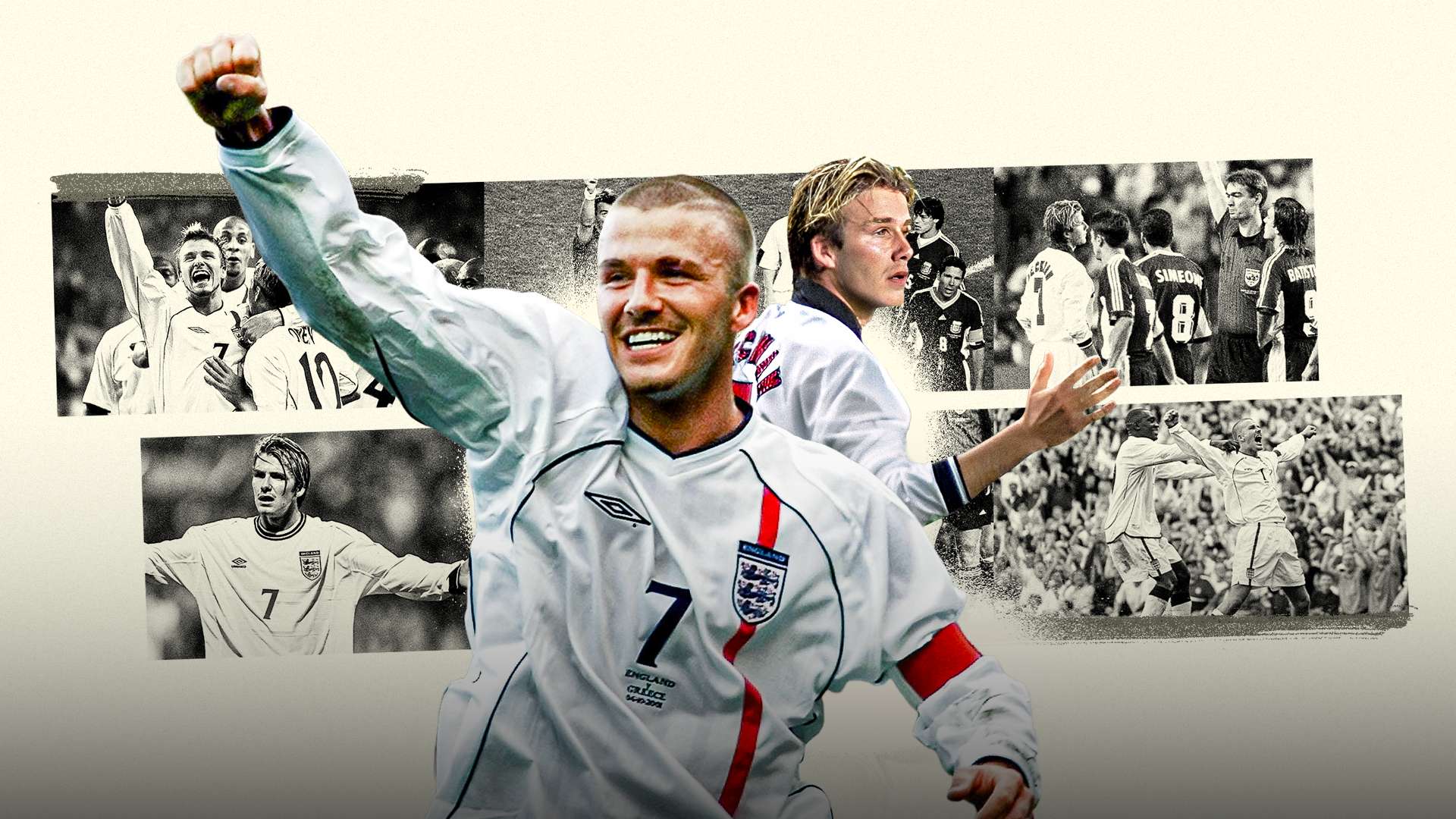
Amid the noise and personal criticism, Beckham still managed to go about his business and became one of the best players in the world during this period. He finished second in Ballon d’Or voting for 1999, the year United won the first treble in English football history. He was world renowned for his free kicks and crossing ability, with a film - Bend It Like Beckham - first going into production in 2001. There was more to life than what happened one evening in 1998.
Yet Beckham still craved the plaudits of the England faithful. He still wanted to right his previous wrongs. The decision to appoint him Three Lions captain in November 2000 was far from universally popular, but it was accepted all the same. With the appointment of Sven-Goran Eriksson as the team’s first foreign manager, there was hope this crop would end decades of hurt and deliver a trophy.
Despite beating rivals Germany 5-1 away in World Cup qualifying, England still needed to claim a point against Greece on the final matchday to book their spot at the 2002 finals in Japan and South Korea. Bizarrely, the Three Lions trailed 2-1 going into stoppage time of the game at Old Trafford.
With seconds to go, the hosts were awarded a free kick just under 30 yards out. There was only one man for the occasion. This was it. Three years of pain and vitriol could be wiped away with one swing of his right boot, this time onto a ball rather than another player.
Up stepped Beckham, and the rest was history.
“I don’t believe it,” commentator Gary Bloom said in utter disbelief. “David Beckham scores the goal to take England all the way to the World Cup Finals! Give that man a Knighthood!”
England were going to the World Cup, and would you believe it, they were drawn to face Argentina again, this time in the group stage. This time, Beckham was the winner.
Once more, Owen won a penalty, brought down by Mauricio Pochettino, nowadays better known as the former manager of Tottenham and Chelsea. There was no doubt who was taking the spot kick, though.
“Hold the cups and the glasses back home,” the immortal John Motson said on the gantry as Beckham took one last breath to himself. “You can smash them now, Beckham has scored for England!” was the next line spoken.
England went out to eventual winners Brazil in the quarter-finals, even despite the Selecao playing over 40 minutes with ten men after Ronaldinho was sent off. In fact, the Three Lions’ trophy drought is still ongoing to this day, with the ‘Golden Generation’ failing to deliver silverware. But Beckham had his moment of vindication. He was no longer an England enemy, rather a hero and a legend. To this day, only two men - Peter Shilton and Wayne Rooney - have played more games for the national team.
Beckham is one of the most recognisable faces in sport anywhere in the world, seen as a trailblazer and a leader by example rather than a mere player. Moreover, he is viewed as an unofficial ambassador of his country during his many excursions abroad.
He ended his career with a grand total of 146 goals in 724 matches, winning 17 trophies and playing club football in five different countries, still loved to this day by every team he ever represented - United, Preston North End, Real Madrid, LA Galaxy, AC Milan and Paris Saint-Germain. The furore over 1998 is now more remembered than the actual hatred towards Beckham, proving once and for all he exorcised those demons.
Oh, and he received his knighthood from King Charles III at long last in 2025. Arise, Sir David Beckham.