From superhero to laughingstock, it was always a thin line for Mario Balotelli. If the night in Warsaw was the dazzling peak of his career, then two particular moments were the humiliation. Actions nurtured by childish mischief, dangerous recklessness, and sheer provocation.
First came the incident of throwing darts at a youth team player out of boredom, in March 2011, before a little over six months later Balotelli set off fireworks in his bathroom just 36 hours before the derby against Manchester United, causing £400,000-worth of damage. As if nothing had happened, though, he scored two goals in that game - a memorable 6-1 triumph for City at Old Trafford.
Go further back, and shortly after arriving in England, he had wrecked his Audi R8 on the way to training and gave the deadpan response to the police officers who asked him why he was carrying £5,000 in cash: "Because I'm rich." The City fans adored him for these antics and even composed a chant to pay homage to their rebel of a forward.
Indeed, alongside the childish behavior was an alarming lack of discipline on the pitch. He collected red cards like Panini stickers. A brutal kung-fu kick at chest height to then-Dynamo Kyiv defender Goran Popov and a deliberate whack to the head of then-Tottenham midfielder Scott Parker were just two notable incidents, while repeated scuffles in training, even with his mentor Roberto Mancini, would occur.
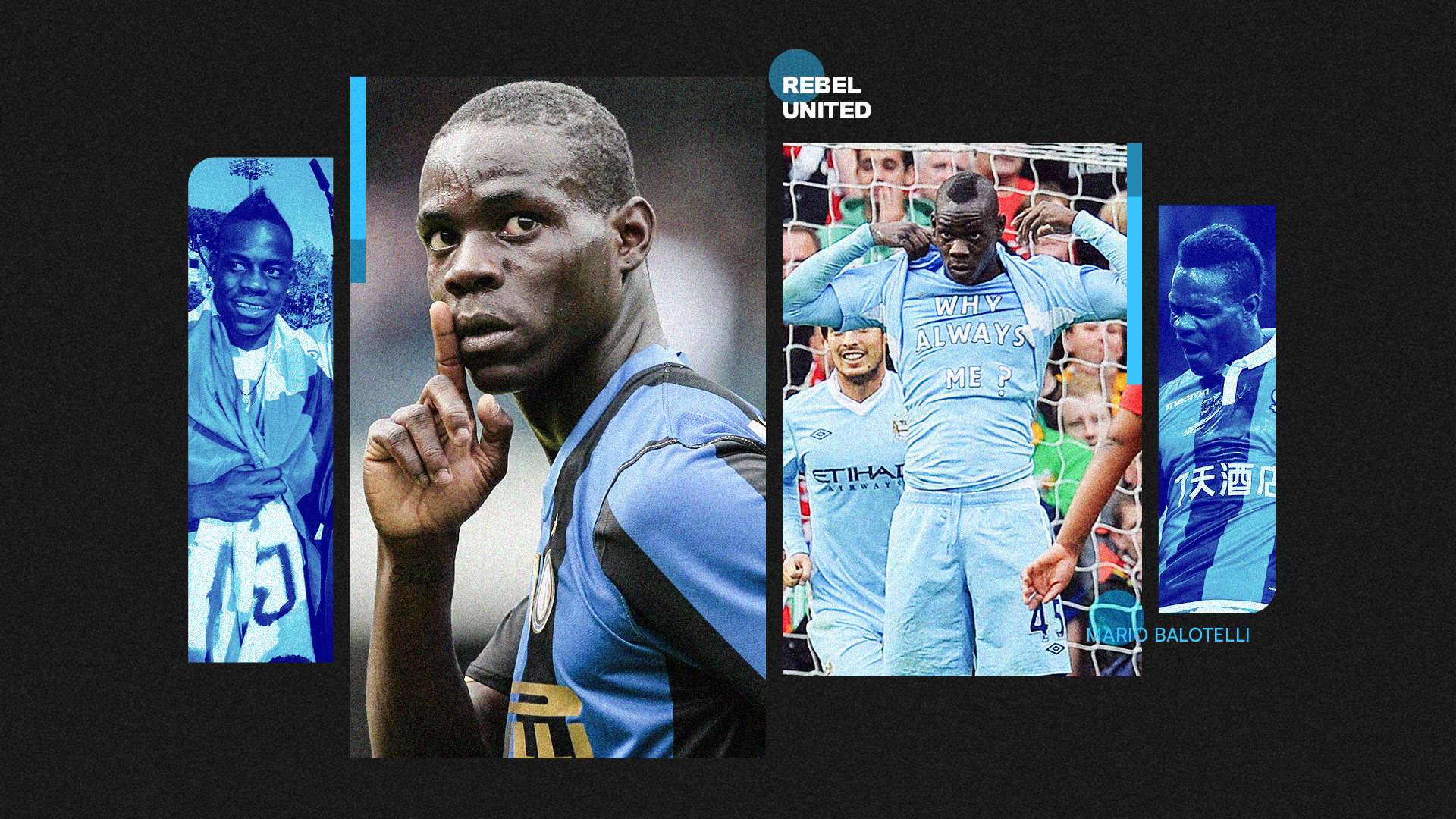
At the centre of this era of madness, however, stands a moment that, much like the Hulk celebration, became an iconic symbol: the 'Why always me?' T-shirt. After his first goal in that 6-1 triumph against United, he lifted his jersey to reveal the three simple words. Many critics interpreted the gesture as sheer arrogance. The truth was likely more complex. "It was a message to all the people who talk bad about me and don't know me, so I just asked: 'Why always me?'", Balotelli said on one occasion when looking back.
It was not meant to be a display of arrogance but a plea for peace. It was here, in this moment, that the toxic but symbiotic relationship between Balotelli's escapades and his global fame was revealed. His scandals were not just a side effect of his career; they were its engine. The truth is that Balotelli's fame, catapulted by the widespread media coverage, also appeared to reflect deep-rooted personal problems, leading to ever-new, ever-more erratic actions. Balotelli was both the architect and the victim of his own myth. The question 'Why always me?' was therefore not rhetorical, but existential.


.jpg?auto=webp&format=pjpg&width=3840&quality=60)


