GFX Legacy Brazil GOAL

LEGACY: The 24-year wait that haunts Brazil as identity crisis grips five-time World Cup winners

World Cups are usually marked by uncertainty - their unpredictability is what makes them so compelling. But the 2026 edition will arrive loaded with certainties. For the Brazilian national team, it will be a turning point in history: either Carlo Ancelotti’s men earn their long-awaited sixth star, or they will set a record for the longest title drought Brazil has ever endured.

It’s been 24 years since Brazil’s last triumph in 2002 - the same gap that separated the 1970 title, won by the all-star team that featured Pele, Jairzinho, Gerson, Rivellino, Tostao and company, from the triumph in 1994. Five straight tournaments without the Selecao lifting the trophy. The math is simple: if the drought doesn’t end next year in North America - as it did on that sunny afternoon at the Rose Bowl, when Roberto Baggio sent his penalty kick flying over the bar - then the wait will stretch to 28 years and six World Cups by 2030.

Brazil has never waited this long for a global title. The first edition of the tournament was in 1930, and while Brazil’s first trophy came 28 years later, in 1958, the country only realistically began dreaming of lifting the trophy in 1950, when it hosted the tournament for the first time. Just eight years separated the scene of a young Pele comforting his tearful father after hearing the ‘Maracanazo’ on the radio from him crying tears of joy, embraced by Nilton Santos, following Brazil’s victory over Sweden in 1958.

From that first title onward, Brazil became synonymous with beautiful soccer, with passing, dribbling, goals, artistry. The yellow jersey became the most recognised and revered sports symbol on Earth. The ‘country of football’, the ‘Jogo Bonito’. The second title followed quickly, in 1962, and the disappointment of 1966 lasted only four years before the 1970 team - televised globally for the first time - sealed Brazil’s place as kings of soccer and Pele’s as the greatest player of all time.
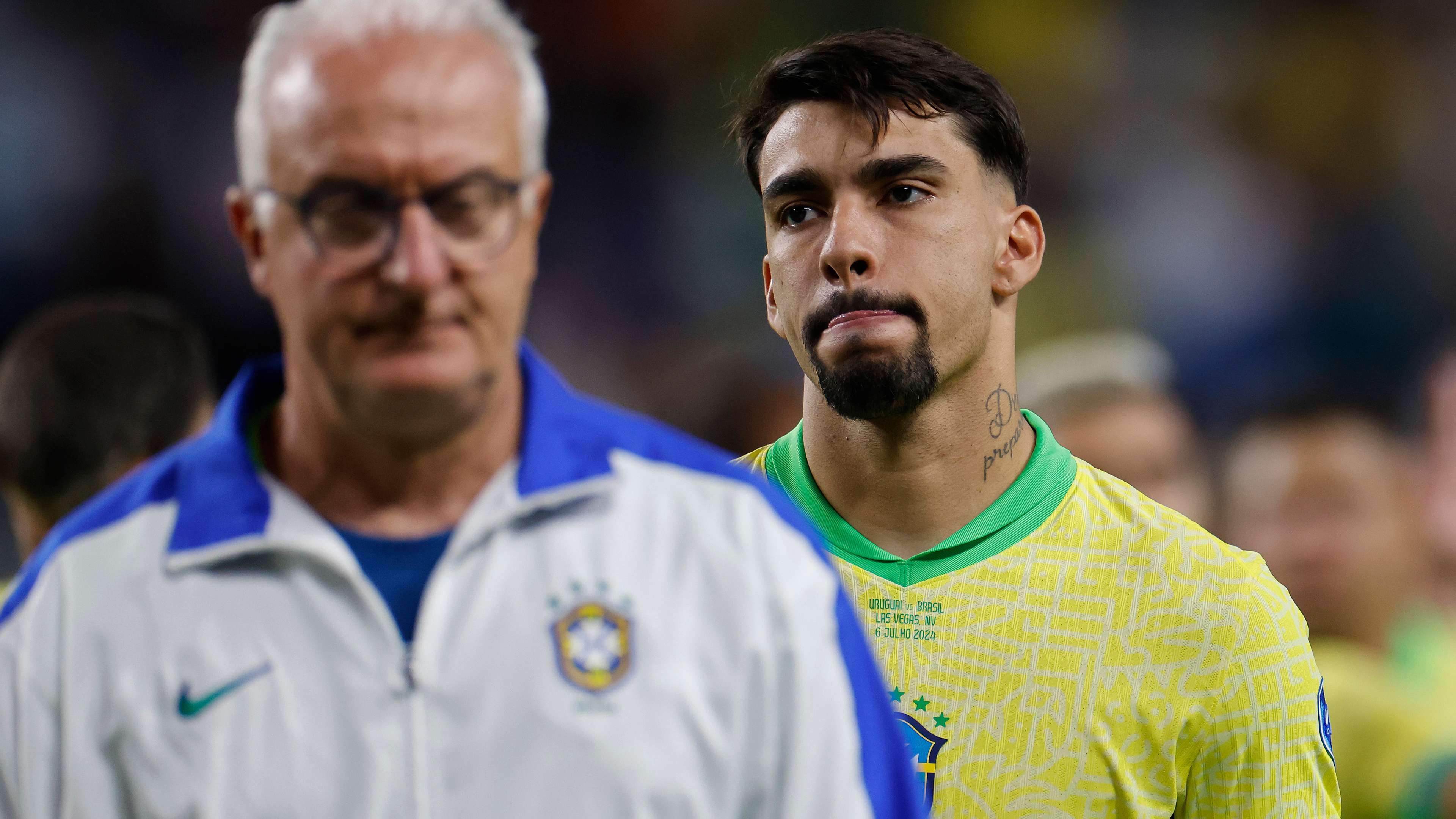
  • Uruguay v Brazil - CONMEBOL Copa America USA 2024Getty Images Sport

    Different kind of drought

    But where lies the differences of these two 24-year title droughts? We're talking about the same number of spins around the sun, or the same five editions of the tournament, but the differences between the two periods could not be starker.

    The current one is, without a doubt, far worse. The post-Penta era has been far more damaging to the image and self-esteem of Brazilian football than anything that came before.

    In 1974, still figuring out life after Pele, Brazil fell to Rinus Michels and Johan Cruyff’s revolutionary Netherlands. In 1978, though Argentina lifted the trophy, Brazil returned home unbeaten - ‘the moral champions’ - after being eliminated on goal difference amid the infamous Argentina-Peru match.

    The 1982 squad earned a special place in history. Like Hungary’s ‘Magical Magyars’ of 1954 and Cruyff’s Netherlands, they enchanted the world despite not winning the title. Losing to France on penalties in 1986 was disappointing, but not disgraceful, and really, who could have stopped Diego Maradona that year? The defeat to Argentina in 1990, on the other hand, was a genuine heartbreak, but soon after came redemption via the 1994 title.

    Despite frustrations between 1974 and 1993, Brazil’s footballing self-image remained proud, not arrogant. Winning a World Cup is never easy, and the sport delivers more heartbreak than glory. Yet the country could still look in the mirror and see its best players competing at home, something that began to change drastically after the 1995 Bosman ruling, which opened the floodgates for South American stars to move permanently to Europe.

    That reality, Brazil’s top talents spending their prime years abroad, seems irreversible now. It goes beyond sport itself. Still, it’s a symbolic blow that deepens the weight of this drought, even if the domestic game in Brazil has recently improved in quality despite the absence of its biggest stars.

  • Advertisement
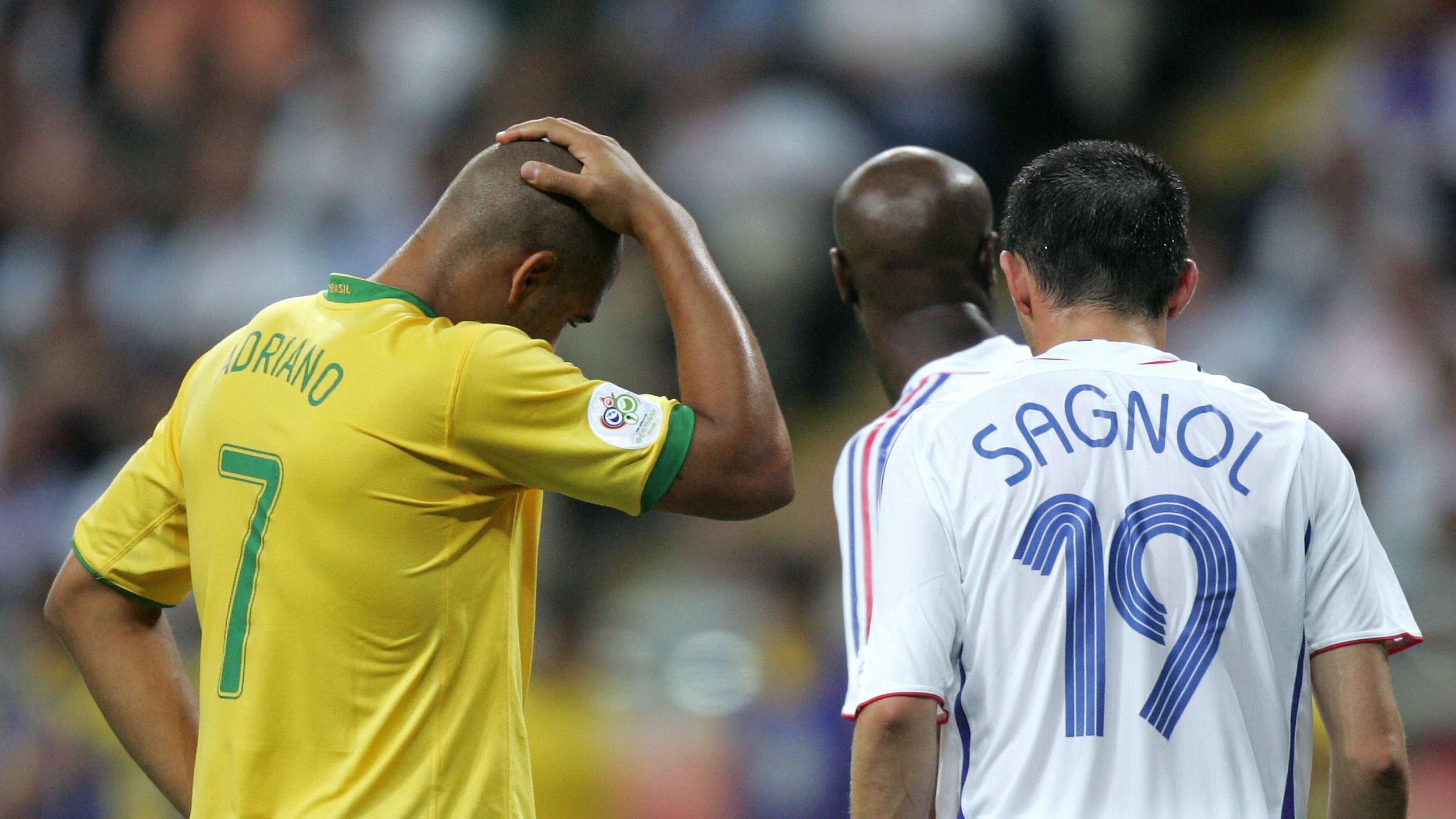
  • Brazilian forward Adriano (L) reacts asAFP

    Failure

    The 2006 World Cup in Germany was the first in which over 80 per cent’s of Brazil’s squad played in Europe. Before the tournament began, no one cared. The mood was one of ‘it’s already ours’, and who could have doubted those believed that?

    The team had Ronaldinho, then the best player in the world; Ronaldo, the best of the previous era; and Kaka, who would soon claim the same crown. Add to that Adriano, Dida, Cafu and Roberto Carlos, and it was the most star-studded Selecao since the one of 1970. The image of that Brazilian team lined up during the national anthem has since become iconic.

    To those who didn’t watch that World Cup, it looks like a golden era. But for those who did, the memory is one of deep disappointment, not only because of the quarter-final loss to Zinedine Zidane’s France, but because the team played without joy, creativity, or structure. The party atmosphere surrounding the squad, epitomised by the light-hearted training camp in Weggis, Switzerland, came to symbolise the collapse.

    That tournament ended with Roberto Carlos famously distracted by his socks while Thierry Henry scored the goal that sealed Brazil’s elimination. The same Carlos Alberto Parreira who led Brazil to end its previous drought in 1994 was now the coach who would oversee the beginning of the new one.

  • FBL-WC2010-MATCH57-NED-BRAAFP

    No more smiles

    The Brazilian Football Confederation’s (CBF) response to 2006 wasn’t to look at itself. Riding the public’s outrage over the ‘Weggis party’, they hired Dunga, the 1994 captain, to impose discipline and seriousness.

    The results were mixed. The team won the Copa America and Confederations Cup, but it lacked spark. Charisma vanished as Ronaldo retired from the national team and Ronaldinho and Adriano were dropped due to declining form and off-field behaviour. Perhaps that was when Brazil truly stopped smiling.

    The preference for physicality over flair became clear when Neymar and Paulo Henrique Ganso, two young stars who were dazzling for Santos, were left out of the 2010 World Cup squad.

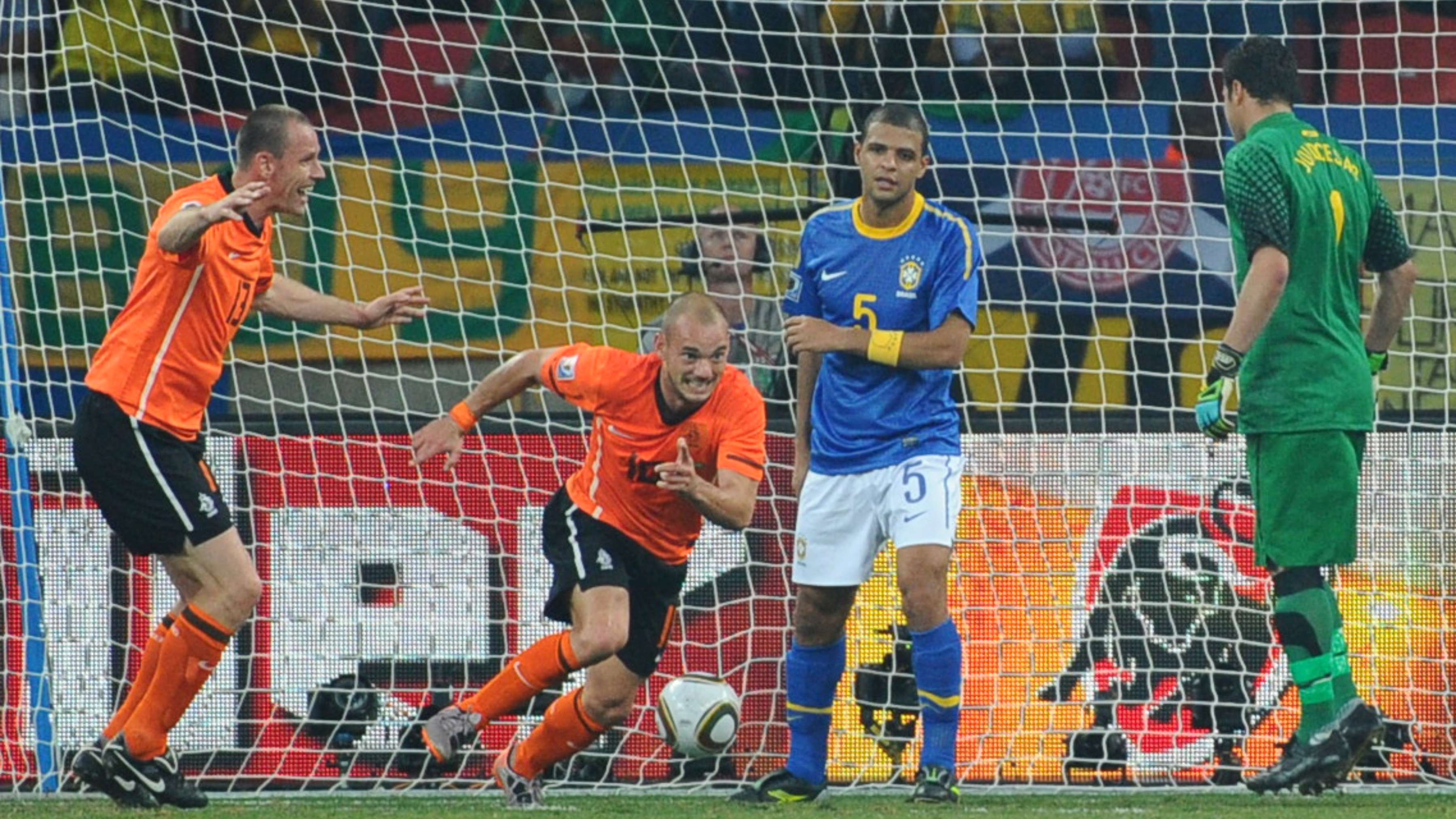
    Against all expectations, the team played an almost spectacular brand of football in the first half of the quarter-final against the Netherlands, but then came the collapse: Goalkeeper Julio Cesar’s mistakes, Felipe Melo’s red card, and a bitter 2-1 defeat. Merely swapping joy for discipline had not restored Brazil’s magic.

  • ENJOYED THIS STORY?

    Add GOAL.com as a preferred source on Google to see more of our reporting

  • FBL-WC-2022-MATCH58-CRO-BRAAFP

    Neymar, the Ronin

    It’s tempting to imagine how far that generation could have gone if Adriano, Kaka, and Ronaldinho had stayed at their peak. Adriano and Kaka were both 28 years old in 2010, while Ronaldinho was 30, but Kaka’s hip injuries cut short his brilliance after 2009, and Adriano and Ronaldinho, each for different reasons, abandoned professionalism just as Lionel Messi and Cristiano Ronaldo began redefining it.

    The result? Kaka underperformed in 2010 and was soon out of the national setup while Ronaldinho and Adriano became cautionary tales. Brazil’s next superstar, Neymar, was left to shoulder the entire burden without mentors to guide him through the weight of that responsibility.

    Amid coaching changes and CBF corruption scandals, the national team became ‘Neymar and 10 others’, and from 2014 through to 2022, that was the story. Brazil still had talent, but no one reached Neymar’s level. A nation built on idols now fielded a team of supporting actors - talented, but lacking leadership and identity.

    The defining event of this identity crisis came at home: the 7–1 defeat to Germany in the 2014 World Cup semi-final. The biggest humiliation ever suffered by a footballing powerhouse as, without the injured Neymar, all of Brazil’s weaknesses were brutally exposed.

    His absence that night created a myth, that Neymar was indispensable, even untouchable. Had he truly succeeded Messi and Cristiano Ronaldo as the world’s best for a long period of time, that notion might have made sense, but Neymar’s career followed a path closer to Ronaldinho’s; dazzling but inconsistent, often derailed by injuries that left him far from peak form in both 2018 and 2022.

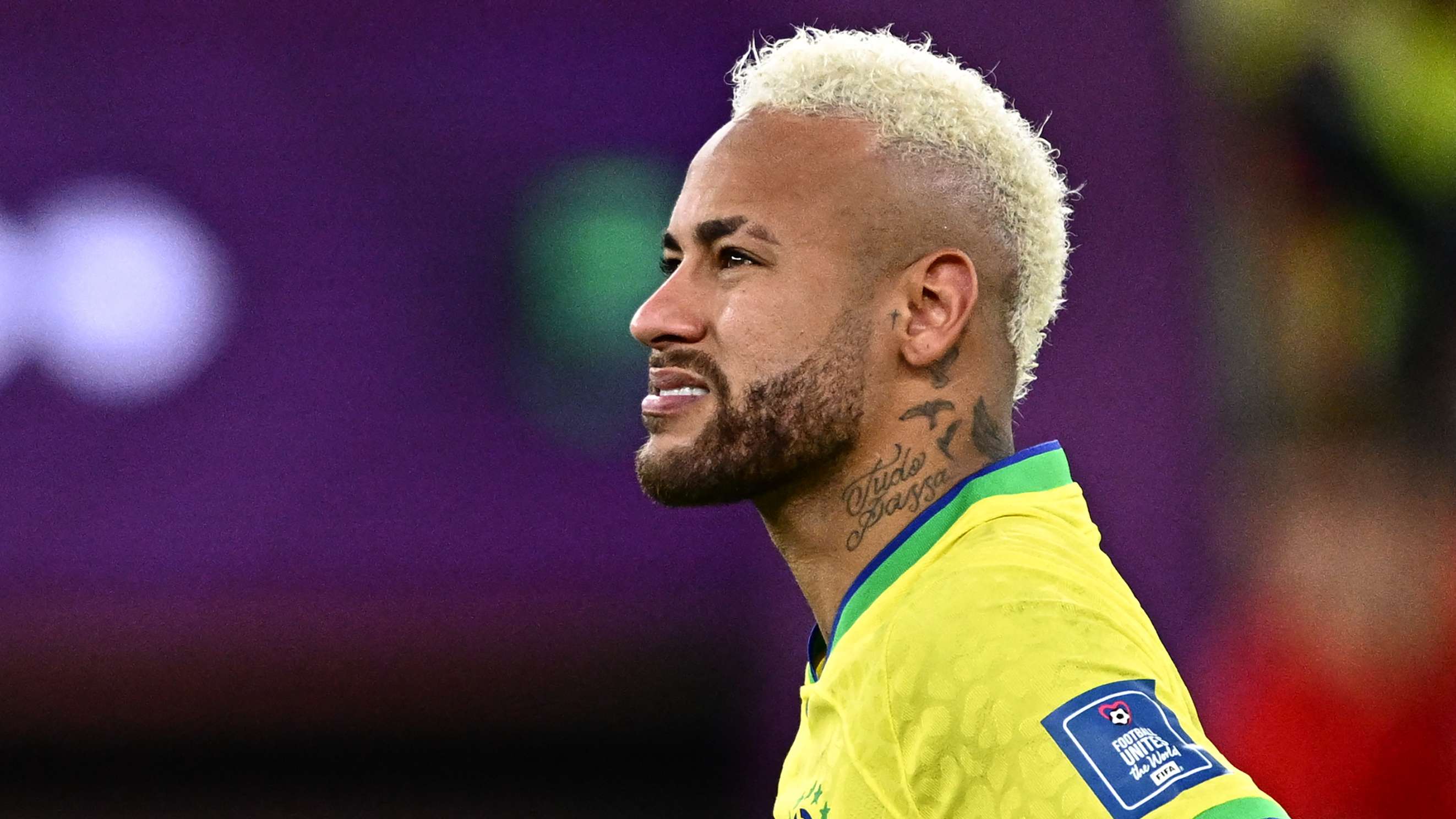
    In Russia 2018, Neymar became a global meme for theatrical dives as Tite’s Brazil fell to Belgium in the quarter-finals. Four years later in Qatar, Neymar played the mentor role to Vinícius Jr and Rodrygo, scoring a beautiful goal against Croatia, only for Brazil to concede late and lose on penalties in another last-eight clash.

  • FBL-JPN-BRAAFP

    Hail Mary

    Since 1994, quarter-final exits have become the norm. The only time Brazil advanced beyond that stage, in 2014, ended in catastrophe.

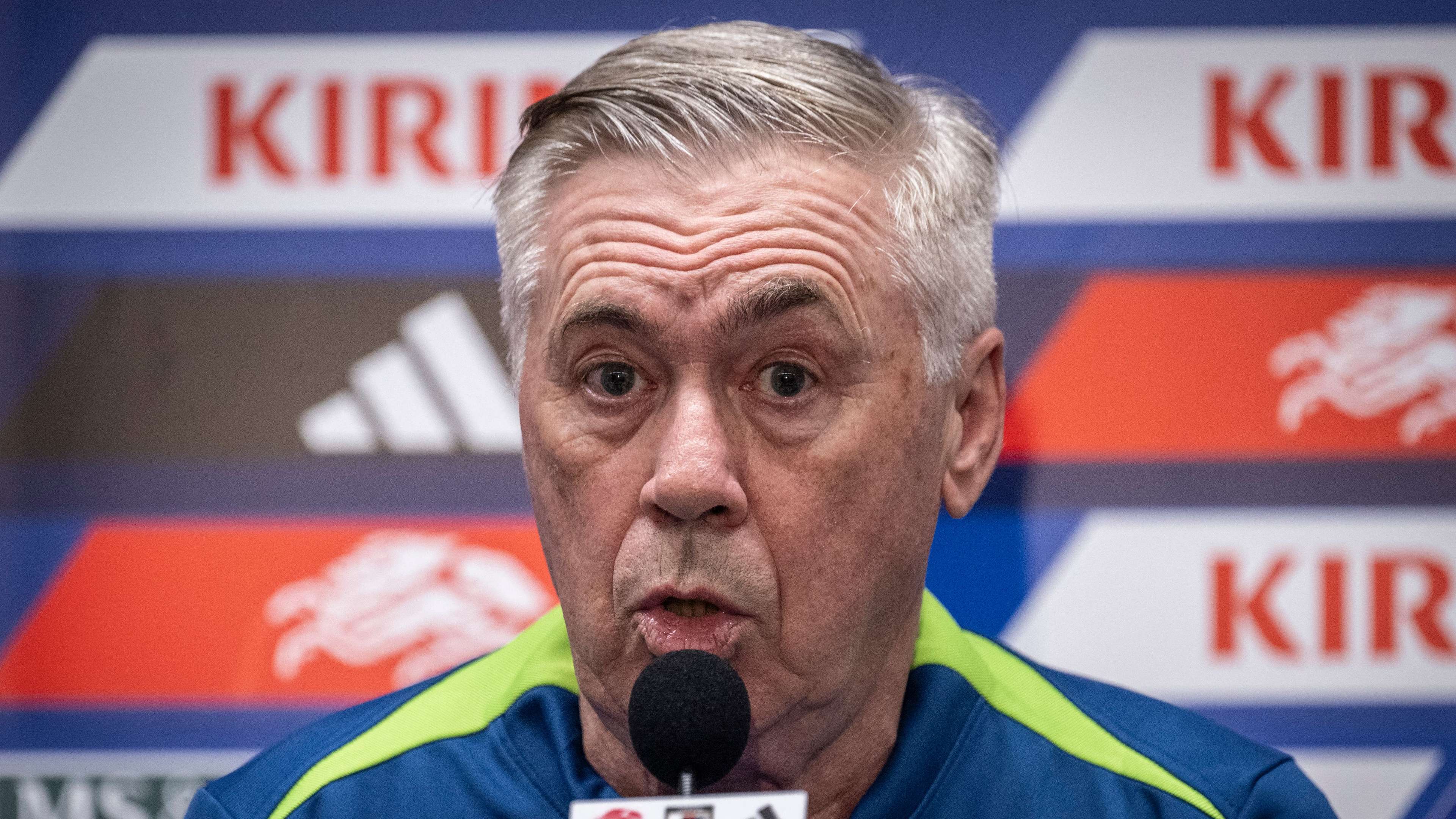
    The road to 2026 has been messy, as an interim period under Fernando Diniz was followed by a brief and uninspiring stint from Dorival Junior. With just over a year to go until the tournament, Ancelotti arrived as the supposed saviour, and as the first foreigner ever to lead Brazil at a World Cup, marking the symbolic fall of Brazilian coaches’ prestige even in their homeland, a trend that was already happening in large scale at club level.

    Ancelotti doesn’t have much time to find balance. Neymar has largely remained sidelined thanks to recurring injuries since 2023, so leadership now falls to Vinicius, Raphinha, and veterans like Casemiro. Most of them were too young to remember 2002, while some weren’t even born. Their collective memory of a victorious national team barely exists.

    With every World Cup that slips away, Brazil’s identity crisis deepens and questions pile up: Should the team embrace freedom, like in 2006, or discipline, like in 2010? Can Brazil win without Neymar? Are there still world-class stars capable of carrying the torch? Is a foreign coach the only path back to glory?

    Everyone has their own answer, but the reality is a growing sense of despair, a nervous anxiety that mirrors the times we live in, wrapped around a drought that has become historic.

    If the 24 years between the third and fourth titles were defined by pride in what Brazilian football could produce, this 24-year stretch reflects the opposite. Identities are built over time, and this long drought has eroded Brazil’s, piece by piece.

    Since the Penta, Brazil, once known for being enchanting and conquering, has been neither. So what defines them now? The Selecao remains the most successful national team in World Cup history, but it’s increasingly rare to see it among the true favourites. That’s not normal.

    The wait for another title has never weighed so heavily on Brazil. All that’s left is to see what kind of history 2026 will write.

0